Friday, May 27, 2011

Blog News 5/27/11 & Blogging Around


Note:  I originally wrote this post yesterday but due to an awful storm that hit Atlanta and various cities nearby.  The power went out for nearly 11 hours.

In Memory of "Macho Man" Randy Savage (1952-2011)  Oooh Yeah!!!!


For those of you who had been reading and following my Cannes Film Festival marathon. Thank you very much. I had fun doing that one and I hope to do it again next year. If anyone wants to join me next year, that would be even better though I would like to see what films we should all see.

Right now, I'm kind of taking a break a bit as I'm currently writing my screenplay that is coming though slowly as I'm early into the project. At the same time, I'm halfway done with my 1991-20 essay project about the music year of 1991 that I will post in my other blog The Void-Go-Round where I'm just posting some old music reviews right now. I don't really feel like writing any new music reviews till I feel like it.

With The Tree of Life finally set to come out tomorrow in New York City and Los Angeles this weekend. I'm already excited that it will come to Atlanta at the Tara Theater a week from Friday as I hope to watch it this weekend. Yet, I think I will approach my review for the film a little differently as I don't like to rush into writing though I did write some cast and technical crew info. I know a lot of us film buffs and fans of Malick are excited that it's coming as I'm also excited to see what my fellow bloggers think.

The Tree of Life will be among the few new releases I will check out along with Cars 2 and maybe X-Men: First Class and Midnight in Paris. Other than that, I plan to focus on films that is currently on my DVR which is being cropped up right now. Among these films I hope to watch are the Red Riding Trilogy that I'll watch this coming weekend along with films by Ingmar Bergman, Luis Bunuel, Ken Loach, Ang Lee, Samuel Fuller, Jim Jarmusch, Guy Maddin, and many others for June. Plus, I'll be posting some old reviews of films by Bunuel, Bergman, Lee, and some Pixar reviews I wrote back at Epinions.com over the years. I will also do some work relating to the 10th Anniversary release of Ghost World which will include an essay of the film that I hope to have by the end of June or early July.

My Ghost World essay will be part of a series of essays relating to my favorite films as I plan to do one on Breaking the Waves probably around the summer as well. My fourth Auteurs profile on Gus Van Sant will be pushed to late July/August while I've decided that the fifth profile will be either on Whit Stilman or Alexander Payne. I thought about doing David Fincher but I would rather push it to some other time.

In the world of the blogosphere, there's a lot I've been reading that has stood out for me.

Edgar at Between the Seats has an incredible review on one of Sam Peckinpah's most underrated films in Bring Me the Head of Alfredo Garcia.

CS at Big Thoughts from a Small Mind has a Great list of 10 Best Film Character Names.

Bryce at Things That Don't Suck has a a wonderful review of Morvern Callar that highlights some of the things I love about the film.

Jake of Not Just Movies posted an excellent review of my favorite film of 2010 in Sofia Coppola's Somewhere at The Final Girl Project.

Nick at Anomalous Material has a great piece on what is The Best & Worst of Woody Allen. His best is Crimes & Misdemeanors while his worst so far is Curse of the Jade Scorpion.

Dan of Dan the Man's Movie Review has a great review on one of the worst films this year in Something Borrowed as he questions the state of romantic comedies these days. Are they getting this bad?

Alex of Film Forager has a great review of one of my favorite action films in Police Story starring Jackie Chan.

Finally, there's two blogs that I've just followed that for those who don't know about these should check them out. First is Bonjour Tristesse which specializes in reviewing foreign films while the other is Andy Buckle's Film Emporium which is a blog that I've enjoyed reading.

Well, that is all for today. Let's all try to create the best review for The Tree of Life and bring our A game to the table. For those living in the U.S. and wondering where the film will play your local city, check out the link here.  And remember... take care... spike your hair... woo woo woo.  You know it!

Wednesday, May 25, 2011

The Hangover


Originally Written and Posted at Epinions.com on 12/26/09 w/ Additional Edits.


Already known for such comedy hits such as Old School and a film version of the hit 70s cop show Starsky & Hutch. Todd Phillips is one of the new breed of comedy directors who delves into the world of raunchy humor. 2006's Schools for Scoundrels with Billy Bob Thornton and Jon Heder wasn't a hit film with audiences or critics that put a dent of Phillips' streak of hit comedies that began with 2000's Road Trip. In 2009, Phillips rebounded in a big way with what turned out to be the biggest hit comedy of that year about a group of guys trying to figure what happened one night in Las Vegas through a slew of mayhem entitled The Hangover.

Directed by Todd Phillips and written by Jon Lucas and Scott Moore with un-credited rewrites from Phillips and Jeremy Garelick. The Hangover tells the story of four guys going to Las Vegas to celebrate a man's upcoming wedding. The next day, three of the men are hung-over as they find a tiger in their bathroom suite, a baby, and memory loss as the groom is missing. Meanwhile, they encounter a stripper, a gang of Chinese gangsters, and other strange occurrences in a crazy weekend. Starring Bradley Cooper, Zach Galifianakis, Ed Helms, Justin Bartha, Heather Graham, Sasha Baresse, Rachael Harris, Ken Jeong, Mike Epps, and Jeffrey Tambor. The Hangover is a witty film that doesn't reach a lot of laughs despite an excellent concept.

Doug (Justin Bartha) is about to get married his longtime girlfriend Tracy (Sasha Baresse) as he decides to go out on a weekend to Las Vegas. Joining him is Tracy's socially-awkward brother Alan (Zach Galifianakis) who is excited to go on the trip. Even as he will be taking the vintage Mercedes owned by Alan's father (Jeffrey Tambor). Joining them on the trip to Vegas is Doug's friends Phil (Bradley Cooper) and Stu (Ed Helms). Phil hopes from a break from his family life and work as a schoolteacher while Stu plans to propose to his longtime but very strict girlfriend Melissa (Rachael Harris). Arriving into Vegas where they stay at a luxurious suite, everyone is having a good time as they drink a shot of alcohol on the roof of the hotel they're staying.

The next morning, no one knows exactly what happens as Alan finds a tiger at a bathroom along with a baby in the closet, a hospital bracelet in Phil's wrists, and Stu missing a tooth. Doug is also missing as they also learn that they had stolen a police car that the valet gave them as they go to the hospital where they have traces of roofies in their blood stream. Learning that they were at a wedding that crazy night where Stu learns he has married a stripper named Jade (Heather Graham), they go to a wedding chapel where they encounter a couple of Asian gangsters shooting and beating up the police car. After finding Jade at her apartment where she's revealed to be the mother of the baby. They are suddenly caught by a couple of police officers (Rob Riggle & Cleo King) who are the original drives of the police car.

After taking part in a police exercise in exchange for their freedom, they also got back the Mercedes where on their way back to the hotel. They find someone in the trunk as it's revealed to be a naked Asian man (Ken Jeong) who beats them up as their day gets worse as Alan reveals the source of where he got the roofies thinking it was ecstacy. Returning to their hotel room, they get a surprise visit from Mike Tyson who was looking for his stolen tiger demanding that they give it back to him. Returning the tiger to Tyson proved to be troubling as they tried to drug the tiger only to wake up at the Mercedes while Tyson reveals the tape of what happened that night. After getting attacked by Asian gangsters that was led by the naked man who is named Leslie Chow. Chow demands $80,000 that he was owed or else Doug will be killed. With Doug's life in the hands of Chow, it's up to Alan's knowledge of card-counting to help them get the money with help from Jade as they succeed but end up with a surprise of their own as they wondered what the hell went wrong.

The story about three guys trying to find their friend while figuring out what the hell happened on a night they don't remember at all is definitely a great idea for a comedy. The problem is that it doesn't entirely work in its execution. There's some moments that are humorous and engaging to watch while the script is well-structured in its set-up. It's just that the script doesn't set-up the comedy as well as it should've been. There's time where the audience knows what will happen and it's not executed in a great way. At the same time, director Todd Phillips goes for moments of raunchy humor but it doesn't really hold itself together as a film. The better moments of Phillips' direction is when there's a surprise cameo from Mike Tyson that is funny along with scenes where Phil, Alan, and Stu are just trying to figure out what's going on in such a subtle presentation. Despite a lot of its flaws and shortcomings, Phillips does create a film that is watchable and engaging in its premise.

Cinematographer Lawrence Sher does nice work with the colorful look of the film, notably the nighttime flashy exterior of Las Vegas including some dark colors for the interior scenes at the home of Mike Tyson. Editor Debra Neil-Fisher does fine work with the editing in creating fast-paced moments to keep the film going along with the comedic moments while it's mostly leisurely paced for the most part. Production designer Bill Brzeski with set decorator Danielle Berman and art directors Andrew Max Cahn & A. Todd Holland do some good work in the look of the suite that the guys stay along with the look of the wedding chapel that they go to. Costume designer Louise Mingenbach is also good for the dresses that Jade wears and the casual clothes that the men wear. Sound designer Tim Chau does some fine work in the sound for some of the film's action-like sequences and location scenes.

The music by Christophe Beck is pretty good for its funk-keyboard style and comical musical sequences. Yet, the film's soundtrack is mostly filled with party songs and such from the likes of the Baha Men, Phil Collins (with singing by Mike Tyson), Wolfmother, Usher, Kanye West, T.I. & Rhianna, the Donnas, the Belle Stars doing Iko Iko in a funny reference to Rain Man, Danzig, and members of the cast singing their own original songs which are quite funny. Another notable soundtrack regular of Todd Phillips work is the Dan Band performing raunchy version of some 80s classics.

The casting by Juel Bestrop and Seth Yanklewitz is pretty good with some cameo appearances from Wayne Newton, Carrot Top, and most of all, Mike Tyson as himself in a very funny performance. Small roles like director Todd Phillips as a creepy guy in the elevator, Ian Anthony Dale and Michael Li as Chow's henchman, Mike Epps as an inept drug dealer, Bryan Callen as a wedding chapel owner, Sasha Baresse as Doug's fiancee, Matt Walsh as a doctor, and Jeffrey Tambor as Alan's dad are pretty good. Rachael Harris is intense as Stu's girlfriend Melissa though she doesn't have much to work with. Cleo King and Rob Riggle are funny as two angry cops who decides to abuse Stu, Phil, and Alan in front of kids at the expense of their amusement. Ken Jeong is kind of funny as an effeminate Chinese gangster in Leslie Chow that Jeong does go overboard with his performance at times.

In a role that was originally slated for Lindsay Lohan, Heather Graham is pretty good as Jade. A stripper with a heart of gold who helps the guys win money while helping Stu loosen up. Justin Bartha is decent as Doug, the groom who goes missing though he doesn't get much to do but be calm and then disappear throughout most of the film. Ed Helms is also good as the straight-man of the group in Stu, a man fearful of his girlfriend's anger as he loses a tooth and deal with the fact that he has to grow some guts in order to be a man. Bradley Cooper is excellent as Phil, a man wanting some freedom from his stressful family life as Cooper plays it straight for the most part of the film while saying some funny lines. Zach Galifianakis is alright as Alan, Doug's soon-to-be brother-in-law who is socially awkward as he tries to fit in where Galifianakis provides some funny moments. Mostly without pants.

While The Hangover doesn't have some of the off-kilter humor of Todd Phillips' previous films, it is still a decent comedy from the director with a good cast and premise. Fans of raunchy comedy will definitely enjoy this in what has definitely been a very down year for comedies. For anyone that wants something wild and fun to watch, The Hangover is the film to go see. Audiences with a much broader idea of comedy might best go for something else.

(C) thevoid99 2011

Tuesday, May 24, 2011

The Battle of Algiers


Originally Written and Posted at Epinions.com on 4/6/09.


The 1954-1962 Algerian war over Algeria's independence from France was a tumultuous period in the longstanding tension between France and Algerians for more than a hundred years ever since France invaded the region in the 1930s. The war ended with Algeria's independence in 1962 with the French dealing with defeat. After a few years following Algeria's independence, the war was a sore spot for the French where in 1966, Italian filmmaker Gillo Pontecorvo made a film about one of the most infamous battles in the city of Algiers in a cinema verite style. The film would be considered to be one of the greatest films of the 1960s entitled La Battaglia di Algeri (The Battle of Algiers).

Directed by Gillo Pontecorvo with a script he co-wrote with Franco Solinas, La Battaglia di Algeri tells the story of the battle itself along with the beginnings of the war right till its climatic battle in 1960 at Algiers. Told in a documentary style in black-and-white that recalls the Italian neo-realist movement of the late 1940s and Russian cinema. Getting perspective from both Algerians and European settlers, it's a film that takes a very in-depth look into one of the most infamous battles in world history. Starring Brahim Hagiag, Jean Martin, and Saadi Yacef.

It's 1957 as an Algerian is being forced to wear a French army uniform in order to lead the French to find National Liberation Front (FLN) leader Ali La Pointe (Brahim Hagiag). He had only been a part of the movement ever since joining three years ago following an altercation with the police over a street scam where he later assaulted a young Frenchman. After being in prison for five months, Ali becomes part of the FLN after being recruited by El-Halid Jafar (Saadi Yacef). In 1956, a series of attacks on policemen forces the police to strike back while barricading parts of the Casbah area filled with Algerians. During one night, officers planted a bomb at a home at the Casbah area that killed many people.

The Algerians strike back by having three women planting bombs in various places outside of the Casbah area filled with the French in Algiers. The attacks were successful with many casualties made. On January 1957, Colonel Mathieu (Jean Martin) arrives with an army to plan attacks and interrogations to find the leaders of the FLN. With an upcoming strike, Ali talks to a FLN leader who reveals that their cause has gained the attention of the United Nations. Ali wants to attack but instead, has to do nothing and let the French do their week-long strike. The strike intensifies by its last day with several of its leaders captured and such. With Mathieu taking charge, he goes inside the Casbah with his troops where he eventually captures Jafar while also making a final attack to win the battle. Unfortunately, a huge protest and demonstration movement in 1960 would mark trouble for the French which would lead to the Algeria's independence in July of 1962.

The film is certainly a provocative yet eerie take on the idea of war. Yet, it's an ugly take on war as director Gillo Pontecorvo goes deep inside to the Casbah area to see how the battle is played out. The film is really about war's ugliness and how both the French and Algerians do horrific things to each other. Though the Algerians have reasonable motives over their demand for independence, how they did it through guerilla tactics and even planting bombs in various buildings seems like they were committing terrorism. The French of course, had to respond but what they did in order to interrogate people and such through torturous methods weren't honorable either. It seems like Pontecorvo and co-screenwriter Franco Solinas decided to make a film that isn't a traditional war film. Especially in creating dramatic sequences involving the idea of the Algerian independence and Col. Mathieu planning his own methods of attack in order to give the audience an idea of the motives of these two factions.

The script is based on several accounts and stories from various people, notably Saadi Yacef's memoir, who plays a fictional version of himself as El-hadi Jafar. Yet, there's no clear protagonist as it's all based on several characters as it's really about the battle. For the film's direction, Pontecorvo decides to create the film as if he's doing a documentary of sorts but in a cinema verite style. Along with the use of the Italian neo-realist style, the film is very engaging into going inside the Casbah area and being inside buildings where the audience knows something is going to happen. In the scenes that involve bombs, there's a level of suspense that Pontecorvo creates and when they're dropped in their locations. The audience knows what's to come but what happens afterwards is horrifying.

Pontecorvo goes deep inside to the locations where the bombs happen and it's shocking. The horrors of people dying and wounded, whether it's Algerian or European is truly an atrocity to watch. By the time the French take over for the battle into the Casbah, it's clear that Mathieu's method of torture and abuse is just as bad. Yet, he is a man that has respect for the opposition offering leaders the chance to surrender and be fair. The other two characters that often get attention are Jafar and Ali La Pointe. The former is the main leader who is smarter while finding some respect for Mathieu over his tactics and mercy. Then there's the younger La Pointe who is more of a rebel who is willing to continue the fight, even during the week-long strike of early 1957 when he isn't supposed to. What Pontecorvo creates is a film that truly exemplifies the spirit of guerilla warfare and all of its chaos and horror. The result is a film that is truly relevant to this day about war, terrorism, and retaliation in all of its troubles.

Cinematographer Marcello Gatti does fantastic work with the film's black-and-white photography along with its hand-held camera movements that isn't shaky nor fast. Instead, it's very steady and captures everything that goes on without swift movements only to slowly capture everything while creating some fantastic shots from Pontecorvo's amazing vision. Notably the exterior shots of Algiers from the beach to the upper exterior look from the Casbah. Gatti's work is truly phenomenal with some grainy camera work that looks realistic in the verite style as well as something that is beautiful. Editors Mario Morra and Mario Serandrei does excellent work with the film's straightforward cutting with little bits of jump cuts to keep the film's rhythm going. Though the pace is a bit slow, it works to create the idea of suspense and events that goes on during the battle.

Production/set designer Sergio Canevari does great work with the film's art direction in recreating the homes at the Casbah to the more clean looks like bars and diners at the European section of Algiers. Very detailed to what it looked like in the 1950s, it shows the contrast between the downtown section of Algiers and the gritty look of the Casbah area. The sound work by technician Omar Bouksani is excellent in capturing the tense atmosphere of war and the chaos that surrounds in the different areas of Algiers. The film's score by Gillo Pontecorvo and the legendary Ennio Morricone is wonderful in playing up to the film's drama and suspense. From the chugging rhythms of the suspense in the bomb scenes to the cadence-style drumming of the battles. The film mixes the Algerian music filled with flutes and such along with orchestral flair of Morricone to play along the tragic consequences and sadness.

The casting is mostly small with memorable roles from Mohamed Ben Kassen as the little boy Omar, Samia Kerbash as one of the female bombers, and Saadi Yacef in a small but memorable role as El-hadi Jafar. Brahim Hagiag is excellent as Ali La Pointe, the rebellious young man who becomes one of the leaders of the FLN as he takes on many risks only to realize how important the revolution is without violence. Jean Martin is brilliant as Col. Mathieu, the cruel yet compassionate general who is intelligent though arrogant in his idea of success towards the battle against the people of the Casbah.

Released in 1966, the film won the Golden Lion at the Venice Film Festival that year along with an Oscar nomination for Best Foreign Film shortly after while 2 years later, received nominations for Screenplay and Direction. Though the film was widely acclaimed, it courted a lot of controversy over its subject matter. Notably in France where it was banned for five years while the film was re-edited for British and American releases over its torture scenes. In Argentina, the film proved to be very popular with the military during the years of political upheaval in the country. In 1999, the film was restored where it received an official U.S. release in its uncensored version in late 2003. The film would be shown in various art house theaters to great acclaim but it's most famous screening was at the Pentagon in 2003 for military and political leaders during the Iraq War.

La Battaglia di Algeri is a brilliant yet harrowing film from the late Gillo Pontecorvo that is powerful and relevant to the situations of the Iraq War. Audiences who enjoy war films will be shocked to see this as a film that is more eerie than most war films with its verite style and harsh realism. For art house and foreign film fans, this film is truly essential as it's one of the best films of the 1960s. It's not an easy film to watch for its violent and meditative pacing but overall, it's unique visual style along with its intense score makes it worth watching. In the end, La Battaglia di Algeri is a powerful yet haunting film from Gillo Pontecorvo.

Gillo Pontecorvo Films: (The Wide Blue Road) - Kapo - (Burn! (1969 film)) - (Ordo)

© thevoid99 2011

Sunday, May 22, 2011

2011 Cannes Marathon Post-Mortem


Well, the festival has just ended and what a festival it's been as far as films were concerned. There was some controversy from Lars von Trier who got banned which I think was a bad idea from the people at Cannes because who are they going to get to put asses in the seat? There were also some disappointments including Gus Van Sant's upcoming film Restless which I'll still see if it plays nearby but with low expectations. And there's been some surprises. The film I'm eager to see that came out at the festival are Michel Hazanavicius' The Artist, Julia Leigh's Sleeping Beauty, Maiwenn's Poliss, and Nicolas Winding Refn's Drive.

For anyone that just heard the news, yes. Terrence Malick's The Tree of Life has won the Palme D'or despite getting some boos at the festival and mixed reviews which was expected. Yet, considering the competition he is facing. I must say I'm happy that he wins and hopes it will give the film a wider release during the summer. I'm a bit upset that neither Pedro Almodovar's The Skin I Live In nor Lynne Ramsay's We Need to Talk About Kevin didn't pick up anything though the latter got a great reception as I've become interested in Ramsay's work. Yet, I'm happy with the fact that The Artist got an award for Best Actor to Jean Dujardin along with Refn getting the best director prize. I'm really happy for Kirsten Dunst getting the Best Actress prize for her work in Lars von Trier's Melancholia as I'm a fan of her work and hope it would boost her career.

I have to say that it's been fun following the festival and its coverage and hope it will be more fun next year.

Now to the marathon which I've concluded with Bob Fosse's All That Jazz. I must say having done the Cannes Marathon since 2006 (w/ the exception of last year which didn't happen) that this one was the best. Not only because I saw a large amount of films where I liked a lot of them. I also had more time to watch them and paced myself with each film and review. At the same time, there were films that met my expectations while a number of them managed to surpass what I've expected.

The great thing about these marathons isn't just discovering these films but also discover filmmakers that no one has heard of or aren't familiar with. The big thing that really surprised me is that since this year's festival featured four films directed by women that were in competition. I also had four films that were directed by women that ended up becoming my favorite films of the marathon. Three of which were very minimalist pictures that definitely impacted my own aspirations as a filmmaker as I'm about to start work on my new screenplay.

Now with every festival, there's always awards that is synonymous with Cannes. Though I didn't pick out any first films for the marathon that I couldn't find which means no Camera D'or for best first film. There will be other awards given to the 15 of 17 films that I saw for the marathon.

For the Palme D'or, this fictional version of the prize goes to... Morvern Callar


This was a real discovery as I came not knowing about Lynne Ramsay as I'm wondering what she's about. The fact that she created a story about this woman who finds her boyfriend dead from a suicide and takes his manuscript under her name and go to Spain with her friend is an engrossing one. There was a minimalist quality I was drawn into along with the filmmaking and the way she used music to play to the image. I was also amazed by not just the raw look but also its beauty as I'm about to work on my own script as I found the film to be very inspirational for me. This is why I pick it as the best film of the marathon.

The 2nd Place Grand Jury Prix goes to Fish Tank


I love coming of age films when it's done right and takes me to places that I don't know. Most of all, the fact that it's about a young girl trying to find solace through street-dancing amidst the chaos of her home life along with the presence of her mother's new boyfriend. I was wowed by Andrea Arnold's direction and her presentation of the film as it's a film that young people need to see.

The Third Place Jury Prize goes to Wendy and Lucy


I wanted to see this film for a long time and it was a last-minute addition to the marathon as I found it premiered at the festival. Yet, I was amazed by its minimalist tale as well as its neo-realist approach. Even with Michelle Williams' performance which is truly one of her best performances in a career that is going extremely well.


The Best Director prize goes to Kelly Reichardt for Wendy and Lucy. It wasn't easy as it came down between her and Andrea Arnold. Reichardt created something that is very engaging as a director. Notably with the way she frames things and not go overly-stylistic. She keeps it simple and to the point as she deserves the prize.


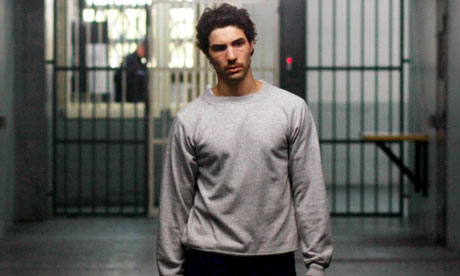
The Best Actor prize goes to Tahar Rahim for A Prophet. Once I saw him in this film, I realized that this going to be hard to top because he is so amazing in this film as a young illiterate convict who becomes a crime boss. With the festival progressing as I saw more and more performances. Rahim's performance still stuck out as it is definitely one for the ages as I hope to see this guy a lot more in films.


The Best Actress prize goes to Abbie Cornish for Bright Star. This wasn't an easy pick as Cornish had some serious competition in Samantha Morton for Morvern Callar, Katie Jarvis for Fish Tank, Michelle Williams for Wendy and Lucy, and Arta Dobroshi for Lorna's Silence. I give it to Cornish for the way she portrayed a woman who is an artist like the man she loved in John Keats. The anguish and grace that Cornish gives is phenomenal as it tops the one she gave in Neil Armfield's Candy.


The Best Screenplay prize goes to Jane Campion for Bright Star. Campion's script is a very engaging one for the way she studies the relationship between John Keats and Fanny Brawne in Keats' final years as well as the way creativity works. It is a story that doesn't dwell into melodrama while taking Keats' writing as a way to help tell the story and provide depth to Keats' relationship with Brawne.


The Technical prize goes to Christian Berger for his cinematography in White Ribbon. Berger's black-and-white photography, that is reminiscent of some of the films by Ingmar Bergman, has a very distinctive look that makes it beautiful. Yet, there is something very haunting in Berger's camera that plays up to the eerie tone of the film as Berger's work stood out for me among the rest.


For the Special Jury Prize, I'm giving it to Katie Jarvis for her performance in Fish Tank. It's a debut performance but what a debut performance for someone who is a relatively unknown that provides something that is fierce and wondrous from start to finish. It is definitely a marvelous role from an unknown who will surely become someone to watch in the years to come.

And here is the ranking for the rest of the films that I saw in the marathon with the exception of Che and Antichrist that I've already seen back in 2009. Here are those films along with brief insights into each one:


Jane Campion's romantic drama about the final years of John Keats and his relationship with Fanny Brawne is a lush yet hypnotic film that isn't overly dramatic nor pretentious


Michael Hanake's haunting drama of a peaceful village coming undone by incidents in pre-World War I Germany is a chilling film about innocence lost.


Jacques Auriaud's prison drama is a fascinating study about a man's journey from a young servant to a mob boss into a crime boss of his own.


Pedro Almodovar's amazing story about a man reflecting on his past and lost love in a multi-layered yet entrancing drama that features great performances from Penelope Cruz and Lluis Homar.


Bob Fosse's 1979 masterpiece about a man's workaholic lifestyle going out of control as he tries to finish and create various projects while facing death.


Gaspar Noe's shocking film about a tragic night where a man tries to avenge the assault and rape of his girlfriend as it's one of the best one-timers ever made.


Zhang Yimou's stylish wuxia romantic drama about two cops trying to find a secret rebellion group with the help of a beautiful blind dancer as it's one of the most gorgeous films ever made.


The Dardenne Brothers' engrossing drama that features a radiant performance from Arta Dobroshi as a woman trying to get money for her own dreams as it's another solid film from the Belgian auteurs.


Laurent Cantet's superb film about the year in the life of a teacher and in his students in this real yet engaging drama.


Ken Loach's fantastic film about a man who seeks help with his own troubled life through his hero Eric Cantona.


Carlos Reygadas' haunting drama about a man dealing with a failed kidnapping as he seeks solace in his boss' daughter in this confrontational yet intriguing film.


Despite a superb cast and visuals, Wong Kar-Wai's English-language debut is a bit uninspiring since it feels derivative of his other work.

Well, that is all for the 2011 Cannes Film Festival Marathon. Let's hope for another one this year and enjoy these amazing films.

2011 Cannes Marathon: All That Jazz


(Co-Winner of the Palme D’or w/ Kagemusha at the 1980 Cannes Film Festival)


While Bob Fosse’s name is synonymous with dance and theater, his work as a film director has been one of the most celebrated in his prolific career. With musicals such as Sweet Charity and Cabaret, Fosse moved away from the musical with 1974’s Lenny about the controversial comedian Lenny Bruce. In 1979, Fosse would make a semi-biographical picture that mixed the dazzling musicals he’s known for with a gritty outlook on life entitled All That Jazz.

Directed by Bob Fosse with a script co-written with Robert Alan Arthur, All That Jazz follows a choreographer/film director whose workaholic lifestyle is spinning out of control. Struggling to get a new musical play going and finishing a film, he is visited by an angel of death as his health begins to take a toll. Based on Fosse’s own life, the film is a study of creativity and the toll it takes on its creator. Starring Roy Scheider, Jessica Lange, Leland Palmer, Ann Reinking, John Lithgow, and Ben Vereen. All That Jazz is spectacular yet hypnotic musical-drama from the late Bob Fosse.

Joe Gideon (Roy Scheider) is a brilliant artist who is known for making great Broadway shows and movies that he’s directed. Yet, Joe’s life is going out of control as he is trying to work on a new musical while finishing up a film about a standup comedian that is still in its rough cut. Every day, Joe chain-smokes and pops up various pills to get himself going as he’s under numerous deadlines while often forgetting to do other things in his life like spending time with his daughter Michelle (Erzsebet Foldi) much to the ire of his ex-wife Audrey (Leland Palmer). Joe also spends his time sleeping with other women much to the dismay of his girlfriend Katie (Ann Reinking).

Joe’s workaholic schedule is starting to take his toll as he’s imagining talking to an angel of death named Angelique (Jessica Lange) about his life and the fact that he a schmuck. With Joe trying to find ideas for his show while being under pressure from collaborators and backers including Jonesy Hecht (William LeMassena) trying to get him to finish. Thanks to some prodding from Audrey, Joe gets an inspiration for his show though it would alienate his backers as he continues to work on his varied projects where it would finally take a toll on his health. After finally suffering chest pains, Joe is sent to the hospital as a cardiologist (Michael Tolan) suggests that Joe should relax.

Instead, Joe continues to play with death in his ways at the hospital while learning about the reviews over his film which he knew wasn’t finished. While Jonesy and other financiers try to figure out how to salvage the show with its expensive production by even turning to another Broadway director in Lucas Sergeant (John Lithgow). Joe starts to realize his own faults as his perception of reality is blurred through his own imagination featuring the people in his life as he starts to face his own mortality.

While the film is based partially on Bob Fosse’s own life at the time he was trying to finish his 1974 film Lenny, some of it is definitely inspired by the works of Federico Fellini. Particularly 8 ½ which was about a film director’s life that is unraveling by his writer’s block and the women in his life. In this film, it’s about a man whose lifestyle and antics finally takes a toll on him in a lot of ways. His personal life is becoming messy due to his womanizing while professionally, he is uninspired and having a hard time getting or finishing projects. This would eventually lead to him facing mortality in the guise of a beautiful angel who would have him see parts of his own life.

The character of Joe Gideon is essentially a scumbag and he knows it. He doesn’t spend a lot of time with his daughter though doesn’t mean to hurt her. He sleeps around with other women much to the chagrin of his ex-wife Audrey and current girlfriend Katie. He likes to flirt around with death by drinking, chain-smoking, pill-popping, and fucking every piece of ass out there as if it was his last day. Yet, he knows that he couldn’t help himself in doing these things as a way to cope with his own work as he is his own worst critic. He wants to do something great but has a hard time trying to please himself and others. The fact that he’s taking much longer to finish a film because of a long monologue that he’s cut over and over again.

The script that Fosse and Robert Alan Arthur create is an intriguing study on art and how artists tend to suffer for their work literally. Yet, it’s also about how the world of Broadway works as there’s a bit of a subplot when Joe’s financiers try to salvage the play they’re working by figuring out how to make money if things go bad while getting another director involved. Fosse and Arthur’s dialogue is phenomenal for its humor as well as the way characters respond to each other and their actions.

Fosse’s direction is truly magnificent in its ambition and presentation by creating a film that is gritty and stylish. For many of the musical sequences that is early in the film, he shoots it on location in the stages or rehearsal halls. Yet, there is something very real to the look and the rough presentation as he allows the staging of these numbers to make it seem intense with sweat dripping on the dancers, musicians, and Joe himself. At the same time, he doesn’t sugarcoat anything that is happening when people are rehearsing as the scene where Joe is looking for dancers. What he shows is everything from people are on time and have rhythm to the lone dancer who is lost in the shuffle knowing he or she won’t make it.

Fosse’s look of the fantasy sequences is truly mystical in the way it plays off to Joe’s messy head as it’s filled with decayed objects and such along with memories including a young Joe (Keith Gordon) dancing around. One of the film’s great moments is a montage of images that play up to the way Joe opens his day to the music of Antonio Vivaldi’s Concerto in G as it always feature Joe saying “It’s show time folks”. If Fosse’s staging of the musical and smaller dramatic moments are wonderful, it’s also the way he frames those scenes where he definitely gets a wide depth of field of what is happening along with allowing the camera to soak in the atmosphere. Using tracking shots and steady hand-held work to allow Joe to be followed along with the intensity of the dance numbers that is choreographed by Fosse himself. The overall work in Fosse’s direction is mesmerizing and masterful as he creates what is truly an engaging yet entertaining film.

Cinematographer Giuseppe Rotunno does a phenomenal job with the film‘s photography in bringing a sense of realism with atmospheric lighting to some of the rehearsal scenes. In the fantasy sequences, Rotunno goes for that same kind of grit along with a ghostly look as the film while the dance sequences late in the film are filled with dazzling lights that brings a lush yet seductive look to Rotunno’s camera. Editor Alan Heim does a superb job with the editing in not just creating amazing rhythmic montages to Joe’s daily routine but also to the dance numbers and dramatic moments in the film. Heim’s work is really the technical highlight of the film for the way he plays off Joe’s intense lifestyle with its frantic cutting as well as playing to the repetition of Joe’s day that includes a slow half-frame speed.

Production designer Philip Rosenberg, along with set decorators Gary J. Brink and Edward Stewart, does an amazing job with the art direction in the creation of the fantasy sequences from the decayed look of Joe‘s world with Angelique to the dazzling stage setting for the many of the film‘s dance sequences in the latter part of the film. Costume designer Albert Wolsky does a great job with the costumes from the all-black clothes that Joe wears to the lush dress that Angelique wears along with the fantasy dance sequences in the film. Makeup artist Fern Buchner does a nice job with the make-up for some of the dance fantasy sequences that play up to the Felliniesque elements of the film.

Sound editor Maurice Schell does a fantastic job with the sound work to capture the feet on the floor to the atmosphere of rehearsals and the meetings. Notably a scene where Joe is in a meeting with all of these people and all he can hear are sparse sounds as it’s one of the highlights of the film. The music by Ralph Burns is superb for its creation of some amazing music pieces that are played for the film including rehearsal music and stuff that’s made up in the scene. The soundtrack includes Antonio Vivaldi’s Concerto in G plus George Benson’s On Broadway and a snazzy cover of Bye Bye Love sung by Ben Vereen. The soundtrack is another of the film’s highlights as it’s an important part of the film.

The casting by Howard Feuer and Jeremy Ritzer is brilliant for its large ensemble that features early appearances by actors who would go on to bigger things such as Sandahl Bergman as a principal dancer, C.C.H. Pounder as a nurse, Wallace Shawn as an accountant, Keith Gordon as the young Joe Gideon, David Margulies as a financier, and John Lithgow as a rival Broadway director. Other notable small roles include Ben Vereen as a singer whom Joe likes to watch, Deborah Geffner as a dancer Joe sleeps with, Cliff Gorman as the actor in Joe’s standup comedy film, Michael Tolan as the cardiologist, and William LeMassena as a financier who tries to help Joe with his play while protecting his investment.

Erzsebet Foldi is great as Joe’s teenaged daughter Michelle who adores her father despite his absence as she always try to get him to slow down while has a few great dance numbers including one with Ann Reinking at an apartment as it’s a fun performance to watch. Ann Reinking is excellent as Joe’s girlfriend Katie, a woman who has a hard time dealing with Joe’s womanizing while trying to ground him. Leland Palmer is superb as Audrey, Joe’s ex-wife and Michelle’s mother who is also a former dancer as she tries to pull him back to real life while dealing with his workaholic persona. Jessica Lange is wonderful as Angelique, an angel of death who is a seductive woman but also quite terse in how she makes Joe confess his own faults.

Finally, there’s the late Roy Scheider as Joe Gideon in what is his best performance of his career. Scheider brings a sense of charm and weariness to a character that is at times, a schmuck but also knows the fact that he is a schmuck. Yet, Scheider makes Joe Gideon into a fascinating figure who is willing to do great things for his art while is willing to accept criticism knowing that the critics could be right. It’s a very fearless yet entertaining performance from the great actor.

All That Jazz is a brilliant yet entertaining musical from Bob Fosse featuring a remarkable performance from Roy Scheider. Featuring great supporting work from Jessica Lange, Leland Palmer, and Ann Reinking, it is definitely one of the best musicals that strays away from the idea of what a musical is. Even as Fosse makes it personal and engaging as it’s one of his greatest films in his short filmmaking career. In the end, All That Jazz is a marvelous film from the late, great Bob Fosse.


© thevoid99 2011

Saturday, May 21, 2011

2011 Cannes Marathon: Fish Tank


(Co-Winner of the Jury Prize w/ Thirst at the 2009 Cannes Film Festival)


Written and directed by Andrea Arnold, Fish Tank tells the story of a 15-year old girl whose family life is in chaos as she finds solace in her mother’s new boyfriend to take up street dancing. A coming-of-age film set in Britain, it is also a realistic portrayal of a young girl who feels unloved and alienated by the world around her. Starring Katie Jarvis, Kierston Wareing, Rebecca Griffiths, Harry Treadaway, and Michael Fassbender. Fish Tank is a harrowing yet enchanting coming-of-age film from Andrea Arnold.

Mia Williams (Katie Jarvis) is a foul-mouthed 15-year old girl who lives in a housing project in Tilbury with her mother Joanne (Kierston Wareing) and her younger sister Tyler (Rebecca Griffiths). Mia is also someone with no friends and doesn’t go to school as she spends a lot of her time alone practicing her street-dance moves and walking around the streets of Tilbury where she comes across a white horse. On one particular day, Mia discovers a man in her apartment as it’s her mother’s new boyfriend Connor (Michael Fassbender) as he takes Mia, Tyler, and Joanne on a road trip of sorts.

Mia enjoys Connor’s presence as he also enjoys her dancing while she also befriends one of the owners of the white horse in a 19-year old boy named Billy (Harry Treadaway). Mia learns of a dance competition coming as she asks Connor for help as he gives her a camera that she can film herself and send it for the audition. Yet, Mia remains intrigued by Connor as they hit it off despite the fact that he’s dating her mother whom she doesn’t like very much. Still, Mia is anxious about her performance as the relationship with her and Connor intensify leading to some issues. Even as Mia would make some discoveries about Connor that would change everything about their relationship.

The story of a young girl who finds solace in street-dancing to cope with her unhappy home and social life might seem like a premise that Hollywood would use to make it an inspirational story. Fortunately, that’s not what the film’s writer/director Andrea Arnold is going for as she aims for a film that follows this young girl’s journey. Yet, Mia Williams is a character that isn’t a perfect one like all girls in real life. Yes, she is a foul-mouthed, volatile, selfish young woman who often does things including head-butting other girls or shouting at her younger sister. Still, like Antoine Doinel of the films by Francois Truffaut like The 400 Blows, is a girl who feels unloved by her mother who is more like a young woman than a mother.

When Connor comes into Mia’s world, she finds someone who is like a father figure to her as he encourages her to dance and such. Yet, he is treated like scum whenever her mother is around as it suggests that Mia has some feelings for Connor. Still, it plays off as a father-daughter thing but as it progresses. It becomes something much though it’s followed by a series of complications that would change Mia’s perspective on Connor. This would follow by events that would not only impact Mia’s own sense of the world as well as the little amount of innocence she had left in her youth. Arnold’s script succeeds in studying Mia while creating characters such as Joanne and Connor as real people who are flawed but also have something about them that makes them enjoyable.

Arnold’s direction is truly mesmerizing in the way she follows Mia in her journey of growing up as it’s shot on location in Tilbury as well as other places in England. Yet, there is something beautiful in the way Arnold presents things in a town that is very working class and not very clean in a lot of places. Arnold’s direction has a mixture of hand-held work and steadicam camera shots to dwell into Mia’s journey while her framing is presented in a full-screen format. The decision to not use the widescreen format is probably because Arnold wanted something that is intimate and direct. The overall direction of the film is superb as Arnold creates a captivating drama about a girl in need of a future in her dreary world.

Cinematographer Robbie Ryan does a phenomenal job with the photography from the colorful yet naturalistic look for many of the film‘s exterior scenes including some nighttime scenes. Yet, a couple of interior shots such as Mia dancing in an empty room or at her apartment are filled with wonderful yet gorgeous lighting schemes to portray its mood. Editor Nicolas Chaudeurge does a superb job with the editing in maintaining a leisured pace for the film along with rhythmic jump-cuts for scenes of Mia practicing her dancing in a few key scenes.

Production designer Helen Scott and art director Christopher Wyatt do an excellent job with the look of the Williams‘ apartment along with the decayed trailer area that Billy lives in with his horse. Costume designer Jane Petrie does a very good job with the costumes from the scantily-clad clothing that Joanne wears to the street, hip-hop inspired clothes that Mia wears throughout the film. Sound editor Joakim Sundstrom does a brilliant job with the sound work to capture the chaotic atmosphere of the apartment with televisions on all the time to the world that is Tilbury.

The film’s soundtrack that is assembled by music supervisor Liz Gallacher is a mixture of hip-hop and soul music that dominates most of the film. Among the tracks that are played in the film are from artists like Nas, Ja Rule, Gang Starr, Cassie, Eric B. & Rakim, James Brown, and a great cover of the Mamas & the Papas’ California Dreamin’ by Bobby Womack that serves as the centerpiece of the film’s soundtrack.

The casting by Jill Trevellick is amazing for its realness as many of the actors that appear in the film are either non-professional for first-time actors. Memorable performances include Sydney Mary Nash as a young girl Mia encounters, Rebecca Griffiths as Mia’s precocious yet foul-mouthed little sister Tyler, and Harry Treadaway as a 19-year old boy named Billy whom Mia befriends. Kierston Wareing is excellent as Mia’s mother who is very neglectful and abusive most of the time unaware of the hurt she’s bringing while being someone who wants to remain youthful which includes a great moment of her, Mia, and Tyler dancing to Nas. Michael Fassbender is superb as Connor, Joanne’s new boyfriend who provides encouragement and attention to Mia while being a father figure of sorts despite the fact that he’s also got a secret to hide. Yet, Fassbender doesn’t make his character creepy though he’s a flawed individual who likes to drink and watch TV as it’s a remarkable performance from the Irish actor.

Finally, there’s Katie Jarvis in a towering debut performance as Mia Williams. Jarvis’ fiery performance is truly spellbinding in the way she acts out her frustrations along with the way she shouts. At the same time, she proves to be a capable street dancer that has a lot of talent without being too flashy and such. It’s a raw yet hypnotic performance from the young actress who is surely to become someone to watch in the years to come.

***Additional DVD Tidbits Written from 3/25/13-3/30/13***

The Region 1 DVD from the Criterion Collection presents the film in its original 1:33:1 theatrical aspect ratio with Dolby Digital Surround Sound as it’s all approved by its writer/director Andrea Arnold. The DVD features a slew of extras relating to the film as well as three short films by Arnold.

The 1998 short Milk is the story about the aftermath of a miscarriage in which a woman is numb in her loss where she goes into an impromptu road trip with a stranger. It’s a very fascinating yet chilling short that features Lynda Steadman in the leading role as well as Stephen McGann as her boyfriend who buries their stillborn child. The 2001 short Dog is about a teenage girl who steals money from her abusive mother to buy weed with her boyfriend as she encounters a stray dog that she falls for only for something innocent from the dog leads to a traumatic moment. It’s another gorgeous short from Arnold that explores a young woman’s innocence in a poor part of town as she finds small joy in this stray dog.

Finally, there’s Arnold’s 2003 Oscar-winning short Wasp starring Nathalie Press and Danny Dyer about a young mother with four kids who meets an old friend as she decides to meet him in a pub while the kids wait outside. It’s a very compelling short about a young woman being torn in being a mother and trying to live the life of a young woman. It also reveals what these kids are going through when they have to fend for themselves that would involve a wasp as it’s definitely a brilliant short.

The 14-minute interview with Kierston Wareing has the actress talking about Arnold’s directing process as Wareing compares it to some of the attributes of Ken Loach whom she had worked with in It’s a Free World…. Wareing also discusses about the character that she played as someone who is selfish and obviously irresponsible where Wareing knew it wasn’t an easy character to play. It’s a very engrossing interview with the British actress who reveals a lot about Arnold’s filmmaking style and how she directs actors.

The 26-minute audio interview with Michael Fassbender is from a January 2010 public conversation at Museum of Moving Images in Queens, New York City as part of its Pinewood Dialogue series with curator David Schwartz. Fassbender talks about the film, Andrea Arnold, and co-star Katie Jarvis where he reveals some tidbits about the film’s production as well as his view on his character. Fassbender also revealed that the film was shot in chronological order as well as without a script that allowed the actors to improvise and play things out naturally. It’s a very fascinating interview to listen to as it reveals a lot of Fassbender’s views on acting and films as well as a funny story about Fassbender directing a stage version of Reservoir Dogs where he played Mr. Pink.

The 10-minute audition footage features 10 dancers who auditioned for the film as each young woman show their dancing skills where it’s definitely a highlight of the special features content. The DVD also includes a trailer and a still gallery showcasing many pictures of the film itself. The DVD also includes a booklet that features an essay film scholar Ian Christie entitled An England Story. Christie’s essay reveals a lot about the film and its importance in British cinema as it continues that tradition of British working-class cinema. Yet, Christie reveals that Andrea Arnold brings something new to the table since it reflects on the lives of women and the uncertainty that Mia faces in her environment. It’s a very engaging essay from Christie as the DVD itself is another highlight from the Criterion Collection.

***End of DVD Content***


Fish Tank is a magnificent yet intense coming-of-age film from Andrea Arnold featuring Katie Jarvis’ powerful performance. Audiences of real British dramas will no doubt see this as one of the best films of that genre while be amazed into the story of a young girl living a world of misery. Even as it serves as a breakthrough for both Andrea Arnold and Katie Jarvis as Fish Tank is a stunning achievement for those two women and British independent cinema.

Andrea Arnold Films: Red Road - Wuthering Heights (2011 film) - American Honey - Cow (2021 film) - Bird (2024 film) - (Featherwood) - The Auteurs #31: Andrea Arnold


© thevoid99 2011

Friday, May 20, 2011

2011 Cannes Marathon: Irreversible


(Premiered at the 2002 Cannes Film Festival, in Competition for the Palme D’or)


Written, shot, edited, and directed by Gaspar Noe, Irreversible tells the story of a man and his best friend seeking revenge against the man who raped his girlfriend. Told in reverse chronology, it is considered to be one of the most controversial films ever made as it features explicit sexual and violent content. Starring Vincent Cassel, Monica Bellucci, Albert Dupontel, and Jo Prestia. Irreversible is a shocking yet captivating film from Gaspar Noe.

It’s a night of celebration as a couple named Marcus (Vincent Cassel) and Alex (Monica Bellucci) are to meet with their friend Pierre (Albert Dupontel) for a party. Things go well at the party as Pierre likes to watch Alex dance while Marcus is acting very wild. Alex leaves the party to go home as she walks to an underpass as she encounters a man (Jo Prestia) beating a woman (Jara-Millo) as he turns his attention towards Alex. Alex is raped and beaten as Marcus and Pierre later find her as Marcus seeks revenge.

The film’s plot is about a couple and a friend going out to a party, the lady leaves only to be beaten and rape by a man as her boyfriend seeks revenge. In a traditional narrative, that makes the story not very engaging as there is an idea of what is going to happen. When it’s told in reverse chronology, that’s when that premise becomes not just very interesting but also tragic. Yet, the film doesn’t start out with this main storyline as it opens with a man from Gaspar Noe’s previous film I Stand Alone known as the butcher (Philippe Nahon) talking with another man about his own crimes as well as a philosophical discussion about time.

This would lead to scenes where the aftermath of all of the revenge happens as it leads to transitions of scenes that follow Marcus’ yearning for revenge to the brutal rape/beating of Alex, and the party they were just in. Yet, the film’s penultimate scene is Marcus and Alex getting ready that includes something that makes Alex’s incident more heartbreaking. Noe’s script is filled with lots of dialogue that recalls Alex and Marcus’ relationship along with warnings and such that would play up to everything that happens as if there’s a sense of foreboding.

Yet, the script really serves as a guide to Noe’s direction as he and co-cinematographer Benoit Debie create something that is dizzying and hypnotic. Shot in 16mm with colorful lights throughout the entirety of the film, Noe creates a film where the camera is always moving as if he’s shooting a lot of it in one take. Yet, the transitions between the many scenes are shot on walls or ceilings where there’s a lot of invisible cutting throughout the film. Some of it through digital imagery with some visual effects to make it seem like the entire film is shot in one take. The camera angles and long tracking and crane shots make the film much more surreal and entrancing in its imagery.

Then there’s the film’s rape scene which is shot in a single take with no edits that is truly the most confrontational and shocking moment on the film. Through that moment when the rape is happening, the camera remains still while during that entire sequence as it rarely moves. It’s Noe being confrontational where the aftermath of that rape is even more disturbing as the beating as the combination of sound and performance makes it feel so real. The overall presentation of the film itself in its dizzying yet chilling presentation with colorful photography and a non-linear storyline that is told in reverse chronology is truly a great piece of art.

Production designer Alain Juteau does an excellent job with the look of Marcus and Alex‘s apartment along with the party they‘re at and the infamous tunnel passageway for the brutal rape scene. Costume designer Laure Culkovic does a great job with the look of Alex‘s party dress along with the casual clothes that the men wear. Visual effects supervisor Rodolphe Chabrier does a very good job with the minimal visual effects used in the film such as the swirling transitions between scenes and digital imaging to make the film look as if it‘s shot on one entire take.

Sound designers Jean-Luc Audy, Marc Boucrot, and Cyril Holtz do a fantastic job with the sound from the atmosphere of the parties and cities to the intimate but horrifying sound of the rape scene that include mixes to create something very disturbing. The film’s score by Daft Punk’s Thomas Banglater is brilliant for its hypnotic presentation along with mood pieces that play up the intensity of what is happening. Banglater’s score is a highlight of the film where at one moment, it can be cool and soothing but other times very dark. The soundtrack also includes a couple of classical pieces by Gustav Mahler and Ludwig Van Beethoven and a couple of pop pieces by Etienne Daho and Andre Bezu.

The casting by Jacques Grant is superb as it features appearances from Philippe Nahon as a man from Noe’s previous film I Stand Alone along with Mourad Khimaand and Hellal as a couple of men who offer to help Marcus in his revenge, and Jara-Millo as a hooker that is being harassed in the tunnel. Jo Prestia is very good as the man who rapes Alex in the way he makes himself brutal and someone that audiences want to see get beaten up. Albert Dupontel is excellent as Pierre, the friend who also serves as the conscious in the film of sorts as he tries to make Marcus be reasonable while being the great friend to Alex.

Vincent Cassell is great as Marcus, a man who is fun and excited while being immature only to become vengeful. It’s mesmerizing role from Cassell who plays up a man who had been manipulated and troubled by what happened to his girlfriend while also providing that he might be at fault for what happened. Monica Bellucci is amazing as Alex, a sensual woman who is very fun and exciting only to become a victim of a brutal beating and rape. Bellucci, who is truly one of the most beautiful women out there, brings something that we all know but the idea of her being in a situation like that is horrifying. Yet, there is something fearless in that performance as it’s one of her finest work to date.

The 2003 Region 1 DVD from Lions Gate Entertainment presents the film in 16x9 widescreen for its 2:35:1 aspect ratio with French 5.1 Dolby Digital Surround Sound with English and Spanish subtitles. Among the special features on the DVD include the film’s theatrical trailer, three minutes worth of teaser trailers from France that include six 30-second clips and one one-minute clip along with a twenty-five second trailer clip for the film’s soundtrack. Other trailers from Lions Gate include James Foley’s Confidence, Mondays in the Sun starring Javier Bardem, and Ken Loach’s Sweet Sixteen.

Two deleted scenes appear in the DVD that includes a four-and-a-half minute scene of the camera moving around the dark tunnel to the frenetic music of Thomas Banglater that’s called “Stress”. The second called “Outrage” which is a four-minute, twenty second scene of a camera moving around during the apartment party scene as it swirls around to the drone-pulsating film score.

The last big special feature is a making of the film’s special effects. The seven-minute featurette has visual effects supervisor Rodolphe Chabrier discuss how many of the transitions were made including a couple of key violent scenes where they had to do various takes to match the same shots. Some of which featured props that were later added digitally while they also used rotoscoping for one of the film’s violent moments as the visual effects took a lot of work with the small budget that was given. While it’s an excellent DVD, it’s one that needed more in what is expected with a lot of films in recent years as far as DVD releases are concerned.

Irreversible is a provocative yet disturbing film from Gaspar Noe featuring eerie performances from Vincent Cassel, Monica Bellucci, and Albert Dupontel. Mainstream audiences who are used to conventional narrative and more traditional ideas of sex and violence should not see this film as it is very challenging and confrontational. Audiences interested in the work of Gaspar Noe as well as the New French Extremity movement will see this as essential viewing. It is a disgusting film yet one that challenges its audience about the way human nature is pushed in shocking events. Irreversible is a film that represents all of ideas of what cinema is and should be as far as challenging ideas is concerned.


© thevoid99 2011