Friday, September 23, 2011

A Very Long Engagement


Originally Written and Posted on 6/28/08 w/ Additional Edits & Revisions.


The worldwide success of 2001's Amelie brought recognition and attention to French director Jean-Pierre Jeunet as the film was considered to be one of the finest films ever made. The film also made actress Audrey Tautou an international star as she continued to make films in her native France as well as starring in Stephen Frears' 2002 film Dirty Pretty Things. For their next film, Jeunet and Tautou collaborated again for an adaptation of Sebastian Japrisot's novel about a woman's search for her fiancee who might have been killed in a battle during World War I.

Directed by Jean-Pierre Jeunet with an adapted script co-written with Guillaume Laurant, Un Long Dimanche de Fiancailles (A Very Long Engagement) is a love story set in World War I about a young woman who makes a desperate search for her fiancee during World War I. A more epic yet dream-like film that is similar to Amelie but more of a mix of different genres. Jeunet creates a film that is evocative as well as harrowing with Audrey Tautou in the role of Mathilde Donnay. Also starring Jeunet regulars Dominique Pinon, Jean-Claude Dreyfus, and Ticky Holgado, plus an all-star cast that includes Gaspard Ulliel, Marion Cotillard, Julie Depardieu, Andre Dussollier, Tcheky Karyo, and Jodie Foster. Un Long Dimanche de Fiancailles is an epic, sweeping film from Jean-Pierre Jeunet.

It's late in World War I in the dark trences of Bingo Crepescule as five men are set to be executed in no man's land including Manech (Gaspard Ulliel) for acts of cowardice. Yet, their walk into this dark land would have them lost as Manech's fiancee Mathilde Donnay wonders what happened to him three years later. Knowing Manech since childhood, Mathilde longs for his return as she recalls memories as she had dealt with the death of her parents at age three while being with polio as she lives with her Aunt Benedict (Chantal Neuwirth) and Uncle Sylvain (Dominique Pinon). Mathilde's life with Manech was great until the war came as Mathilde wonder what happened to him as she meets a former lieutenant named Esperanza (Jean-Pierre Becker) who reveals what went on in that battle as did Captain Favourier (Tcheky Karyo) who reveals more that involved a report to be sent to Commandant Lavroye (Jean-Claude Dreyfus).

With Mathilde knowing more about other men that included a welder named Six-Soux (Denis Lavant), a soldier named Bastoche (Jerome Kircher), an ex-pimp called Bassignano (Dominique Bettenfeld), and a farmer named Benoit Notre-Dame (Clovis Cornillac). She turns to an investigator in Germaine Pire (Ticky Holgado) and a family friend Pierre-Marie Rouvieres (Andre Dussollier) for help in the search for Manech's status. Pire goes to a town to find Bassignano where he meets a former lover in Tina Lombardi (Marion Cotillard) who is revealed to be a mysterious killer seeking revenge. Mathilde and Rouvieres go through war records where they encounter classified information while learning about Lombardi who encounters Bastoche's girlfriend Veronique (Julie Depardieu). Yet, Mathilde meets Benjamin "Biscuit" Gordes (Jean-Pierre Darroussin) who tells her more which leads her to meet Bastoche's widow Elodie (Jodie Foster).

After hearing Elodie's story where Elodie had an affair with Bastoche as things become more questionable. When an officer named Celestin Poux (Albert Dupontel) reveals Mathilde with revelations about the battle, he reveals what he saw though he was unsure who survived while revealing that Cpt. Favourier had pardon papers for those men during the battle. With Sylvain accompanying both of them to the land, they meet a German woman (Elina Lowensohn) who has clues while news that Lombardi has been captured. Mathilde meets Lombardi, before her execution, who gives final information about someone who knows what might've happened.

For a film that is epic and sweeping with huge images, what Jean-Pierre Jeunet and co-screenwriter Guillaume Laurant create is a film about a woman trying to keep hope alive that her beloved will return. Though it's a story that's been heard before recently in films like Anthony Mingella's adaptation of Cold Mountain back in 2003 and the recent adaptation of Atonement by Joe Wright. This film is different since it takes place after the war and is more about a woman's investigation into finding clues into the possibilities that her lover could be alive though the news of the outcome will be heartbreaking no matter what. While the story is filled with multiple subplots that tell clues of what might happen. Jeunet and Laurant make things interesting for the mystery though at times, it's hard to follow despite the narration by Florence Thomassain. Yet, the emotional outcome in the end makes the story worth it.

Jeunet's direction is truly superb in every frame and presentation he creates. Though his approach to the epic isn't perfect due to its pacing where it feels a bit overlong. Taking a period film with huge canvas and jaw-dropping visuals is truly majestic as he creates a world that is France but from another time. From its grimy, eerie depiction of war to the look and beauty of post World War I France including Paris. The look of the French countryside and sea plus Jeunet's look of the interiors where he takes the camera to create a world that is dream-like. The scope and look of the film and the compositions of where the characters are at and how they're in the frame of the scene. The result is truly magnificent as Jean-Pierre Jeunet creates an epic film that lives up to its richness and scale.

Cinematographer Bruno Delbonnel does a wonderful job with the film's dream-like look awashed with yellow, sepia-like colors for the film's 1920 sequences to convey the sense of sunlight and beauty of France. Delbonnel also explores different color schemes for the film's war sequences where everything looks a bit de-saturated and grey to convey the film's bleakness. Delbonnel's work is truly superb for his coloring and look to help emphasize Jeunet's unique vision. Editor Herve Schneid does a great job with the film's stylized editing with the use of dissolves, transitions, and rhythmic jump-cuts. Particularly the film's investigation sequences where scenes are blended together while maintaining a leisurely yet engrossing pacing that goes well throughout though at times, is a bit slow.

Longtime set designer Aline Bonetto with set decorator Veronique Melery does a wonderful job in the recreation of 1920s France with its exteriors as well as the World War I war sequences of the trenches and hospital base during one notable scene. Costume designer Madeline Fontaine does a wonderful job with the film's period look with its hats, underwear, dresses, and suits to convey the look and feel of the film with standout clothing for characters like Mathilde and Tina. Sound editors Marilena Cavola and Gerard Hardy does a great job with the film's war sequences with the sounds of explosions, gun shots, bomb dropping, and such to convey the horror of war as well as other sequences including the busy sound of 1920 Paris. Visual effects supervisor Alain Carsoux does some wonderful visual effects for a few scenes of the war and a great shot of the sky of the lighthouse to emphasize the film's dream-like look.

Music composer Angelo Badalamenti, famous for his work with David Lynch, does an amazing job with the film's dreamlike yet sweeping film score. Filled with huge arrangements, flourishing strings, and a grand atmosphere, Badalmenti's score is full of wondrous melodies and arrangements that sweep up the scenery without overdramatizing or underplaying the film's emotions. Badalamenti’s score is truly one of the film's highlights.

The casting by Pierre-Jacques Benichou, Marie-Sylvie Caillierez, and Valerie Espagne is truly magnificent for its diverse array of actors including appearances from Jeunet regulars Rufus as a man named Breton and Urbain Cancelier as a priest plus notable small appearances from Julie Depardieu, Elina Lowensohn, Francois Levantal as one of the evil officers named Thouvenal, Jean-Paul Rouve as a postman, Michel Robin as an old man showing Mathilde the battlefield, Christian Pereira as an archives officer, and Phillippe Duquesne as the bartender Favart. Tcheky Karyo is great as a captain who tries to get everyone into battle while learning of a betrayal concerning the soldiers who were supposed to be executed. Jean-Claude Dreyfus is excellent as the conniving Commandant Lavrouye as is Jean-Pierre Becker as Esperanza. Denis Lavant, Jerome Kircher, and Dominique Bettenfeld are great as the three of the five soldiers who are to be executed as each actor have an individual moment.

Clovis Cornillac is great as the mysterious yet tough Benoit Notre-Dame who tried to help Manech during their time in no man's land while proving to be the toughest of them all. Jean-Pierre Darroussin is good as Benjamin "Biscuit" Gordes as a man who tries to get out of the war only to have his heart broken until seeing that Bastoche is to be executed. Andre Dussollier and Jeunet regular Ticky Holgado are great as the two men investigating Manech's possible whereabouts and death as Dussollier plays the more serious of the two with Holgado as the more upbeat individual. Albert Dupontel is great as Celeste Poux, the soldier who reveals what he saw at the battle as he raises the hope of Mathilde. Chantal Neuwirth is wonderfully funny as Aunt Benedicte who likes the sound of dog farts and making food for other people. Jeunet regular Dominique Pinon is also funny as Uncle Sylvain who is often annoyed by the arrival of the postman while enjoys having fun with Celeste Poux.

Jodie Foster is brilliant in a rare performance, where doesn't act all frantic in some of her recent films, as she speaks perfect French as a widow who reveals to Mathilde in a letter about her affair with Basconte and the damage it caused to his friendship with her husband. Marion Cotillard is amazing as the mysterious yet sexy Tina Lombardi, an assassin-of-sorts wanting vengeance as she reveals secrets to Mathilde about the men she killed. Cotillard is truly magnificent as he brings a complexity to a woman who might seem evil but her intentions are for the right reasons as she and Tautou, in the lone scene they're in are great consider that they're two of France's finest actresses. Gaspard Ulliel is excellent as Manech, Mathilde's lover who is desperate to be with her as it's the one that's trying to keep him alive while his whereabouts remain unknown.

Finally, there's Audrey Tautou in another powerful performance from the French actress. Though not as whimsical or as lively as her title role in Amelie, Tautou's determined, grand performance is truly spectacular as she delves into her emotions as a woman desperate to try and find the truth. Even in scenes where she's playing a tuba, there's a lot of emotions carried out by doing so little. Tautou breathes a lot of life into the character of Mathilde, even with her limp and flaws, Tautou makes her into a character whose journey is thrilling to watch.

While not as brilliant as Amelie, Un Long Dimanche de Fiancailles is still a spectacular epic film from Jean-Pierre Jeunet and star Audrey Tautou. Fans of Jeunet will no doubt enjoy the director's dream-like vision to the sweeping, romantic-epic genre mixed in with the harsh imagery of war. With a superb cast that includes standout performances from Marion Cotilliard and Jodie Foster, this is a film lives up to its grand presentation. In the end, for a film that is romantic, big, and certainly emotional, Un Long Dimanche de Fiancailles is the film to see.

Jean-Pierre Jeunet Films: Delicatessen - The City of Lost Children - Alien: Resurrection - Amelie - Micmacs - (The Young and Prodigious Spivet) - The Auteurs #20: Jean-Pierre Jeunet

(C) thevoid99 2011

Thursday, September 22, 2011

Wild Grass


Based on the works of Christian Gailly, Les Herbes Folles (Wild Grass) is the story of a dentist who loses her wallet that is later found by a married man who becomes fascinated by her picture as he tries to be in her life. Directed by Alain Resnais with an adapted script by Alex Reval and Laurent Herbiet, the film is a look about the way people get into other people’s lives through accidental means and its impact. Starring Sabine Azema, Andre Dussollier, Anne Consigny, Emmanuelle Devos, Mathieu Amalric, and narration by Edouard Baer. Les Herbes Folles is a quirky yet entrancing film from Alain Resnais.

After having her purse stolen by a thief, Marguerite Muir (Sabine Azema) is comprehend what happens as her wallet is later found in a mall parking lot by a man named Georges Palet (Andre Dussollier). Palet ponders what to do after looking into the contents of the wallet as he eventually decides to turn the wallet into the police as Bernard de Bordeaux (Mathieu Amalric) takes the wallet to return to Marguerite. Georges however, is wondering about what to do as he attempts to make contact with Marguerite as he’s trying to do usual activities for his wife Suzanne (Anne Consigny). Still, he ponders about Marguerite as his attempts to contact her leaves him disturbed where he finally reaches her through letters as things get weird.

Due to Georges’ behavior and the way he reacts though they haven’t met, Marguerite contacts Bernard for help as he and his partner Lucien (Michel Vuillermoz) talk to Georges to stop contact Marguerite. Georges does so though Marguerite remains intrigued by Georges as she wants to know more about him much to the chagrin of her dental partner Josepha (Emmanuelle Devos). Yet, Marguerite manages to contact Suzanne as she wants to meet Georges though things remain weird. Finally, Marguerite and Georges eventually meet though the meeting proves to be awkward. Yet, Marguerite wants to know more by making Georges an offer he couldn’t refuse.

The film is about the way fates play into the world as this eccentric yet lively woman, who is a dentist and likes to fly planes, has her purse stolen only for her wallet to be found by another man. Yet, this troubled yet quiet man would become interested in this woman as it would eventually cause trouble as his wife is confused by this interest while the woman’s friend is also baffled by it later on in the film. Yet, these two people have a shared interest in aviation though the letters they correspond through early in the film. Still, Georges’ own behavior and later, Marguerite’s own interest would lead to some consequences as the script works in terms of studying these two characters. Notably the way the try to contact each other and the impact it would have on the people around them.

Alain Resnais’ direction is entrancing for the way he presents the film with such style that makes it very engaging. With many scenes shot from a crane to emphasize everything that is from above, Resnais uses the style to ponder what Marguerite and Georges are thinking. There’s scenes where the two are driving in different scenes while their respective faces pop up in the frame to see what they’re going to do if they contact one another. The narrative jumps a bit to see how Marguerite learns about Georges when she meets Bernard as that scene is presented in a flashback. The film is filled with a lot of voice-over narration for the main characters to think about their own situations while the narration of Edouard Baer talks about the characters and their own back story. The film ends in a strange note while Resnais adds a bit of style to the film. There’s parts where the film lags a bit though it’s an overall wonderful film by Alain Resnais.

Cinematographer Eric Gautier does a brilliant job with the film‘s colorful yet lush cinematography to complement the naturalistic look of the scenes involving grass and nature to a more stylized yet soft look for some nighttime scenes and the opening purse theft sequence. Editor Herve de Luze does a very good job with the film’s stylized editing as a lot of it is straightforward while the transitional fade-outs help the film move well despite a few pacing issues.

Production designer Jacques Saulnier does an excellent job with the set pieces created such as Georges‘ home as well as the home of Marguerite while her dentist office features paintings of the Beatles. Costume designer Jackie Budin does a superb job with the costumes from the darker clothes that Georges wear to the more colorful look of Marguerite to display their personalities. Sound editor Gerard Hardy and mixer Jean-Marie Blondel do an incredible job with the sound work to emphasize the locations and places the characters go into. The film’s score by Mark Snow is wonderful for its plaintive piano pieces that ranges from light-hearted to somber as well as some dark, brooding electronic pieces.

The casting for the film is amazing for the ensemble that is created as it includes appearances from Sara Forestier and Vladimir Consigny as the young-adult children of Georges and Suzanne, Nicolas Duvauchelle as the son-in-law, Annie Cordy as a neighbor of Marguerite, Michel Vuillermoz as Bernard’s police partner, and Roger Pierre as an elderly patient of Marguerite. Mathieu Amalric is very good as Bernard, a police officer who tries to smooth things out and make sure no one gets into trouble. Emmanuelle Devos is excellent as Josepha, Marguerite’s friend/business partner who tries to deal with Marguerite’s sudden interest in Georges. Anne Consigny is wonderful as Georges’ wife Suzanne who tries to figure out Georges’ interest while she would also make contact with Marguerite.

Finally there’s Sabine Azema and Andre Dussollier in fantastic performances in their respective roles of Marguerite and Georges. Azema brings a wonderfully lively yet laid-back performance to a woman who likes to fly and do her duties only to become more intrigued by the man who found her wallet. Dussollier adds a complexity to a man who is very troubled as well as kind as someone wanting to know this woman only to back off due to his own troubled behavior. Azema and Dussollier, two regulars of Resnais, have an amazing chemistry to the way the react each other that involves some light humor to their performances.

Les Herbes Folles is an excellent film from Alain Resnais that features a stellar ensemble cast led by Sabine Azema and Andre Dussollier. While it’s a more low-key film from Resnais, it’s a film that is fascinating for the way he plays with the idea of fate. It’s a film also proves that Resnais, a key figure of the French New Wave, still has some things to say though it’s a film that isn’t perfect due to a few pacing issues. Still, Les Herbes Folles is a terrific yet majestic film from Alain Resnais.

Alain Resnais Films: Night and Fog - Hiroshima Mon Amour - Last Year at Marienbad - (Muriel) - (The War is Over) - (Je T’aime, je t’aime) - (Stavisky) - (Providence) - Mon oncle D'Amerique - (Life is a Bed of Roses) - (Love Unto Death) - (Melo) - (I Want to Go Home) - (Gershwin) - (Smoking/No Smoking) - (Same Old Song) - (Not on the Lips) - (Private Fears in Public Places) - (You Haven’t Seen Anything Yet) - (Life of Riley)

© thevoid99 2011

Wednesday, September 21, 2011

Amelie


Originally Written and Posted on 6/15/08 w/ Additional Edits & Revisions.


When French director Jean-Pierre Jeunet arrived to the cinema with 1991's black-comedy Delicatessen with directing partner Marc Caro. It unveiled two new voices in cinema with Jeunet providing a colorful look to the film with Caro providing the effects. The duo scored a much bigger hit with the fantasy film The City of Lost Children that allowed the duo to make a Hollywood film. The project they were given was the fourth Alien film of the franchise entitled Alien: Resurrection with Buffy the Vampire Slayer creator Joss Whedon writing the screenplay.

Despite making a profit, the film wasn't well-received with critics and audiences with Jeunet given sole credit as Caro did work on the art direction. Jeunet was disappointed by the experience of making the film despite the clout it gave him as he and Caro parted ways. In 2001, after a break, Jeunet returned with a film that would re-define his career as well as establish himself as one of cinema's finest artists with the film entitled Le Fabuleux Destin d'Amelie Poulain (The Fabulous Destiny of Amelie Poulain) or simply, Amelie.

Directed by Jean-Pierre Jeunet with a script he co-wrote with Guillaume Laurant, Amelie tells the story of a shy waitress who makes life better for those around her while struggling with her own isolation. A lighter, more colorful fare than his previous work, the film explores the whimsical world of contemporary Parisian life through the eyes of a young woman. Starring Audrey Tautou, Mathieu Kassovitz, Rufus, Dominique Pinon, Yolande Moreau, and in the voice of the narrator, Andre Dussolier. Amelie is a wonderful, imaginative, and heartwarming masterpiece from Jean-Pierre Jeunet.

Amelie Poulain (Audrey Tautou) has always lived a life of imagination despite being born to her antisocial ex-Army doctor father Raphael (Rufus) and her nerve-stricken mother Amandine (Lorella Cravotta). While she had a whimsical life as a child (Flora Guiet), she also had a weak heart condition while her mother died in a freak accident due to the suicide of a Quebecois woman at the Notre Dam Cathedral. While her father would make a shrine for his wife, Amelie's imagination grew as she became a waitress with a group of eccentrics that included its manager Suzanne (Claire Maurier), a waitress named Gina (Clotilde Molett), the cigarette clerk Georgette (Isabelle Nanty), Gina's ex-boyfriend Joseph (Dominique Pinon), and a failed writer named Hipolito (Artus de Penguern).

Despite a lack of a thriving social life and her frequent weekend trips to see her father, she would have strange pleasures that plays to her personality until the death of Princess Diana were she finds a mysterious box in her apartment. After asking her landlady Madeleine Wallace (Yolande Moreau), the market owner Collignon(Urbain Cancelier), and Collignon's parents (Michel & Andree Damant), Amelie is able to find Dominique Bretodeau (Maurice Benichou) with help from her neighbor Raymond Dufayel (Serge Merlin). Leaving the box to Bretodeau allowed Amelie to do good for people to fulfill her own life to deal with her own lonely life

After playing matchmaker to Georgette and Joseph while helping out Lucien (Jamel Debbouze) deal with Collignon. Yet, Amelie find herself falling for a man named Nino Quincampoix (Mathieu Kassovitz) whom she had seen in the train station as he had just lost a book of photos. Amelie decides to play a game with his book in order to get to know him more as she learns about him as he works in a fair and at a porno shop with friend Eva (Claude Perron). With Amelie continuing to help other people while stealing her father's gnome and having a stewardess travel with it all over the world. Nino starts to respond to Amelie's game in hopes to contact her as he uses some unexpected help to reach her.

Imagination is truly one of the strongest forms of escapism and in the vision of Jean-Pierre Jeunet, he creates a film that is dream-like but also whimsical. What this film is about is a young woman, with not much to fulfill her life decides to play a role in being a guardian angel of sorts for the people around her including her father and landlady. Yet, when she falls for a mysterious man who is also lonely and has quirks, she doesn't know how to react nor how to talk to him and such. Yet, amidst all of Amelie's drama, Jeunet and co-writer Guillaume Laurant make a wise decision to profile all of the people that Amelie has an effect on.

The script is wonderfully written that includes an amazing narrative told by Andre Dussolier who reveals the unique world that Amelie lives by as well as the assortment of characters that the audience get to enjoy and care about. Yet, through the center of it all, the main focus is in its title character. The narrator reveals her childhood existence, her odd behavior, and quirky imagination as well as her longing to connect with people in a unique manner. Throughout all of this, the script flows through easily as Dussolier's narration is told in such a manner and style that isn't distracting but an essential part to the story.

If Jeunet and Laurant's script is filled with lots of wonder and humor, Jeunet's direction is the key to the film's unique look and feel. While some might accuse Jeunet of creating a postcard look of sorts for Paris, his vision is more in tune in what Amelie sees in Paris as this dream-like yet beautiful city of full of wonder and life. Yet, with its sepia, dream-like look, it's a film full of energy and life that includes visual effects to play to the film's whimsical nature and oddball humor. Yet, the drama is told with such subtlety, it doesn't pander down to anything over-dramatic and sentimental. The way Jeunet tells the story with such style and warmth for the characters involved is truly magnificent. Even how he presents them through zoom lenses, long tracking shots, and such, he also uses things like films, events, and even the Renoir painting that Dufayel is trying to recreate to tell his story. The result is truly a fascinating, charming, and heartwarming style of direction from the wondrous mind of Jean-Pierre Jeunet.

Cinematographer Bruno Delbonnel does a wonderful job with the film's picturesque, sepia-drowned look with yellowish colors and shades of red and such to convey the dreamy mood of the film. Delbonnel's photography is exquisite and stylish for every scene shot as his camera moves with such ease and energy to convey the whimsical nature of the film. Editor Herve Schneid does a fabulous job in the film’s editing including the use of stock footage, old films including the classic Jules et Jim by Francois Truffaut, and TV footage. Schneid's editing also plays up to the film’s whimsical nature as its emphasis on styles moves from a smooth, transitional editing style to sometimes, speed-cutting to add to the film's sense of energy and eccentricity.

Production designer Aline Bonetto along set decorator Marie-Laure Valla and art director Volker Schafer do a fantastic job with the film's look from the real coffee shops and markets that Amelie goes to along with various locations in Paris and France. One of the great set designs is in the fun fair scene where Amelie goes into a ride and the look of it is truly superb. Costume designers Madeline Fontaine and Emma Lebail do a wonderful job in bringing the film's unique look in its clothing from the casual look that Amelie has to the coloring of the clothes that the character wear for the film’s picturesque look.

Special effects supervisor Yves Domenjoud and visual effects supervisor Alain Carsoux do a fantastic job with the film's small but delightful special effects for some of Amelie's appliances and one of Nino's pictures. Sound editors Marilena Cavola, Gerard Hardy, and Alexandre Widmer do a great job with the sound work to capture the atmosphere of Paris as well as the sense of adventure and whimsy that surrounds the film and its character.

The music by composer Yann Tiersen is truly whimsical but also one of the most memorable film scores in film. With the use of the accordion, the music captures the sense of romance and quirkiness that is Paris. Tiersen's music adds to the film's sense of humor and whimsy with the accordion playing speedily but also at times, serene and flutter. For its intense drama, it plays slowly with low notes as it captures the tension and drama of what Amelie is going through.

The casting by Pierre-Jacques Benichou, Valerie Espagne, and Alberte Garo is truly superb as it's filled with a numerous array of actors including several of Jeunet's regulars. Small performances from Isis Peyrade as one of Nino's colleagues from the porn shop, Eugene Berthier as the man whose pictures Nino has been collecting, Amaury Babault as the young Nino, and Ticky Holdago as the man in the photo who talks to Nino about Amelie. Other small but memorable performances from Claude Perron as Eva, Michel Robin and Andree Damant as Collignon's parents, and Maurice Benichou as Dominique Bretodeau are excellent. Flora Guiet is great as the young Amelie while Lorella Cravotta is also great as Amelie's nervous, neurotic mother. Urbain Cancelier is funny as the bullying Collignon who goes nuts due to Amelie's pranks while Yolande Moreau is brilliant as Amelie's landlady Madeleine who is still mourning over the death of her husband and the idea that he never loved her.

Artus de Penguern is good in his small role as a failed writer who observes everything that goes on in the coffee shop. Clotilde Mollet is also good as the flirtatious Gina who makes her ex-boyfriend Joseph jealous. Dominique Pinon is great as the cantankerous Joseph who realizes he has a crush on Georgette. Isabelle Nanty is excellent as the bothered, cranky Georgette who becomes aware that Joseph has a crush on her. Claire Maurier is superb as the coffee shop manager Suzanne who manages everything while is another observant of everything that goes on. Jamel Debbouze is amazing as the bullied Lucien, a man who has a great love for vegetables that he's mocked by Collignon while having a friend in Raymond Dufayel.

Rufus is great as Amelie's antisocial, taciturn father Raphael who, after his wife's death, has refused to go anywhere as his desires to turn her grave into a shrine is suddenly stopped when his gnome is taken and goes all over the world. Serge Merlin is brilliant as Raymond Dufayel, a man trying to recreate a Renoir painting as he observes everything that's around him while being a friend to both Amelie and Lucien as Merlin's performance is a huge standout. Mathieu Kassovitz is great as Nino, a dreamer who likes to collect torn photographs from a photo booth as he had his book lost and then found while being intrigued by Amelie, whom he sees from afar.

Finally, there's Audrey Tautou in her breakthrough role as the title character of Amelie. Tautou's charming, whimsical, and energetic performance is truly intoxicating to watch as is her smile. There’s a sense of spirit to everything she does while in moments where she's not speaking, there's so much life to her performance. When she's sad, she doesn't overdramatize herself or anything but remain subtle. It's a worldly performance from the French actress as she carries the film with such wonder and charisma whether she pretends to be Zorro, Tautou's performance is one of such charm and wit that it will make anyone want to fall in love with her.

Amelie is a colorful, whimsical, and charming masterpiece from Jean-Pierre Jeunet and company featuring a superb, spirited performance from Audrey Tautou. For audiences new to today's French cinema will no doubt place this film as one of the essential while it's also one of the best romantic films of the decade. For anyone new to Jeunet will consider this to be a great start to his film work while also makes a great introduction to the wonder that is Audrey Tautou. In the end, Amelie is one of those rare films that at first viewing, is the kind of film you tend to fall in love with.


(C) thevoid99 2011

Tuesday, September 20, 2011

Mon oncle d'Amerique


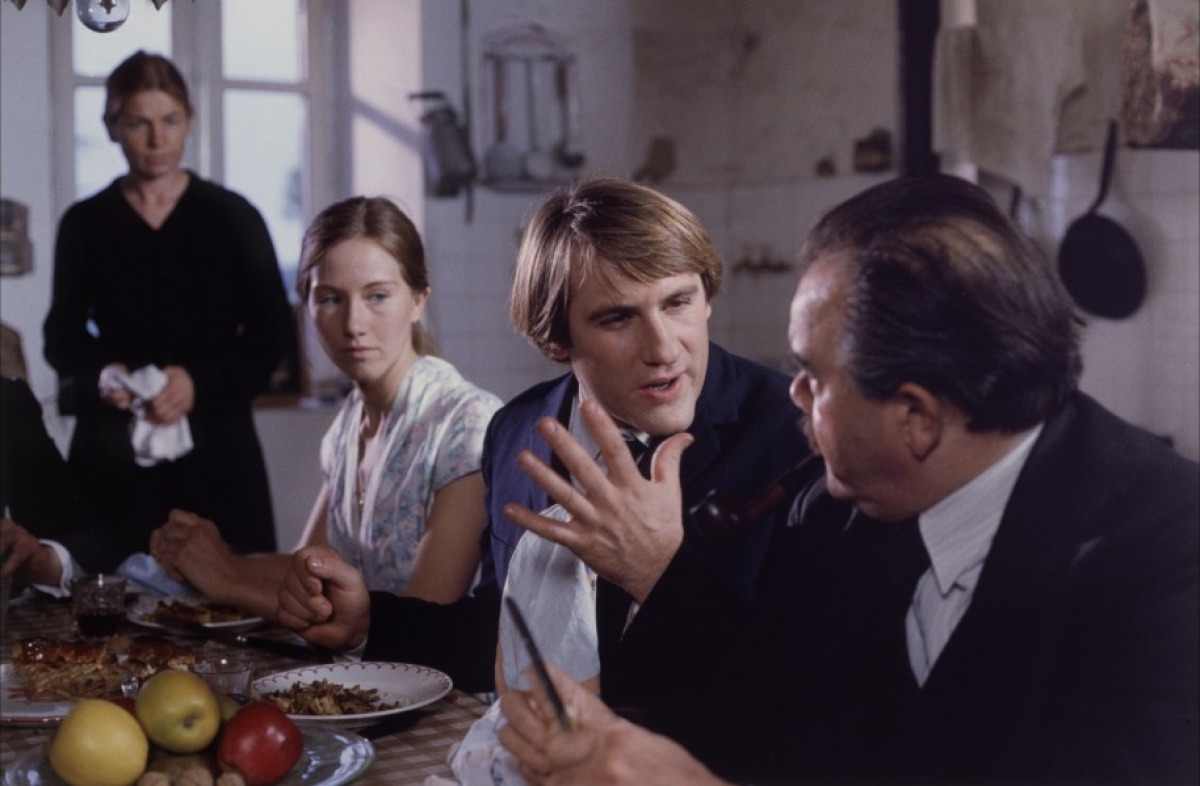
Directed by Alain Resnais and written by Jean Gruault that is based on the writings of Henri Laborit, Mon oncle d’Amerique (My American Uncle) is the story of Laborit’s exploration into the lives of three different people as they all become studies of Laborit’s social experiment. One has a man leaving his family farm for a more corporate lifestyle while a woman becomes an actress and has an affair with an upper-class writer. Starring Gerard Depardieu, Nicole Garcia, Roger Pierre, and Henri Laborit as himself. Mon oncle d’Amerique is an intriguing yet stylish drama from Alain Resnais.

For Henri Laborit’s study of behavior and its impact, he takes on three different subjects for this experiment. The first is a man named Rene (Gerard Depardieu) who lived his life as a farm boy and was raised to live a life of hard work and such. When he leaves the world of farming with his girlfriend Therese (Marie Dubois), he later becomes an accountant for a small textile firm to become a success and has a family. Then when a merger is happening as a man named Veestrate (Gerard Darrieu) is observing the firm, Rene finds himself being threatened with new changes in his life.

The second subject is a woman named Janine who leaves a life being raised by Communist parents to become an actress. After succeeding, she meets the third subject in a political minister named Jean (Roger Pierre). The two have an affair as Jean is trying to create a book based on his own childhood experiences with his grandfather. When Jean leaves his family to be with Janine, Jean’s health starts to get troubles until Janine meets with Jean’s wife Arlette (Nelly Borgeaud) with some news. When Janine ends the affair, she doesn’t see Jean for two years as they see each other at the island Jean had spent his childhood at. Yet, things become complicated as Janine has a new job where she has a meeting with Rene about his new job that would eventually make some big changes for the three subjects.

The film is essentially a multi-layered study about three people making decisions that would change their lives as Henri Laborit studies them and see how humans behave through the situations they’re in. Throughout the film, the narrative shuffles into three or four different storylines with Laborit serving as a narrator to all that is happening along with voice-over narrations from the subject themselves about their own backgrounds. Eventually, the narratives would mesh into two as Janine is the only that interacts with the other two subjects in the film.

Jean Grualt’s screenplay allows the different narratives to cross-cut with one another in order to emphasize Laborit’s study and to compare the three different backgrounds of these individuals. Rene is from a farm as he starts off in a life of hard work and having a religious background while dealing with the fact that his father and uncle have a hard time dealing with the progressing times. When Rene takes on a corporate life where he lives comfortably, that life is threatened by different ideas of change of his own as he finds himself given offers that he couldn’t refuse but remains unsure about his duties. Then there’s Janine and Jean, two people from very different backgrounds who get together for large portion of the film’s second act. Janine comes from a working class family that supports Communism while Jean is from a rich family whose grandfather takes him to an island to study nature.

The film’s title refers to a story that Jean read as a kid thinking that an American uncle has left treasure somewhere in the island he often goes to. Yet, it’s all about the idea of memory as it’s one thing in his childhood Jean clings to as he shares it with Janine late in the film. Their relationship is based on their interest towards each other as Janine would later feel guilty over the fact that Jean leaves his family. It all goes back to Laborit’s decision over the way he studies human behavior and the decisions they make as it comes down to this third act where Janine would briefly meet Rene. By this time, Janine’s life has changed in the two years she had left Jean where the meetings she would make would have an impact on the other subjects she encounters. The script is definitely complex for this study but also doesn’t become boring for the way it’s presented.

Alain Resnais’ direction is truly mesmerizing for the way he presents the film and cross-cutting through the different narratives in the film. For a lot of the dramatic moments, there is a way Resnais would show scenes in different perspectives from where it’s actually happening or how it’s reflected in Laborit’s study. The scenes with Laborit’s allows him to comment on what is happening as he uses lab rats for example where the actors would later dress up as rats to exemplify his point. Meanwhile, each subject draws upon three iconic actors as inspirations. For Jean, it’s Danielle Darrieux while Janine’s inspiration is Jean Marais, Rene is in Jean Gabin. The footage of the actors Resnais chooses would enhance the feelings and emotions that the three subjects are dealing with.

Throughout the film, the subjects are placed into different tests which would impact the development of the film. For Janine, it’s all about what to do when she’s confronted by Arlette and the decision that she would make. For Jean, it’s about what to do once he sees Janine again and what should he do. For Rene, it’s about taking a prestigious job offer that would threaten the comfort of his life. Resnais maintains a controlled intimacy to these dramatic moments while creating some startling compositions for the way they react to their surroundings. Yet, they would all be confronted by some person who is trying to get them to lose control. While it’s a film that does start off in a very difficult manner due to its cross-cutting approach. The overall film is truly a haunting yet exhilarating portrait of human nature from Alain Resnais.

Cinematographer Sacha Vierny does a superb job with the film‘s cinematography from the colorful look of the scenes where Janine acts on stage to the more naturalistic yet lush look of the film for many of its exterior locations. Editor Albert Jurgensen does a great job with the film’s unconventional editing approach with its rhythmic cuts to cross-cut from one story to another without moving too fast. The editing also works for creating montages to compare and contrast between the behaviors of the lab rats and the main subjects in the conflict they deal with as the editing is a major highlight of the film.

Production designer Jacques Saulnier does an excellent job with the differing set pieces created such as the posh world of Jean and the working world that Rene and Janine delve into as well as the set pieces created for Janine‘s stage career. Costume designer Catherine Leterrier does a fantastic job with the dresses that Janine wears on and off-stage as well as the suits the men wear. The film’s score by Arie Dzierlatka is wonderful for its varied arrangements from somber yet broad orchestral pieces to more low-key pieces for some of the dramatic moments on the film.

The casting for the film is incredible that features appearances from Jean Daste as Rene’s boss, Alexandre Rignault as Jean’s grandfather, Laurence Badie as Veestrate’s wife, Bernard Malaterre and Laurence Roy as Jean’s parents, Veronique Silver and Jean Lescot as Janine’s parents, Genevieve Mnich and Maurice Gauthier as Rene, and Gerard Darrieu as the cold Veestrate. For the roles of the younger versions of the subjects, Ina Bedart and Stephanie Loustau as the younger versions of Janine, Guillaume Boisseau and Damien Bossieau as the young Jean, and as the younger versions of Rene, Ludovic Salis and Francois Calvez as they all give terrific performances.

Marie Dubois is very good as Rene’s supportive though grounded wife Therese as is Nelly Borgeaud as Jean’s more dramatic wife Arlette. Henri Laborit is excellent as himself by being calm and relaxed throughout the entirety of the film. Roger Pierre is brilliant as Jean, a bourgeois minister whose life is shaken by his affair with Janine as well as dealing with the fact that he is trying to finish a book that he’s wanted to do for many years. Gerard Depardieu is great as Rene, a farm boy turned textile firm accountant whose life unravels by changing times and uncertainty over the decisions he’s making. Finally, there’s Nicole Garcia in an amazing performance as Janine. Garcia’s performance is filled with the anguish and radiance of a woman trying to please Jean while fulfilling her own ambitions as it’s a truly mesmerizing performance.

Mon oncle d’Amerique is a phenomenal film from Alain Resnais that features an amazing cast led by Nicole Garcia, Gerard Depardieu, Roger Pierre, and Henri Laborit. While it’s not an easy film to follow and it is very unconventional, it is a very fascinating film about the studying of human behavior and ambition. The film is one of Resnais’ finest films for the way he plays with conventional storytelling and the study of characters through the situations they go through. In the end, Mon oncle d’Amerique is a superb yet provocative film from Alain Resnais.

Alain Resnais Films: Night and Fog - Hiroshima Mon Amour - Last Year at Marienbad - (Muriel) - (The War is Over) - (Je T’aime, je t’aime) - (Stavisky) - (Providence) - (Life is a Bed of Roses) - (Love Unto Death) - (Melo) - (I Want to Go Home) - (Gershwin) - (Smoking/No Smoking) - (Same Old Song) - (Not on the Lips) - (Private Fears in Public Places) - Wild Grass - (You Haven’t Seen Anything Yet) - (Life of Riley)

© thevoid99 2011

Monday, September 19, 2011

The Last Metro


Directed by Francois Truffaut and co-written with Suzanne Schiffman, Le Dernier Metro (The Last Metro) is the story of a woman trying to hide her Jewish husband in a theater that they own during the German’s occupation of France in World War II. During this hideout, the woman tries to keep the theater going as she falls for an actor in a production they’re working on. Starring Catherine Deneuve, Gerard Depardieu, Heinz Bennent, and Jean Poiret. Le Dernier Metro is a glorious period film from Francois Truffaut.

It’s 1942 as the Germans have occupied France as rumors emerged that renowned theater director Lucas Steiner (Heinz Bennent) has fled France leaving his prestigious theater in the control of his wife Marion (Catherine Deneuve) and another theater director in Jean-Loup Cottins (Jean Poiret). Marion and Jean-Loup have been given instructions to run a new play called The Woman who Disappeared with notes from Steiner as they work with their regular group of workers and actors. One of the new arrivals is Bernard Granger (Gerard Depardieu) who has been a fan of the theater and wants to act as he successfully gets an audition.

While Marion is trying to deal with notorious critic Daxiat (Jean-Louis Richard), she also has been secretly hiding Lucas in a cellar under the theater so he can hear what is going on. With plans for Lucas to flee to Spain has failed, he decides to help out by giving notes in secrecy to Marion as he hears the rehearsals. With Bernard becoming the perfect leading man for Marion, he also secretly helps out a man named Christian (Jean-Pierre Klein) with work for the Resistance. Still, Bernard manages to win over the people as he tries to flirt with the women including young actress Nadine (Sabine Haudepin) and the set/costume designer Arlette (Andrea Ferreol).

With opening night happening and everyone nervous, the play ends up being a big success though Daxiat’s review was not surprisingly well-received. Though Bernard received praise in his review, he confronted Daxiat as he gets himself in trouble with Marion. With the play still going on as Marion becomes distanced towards Bernard, trouble brews as Gestapo forces are wondering if Lucas had really disappeared. When Bernard reveals to Marion about his involvement with the Resistance, she reveals the secret about Lucas as the three figure out what to do. With Bernard set to leave to join the Resistance and the theater in trouble due to Daxiat’s political connections, Marion begins to realize her feelings towards Bernard as the two try to come to terms with it.

The film’s title refers to the last subway train ride before curfew is imposed by the Nazis during their occupation of France in World War II. Yet, there’s brief mentions about that though it is really about an actress, her husband, and a group of people working at the theater trying to keep it going amidst the chaos of World War II. With help of a new actor, who is involved with the Resistance, a love triangle does start to emerge between this new actor, the leading lady, and her husband who is hiding at a cellar. Yet, Francois Truffaut doesn’t make the film about the love story but rather what these three people and various others do to keep this play together for the people of France in this time of trouble.

Truffaut and co-writer Suzanne Schiffman create a script that allows the audience to see how a play is created as well as the people involved in making it. Aside from the three principle characters, other characters such as the young ingenue, a new director, the costume/set designer, an elderly assistant named Germaine (Paulette Dubost) and a handyman named Raymond (Maurice Risch) help out in creating this play. Though no one knows about the fact that Lucas Steiner is under the stage listening to everything until Bernard learns about it late in the film. It’s as if they’re trying to keep things forward as if he is still there while dealing with a notorious critic and the Nazis who are trying to bring trouble.

Throughout the story, there are things that goes on that does play out casually about the creation of a play where Bernard tried to flirt with a few women while he would have these secret meetings with a Resistance agent. At the same time, there’s little moments throughout the story about how sets are made while Lucas gives out notes to Marion as he listens in. The script allows the characters to be more than who they are while there’s moments of frustration and anguish that goes on. Notably when everyone is trying to deal with the Nazis as they’re forced to not hire Jews though a young girl creating costumes does get a job in secrecy. The script is truly superb for the characters that is created as well as the situations that happens as well as the planning of the play.

Truffaut’s direction is truly potent in the way he creates a film that is about the creation of a play during World War II in occupied France. While it’s shot in a theater with some set pieces recreated for the period, Truffaut creates an intimacy to the direction where he lets the audience be engaged by what is happening. At the same time, he underplays the drama by letting things be a bit more upbeat except in more intense dramatic moments in the film. Particularly as the film has Nazis around though there are no scenes of violence except what is mentioned on paper and on the radio.

The scenes of the play does have a theatricality that is very entrancing to the way Truffaut and his actors tell the story of this woman haunted by the appearance of her son’s tutor. The staging and presentation is very haunting while the stuff that goes on from the audience and backstage makes it very interesting about their reaction. Even as the curtains close to see how the actors feel about each other or what is going on around them. There is a great sense of rhythm to how Truffaut plays up to the small amount of suspense as well as playing to the sense of longing in the way Marion and Bernard look at each other from afar. Overall, Truffaut creates a film that is enchanting for its gorgeous presentation and heartfelt approach to storytelling.

Cinematographer Nestor Almendros does a superb job with the film‘s lush yet colorful cinematography. Almendros’ exquisite work plays to the look of the red curtain for many of the scenes in the theater while creating a mix of gray and black with bits of color for the exteriors outside of the theater. For some dark interior scenes, Almendros’ approach to lighting by using candles or little electric lights allow the film to maintain a sense of beauty that is truly magical as his work is truly the film’s technical highlight. Editor Martine Barraque does an excellent job with the editing as she presents a very straightforward approach to the cutting while using fade-outs for the some of the films’ transitions.

Production designer Jean-Pierre Kohut-Svelko does a great job with the set pieces created for the stage play as well as the look of the theater and hangouts the characters go to. Costume designer Lisele Roos does a spectacular job with the clothes that includes the dresses the women wear including the more posh look of Marion with her fur coats and the red dress she wears for the play. The sound work of Michel Laurent and Michel Mellier is brilliant for the intimacy that is created on the stage to the sirens heard for air raids that pops up a few times in the film. The film’s score by Georges Delerue is wonderful for the wide range of moods it creates from some light-hearted moments with upbeat orchestral arrangements to a more ominous theme for scenes involving Bernard’s work with the Resistance and scenes relating to the Nazis.

The casting for the film is amazing with the ensemble that is created as it includes some appearances from Laszlo Szabo as a Nazi lieutenant, Richard Bohringer as a Gestapo officer, Jessica Zucman as the young Jewish costume maker Marion secretly hires, Martine Simonet as a black-market woman Raymond meets, Henia Suchar as Marion’s hotel chambermaid, Renata Flores as a German singer at a club, Franck Pasquier as a child actor in the play, and Jean-Pierre Klein as Bernard’s Resistance contact Christian. Other notable small yet memorable supporting roles include Maurice Risch as the funny yet loyal technician Raymond, Paulette Dubost as Marion’s elderly yet kind assistant Germaine, and Jean-Louis Richard as the politically-connected critic Daxiat.

Sabine Haudepin is very good as Nadine, a young ingenue who is trying to maintain her loyalty to the company while dealing with the numerous job offers she’s getting. Andrea Ferreol is wonderful as Arlette, the set/costume designer who tries to deal with the flirtations of Bernard as well as the demands of the play. Jean Poiret is excellent as Jean-Loup Cottins, the play’s director who tries to deal with the presence of Daxiat as well as trying to get the play in the same vision of Lucas Steiner. Heinz Bennent is superb as Lucas Steiner, a revered Jewish playwright who is forced to hide as he listens from a cellar on the rehearsals of his own play while dealing with the fact that he’s isolated with only Marion to talk to.

Finally, there’s the duo of Gerard Depardieu and Catherine Deneuve as they each give incredible performances in the respective roles of Bernard and Marion. Depardieu displays a wonderful sense of charm and sensitivity to a man who loves to act but also tries to deal with his role working with the Resistance. For the stage performance, Depardieu brings a very restrained yet hypnotic approach which really shows the complexity of his range as an actor. Deneuve gives a truly elegant performance of a woman dealing with everything as she also tries to help her husband in his isolated state. Deneuve also creates a stage performance that intense in its melodrama while proving to be very tough. While Deneuve has great rapport with her other actors, the scenes she and Depardieu have are magical as they really work off each other and seem to enjoy themselves as they’re a major highlight of the film.

Le Dernier Metro is a sensational yet entertaining film from Francois Truffaut. Featuring a top-notch ensemble cast led by Catherine Deneuve and Gerard Depardieu as well as great technical work led by Nestor Almendros’ rich cinematography. It is truly one of Truffaut’s finest films in his revered career for the way he creates a World War II period piece and making it into a compelling dramatic film. While it may not have the looseness of his early films of the 1960s, it is a film where Truffaut has refined his technique to bring something more to a World War II drama. In the end, Le Dernier Metro is a mesmerizing film from the late, great Francois Truffaut.


© thevoid99 2011

Sunday, September 18, 2011

The Wild Child


Based on the novel by Dr. Jean Itard, L’Enfant sauvage (The Wild Child) is the true story of a late-18th century doctor trying to help a child who had been raised in the woods. In hopes to civilize him, the doctor tries to figure out how to help a boy that seems lost. Directed and starring Francois Truffaut as Dr. Jean Itard with an adapted script written by Truffaut and Jean Grualt, the film is an examination of a man trying to help a boy who was lost in a world outside of humanity. Also starring Jean-Pierre Cargol, Francoise Seigner, and Jean Deste. L’Enfant sauvage is an extraordinary yet touching film from Francois Truffaut.

A young, naked boy (Jean-Pierre Cargol) is trekking for food around the woods as he has scared a woman gathering food. With hunters and dogs capturing the boy, his odd yet savage behavior has been the talk of the town. The news of the boy has reached Dr. Jean Itard at a Parisian school for deaf-mutes who is eager to learn about the boy. Once the boy arrives to the school, he is treated badly kids and an opportunistic orderly as Dr. Itard asks Professor Philippe Pinel to take the boy in his care. Pinel reluctantly does so as Dr. Itard takes the boy to his home as he and his maid Madame Guerin (Francoise Seigner) care for him.

In hopes to create a report on the boy, Dr. Itard, with Madame Guerin’s help, try to civilize the boy as he starts to act less savagely. Dr. Itard attempts to educate the boy, now called Victor, in hopes he can become civilized though progress becomes slower than Dr. Itard had realized. During these lessons, Dr. Itard and Madame Guerin patiently help Victor act human as Dr. Itard uses methods to educate the boy to try and speak or to read. Despite the slowness of Victor’s ability to learn, Dr. Itard realizes that the boy is able to become human.

The film is about a doctor in the late 1798 trying to help a young boy who had been found in the woods and act like a savage. During the course of the film, Dr. Itard narrates the film to explain the progress of Victor as well as reveal his own frustrations and fears. Though there’s not a lot of dialogue in parts of the film to express Victor’s lack of ability to speak properly, it does help engage the audience to understand the behavior of the young boy as well as Dr. Itard.

Francois Truffaut and co-screenwriter Jean Grualt create a script where it’s all about a man trying to study this savage boy in the idea that he can help him. Placed at a time when people who might seem deaf and dumb to be inadequate, the script does give in to the idea of how society would be interested in a child like Victor for selfish reasons. Yet, it’s in Dr. Itard and his willingness to help the boy that makes the story very compelling. While Dr. Itard is a flawed man who has a hard time trying to understand Victor’s behavior as well as the fact that his attempt to be stern comes with consequences. It’s only for Dr. Itard to see what he is trying to do though he admits to his own reluctance in being disciplinary to the boy. The script works since it is study of a man struggling to do what is right for a troubled boy and his idea that anyone can be helped no matter the circumstances.

Truffaut’s direction is superb for the way he allows the film to start off very loosely with little-to-no dialogue to emphasize Victor’s animalistic behavior. While it’s a film set in 1798, the set pieces are sparse in favor of a lot of scenes in that are set in a countryside. It’s all about Truffaut creating an environment where Victor can roam as Dr. Itard observes what is happening. While Truffaut goes for a much more straightforward approach in terms of framing and creating scenes. He also adds a bit of style to the filmmaking such as an iris zoom shot in order for the audience to see Victor progressing into a human being. Yet, Truffaut remains the observer throughout the film as he shoots Victor from afar whenever the boy is alone to ponder what the boy is doing. It’s truly touching in the way Truffaut directs with such a simple presentation as the overall work that he does is magnificent.

In his first collaboration with Truffaut, cinematographer Nestor Almendros does a gorgeous job with the film’s black-and-white photography. Almendros gives the film a majestic look for many of the film’s exterior scenes that involves lots of shots in the forest as well as a wonderful mix of black, white, and gray for the rainy scenes. For scenes that just involves candlelight, Almendros creates a look that is very simple yet entrancing without overstating the scene or underplaying it. Almendros’ photography is a real highlight of the film as the work he put was among one of the reasons why Terrence Malick wanted him for Days of Heaven.

Editor Agnes Guillemot does an excellent job with the editing which is mostly straightforward though fade-outs and iris closures are used as transitions which help the film out quite smoothly. Set decorator Jean Mandaroux does a very good job with the look of Dr. Itard‘s home as well as some of the props created for the film. Costume designer Gitt Magrini does a wonderful job with the costumes to complement the period of 1798 while letting Victor wear something simple. The sound work of Rene Levert and mixer Alex Pront is great for emphasizing a calm environment for the nature scenes as well as playing to the way Dr. Itard is studying Victor‘s hearing. The film’s music is largely dominated by the works of Antonio Vivaldi which is amazing as it plays to the sense of innocence that surrounds the relationship between Dr. Itard and Victor.

The casting is brilliant as it features appearances from filmmaker Claude Miller and his wife Annie as friends of Dr. Itard, Mathieu Schiffman as an opportunistic orderly at the deaf institute, and Jean Daste as Dr. Itard’s mentor Professor Pinel. Francoise Seigner is great as Madame Guerin, Dr. Itard’s maid who acts as a maternal figure for Victor as well as a conscience for Dr. Itard. Francois Truffaut is excellent as Dr. Itard as Truffaut gives a compassionate yet determined performance as man trying to help out this poor boy while realizing how hard it will be. Finally, there’s Jean-Pierre Cargol who is phenomenal as Victor. Though he barely speaks a word in the film, Cargol is just outstanding for the way he is able to create a character whose performance that is entirely physical and using hand gestures to communicate. It’s one of the best performance ever created by a child as well as one of the toughest on film.

L’Enfant sauvage is an incredible film from Francois Truffaut featuring a mesmerizing performance from Jean-Pierre Cargol. The film is definitely one of Truffaut’s finest films of his career for the way he creates a sensitive story about Dr. Jean Itard’s study of this savage boy. The film is also one of Truffaut’s more accessible films as it has a simple approach to storytelling that appeals to a wider audience as it’s something that kids could be able to see. In the end, L’Enfant sauvage is touching yet exhilarating film from Francois Truffaut.


© thevoid99 2011

Saturday, September 17, 2011

Le Samourai


Originally Written and Posted at Epinions.com on 1/13/10 w/ Extensive Revisions.


One of the key figures of French cinema, Jean-Pierre Melville was one of the first film directors to create films outside of studios and through his own means. A major influence to the French New Wave movement, Melville's idea to shoot on real locations was something different to his work in comparison to the French films being made during the 1950s. In the 1960s, he was revered by many as making acclaimed films throughout the decade. One of them would be considered one of his finest which featured of France's best actors of that time in Alain Delon entitled Le Samourai (The Samurai).

Directed by Jean-Pierre Melville and based on the novel The Ronin by Joan McLeod. Le Samourai tells the story of a hitman who lives by a strict code of rules and maintains a certain form of perfection in his job. During an assignment where something goes wrong as he finds himself in trouble. Adapted into script by Melville and Georges Pellegrin, the film is a mixture of 1940s American crime films with 1960s French New Wave style along with the mythology of the Japanese samurai as Alain Delon plays the title character. Also starring Francois Perier, Nathalie Delon, and Cathy Rosier. Le Samourai is a smart, hypnotic, and stylish thriller from Jean-Pierre Melville.

Jef Costello (Alain Delon) is a hitman that lives in an apartment with a little caged bird that's based on a strict lifestyle from the ideas of the samurai. For one particular assignment, Costello steals a car with his set of keys to find which one to start the car as he goes to a secret place to get a gun, money, and a new license plate for the job. After visiting his girlfriend Jane (Nathalie Delon) to create an alibi of where he was at between 7PM and 2AM as he goes to a nightclub to kill its owner. He succeeds only to be seen by the nightclub's pianist Valerie (Cathy Rosier) as he is suddenly pursued by the police and caught. Despite having no criminal record, the police superintendent (Francois Perier) believes that Costello fits the description of the assassin.

During a line-up description where Valerie attends, the bartender (Robert Favart) and a couple of witnesses claim it's Costello as Jane is asked to come to the police station. Yet, Jane's former lover Weiner (Michel Boisron) claims to have seen someone fitting Costello's description at an apartment at around 1:45 AM as Costello was let go due to lack of evidence. While the superintendent decides to have Costello followed, Costello decides to meet his employer (Jacques Leroy) at a bridge where things go wrong as he is aware that he's followed. Costello hopes to meet Valerie into why she didn't say anything as an attraction ensues.

With the superintendent hoping to catch Costello by placing a bug in his apartment, Costello goes on the search for the man his employer is working for as paranoia starts to happen. Based on evidence found at Costello's apartment, the superintendent and his men question Jane who realizes that something is wrong. With the cops tailing him and a man wants him for a new contract to kill someone, Costello makes a move where he would get himself in the clear.

The film is a tribute of sorts to 1940s gangster films where the character of Jef Costello has a look that is very 1940s with a Fedora hat, a suit, and trench coat. Yet, with its French New Wave aesthetics and a tone that is similar to Japanese cinema. It's a film that definitely transcends various styles while taking a genre and turning into something that is very different from what audiences would expect in a thriller. It doesn't have a lot of action nor does it have any fast-building moments of suspense. It's a film that takes it time like the character of Jef Costello does in planning things out.

The screenplay that Jean-Pierre Melville and Georges Pellegrin create is definitely inspired by the works of Japanese cinema. Notably the samurai films of Akira Kurosawa where the film begins with a fictional quote that is attributed from The Book of Bushido. It is in that quote where audiences get to know who Jef Costello is for the first 10 minutes which almost has no dialogue at all. A man who lives a certain lifestyle. Not with a lot in his apartment and by a strict code of rules. A perfectionist who does his job and that is it. He creates alibis, steal cars with set of keys that where he needs to find the right one. Go somewhere far away from the city of Paris to get a gun, a bit of money, and the license plate removed.

Then when a mistake happens when he is suddenly seen, everything goes to hell and tries to get himself out of trouble only to realize he's in a whole lot of trouble from both the cops and the people who hired him to kill a man. At the same time, there's a police superintendent who is an antagonist of sorts but is one with morals and lives by his own set of rules. Knowing that he Jef Costello could be the killer of the nightclub owner, he does what he has to do to get the truth. Even if he has to harass a young woman with threats and a chance to have her name cleared up. The script is about what men will do for their own means as it's really a battle of wits between two very disciplined men.

Melville's direction is definitely full of stylish shots and striking compositions to give the film a tone that is quiet and hypnotic. The first ten minutes is nearly dialogue free until Jef comes to Jane's apartment where she only says his name near the 10 minute mark. A lot of what happens is just Jef Costello doing what he's doing in preparation for what he's going to do. Yet, there's not much dialogue that Jef Costello says throughout as he remains this stoic persona who maintains his cool unless he gets into some trouble where he makes some moves of his own. Melville's camera is always on something from the shot of objects to establishing shots that would prove to be crucial to the story and what is going to happen. Even in scenes where there's great tracking shots that move slowly to what Costello is doing or what is going on around him. The result is Melville maintaining a sense of style and wit into his direction that works to the fullest.

Cinematographer Henri Decae does an amazing job with the film's colorful look with the dark look of Jef's apartment to the bright colors of the apartments where Valerie and Jane stays in. The exterior look of Paris is often filled with low lights depending on its mood which plays up to what Melville needed while the scenes in the police station are shot with a sense of claustrophobia and lights that conveys a far chilling mood. Decae's work is truly superb in its lighting schemes and camera movements for what Melville needed. The editing by Monique Bonnot and Yolande Maurette is great in its slow yet methodical pacing for the first act of the film to more fast-paced cuts in some of the film's action sequences. With the use of rhythmic jump-cuts to keep some of the momentum going, one of the film's striking moments in the editing is the use of side-wipe transitions which is definitely a tribute to the work of Akira Kurosawa, who is famous for those transitions as the editing works in maintaining its sense of style.

The production design/set decoration work of Francois de Lamothe is brilliant for its mood and personalities of where the characters live in. From the dark yet open-space look of Jef's apartment to the stark yet clean look of the police station and office. The art direction and set design is truly fascinating while the look of the club in its clean, glamour look is the epitome of cool but also something that isn't entirely accessible. The sound editing of Robert Pouret is excellent for its sense of atmosphere from the tense feel of the police station to the chaotic work that is Paris in its trains and the city itself. The nightclub scenes are presented in an intimate fashion with jazz music playing in the background throughout. The music score of Francois de Roubaix is wonderful for its jazzy feel with its sense of melancholia and nightclub rhythms that keeps the momentum going in some places while it is mostly played for a calm, suspenseful feel.

The casting is superb with some memorable small roles from Andre Salgues as a garage keeper, Michel Boisrond as Jane's other lover Weiner, Robert Favart as the nightclub's barkeeper, Catherine Jourdan as a hatcheck counter at the club, Jacques Leroy as an employer of Jef, and Jean-Pierre Rossier as the man who ordered the hit on the nightclub owner. Cathy Rosier is very good as Valerie, a jazz-pianist who is smitten by Jef while being the only real witness to see what had happened as she is very understated throughout the film. Nathalie Delon is also good as Jane, Jef's secret lover who maintains his alibi while being very cool when she is being confronted by the police superintendent.

Francois Perier is great as the superintendent who suspects Jef Costello while trying to do all the he can with some rules to catch the guy. Perier is often very calm and at times, plays it cool a bit in his scene with Nathalie Delon as it is definitely remarkable role for the late, great actor. Finally, there's Alain Delon in what is definitely one of his most iconic performances as Jef Costello. Though restrained for the most part and not with a lot of dialogue to speak. Delon's stoic performance is nothing short of cool as he maintains a sense of discipline and charisma to his character. It is definitely one of Delon's finest work of his career.

Released in 1967, the film was considered to be one of Jean-Pierre Melville's finest work. The film would have such an influence on young filmmakers that several paid tribute to the film in various ways. John Woo payed tribute to it with his 1989 film The Killer while he would end up writing an essay for the film's 2005 Criterion release. In 1999, Jim Jarmusch paid tribute to Melville and the film with his own samurai-style hitman story called Ghost Dog: The Way of the Samurai with Forest Whitaker's character maintaining the same code of rules and a set of keys just like the Jef Costello character.

Le Samourai is a cool, stylish film from Jean-Pierre Melville featuring a phenomenal performance from Alain Delon. Fans of hitman stories and stylish thrillers will no doubt enjoy this film while it also serves as a worthy introduction to the works of both Jean-Pierre Melville and Alain Delon. It's a film that kind of gets to a slow start at first but once the audience gets into it, it become a whole, worthwhile experience. In the end, Le Samourai is a fantastic, unconventional film from Jean-Pierre Melville.

Jean-Pierre Melville Films: 24 Hours in the Life of a Clown - Le silence de la mer - Les Enfants Terribles - (When You Read This Letter) - Bob le Flambeur - (Two Men in Manhattan) - (Leon Morin, pretre) - (Le Doulos) - Magnet of Doom - Le deuxieme souffle - Army of Shadows - Le Cercle rouge - (Un flic)

© thevoid99 2011

Friday, September 16, 2011

Made in U.S.A.


Based on The Jugger by Donald E. Westlake, Made in U.S.A. is the story of a young woman who travels to Atlantic City to find her boyfriend as she finds herself in a world of trouble filled with intrigue and political turmoil. Written for the screen and directed by Jean-Luc Godard, the film is a stylish on the American crime films Godard love as it’s inspired by Howard Hawks’ The Big Sleep as well as Westlake’s novel. The film also marks the seventh and final feature-length collaboration between Godard and his then-wife muse Anna Karina as Paula Nelson. Also starring Jean-Pierre Leaud, Yves Afonso, Laszlo Szabo, and a special appearance from Marianne Faithfull. Made in U.S.A. is a stylish yet entrancing film from Jean-Luc Godard.

It’s 1969 as Paula Nelson travels to Atlantic City as she learns that her boyfriend Richard P. (Jean-Luc Godard) is dead. Trying to find out what happened and why, she meets with Edgar Typhus (Ernest Menzer) who gives her some information about Richard’s death as his nephew David Goodis (Yves Afonso) and his Asian girlfriend (Kyoko Kosaka) visit. Later going to a bar, Paula meets a gangster named Richard Widmark (Laszlo Szabo) and his assistant Donald Siegel (Jean-Pierre Leaud) about more information as she goes to a villa where Richard P. frequented at where she encounters Widmark about Richard’s disappearance.

With Paula now a suspect over the death of Typhus and David’s girlfriend with David believing that Paula did it, Widmark helps her out though a private investigator named Aldrich (Claude Bouillon) remains suspicious. Though she suspects Widmark, Paula believes that Richard was killed over his political beliefs as more complications occur. With the often silent Siegel revealing some unexpected information, Paula takes charge into what happened to Richard as she turns to Aldrich and David for help.

The film is about a Leftist journalist/P.I. who goes on the search for the story about her boyfriend’s death and its supposed political reasons. Yet, it’s really a movie about a woman caught up in a world where she is surrounded by ideals about advertising, pop culture, and politics. While the film is set in Atlantic City, it’s really set in a Parisian suburb where Atlantic City plays more like a metaphor of American culture and its impact of Europe. Throughout the film, Paula Nelson talks in metaphors about the idea that advertising is really a form of Fascism while she meets various characters including a man (Remo Forlani) who talks with a bartender (Marc Dudicourt) about the objects at a bar.

The unconventional yet minimalist script allows Godard to create a story where it’s not really about the mystery but the study of a woman in a world where her views start to blur her idea of reality and fiction. There’s moments when the fourth wall of the film breaks as Paula says that this film is “Walt Disney with blood”. There’s characters that are named after either filmmakers, actors, or political figures while there’s also a lot of literary references to what Paula describes the film as there’s a lot of loose scenes that goes on including moments where Marianne Faithfull’s voice is heard singing As Tears Go By in a capella as she makes a cameo appearing at the bar scene.

Godard’s direction in the film is definitely mesmerizing for the way he maintains a much more controlled sense of presentation for this film. Throughout the film, there’s moments where Godard just let things happen while barely moving the camera or just keeping things still as if the characters are talking to the camera. There are elements of unconventional ideas in the film such as Richard’s last named drowned out by sounds of airplanes flying or a car beeping. In scenes where Donald is talking, it’s covered by Paula’s voice-narration which pop ups now and then to emphasize what she is going through.

Since the film is called Made in U.S.A., there is a vibrancy to the way the film looks as Godard employs the three colors of the U.S. and French flags. Particularly to emphasize the former in terms of its cultural influence though it’s set in the latter as there is a conflict over the America’s influence on French pop culture. The characters are often shown with these any of those three colors behind them to emphasize the world they’re in. The presentation is very mesmerizing even though it’s a film that is difficult to comprehend due to its unconventional approach. The political context might seem dated though it does make sense about the way the world is in terms of how advertising might be considered a form of Fascism. Overall, it’s an abstract but intoxicating film from Jean-Luc Godard.

Cinematographer Raoul Coutard does a gorgeous job with the film‘s vibrant photography that is awash with gorgeous colors from the locations to the dresses that Paula wears. Coutard’s photography also heightens the look for many of its exterior settings while keeping it more straightforward in its interior setting as he is the major highlight of the film’s technical work. Editors Francoise Collin and Agnes Guillemot do a great job with the editing which is mostly straightforward with a few jump-cuts in order to go for a more controlled though energetic tone. The sound work by Rene Levert and Jacques Maumont is superb for the way sound is placed on some parts of the dialogue along with natural sound in the locations that are in. The film’s music is mostly dominated by classical pieces from Ludwig Van Beethoven and Robert Schuman along with Marianne Faithfull’s As Tears Go By.

The casting is amazing for the people that appears in the film including Marianne Faithfull as herself along with Sylvain Godet and Jean-Pierre Biesse as a two lowly gangsters respectively named Robert MacNamara and Richard Nixon, Marc Dudicourt as a bartender, Remo Forlani as a man in the bar, Kyoko Kosaka as David’s Asian girlfriend, and Jean-Luc Godard as the voice of Richard P. Other notable small roles include Claude Bouillon as Inspector Aldrich, Ernest Menzer as Typhus, Jean-Pierre Leaud as the helpful Donald Siegel, and Yves Afonso as the wannabe writer David Goodis. Laszlo Szabo is very good as Richard Widmark, a shady man who helps out Paula though he remains secretive in what he’s doing. Finally, there’s Anna Karina in a mesmerizing performance as the metaphorical yet take charge Paula Nelson. Karina displays a restrained yet magnetic performance as a woman that tries to make sense of everything while proving to be no push-over as it’s a magnificent performance for the actress.

Made in U.S.A. is an extraordinary film from Jean-Luc Godard that features a radiant performance from Anna Karina. The film is definitely considered one of his best films of his revered 1960-1967 period though it’s really a transitional film of sorts as it shows Godard leaning towards political themes that would be prevalent in his post-1967 films. Yet it is a film that plays into the idea of American culture overwhelming a world that isn’t American as well as a woman trying to make sense of things in a crime-setting drama. In the end, Made in U.S.A. is a rich yet dazzling film from Jean-Luc Godard.

Jean-Luc Godard Films: All the Boys Are Called Patrick - Charlotte et son Jules - Breathless - The Little Soldier - A Woman is a Woman - Vivre sa Vie - The Carabineers - Contempt - Band of Outsiders - A Married Woman - Alphaville - Pierrot Le Fou - Masculine Feminine - Two or Three Things I Know About Her - La Chinoise - Weekend - One Plus One (Sympathy for the Devil) - (Joy of Learning) - (British Sounds) - Tout va Bien - (Letter to Jane) - (One A.M.) - (Number Two) - (Here and Elsewhere) - (Every Man for Himself) - (Passion) - (First Name: Carmen) - Hail, Mary - (Soft and Hard) - (Detective) - (King Lear (1987 film)) - (Keep Your Right Up) - (Nouvelle Vague) - (Allemagne 90 neuf zero) - (JLG/JLG - Self-Portrait in December) - For Ever Mozart - (Historie(s) de Cinema) - (In Praise of Love) - (Notre musique) - (Film Socialisme) - (Adieu au Language) - (The Image Book)

© thevoid99 2011