Showing posts with label kris kristofferson. Show all posts
Friday, December 23, 2016
Convoy (1978 film)
Directed by Sam Peckinpah and written by Bill L. Norton, Convoy is the story of a group of truckers who band together to do a convoy and deal with a corrupt sheriff. Based on C.W. McCall song of the same name and the CB radio-fad of the 1970s, the film is an action-adventure film that revolves around the craze into a road-like adventure. Starring Kris Kristofferson, Ali MacGraw, Burt Young, Madge Sinclair, Franklyn Ajaye, Burt Young, Seymour Cassel, and Ernest Borgnine. Convoy is a silly and uninteresting film from Sam Peckinpah.
The film follows around a trucker whose encounters with a corrupt sheriff forces him to create a convoy from Arizona to Texas in order to avoid persecution during a brawl at a restaurant. It’s a film with a simple story but it never makes sense into what is going on into why these truckers are doing a convoy across the American Southwest while trying to avoid the authorities. The film’s screenplay has a lot that is happening but it often feels very derivative of the car chase films of the 1970s. Most notably Smokey and the Bandit but with lots of trucks and a more devious antagonist as it never really provides any idea of what these truckers are doing a convoy for as its protagonist Rubber Duck (Kris Kristofferson) becomes some unlikely folk hero. Though Rubber Duck is definitely the most interesting character of the film along with a few fellow truckers, they’re not given much to do or be fleshed out more while Duck’s traveling companion in a photographer Melissa (Ali MacGraw) is just some love interest.
While there are elements in Sam Peckinpah’s direction that bear some of his visual trademark in terms of his elaborate action set pieces and slow-motion approach to action. Yet, it feels quite derivative as it goes overboard and doesn’t really do much to help tell the story while it is clear that there was some tampering into what Peckinpah was trying to do. While there are some wide shots of the locations with some second unit direction provided by James Coburn. The direction is often focused on close-ups and medium shots to capture what goes on inside a truck as well as the world of the truck stops and camps where they go into. Yet, they don’t really do much visually where Peckinpah wanted to balance not just some of the action but also the humor as the latter feels forced. When it reaches it climax in this showdown between Rubber Duck and the sheriff known as Cottonmouth (Ernest Borgnine), it does feel quite derivative as it is overly stylized and it is followed by something that is quite lame as it pertains to its ending which is definitely something Peckinpah doesn’t do. Overall, Peckinpah creates a messy and ridiculous film about a trucker leading a convoy against a vile sheriff.
Cinematographer Harry Stradling Jr. does nice work with the film’s cinematography as it play into the gorgeous sunny locations of the American Southwest in the day along with some lighting for the scenes set at night. Editors Garth Craven and John Wright do OK work with the editing where it does showcase what is happening yet its approach in the slow-motion cuts and some of the fast-cutting is just downright terrible. Production designer Fernando Carrere, with set decorator Frank Lombardo and art director J. Dennis Washington, does nice work with some of the interior of the trucks and truck stops as well as the truckers‘ camp in the film‘s second half. Sound mixer William Randall does some fine work with the sound as it play into the way the horns sound as well as the truck engines and other moments involving the action. The film’s music by Chip Davis is pretty good for its mixture of orchestral music with bits of country to play into the world of the American Southwest while music supervisor Bill Fries creates a soundtrack filled with music from Glen Campbell, Merle Haggard, Crystal Gayle, Kenny Rogers, Doc Watson, Anne Murray, and a new version of the titular song by C.W. McCall.
The casting by Lynn Stalmaster is superb for the ensemble that is created despite its lackluster script as it feature some notable small roles from Jorge Russek as a brutal sheriff from Texas, Tommy Bush as a sheriff trying to help Cottonmouth, Donnie Fritts as the Reverend Sloane who rides a bus and joins the convoy with his band of hippie churchgoers, Cassie Yates as Rubber Duck’s waitress girlfriend Violet, and Seymour Cassel as New Mexico governor Jerry Haskins who wants to use Rubber Duck for his own political campaign for the senate. Franklyn Ajaye and Madge Sinclair are good in their respective roles as the African-American truckers Spider Mike and Widow Woman with the former wanting to get home to his wife for the birth of his child and the latter being this quirky, Rastafarian-type of gal.
Burt Young is terrific as Bobby aka Pig Pen/Love Machine as the comic relief who is also a realist as he is this trucker that knows what is going on and can smell bullshit from miles away. Ernest Borgnine is terrible as the sheriff Cottonmouth as a sheriff that is quite dark yet is often seen as a comic foil as Borgnine is unfortunately put into some very humiliating moments. Ali MacGraw is uninspired as Melissa as a photographer with a bad haircut who is just there as a reluctant love interest that is trying to understand what Rubber Duck is doing as it’s just a badly written character. Finally, there’s Kris Kristofferson in a wonderful performance as Rubber Duck as a truck driver who has had enough of Cottonmouth’s abusive attitude as he decides to go on the run unaware that he’s created a convoy even though it’s a role that isn’t well-written either.
Convoy is a pretty bad film from Sam Peckinpah that bear little of his oeuvre as well as the fact that it’s just a film based on a fucking novelty song. It’s a film for anyone interested in the CB craze of the 70s might want to take an interest in but this is definitely an inessential film from Peckinpah as it shows a director not in total control. In the end, Convoy is just a terrible film from Sam Peckinpah.
Sam Peckinpah Films: The Deadly Companions - Ride the High Country - Major Dundee - Noon Wine - The Wild Bunch - The Ballad of Cable Hogue - Straw Dogs - Junior Bonner - The Getaway - Pat Garrett and Billy the Kid - Bring Me the Head of Alfredo Garcia - The Killer Elite - Cross of Iron - The Osterman Weekend - The Auteurs #62: Sam Peckinpah
© thevoid99 2016
Wednesday, December 09, 2015
Bring Me the Head of Alfredo Garcia
Directed by Sam Peckinpah and screenplay by Peckinpah and Gordon Dawson from a story by Peckinpah and Frank Kowalski, Bring Me the Head of Alfredo Garcia is the story of an ex-army officer who joins in a quest to find the head of a dead man for a bounty where he encounters all sorts of trouble. Though it is set in a contemporary setting, the film is a Western of sorts where a man deals with many others to collect the bounty for a crime lord who wants the head of this dead man. Starring Warren Oates, Isela Vega, Robert Webber, Gig Young, Helmut Dantine, Kris Kristofferson, and Emilio Fernandez. Bring Me the Head of Alfredo Garcia is an absolutely violent and rapturous film from Sam Peckinpah.
When a crime lord learns about his daughter has been impregnated by a man named Alfredo Garcia, he puts a bounty on the man’s head where a group of criminals get a former American army officer to do the job unaware that the reward is a million dollars. It’s a film where a man knows who Garcia is as he’s been tasked to do a deed where he’ll be paid handsomely as he brings along his prostitute girlfriend who also knows Garcia where the two go on a road trip through Mexico. Yet, they would also encounter bounty hunters and all sorts of people who either know about the bounty or those that just want to cause trouble.
The film’s screenplay isn’t about this trip that Bennie (Warren Oates) has to make with Elita (Isela Vega) but also the chance for a good life with the money he’s to be given. Still, Bennie has to endure all sorts of things as he’s seen a lot of good and bad things in his life where he wants something new and different which is among the reasons why he took the job. While trekking through Mexico where he would encounter bikers, strange men, and all sorts of people. He wonders why is people interested in Garcia who is already dead and why the need for his head? Especially in the film’s second half where he would retrieve the head despite many complications but also a trail of bodies that include some innocent people. It plays into a man being caught in the middle of a quest where he eventually finds out why the need for the head of a dead man.
Sam Peckinpah’s direction is definitely intense in terms of the level of violence and suspense that plays out into the film. Especially as it opens very serenely where a young pregnant woman looks out at the river of her family villa until her father known as El Jefe (Emilio Fernandez) demands to know who the father of the child is. It plays into this air of suspense where many men from different parts of Mexico along with some American and European criminals who all go around Mexico to find anyone who knows Alfredo Garcia. All of this happens in the first 10-15 minutes of the film as it establishes what is going on where a couple of Americans meet Bennie at a bar he runs where he’s playing piano as they ask him about Garcia. Peckinpah’s approach to close-ups and medium shot help play into the intimacy that occurs including Bennie’s relationship with Elita where it’s playful at times but also a bit one-sided considering that Elita sleeps with other men much to Bennie’s chagrin. By the time the film moves into the Mexican countryside where Peckinpah takes great advantage of the desert locations with its wide and medium shots. He also knows how to build up moments of suspense such as an encounter that Bennie and Elita would have with a couple of bikers that would end violently.
It would set the tone for things to come where Peckinpah does infuse elements of style into the way he approaches the violence where some of it is quite gruesome. Especially in the third act as it involves shootouts and such where Bennie is forced to come to terms with what he’s doing as well as why Garcia’s head means so much to this crime lord in the middle of Latin America. It all plays into Bennie being someone of the old ways where it’s the new world that is coming into play where the new world order doesn’t care how many lives are worth for the head of one man but for Bennie. These lives actually matter as it shows that money can’t buy everything. Overall, Peckinpah creates a riveting yet wild film about a man going on a trip to retrieve a dead man’s head.
Cinematographer Alex Phillips Jr. does excellent work with the film’s cinematography with its usage of grainy film stock to play up the brooding tone of the film as well as the griminess of the locations in Mexico with its approach to natural lights for its daytime/nighttime exterior scenes. Editors Dennis Dolan, Sergio Ortega, and Robbe Roberts do brilliant work with the editing with its stylish usage of jump-cuts, slow-motion cuts, and other rhythmic cuts to play into the action as well as some of the dark and violent moments of the film. Art director Agustin Ituarte does nice work with the set design from the look of a hotel suite where Bennie is given the job to the home of El Jefe.
Sound editor Michael Colgan does superb work with the sound from the usage of sound effects in the shootouts to the raucous atmosphere in the bars and places the characters go to. The film’s music by Jerry Fielding is amazing for its mixture of traditional Mexican folk music with bits of orchestral flourishes that play into the world of Mexico and the aspects that is the West.
The casting by Claudia Becker is fantastic as it features some notable small appearances from Janine Maldonado as El Jefe’s pregnant daughter and Kris Kristofferson as a biker who harasses Elita. Emilio Fernandez is superb as El Jefe as this crime lord who puts a bounty for whoever gets the head of Alfredo Garcia while Helmut Dantine is terrific as a European businessman who orders Bennie to find Garcia’s head where he will pay him a good sum as he wants to deliver the head to collect the bounty. Robert Webber and Gig Young are excellent in their respective roles as the American hitmen Sappensly and Johnny Quill who meet with Bennie early in the film in finding Garcia as they later track him down to collect the bounty.
Isela Vega is brilliant as Elita as this prostitute who knew Garcia as she reluctantly joins Bennie on the trip where she copes with the encounter with the bikers as well as what Bennie is going to do though she too craves for a better life. Finally, there’s Warren Oates in a phenomenal performance as Bennie as this former Army officer who likes to play piano and get drunk where he is given a chance to make money by retrieving a dead man’s head where he gets more than he bargains for where Oates is quite tough but also shows a vulnerability that is rarely displayed as it is Oates in his greatest performance.
Bring Me the Head of Alfredo Garcia is a spectacular film from Sam Peckinpah that features an incredible performance from Warren Oates. It’s a film that is absolutely uncompromising in terms of violence and the inhumanity a man faces in his quest to retrieve a man’s head. Even as it is presented with a sense of grittiness and excessive violence that isn’t afraid to be out there and to the fucking point as it is a pure example of “fuck you” cinema. In the end, Bring Me the Head of Alfredo Garcia is an astonishing film from Sam Peckinpah.
Sam Peckinpah Films: The Deadly Companions - Ride the High Country - Major Dundee - Noon Wine - The Wild Bunch - The Ballad of Cable Hogue - Straw Dogs - Junior Bonner - The Getaway - Pat Garrett and Billy the Kid - The Killer Elite - Cross of Iron - Convoy - The Osterman Weekend - The Auteurs #62: Sam Peckinpah
© thevoid99 2015
Monday, July 20, 2015
Alice Doesn't Live Here Anymore
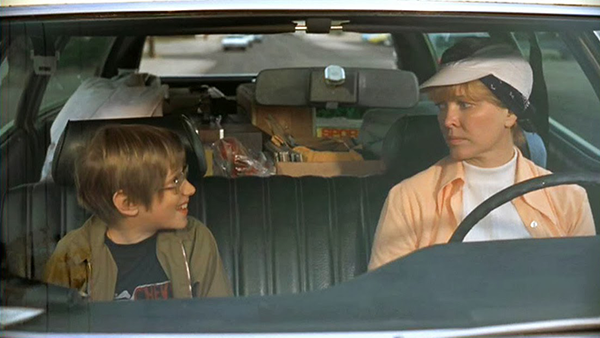
Directed by Martin Scorsese and written by Robert Getchell, Alice Doesn’t Live Here Anymore is the story of a widow who travels to the American Southwest with her young son in the hopes that she can find a better life for them. The film plays into a woman trying to start over as she struggles to find love and a new job as well as raise her pre-teen son who is going through growing pains. Starring Ellen Burstyn, Kris Kristofferson, Alfred Lutter, Diane Ladd, Jodie Foster, and Harvey Keitel. Alice Doesn’t Live Here Anymore is a mesmerizing yet compelling film from Martin Scorsese.
Following the death of her husband in an auto accident, the film revolves around a widow and her 11-year old son trying to start over in the American Southwest on their way to her hometown of Monterrey, California as she would struggle to find work and love. It’s a film that plays into a woman trying to live something that is very ideal but has to contend with the reality of her situation as well as raising a son who is quite bratty and going through growing pains. Though Alice (Ellen Burstyn) was once a singer, she realizes that finding a job to be one is difficult where she would eventually work as a waitress and later meet a kind rancher named David (Kris Kristofferson). Still, Alice would struggle to keep her son Tommy (Alfred Lutter) intact as he would eventually act out and later befriend a troublemaker named Audrey (Jodie Foster).
Robert Getchell’s screenplay plays into Alice’s trials and tribulations as the first act has her coping with the death of her husband despite their turbulent relationship as she realizes that she needs to move from New Mexico and back to her hometown of Monterrey. Much of the film’s first half is a road movie where Alice and Tommy try to find a place to live as well as a job for Alice as she would get a job as a singer for a bar but it wouldn’t last due to an unfortunate tryst with a young man named Ben (Harvey Keitel). The second half would have Alice finally settle in Tuscon, Arizona hoping it would be temporary as she realize the only job she can get is a diner waitress where is later guided by the waitress Flo (Diane Ladd). At the same time, Alice ponders if she can have a relationship as the film also has a feminist message of sorts about what Alice really wants and what she needs to do for herself and for her son.
Martin Scorsese’s direction is very intimate in the way he captures Alice’s turbulent life as well as the world that she has to deal with that is quite chaotic. The film opens in the style of a melodrama and in a full-frame aspect ratio where it shows a young Alice fantasizing about being a singer in the farm that she’s in. When she then says something profane, it becomes clear that this is not a 1950s melodrama as it shifts into a widescreen aspect format to play into Alice’s troubled life with her husband and son Tommy who is listening to Mott the Hoople in loud volume. It establishes that Alice hasn’t reached her goal as she deals with a neglectful husband and a bratty kid where things would change once her husband dies. Much of Scorsese’s compositions are very simple as he does take advantage of the beauty in the many locations in the American Southwest in places in New Mexico and Arizona.
For many of the scenes at the motels and at the diner, Scorsese would employ a lot of hand-held camera tracking shots to play into the drama as well as to capture Alice trying desperately to look good so she can get a job. Even the scenes in the diner shows how frenetic things are where Scorsese would maintain that intimacy with a sense of style in the hand-held camera shots. There are also moments where Scorsese would play into something that feels very loose in the way Tommy would go into his own adventures with Audrey as it would play into his own sense of acting out. Especially as it would boil the tension between him and Alice as it relates to what Alice wants in her life but also what she needs to do for herself and Tommy. Overall, Scorsese creates a very engrossing yet spirited film about a woman starting over with her son.
Cinematographer Kent L. Wakeford does excellent work with the film‘s cinematography to capture the sunny look of the locations in its exteriors along with some unique lighting for some of the scenes set at night including the scenes in Phoenix where Alice would spend time with Ben. Editor Marcia Lucas does nice work with the editing as it is straightforward with some rhythmic cuts for some of the comedic and more heavier moments in the drama. Production designer Toby Carr Rafelson does fantastic work with the look of the motels Alice and Tommy lived in as well as the diner and David‘s ranch. Sound mixer Don Parker does terrific work with the sound in capturing the atmosphere of the diners and bars as well as some of the music that is played on location. The soundtrack would feature not just a few pop standards but also contemporary music from Mott the Hoople, T-Rex, Elton John, Leon Russell, and Dolly Parton.
The film’s amazing cast includes some notable small roles including an early un-credited appearance from Laura Dern as a young girl in glasses eating an ice cream cone at the diner, director Martin Scorsese as a diner customer, Lane Bradbury as a woman who has some connection with Ben, Harry Northup as a bartender that helps Alice in Phoenix, Billy “Green” Bush as Alice’s late husband Donald who appears early in the film, Leila Goldoni as Alice’s best friend Bea who helped her with the move, Valerie Curtin as the shy and timid waitress Vera, and Vic Tayback as the diner’s owner/short-order cook Mel. Harvey Keitel is superb as Ben as this man who meets Alice at a bar in Phoenix as they would have a brief relationship that doesn’t last. Jodie Foster is wonderful as a teenage tomboy named Audrey whom Tommy would meet in Tucson as she would introduce him trouble as well as saying very foul language.
Diane Ladd is fantastic as the waitress Flo as a sass-talking woman who is quite hardened as she helps Alice in keeping her head straight as it’s a performance that is just fun to watch. Kris Kristofferson is excellent as David as a kind rancher who understands what Alice is going through as he wants to help her and Tommy while dealing with Tommy’s bratty behavior. Alfred Lutter is brilliant as Tommy as this pre-teen kid who is very talkative as he copes with being bored as well as finding somewhere to be at as it’s a very wild yet naturalistic performance for the actor. Finally, there’s Ellen Burstyn in an incredible performance as Alice as this widow who is forced to start over as her dreams of being a singer is pulled by the wayside in order to care and raise her son as well as find out what she really wants in her life as it’s a funny but also gripping performance from Burstyn.
Alice Doesn’t Live Here Anymore is a remarkable film from Martin Scorsese that features a magnificent performance from Ellen Burstyn. While it is a very different film from some of the more urban films that Scorsese is known for. It is still one of his finest in terms of character study as well as being a feminist film of sorts where a widow is trying to come to terms with what she has to do with her life and for her son. In the end, Alice Doesn’t Live Here Anymore is a phenomenal film from Martin Scorsese.
Martin Scorsese Films: (Who’s That Knocking on My Door?) - (Street Scenes) - Boxcar Bertha - (Mean Streets) - Italianamerican - Taxi Driver - New York, New York - American Boy: A Profile of Steven Prince - (The Last Waltz) - Raging Bull - The King of Comedy - After Hours - The Color of Money - The Last Temptation of Christ - New York Stories-Life Lessons - Goodfellas - Cape Fear (1991 film) - The Age of Innocence - (A Personal Journey with Martin Scorsese Through American Movies) - (Casino) - (Kundun) - (My Voyage to Italy) - Bringing Out the Dead - (The Blues-Feel Like Going Home) - Gangs of New York - (The Aviator) - No Direction Home - The Departed - Shine a Light - Shutter Island - (A Letter to Elia) - (Public Speaking) - George Harrison: Living in the Material World - Hugo - The Wolf of Wall Street - (The 50 Year Argument) - Silence (2016 film) - (The Irishman) - Killers of the Flower Moon - (An Afternoon with SCTV)
© thevoid99 2015
Saturday, July 11, 2015
Pat Garrett and Billy the Kid
Directed by Sam Peckinpah and written by Rudy Wurlitzer, Pat Garrett and Billy the Kid is the story of an aging Pat Garrett who is hired by wealthy cattle barons to hunt and kill his friend Billy the Kid. The film is an exploration of friendship and betrayal in the Old West as well as the final days of the West as James Coburn plays Pat Garrett and Kris Kristofferson stars as Billy the Kid. Also starring Jason Robards, Slim Pickens, Katy Jurado, Richard Jaeckel, Chill Willis, and Bob Dylan. Pat Garrett and Billy the Kid is a wondrous and evocative film from Sam Peckinpah.
Set in 1881 in New Mexico, the film is about Pat Garrett being asked by forces with political ties to hunt down and kill his friend Billy the Kid. While it is a simple story, the film is more about a sense of change that looms in the American West where Billy the Kid is a representation of someone that doesn’t play by the rules as he spends much of the film trying to live his life and find ways to play under his own rules. Pat Garrett meanwhile is a man that is conflicted about hunting the Kid down as just wants him to go to Mexico or deal with him by himself instead of letting others kill him. Even as he meets with individuals who are part of a secret ring of cattle barons who not only want the Kid dead but want to do things their way to the world that is the West.
Rudy Wurlitzer’s screenplay opens with Garrett’s death as he is gunned down by a group of mysterious men as it adds some ambiguity into why he is killed. It plays into not just the sense of change that Garrett didn’t want to be a part of but a change that already happened as it inter-cuts with a time where Garrett had just become a sheriff where he meets the Kid as they shoot down the heads of chickens. It plays into a moment where things were simple as Garrett and the Kid are friends though Garrett knows he is now the law and he is instructed to capture the Kid. Yet, Garrett tells the Kid on what he has to do where he wants him to be safe and not be killed in the hands of the law. However, the Kid is a freebird that just refuses to do what anyone tells him as there is someone who admits to killing some people whether they were good or bad.
The script also plays into that sense of changing times where Garrett is forced to uphold the law as he struggles to do things his way but finds himself coping with these changes. Especially as he would be forced to work with men who are part of this secret ring as they do things in ways that not only disgusts Garrett but also the Kid who would encounter some of these things on his way to Mexico which would force him to seek refuge in the place in Old Fort Sumner. It is in that moment where both the Garrett and the Kid are forced to realize that the ideas of the Old West is coming to an end where Garrett would have to make a decision to either adapt or die. A decision that the Kid wouldn’t stand for as the inevitable is to come.
Sam Peckinpah’s direction is very entrancing for not just the way he pictures the American West but also into how its sense of mythology and codes are being pushed aside in favor of greed. The film is very stylized in not just the way Peckinpah shoots some of the violence but also in the way people lived in those times. There is a looseness to the direction where Peckinpah puts in some humor over some of the situations the Kid would get into but also play into someone that would kill someone when he didn’t want to but had no choice. With its usage of wide and medium shots along with some close-ups, Peckinpah takes great stock into the world that surrounds these characters but also plays into a sense of change that is looming. Most notably a scene where Garrett and an aging sheriff in Colin Baker (Slim Pickens) try to confront a gang only for things to go wrong as it plays into a world that is changing.
The direction has these tense moments in the drama such as a meeting Garrett would have with New Mexico’s leader in Governor Lew Wallace (Jason Robards) who would introduce Garrett to this group of cattle barons who are part of a secret ring in New Mexico. Most notably as it plays into the sense of change that would emerge that the Kid would later see when he encounters a group of men killing a friend and raping his wife to show an ugliness in a new world that he doesn’t want to be a part of. It would all play to the inevitable as the climax where Garrett would do what has to be done since it plays into a new world that neither he nor the Kid could be a part of. Overall, Peckinpah creates a mesmerizing film about two friends who are both forced to go against each other in an ever-changing world.
Cinematographer John Coquillon does brilliant work with the film‘s cinematography from the usage of lights for some of its nighttime interior/exterior scenes along with some gorgeous and naturalistic images for the scenes in the day including a shootout involving Sheriff Baker. Editors Roger Spottiswoode, David Berlatsky, Garth Craven, Tony de Zarraga, Richard Halsey, and Robert L. Wolfe, with additional editing by Paul Seydor for the 2005 special edition, do amazing work with the editing in creating some unique slow-motion cuts for some of the action along with rhythmic cutting for some of the drama and suspense. Art director Ted Haworth and set decorator Ray Moyer do excellent work with the design of the sets from hideout that is Fort Sumner as well as the look of Lincoln where the Kid was supposed to be hanged until his escape.
The sound work of Harry W. Tetrick and Charles M. Wilborn is superb for the naturalistic sound it captures along with some sound effects in the sound of gunfire and knives that are thrown. The film’s music by Bob Dylan is fantastic as the soundtrack album features some country-folk instrumentals and a few songs including one of Dylan’s greatest songs in Knockin’ on Heaven’s Door that is played in one of the film’s most poignant moments.
The casting by Patricia Mock is great as it features notable appearances from such noted Western character actors like L.Q. Jones as a bandit Garrett confronts in a shootout with Sheriff Baker, Jack Elam as Garrett’s ragged deputy Alamosa Bill Kermit, Emilio Fernandez as the Kid’s Mexican friend Paco, Chill Wills as a saloon owner named Lemuel Jones who knows Garrett, screenwriter Rudy Wurlitzer as a friend of the Kid in Tom O’Folliard, Luke Askew as a cattle baron that is part of a secret ring in Santa Fe, Richard Bright as a member of the Kid’s gang, Rutanya Alda as a prostitute who lives in Fort Sumner with the Kid and his gang, Charles Martin Smith as an early member of the Kid’s gang who encounters a horrifying shootout, and Aurora Clavel as Garrett’s wife Ida who appears in the film’s 2005 reconstructed special-edition version. Other notable small roles include Harry Dean Stanton as a member of the Kid’s gang in Luke, Matt Clark as a deputy sheriff the Kid befriends, R.G. Armstrong as a sheriff who despises the Kid, and John Beck as a hired gun for the secret Santa Fe ring who is eager to kill the Kid.
Barry Sullivan is terrific as a cattle baron named Chisum that the Kid used to work for as the Kid learns what Chisum’s men would do that would disgust the Kid. Slim Pickens is fantastic as the aging sheriff Colin Baker who aids Garrett in trying to find the Kid while Katy Jurado is wonderful as Baker’s wife who helps them both while being great with a shotgun. Richard Jaeckel is superb as a friend of Garrett in Sheriff McKinney who helps Garrett late in the film to capture the Kid while Jason Robards is amazing in a brief but memorable performance as Governor Lew Wallace who tells Garrett what is at stake in capturing the Kid as he is part of a new world order. Bob Dylan is excellent as a young bandit named Alias who joins the Kid during the film’s second act as he proves to be very handy with a knife.
Finally, there’s the duo of James Coburn and Kris Kristofferson in phenomenal performance in their respective roles as Pat Garrett and Billy the Kid. Coburn brings a rugged yet weary role to Garrett as a man who is now part of the law as he deals with the new rules of his role as well as times that are changing which adds to the conflict in capturing the Kid. Kristofferson brings this sense energy and joy into the role of the Kid as someone who is a total free spirit that doesn’t believe in rules as he copes with a world that is very difficult and troubling. Coburn and Kristofferson have great rapport together in how they both share similar views towards the world as they’re both being pulled into different directions.
Pat Garrett and Billy the Kid is a remarkable film from Sam Peckinpah that features exhilarating performances from James Coburn and Kris Kristofferson. The film is definitely one of Peckinpah’s finest films (whether in its preferred 1988 122-minute preview version or the 115-minute special edition version) as it plays into the myth of the American West and how it would change. Especially as it features an incredible soundtrack from Bob Dylan that plays into the mythological elements of those times. In the end, Pat Garrett and Billy the Kid is a riveting film from Sam Peckinpah.
Sam Peckinpah Films: The Deadly Companions - Ride the High Country - Major Dundee - Noon Wine - The Wild Bunch - The Ballad of Cable Hogue - Straw Dogs - Junior Bonner - The Getaway - Bring Me the Head of Alfredo Garcia - The Killer Elite - Cross of Iron - Convoy - The Osterman Weekend - The Auteurs #62: Sam Peckinpah
© thevoid99 2015
Monday, July 21, 2014
Heaven's Gate (2012 Restoration Edition)
Written and directed by Michael Cimino, Heaven’s Gate is the story of a Harvard-educated marshal who finds himself in the middle of a conflict between rich and established cattle barons who wage war on a group of poor, European-based immigrants over claims of stealing cattle. A fictional account of the Johnson County War of 1892, the film is scathing look into the world of American Imperialism and the myth of the American dream as a man finds himself battling a friend as they’re both in love with a prostitute who is among the many that cattle barons want killed. Starring Kris Kristofferson, Christopher Walken, Isabelle Huppert, Sam Waterston, John Hurt, Jeff Bridges, Brad Dourif, and Joseph Cotten. Heaven’s Gate is a visually-stunning and enthralling film from Michael Cimino.
Based on the real-life events of the Johnson County War in 1892, the film explores a piece of American history where a group of established cattle barons battled against small settling ranchers where these more established men hired killers with the backing of the American government. Yet, the film is a re-interpretation about these events as the cattle barons are portrayed as rich men who want to kill these poor European immigrants for stealing their cattle as they think of them as thieves and anarchists. On the other side is a group of European immigrants who only steal because they’re hungry as they just want to live in America and live the American dream. In the middle of this is the marshal of Johnson County in James Averill (Kris Kristofferson) who wants to smooth out the conflict before it gets more troubling yet he is a man full of complications and contradictions. Especially as he’s in a love-triangle with a bordello madam in Ella Watson (Isabelle Huppert) who is in love with an enforcer in Nate Champion (Christopher Walken) who is a friend of Averill.
The film’s screenplay is quite vast as it starts in 1870 where Averill graduates from Harvard with his friend William Irvine (John Hurt) and ends with an epilogue set in 1903 in Newport, Rhode Island. Yet, much of the story is set in 1890 Wyoming where Averill tries to use his wealth and education to help the people of Johnson County that is full of European immigrants that is this mix of German, Russian, Slavic, Dutch, and other ethnicities who are just trying to live good lives. Averill is inspired by the ideas that is instilled upon him from his Harvard graduation when its speaker the Reverend Doctor (Joseph Cotten) urges the graduates to use their knowledge to help those in need. That moment is mocked by Irvine who later finds himself as a man lost in his role as he becomes a rambling, poetic drunk who has no clue on what to do as he would regret those actions. Irvine is part of this faction known as the Stock Growers Association led by Frank Canton (Sam Waterston) who is a rich cattle baron that has a lot of government connections while being very arrogant about what he does.
It is all part of something that is very complex as well as containing lots of ambiguities as Champion is an enforcer of the Association as he just enforces the law where he does kill an immigrant and later threatening another from stealing as he is just a lawman. He’s also in love with Ella who doesn’t mind being paid either in cash or cattle for prostitution as she is this woman who is in love with both Champion and Averill. Averill wants to take her out of the world of prostitution and protect her from what is coming once he learns about what is going to happen. Yet, she prefers a life that is simpler which is something Champion is offering as he would later question what Canton and the Stock Growers Association is doing. Especially when Ella’s name is in a death list that features many immigrants where Averill tries to figure out what to do as he becomes troubled by his own personal issues and the longing for a life that isn’t complicated. It’s part of that sense of conflict he’s in because of Ella where he would eventually take part in this brutal battle between the Stock Growers Association and the immigrants with very bloody results.
The script does have flaws in some of the characterization as the William Irvine character is an ambiguous figure as he is this rambling, poetic drunk that had the power to make a difference with his wealth and education. Yet, he’s a lost figure who has no clue what he’s doing or why he’s still in the Stock Growers Association as there’s a scene where a character asks why is he even here. Another flaw is its politics where it’s clear that it is one-sided in the way Canton is portrayed as this snobbish and arrogant antagonist while the poor is treated more fairly though there’s aspects of them that are just as flawed where one of them would try to make a bargain only to get his ear shot off. Still, it is a commentary on the idea of American Imperialism where Americans try to infuse their own ideas and such all for something as childish as money.
Michael Cimino’s direction definitely recalls a lot of the visual traits of the western as well as his own fascination with American landscapes as he shoots with such a wide canvas that covers so much of the landscape as it’s largely shot in Montana. There are aspects of the film where Cimino definitely wants to create something that has the attribute of an epic with these massive wide shots that includes this terrifying shot of a large group of horsemen on top of a mountain about to kill someone. Cimino’s approach to the widescreen in its 2:40:1 aspect ratio would showcase some of the lavishness of the film such as the Harvard dance sequence where Averill and Irvine waltz around a tree with a bevy of beautiful women. The Harvard prologue serves as a place where Averill and Irvine are being tasked as men who have the power to make change and help those who are less fortunate. It’s something that would drive Averill to do what is right in Johnson County as he feels the need to do with the power and responsibility he’s given.
The direction is also quite excessive in terms of its attention to detail in the way 1890s Wyoming is portrayed in its buildings and such that would also include this beautiful sequence of people in a roller skating rink to showcase what it was like to have fun in those times. It is in contrast to the sense of terror that would happen as much of the violence is quite graphic and bloody where it would culminate into this very spectacular battle scene that is frenetic at times but also very direct with the cameras being on wagons and such as well as shooting it from multiple perspectives. There’s also some unique ideas in camera angles and crane shots that Cimino uses while he also creates some intimate moments that plays into this love triangle where there’s some humor but also a sense of longing as both Averill and Champion want to have a better future with Ella. Its climax in the battle and its aftermath would lead to not just this understanding over how things are but also the question into what difference Averill made. Especially as he tries to come to terms with his own identity and the responsibilities he has as the film ends with this somber epilogue in 1903 Rhode Island. Overall, Cimino has created a grand yet very visceral film about a dark piece of American history seen through the eyes of a marshal trying to make some kind of difference.
Cinematographer Vilmos Zsigmond does absolutely incredible work with the film‘s rich and evocative cinematography with its approach to sepia lighting for some of the film‘s interiors with its shading and such as well as the colorful exterior settings of Montana in the day time as well as some low-key yet beautiful lighting for some of the film‘s interior scenes. Editors Tom Rolf, William Reynolds, Lisa Fruchtman, and Gerald Greenberg do brilliant work with the editing with its unique approach to rhythms in some of the film‘s dramatic moments along with its frenetic cutting in the battle scenes. Production designer Tambi Larsen, along with set decorators James L. Berkey and Josie MacAvin and art directors Spencer Deverell and Maurice Fowler, does phenomenal work with the set design from the look of the small town of Sweetwater with its cabins and roller skating hall as well as the home of the Stock Growers Association.
Costume designers Allen Highfill does excellent work with the costumes from the suits that the men wear to the period dresses that the women along with the more lavish look in the Harvard dance sequence. Sound editor James J. Klinger does fantastic work with the soundtrack from the way gunfire is presented to the sound of cannons as well as some of the intimate moments as it is quite sprawling in its mixing and editing. The film’s music by David Mansfield is just sublime for its mixture of eerie string arrangements with these rich arrangements of acoustic guitars, mandolins, and balalaikas to play into the film’s Eastern European tone as it features some amazing themes plus reinterpretations of classical pieces and traditional themes as Mansfield’s score is one of the film’s major highlights.
The casting by Cis Corman, Tony Gaznick, and Jane Halloran is amazing for the ensemble that is created as it features some appearances from composer David Mansfield plus T-Bone Burnett and Huey Lewis & the News keyboardist Sean Hopper as the live band in the skating rink, Willem Dafoe as a bar waiter, Anna Levine and Caroline Kava as a couple of young prostitutes, Mary C. Wright as the fiery prostitute Nell, Tom Noonan as an Association hitman who tries to rape Ella, Mickey Rourke as Nate’s friend Nick Ray, Waldemar Kalinkowski as the immigrant photographer, Terry O’Quinn as cavalry leader Captain Minardi, and Roseanne Vela as a beautiful girl that Averill eyed on at the Harvard graduation. Other notable small roles include Geoffrey Lewis as a trapper friend of Nate’s, Ronnie Hawkins as a military leader working with Canton, Paul Koslo role as the town’s cowardly mayor, and Richard Masur as the train station manager Cully who is friends with Averill. Brad Dourif is terrific as the town commerce head Mr. Eggleston who would have this great monologue about what it means to be poor and from another country as he would inspire his fellow immigrants to fight back.
In a small yet crucial role at the Harvard graduation scene, Joseph Cotten is superb as the Reverend Doctor who speaks to the graduates to ensure the weight of responsibility they have for the future of America. John Hurt is wonderful as Averill’s old Harvard classmate William Irvine as this rambling drunk who often spouts poetry though his role is one of most flawed elements of the film. Jeff Bridges is excellent as the town proprietor John L. Bridges who runs the bar and skating rink as he is a friend of the immigrants and becomes one of their leaders in the battlefield. Sam Waterston is brilliant as the smarmy and arrogant Stock Growers Association leader Frank Canton who is a man that is driven by greed as he is someone that is full of himself as Waterston brings this smarmy quality to a character that everyone loves to hate.
Isabelle Huppert is fantastic as Ella Watson as this bordello madam who is caught in a love triangle with two men as she wants to maintain a life that she built for herself while dealing with the reality of what she is facing as her name is on a death list. Christopher Walken is marvelous as Nate Champion as an Association enforcer who is quite prejudiced towards immigrants as he would eventually question his bosses once Ella is targeted as he realizes that they’re breaking the law. Finally, there’s Kris Kristofferson in a remarkable performance as James Averill as a marshal with a very posh and educated background who tries to mediate a deadly situation as he deals with his own personal feelings for Ella while dealing with who he is and what he tries to do to make a difference.
The 2-disc Region 1 DVD/Region A Blu-Ray from the Criterion Collection presents the film in a 2:40:1 theatrical aspect ratio in a widescreen format with 5.1 Dolby Digital Surround Sound in a newly-restored transfer supervised by Michael Cimino in a new 216-minute cut where the only scene removed is the film’s intermission scene plus a few slightly-trimmed shots in some sequences. The first disc of the Blu-Ray is the film in its entirety as it is given a much richer transfer while on the DVD version, the film is split into two parts where the split occurs just after James Averill receives the death list.
The film’s second disc features many extras relating to the film and its notorious production starting with a 31-minute illustrated audio interview with Michael Cimino and producer Joann Carelli (which appears as an extra in the DVD‘s first disc). Through various still photos of the film and its production, Cimino and Carelli talk about the film where Cimino dominates much of commentary as he revealed that the version on the Criterion DVD/Blu-Ray is his final version. Cimino and Carelli talked about the research they went through about the actual Johnson County War as Carelli talked about Cimino’s approach to writing and how she discovered David Mansfield during the production. Cimino admits to not using monitors or watch dailies in his approach to directing while commenting on a lot of the things about the film as it’s a very compelling piece that showcased Cimino feeling validated that the film is being given a second chance.
The extras include new interviews with three people involved the film as the first is a nine-minute, twenty-three second interview with actor Kris Kristofferson. Kristofferson talks about what made him do the film as he was interested in the subject matter and working with Cimino. He felt it was a story that needed to be told as he admitted that Cimino was difficult and excessive but only because he wanted to get things right. Kristofferson admitted to being hurt over the film’s reception yet he doesn’t regret doing the film which he is still proud of while he also talks about the political aspects of the film where he felt that it was probably too controversial for audiences to handle.
The nine-minute interview with music composer David Mansfield has him talking about the music and his background as he had been proficient in a lot of string instruments. He was discovered by Joann Carelli who had seen him play with Bob Dylan in the mid-1970s as he was among several real musicians including T-Bone Burnett that were hired to play a band that actually played live music. Through his work and what he was able to do on the set, Cimino hired Mansfield to do the score as Mansfield talked about his approach to the score as well as infusing a lot of Eastern European influences into the music since his father is from a Eastern European background.
The eight-minute interview with second assistant director Michael Stevenson who talked about making the film as he knew what Cimino wanted in terms of scenery and in its attention to detail. Having worked with David Lean, Anthony Mann, and Richard Brooks, Stevenson knew that Cimino had that sense of wanting to get things right where Stevenson also talks about some technical moments in the film. Especially in how close Cimino was with his actors in making sure they would get their performances right as they trusted him as Stevenson would work with Cimino in his next two films. Other minor extras include a two-and-a-half minute restoration demonstration that showcases what had to be done as the film was drenched in sepia as a lot of work through digital scanning had to be made to restore its original color. The extras include a teaser and a TV spot for the film where the latter displayed the sense of controversy about the film.
The DVD/Blu-Ray set includes a booklet that features two pieces of text relating to the film. The first is an essay entitled Western Promises by the New York-based film writer and programmer Giulia D’Agnolo Vallan about the film. Vallan discusses much of what Cimino wanted to say in the film as well as its disastrous screening in November of 1980. Vallan also talks about the film’s politics and some of the aspects of the production as she feels like it is a film that got attacked over what was going on in its production and its cost rather than it was about. Even as it was well-received in Europe who were looking for the kind of films that old masters like John Ford and Howard Hawks used to make while it was getting trashed by American critics just as the film industry was in a state of transition in the age of the blockbuster as it’s a very engaging essay about the film.
The second piece of text is an interview with Michal Cimino for the November 1980 issue of American Cinematographer entitled The Film That Took On a Life of Its Own by the magazine editor Herb Lightman who was a guest camera operator on the film. Cimino talks about what he wanted to say and do with the film as well as his meticulous approach as he needed people who were able to recreate things from the past as he felt it was something that was lost at the time. Cimino also talked about wanting to shoot in certain locations where he said that if he ever found the right location, he would go ahead and shoot somewhere just to capture something that is just magical. Even as he would capture something that was just accidental yet felt right for the story as it is a compelling piece that showcased his perspective on the making of the film before it would have its notorious premiere.
Heaven’s Gate is a tremendously rich and harrowing film from Michael Cimino. Armed with a great ensemble cast plus major technical achievements in its art direction, Vilmos Zsigmond’s photography, and David Mansfield’s score. It’s a film that showcases a man trying to make a difference in a conflict driven by greed and class differences set to a dark piece of American history. While it is a film that is flawed, it has aspects that are thematically provocative as well as visuals that really defines the concept of epic filmmaking. In the end, Heaven’s Gate is a remarkable film from Michael Cimino.
Michael Cimino Films: Thunderbolt & Lightfoot - The Deer Hunter - Year of the Dragon - The Sicilian - Desperate Hours (1990 film) - The Sunchaser - To Each His Own Cinema-No Translation Needed - The Auteurs #35: Michael Cimino
© thevoid99 2014
Tuesday, June 25, 2013
Fast Food Nation
Originally Written and Posted at Epinions.com on 11/26/06 w/ Additional Edits & Revisions.
Based on the book by Eric Schlosser, Fast Food Nation is a multi-layered film that explores the world of the fast food industry through the perspectives of different people from fast-food workers, a corporate executive, and a group of Mexican immigrants. Directed by Richard Linklater and written by Linklater and Schlosser, the film takes Schlosser's non-fiction book into a dramatic context to showcase a dark world of the industry that is about profit no matter at the cost. Starring longtime Linklater regular Ethan Hawke along with Greg Kinnear, Patricia Arquette, Ashley Johnson, Catalina Sandino Moreno, Wilmer Valderrama, Ana Claudia Talancon, Lou Taylor Pucci, Paul Dano, Mitch Baker, Luis Guzman, Bobby Cannavale, Esai Morales, Kris Kristofferson, Avril Lavigne, and Bruce Willis. Fast Food Nation is a harrowing, insightful film that uncovers the dark side of the fast food industry.
The film revolves around three different storylines that plays into the world of the fast food industry as marketing executive named Don Anderson (Greg Kinnear) goes to Cody, Colorado to investigate rumors about manure in the meat as he gets a tour of the UMP slaughterhouse and later meets a local rancher in Rudy Martin (Kris Kristofferson) where he and his maid (Raquel Giva) reveal the dark secrets about the UMP slaughterhouse. The other storyline revolves around a group of Mexican immigrants in Raul (Wilmer Valderrama), his girlfriend Sylvia (Catalina Sandino Moreno), and their friend Coco (Ana Claudia Talancon) who arrive to Cody with the help of Benny (Luis Guzman) as Raul and Coco work at the UMP slaughterhouse where Coco has an affair with its plant manager Mike (Bobby Cannavale). The third story line plays into a fast food employee named Amber (Ashley Johnson) who becomes uncomfortable about working at Mickey's as advice from her uncle Pete (Ethan Hawke) has her trying to rebel against corporations with help of an activist named Paco (Lou Taylor Pucci). Eventually, the three storylines would have some resolutions though they don't really crisscross with one another but would unveil a lot of troubling cynicism that plays into the fast food industry.
What Richard Linklater and Eric Schlosser reveal is very complex where it goes to the treatment of immigrants to what goes on behind the food that consumers are eating. While the film isn't perfect, it reveals a lot, even to some graphic detail of how the meat is made from cattle where the objective is to make the audience think while being uncomfortable at the same time. While Linklater takes a documentary-like approach to the film in his observant direction, the approach he and Schlosser takes is in the form of a docu-drama where three different stories are told. While the stories do intertwine with everything, the script is a bit uneven at times though wonderfully structured with the first act being the arrival of the immigrants and Anderson's investigation with the second going further to what Anderson discovers and Sylvia's moral judgement. Then comes the third act that does make things a bit uneasy with Amber joining a revolutionary group and the grim reality Sylvia has to face.
Despite the flaws with the script, Linklater's direction remains strong in how he observes the behaviors while finding a bit of humor in the workplace. While Linklater isn't exactly trying to make audiences think twice about eating fast food but he does raise question of where the food is coming from. More importantly, he reveals more of the corporate cover-ups in which Anderson is forced to think about his job and livelihood to the point that he goes into some moral judgement. The story of the immigrants is handled with realism as well as cynicism about the how untrue the American dream is where Sylvia is the observant character of the film where she tries to do honest work while realizing a lot of the bad things that goes on at the UMP plant. It's by far the most compelling story of the film while the Amber story is a bit weak though Linklater reveals the cynicism that comes afterwards where the film's ending is very bleak.
Helping Linklater in his visual presentation is longtime cinematographer Lee Daniel whose grainy, cinema verite style gives the film a documentary like feel to convey the atmosphere from the polished look of the Californian offices of Mickey to the vast, open spaces and claustrophobic worlds of Cody, Colorado. Longtime editor Sandra Adair does some wonderful cutting on shifting through the segments while making them intertwine with story while giving the pacing a leisurely feel in its 116-minute running time. Production designer Bruce Curtis and art director Joaquin A. Morin did excellent work on the design and look of the Mickey's franchise while costume designer Kari Perkins also does a great job in the look of the Mickey's uniform. Sound editors Michael J. Benavente and Tricia Linklater also do excellent work on creating the atmosphere of the surroundings the characters are in. Friends of Daniel Martinez create a varied mix of music filled with acoustic, Mexican-style music and droning, atmospheric rock to convey the sense of bleakness in the film.
The film's cast is diverse with a lot of actors that include such noted small performances from Mitch Baker, Frank Ertl, Raquel Giva, Armando Hernandez, Hugo Perez, Aaron Himelstein, and Cherami Leigh. Minor roles from the likes of Lou Taylor Pucci, Paul Dano, Esai Morales, and Luis Guzman are excellent. One minor performance that comes across as very annoying is Avril Lavigne as a college protester which is very grating and over-the-top. Another performance that doesn't work is Wilmer Valderrama who whenever he tries to talk, he ends up putting the same kind of Fez that people often sees in his role as Fez in That's 70s Show. Valderrama is not an actor and the casting people should've gotten someone else. Ana Claudia Talancon is excellent as the naive, flirtatious Coco who descends to the world of drugs while Bobby Cannavale is great as the evil, manipulative supervisor. Kris Kristofferson is wonderful as the gruff, cautious rancher who reveals a lot of the dark secrets behind the UMP slaughterhouse while Bruce Willis is great in the one scene he's in as the cynical, corporate supervisor who tells Don Anderson the way the world works.
Patricia Arquette is excellent in her small role as Amber's fun, caring mother who is unaware of what her town is becoming. Ethan Hawke is great in his small role as Amber's radical, political uncle who reveals what happens to local business when they're taken over by corporations. Ashley Johnson is great as Amber who realizes the dark side of the fast food industry and tries to become a revolutionary only to see the grim realities that comes with them. Greg Kinnear gives another fine performance following this year's Little Miss Sunshine as a corporate executive who faces some truths and is forced to go into a moral dilemma that would cost his livelihood while thinking about the customers he's marketing towards. Catalina Sandino Moreno, who is known for her debut performance in Maria Full of Grace, proves that her Oscar nomination was no fluke as she gives the most chilling and moralistic performance of the film. Moreno's proves to be the most heartbreaking in how she tries to do an honest day's work, dealing with the way things are to the people she knows, and how she is forced to face the grim reality that is America. It's really an amazingly powerful performance from the young actress.
While not as entertaining or accessible as Morgan Spurlock's Super Size Me or as fulfilling as the other films Richard Linklater did, Fast Food Nation is still a strong, engaging portrait of the American fast food industry. While fans of Linklater will enjoy the dialogue-driven conversations and cinema verite approach, some audiences might be disgusted in some of the graphic imagery as well as some of the things the film is talking about. While it will raise more question about the industry and how it takes care of its customers, it's likely whether or not it will keep people away from fast food or be aware of the changes in the corporate world. Still, Fast Food Nation succeeds in what it aims to do as it's one of the year's most politically-engaging films.
Richard Linklater Films: It’s Impossible to Learn to Plow by Reading Books - Slacker - Dazed & Confused - Before Sunrise - subUrbia - The Newton Boys - Waking Life - Tape - School of Rock - Before Sunset - Bad News Bears (2005 film) - A Scanner Darkly - Me and Orson Welles - Bernie (2011 film) - Before Midnight - Boyhood - Everybody Want Some! - The Auteurs #57: Richard Linklater Pt. 1 - Pt. 2
© thevoid99 2013
Tuesday, April 10, 2012
Blade II
Based on the Marvel comic book by Marv Wolfman and Gene Colan, Blade II is the story of a vampire hunter, with vampire powers, who is hired to fight off a new breed of vampires that is threatening a company of vampires trying to keep the peace with humans. Directed by Guillermo del Toro and screenplay by David S. Goyer, the film is the second part of a trilogy that would stand out from the films made in the original trilogy as Wesley Snipes reprises his role as the titular character. Also starring Ron Perlman, Leonor Valera, Norman Reedus, Luke Goss, Karel Roden, Thomas Krestchmann, Tony Curran, and Kris Kristofferson returning as Whistler. Blade II is an exciting action-thriller from Guillermo del Toro.
Two years after Whistler’s disappearance, Blade has finally found him in Eastern Europe where would battle various vampires to retrieve him. Though weakened, Whistler is able to recover in Blade’s secret workshop that includes Blade’s gadgets inventor Scud (Norman Reedus). On one particular night, the workshop is broken in as Blade would stop the two revealing to be Nyssa (Leonor Valera) and her associate Asad (Danny John-Jules). Nyssa is the daughter of vampire overlord Eli Damaskinos (Thomas Krestchmann) who wants to form a truce with Blade to stop a virus that is carried by a mysterious man (Luke Goss) who is a new breed of vampires that feeds on both humans and vampires. Blade reluctantly joins Damaskinos as Whistler and Scud would team up with Nyssa and her team that includes the cocky Reinhardt (Ron Perlman).
Going into a secret vampire club to find these new breeds called Reapers, they learn that they’re more powerful than vampires except when it comes to sunlight. Still, Blade wonders why the head of the Reapers didn’t kill Nyssa while Whistler captures a Reaper for Nyssa to examine. Realizing what it will take to kill the Reapers, Blade and the team go into another battle where more chilling discoveries are made into why Blade has been hired. Whistler also makes a discovery about the head Reaper and why he’s been coming forcing Blade and Whistler to fight against the enemy.
The film is a continuation of the Blade story where the half-human, half-vampire who hunts vampires is forced to make a truce with his enemy to stop a new breed of super vampires who feed on both humans and vampires. There, he discovers that not all vampires have ulterior motives while the head of this new breed of vampires has reasons that are far more personal than what is expected. While the story is formulaic in terms of what is expected in a comic-book action-thriller, screenwriter David S. Goyer does find ways to keep the suspense going as well as creating characters who are quite complex. Notably Blade as he still struggles with who he is while regaining Whistler, who was in near-death, only adds to the struggle. Still, the Whistler character is the guy that grounds Blade while the vampire Nyssa is aware of Blade’s secretive persona though she is able to get through him.
Goyer’s script also succeeds in finding humor in the story for some of the situations that occur. Notably in the way Blade would interact with foes and allies while it’s mostly very subtle. Still, it’s an action film as Goyer creates moments where it’s about the battles and the stakes in these fights that Blade would be a part of. The overall work Goyer does is superb as he creates a solid script that is a cut above the typical action, comic-book based films.
Guillermo del Toro’s direction is definitely engaging for the stylish approach he does for the film. Notably as he chooses to create a film where it has a different look and feel than its 1998 predecessor. While the film does have conventional ideas of action and fight scenes that is typical of martial-arts action-adventure with some suspense. One of the key elements that allows del Toro to do more is setting up the battle while taking his time to play with the film’s suspense and humorous moments. Notably in the former where there’s a lot of suspicion as del Toro slowly builds up the moment where Blade and Whistler think something isn’t right.
Another key element of del Toro’s direction is the way he creates an atmosphere to the setting that the characters encounter. Whether it’s the brooding moments in the sewers to fight off the army of Reapers or the world that Damaskinos lives in that is sleek yet ominous. It’s part of del Toro’s gift as a filmmaker where he pays attention to the set pieces and the objects that could play a key role in the story. The vast compositions and close-ups del Toro create is very engaging and vibrant for the mood that is set as well as the drama that unfolds. Overall, del Toro creates a very engrossing yet very entertaining film that does a whole lot more than what its genre expects.
Cinematographer Gabriel Beristain does excellent work with the stylish cinematography from the sepia-drenched nighttime interior and exterior settings for Damaskinos‘ halls as well as a dark-blue look for the chilling sewer scene. Editor Peter Amundson does superb work with the editing to maintain a leisured pace for the film while using swift cuts for some of the film‘s fights without being too fast. Production designer Carol Spier, along with art director Elinor Rose Galbraith and set decorators Jeffrey Kushon and Peter P. Nicolakakos, does brilliant work with the set pieces such as Blade‘s home base as well as the sleek look of Damaskinos‘ lab.
Costume designer Wendy Partridge does fabulous work with the costumes that include the sunlight-repellant leather Blade and the vampire team wear during the sewer sequence. Visual effects supervisor Nicholas Brooks does nice work with some of the film‘s visual effects including some of the animation for the Reapers mouth and their interior body parts though some of the movements in the fight scenes by the characters look wobbly at times. Sound designer Scott Martin Gershin and co-sound editor Mathew Waters do wonderful work with the sound from the sound of gunshots and sword clangs to the atmosphere of the club and sewer scenes.
The film’s score by Marco Beltrami is terrific for the mixture of sweeping orchestral bombast that is mixed with chugging rock music to play up the sense of excitement of the film. With additional music by Danny Saber and Buck Sanders, the score features bits of electronic music to play up some of the film‘s action scenes. Music supervisor Happy Walters provides a soundtrack that is a mix of hip-hop, rock, and electronic music as it includes collaborative tracks from Massive Attack/Mos Def, Redman/Gorillaz, Ice Cube/Paul Oakenfold, the Crystal Method, Bubba Sparxxx, the Roots/BT, Busta Rhymes & Silkk tha Shocker/Dub Pistols, and Cypress Hill/Roni Size. It’s an interesting yet engaging soundtrack as the film’s music is a real highlight.
The casting by Nancy Foy is outstanding for the ensemble that is created as it includes appearances from Santiago Segura as a vampire Blade meets early in the film and Karel Roden as Damaskinos’ lawyer who tries to conduct business for his boss. For the roles of Blade and Nyssa’s team, there’s fight choreographer Donnie Yen as the mute swordsman Snowman, Marit Velle Kile as the red-haired Verlaine, Tony Curran as the Scottish Priest, Daz Crawford as the hammer-wielding Lighthammer, Danny John-Jules as Nyssa’s friend Asad, and Matt Schulze as the brash Chupa. Luke Goss is very good as the Reaper leader Jared Nomak who is hell-bent on revenge while proving to be a tough opponent for Blade. Norman Reedus is terrific as Blade’s gadget-creating friend Scud who proves to be a resourceful aid for Blade.
Thomas Krestchmann is superb as vampire council head Eli Damaskinos who hires Blade to help him fight off the Reapers only to have far bigger motives that would make Blade suspicious. Leonor Valera is pretty solid as Damaskinos’ daughter Nyssa who aids Blade in fighting the Reapers while realizing what kind of a person he is when it comes to avoiding trouble. Ron Perlman is amazing as the vampire Reinhardt who despises Blade as Perlman gets to have some of the film’s funniest lines while never taking off his sunglasses. Kris Kristofferson is great as Blade’s mentor Whistler who gives Blade advice while being part of the team as he is aware that something isn’t right as Kristofferson also provides some wonderful one-liners.
Finally, there’s Wesley Snipes in a kick-ass performance as the titular character as he provides a calm performance of a man struggling with himself. Even as he teams up with vampires where Snipes also brings charm to his character while showing that he can seriously kick some ass.
Blade II is a marvelous and thrilling film from Guillermo del Toro that features great work from Wesley Snipes, Kris Kristofferson, and del Toro regular Ron Perlman. Of the three Blade films, this one is certainly the best in terms of its production value as well as David S. Goyer’s suspense-driven screenplay. While it may not live up to some of the films that Guillermo del Toro would do later on. It is still a great example of the kind of work he does where he will do more than just entertain by telling a story with characters that audiences can enjoy watching. In the end, Blade II is stellar yet fun action film from Guillermo del Toro.
Guillermo del Toro Films: Cronos - Mimic/Mimic (Director’s Cut) - The Devil's Backbone - Hellboy - Pan's Labyrinth - Hellboy II: The Golden Army - Pacific Rim - Crimson Peak - The Shape of Water - Nightmare Alley (2021 film) - Pinocchio (2022 film)
Related: (Blade) - (Blade III) - (Blade (2024 film)) - The Auteurs #10: Guillermo del Toro
© thevoid99 2012
Subscribe to:
Posts (Atom)