Showing posts with label mike nichols. Show all posts

Saturday, August 30, 2025

2025 Blind Spot Series: Who's Afraid of Virginia Woolf?


Based on the play by Edward Albee, Who’s Afraid of Virginia Woolf? is the story of a college professor and his wife who invite a couple new to the university to their home during a late night of drinking and terror. Directed by Mike Nichols and screenplay by Ernest Lehman, the film is an exploration of a late night where two couples drink as everything unravels during the night where secrets and revelations are unveiled. Starring Elizabeth Taylor, Richard Burton, George Segal, and Sandy Dennis. Who’s Afraid of Virginia Woolf? is an unsettling and intoxicating film by Mike Nichols.

Set in the span of one late night at a university residence, the film revolves around an associate college professor and his wife as they invite a young couple new to the university for a chat and some drinks where everything goes to hell. It is a film that is about one late night where much of the action takes place at this couple’s home at the university as they invite a new professor and his wife for a drink that ends up being a night of chaos. Ernest Lehman’s screenplay is straightforward in its term of the narrative as its first and third act take place at the home of Martha (Elizabeth Taylor) and her associate professor husband George (Richard Burton) with a bit of the film’s second act taking place outside of the house and at a roadhouse. Part of the film’s strength is the dialogue and monologue spoken by the characters with George often pushing people’s buttons while telling stories to observe his guests in Nick (George Segal) and Honey (Sandy Dennis).

Nick is the new biology professor despite Martha’s claim he is teaching math as he is fascinated by George’s time in the university as well as what to expect though Honey is a woman who is fragile as she will get sick if she drinks. As the night goes on, things start to unravel when Martha talks about her son whose birthday is the next day when George is upset over the mention of him. At a brief stop at a roadhouse, more drinks happen with Honey wanting to dance and have fun yet things between Martha and Nick would anger George as he decides to push everyone’s buttons where he ends up walking home. Yet, revelations about Nick and Honey are unveiled during the night including a conversation between George and Nick outside of the house and another one between George and Honey in the third act.

Mike Nichols’ direction is rapturous in its setting as it is shot on location at the Warner Brothers soundstage for all the interior scenes with all the exterior scenes are shot at Smith College in Northampton, Massachusetts. While there are wide shots for some of the exterior scenes including the opening shot of the film where George and Martha walk out of a party on their way home. Much of Nichols’ direction is emphasized on close-ups and medium shots to play into the intimacy of the house that George and Martha live in as well as scenes at the roadhouse during the film’s second act. Notably in how Nichols creates compositions in the way characters are seen in the foreground and in the background during a shot. Nichols’ direction also maintains this air of theatricality where he utilizes long shots for monologues and dialogues to be spoken for minutes uncut as well as scenes where the camera would move from one room to another to follow a character. It adds to this sense of tension as well as moments of dark humor such as a scene where George carries a rifle that would be served as a prank.

Nichols also maintains moments that are somber such as George and Nick’s conversation outside of the house where Nichols create some unique camera angles to play into whether the characters are equal or dominating one another in the conversation. The scenes at the roadhouse are tense for the way everyone starts to unravel with Honey wanting to dance and have fun, yet George starts to notice something is happening with Nick and Martha. The third act is where a lot of revelations about everyone comes into play with George, ready to push everyone’s buttons in revealing something including himself. Especially as Martha brought up the subject of their unnamed son as well as George’s failed novel early in the film, forcing George to get confrontational where Nichols’ direction is always fixed on what is happening. Even as he knows where to place the camera waiting for something to happen that will just blow things up. Overall, Nichols crafts a gripping and ravishing film about a drunken couple’s meeting with a young couple for a late night of drinks going wrong.

Cinematographer Haskell Wexler does incredible work with the film’s black-and-white photography with the way the home of George and Martha is lit in its living room and kitchen as well as spacious look of the roadhouse and the low-key lighting for the exterior scenes. Editor Sam O’Steen does brilliant work with the editing with a few scenes of fast-cuts during the second act where all the characters are in a car before they arrive at the roadhouse along with cuts that allow shots to linger to play into the emotional moments in the film. Production designer Richard Sylbert and set decorator George James Hopkins does excellent work with the look of the interiors of George and Martha’s home with a messy kitchen as well as a living room full of books and a bar full of drinks as well as the spacious interior of the roadhouse. Costume designer Irene Sharaff does fantastic work with the costumes in the suits the men wear to Honey’s dress and coat as well as the posh yet ragged clothes that Martha wears.

Makeup artists Gordon Bau and Ron Berkeley, along with hair stylist Sydney Guilaroff, do amazing work with the look of Martha from her big hairstyle as well as the makeup where she looks older than she is as it is a highlight of the film. The sound work of M.A. Merrick and George Groves do superb work with the sound as it plays into the atmosphere of a room as well as whatever music is played in the roadhouse. The film’s music by Alex North is wonderful for its low-key orchestral score that is used sparingly to play into the dramatic tension that looms throughout the film.

The film’s ensemble cast feature a couple of notable small yet uncredited performances from Frank and Agnes Flanagan as the couple who run the roadhouse. Sandy Dennis is great as Honey as a young woman who is fragile due to her inability to deal with alcohol where she would have mood swings where she can be upbeat but also feel down as she wonders if Nick really loves her for who she is or for something else. George Segal is phenomenal as Honey’s husband Nick who is the new biology professor at the university as he is troubled by George and Martha’s behavior though he would briefly have a moment with George about his marriage to Honey realizing they are the same in some respects.

Richard Burton is tremendous as George as an associate history professor who is reluctant to invite new guests while he starts to unravel over things his wife said that would force him to push everyone else around him. Burton has this gravitas of a man who has experiences a lot yet is also carrying something that is deep inside him that he does not want to reveal. Finally, there’s Elizabeth Taylor in a spectacular performance as Martha as George’s wife whose father is the university president as she is known for drinking and oversharing information that would humiliate George. Taylor is also someone that is also hiding something as she is also someone who is willing to get what she wants no matter who she hurts as it is one of her career-defining performances.

Who’s Afraid of Virginia Woolf? is a magnificent film by Mike Nichols that features great leading performances from Elizabeth Taylor and Richard Burton as well as impressive supporting performances from George Segal and Sandy Dennis. Along with Ernest Lehman’s confrontational screenplay, Haskell Wexler’s stunning cinematography, and its unsettling presentation. It is a film that is an engaging drama that is about an older couple meeting a young couple only for a late night of drinking just to unravel. In the end, Who’s Afraid of Virginia Woolf? is an outstanding film by Mike Nichols.

Mike Nichols Films: (The Graduate) – (Catch 22) – Carnal Knowledge - (The Day of the Dolphin) – (The Fortune) – (Gilda Live) – (Silkwood) – (Heartburn) – (Biloxi Blues) – Working Girl - Postcards from the Edge - (Regarding Henry) – (Wolf (1994 film)) – The Birdcage - (Primary Colors) – (What Planet Are You From?) – (Wit) – (Angels in America) – Closer (2004 film) - (Charlie Wilson’s War)

© thevoid99 2025

Monday, April 09, 2018

Arthur Miller: Writer


Directed by Rebecca Miller, Arthur Miller: Writer is a documentary film about the life of the famed playwright through many archival interviews and rare home movies shot by Miller’s daughter Rebecca. The film explores Miller’s life as well as his marriages to different women including Marilyn Monroe and photographer Inge Morath who is Rebecca’s mother as well as look into their family life. The result is a compelling and evocative film from Rebecca Miller.

Considered one of the great playwrights of the 20th Century, Arthur Miller was a figure that made an impact on American culture with his plays during the post-war era of the 20th Century. While it may have brought him fame and fortune, he also deal with scrutiny over supposed ties with communists during the Red Scare as well as being in a very publicized marriage to actress Marilyn Monroe from 1956 to 1961. For much of his time being famous and revered by many, Miller remained a man who was quite humble due to his upbringing as he would also choose to live much of his life in his home in Connecticut with his family doing all sorts of things. During this time in the 1980s to the early 2000s, Miller was filmed by his daughter Rebecca for interviews about his life that include conversations with his two siblings and his third wife Inge Morath.

The film is told in six chapters as it relates to Miller’s early life, his success with his plays, his three marriages including his second to Monroe, the Red Scare where he was accused of being a communist, and the period in the 1970s and 1980s where he felt out of place with the world of plays. Yet, much of the footage of Miller being interviewed is filmed by Rebecca who would appear in the camera as she also talks to her uncle Kermit and the actress Joan Copeland who is Rebecca’s aunt. Also interviewed in the film through more recent periods just years after her father’s death in 2005 are Rebecca’s older half-brother Robert, playwright Tony Kushner, and filmmaker Mike Nichols just before his death in 2014 as they’re filmed by Miller and cinematographer Ellen Kuras. Another half-sibling interviewed is Jane who does an audio interview as she and Robert talk about their father’s first marriage to their mother Mary Slattery and some of the regrets their father had over their dissolution.

Robert also talked about the time his father was married to Monroe where she was good to Robert and Jane but they both knew how fragile Monroe was as a person. It was during the production of The Misfits that starred Monroe and was written by Miller is where Miller first met the German-born photographer Morath who would later become his third wife though they only began a relationship just after Miller and Monroe had officially split. Rebecca would make mention of her younger brother Daniel who was born with Down syndrome as she doesn’t have him filmed nor use any photographs of him out of respect for his privacy as she also mentions that she never had the chance to film her father about Daniel whom he and Inge rarely talked about. Yet, Rebecca would also have her father talk about his falling out with filmmaker Elia Kazan over Kazan testifying to congress during the Red Scare as he felt Kazan had been pressured to name names in order to maintain his career. While Miller admitted to having interest in Marxism, he ended up not going along with it as he felt the whole Red Scare was about people becoming liberal against a very conservative period in American history which is partially why he wrote The Crucible.

Much of Rebecca Miller’s direction is straightforward with a lot of the home movies that she cultivated including the interviews and home movies she filmed from the 1980s to the 2000s that include a few she shot with cinematographer Ellen Kuras. Editor David Bartner would cultivate a lot of the home footage including the rare home movies shot by Arthur Miller himself as well as news footage of Miller during the late 1940s to the 2000s including footage of his plays and film contributions. Sound designer Ruy Garcia would compile all of the audio including rare audio interviews with Miller and his daughter Jane as well as audio from others about Miller’s life including his troubling period in the 1970s where he felt out of place from the world as he admitted having no clue about the counterculture as he preferred to follow his own muse. The film’s soundtrack largely consists of jazz music as it play into the world that Miller was including bits of rock as it relates to the late 1960s.

Arthur Miller: Writer is a marvelous film from Rebecca Miller. Not only is it a fascinating portrait of a revered man by his daughter but also a film that allows the man to be seen as someone who is human that has a broad view of the world. Even as it’s a film that allows Miller to show her father as someone that loved life no matter how bad things can be and the mistakes he’s made as a person. In the end, Arthur Miller: Writer is a remarkable film from Rebecca Miller.

Rebecca Miller Films: (Angela (1995 film)) – Personal Velocity: Three Portraits - The Ballad of Jack and Rose - The Private Lives of Pippa Lee - Maggie’s Plan

© thevoid99 2018

Monday, January 23, 2017

Postcards from the Edge


Directed by Mike Nichols and written by Carrie Fisher that is based on her autobiographical novel, Postcards from the Edge is the story of a recovering drug-addicted actress who is forced to move back in with her boozy mother, who is also an entertainer, as she copes with her own troubled life and her turbulent relationship with her mother. The film is a fictionalized-take on Fisher’s own real-life relationship with her own mother Debbie Reynolds as well as her own substance abuse. Starring Meryl Streep, Shirley MacLaine, Dennis Quaid, Richard Dreyfuss, Simon Callow, Annette Bening, Rob Reiner, and Gene Hackman. Postcards from the Edge is a witty and delightful film from Mike Nichols.

The film follows the turbulent love-hate relationship between a troubled actress and her boozy mother as the former has just recovered from a drug overdose where she is forced to move back home with her mother for insurance reasons or else she couldn’t work again. It’s a film that play into this troubled mother-daughter relationship between two women in the world of entertainment as the singer/actress/entertainer Doris Mann (Shirley MacLaine) is a woman that has a lot of connections and such but is in denial over her alcoholism. Doris’ daughter Suzanne Vale (Meryl Streep) is an actress that has been trying to step out of her mother’s shadow but has become a liability due to her drug abuse. Carrie Fisher’s screenplay doesn’t just play into the turmoil over this relationship but also two women who do care for each other but often bring the worst in each other.

Fisher’s script isn’t just filled with some witty dialogue that are quite memorable but also in the way Suzanne and Doris deal with their own situations. Much of the film is about Suzanne as it opens with her on a film set obviously under the influence and then the next morning be seen overdosing on a mixture of pills and drugs as she is dropped off by a one-night stand. It sets the course of Suzanne being forced into rehab as she tries to embrace sobriety yet she realizes what she has to do while also starring in a low-budget film just so that she can keep working. It become a series of humiliations that she has to endure though she would find some solace in dating a producer named Jack Faulkner (Dennis Quaid) but Doris doesn’t think he’s good news. Doris is just as interesting as she’s from the old school but has very little clue of what she does to Suzanne as it is clear she wants the attention but it only makes Suzanne very insecure.

Mike Nichols’ direction is quite simple in some respects yet it does have some elements of style starting with the film’s opening tracking shot that is essentially part of a film shoot that Suzanne is in as it goes on for a few minutes. Shot largely in Los Angeles and at some studio lots, the film does play into the high-octane world of Hollywood where there is so much expectations out there. While Nichols’ usage of close-ups and medium shots help play into moments that are intimate as well as in some of the dramatic moments. Nichols’ wide shots do play into that world of Hollywood from Suzanne’s homecoming party to what goes on at a film set and some of the scenes set on certain locations such as Faulkner’s lavish home. Nichols’ approach to comedy is quite low-key yet he always finds a way to keep things lively whether it’s in a few musical numbers or moments that has Suzanne in a humiliating moment and reacting to her situation. The dramatic moments are just as important as it play into Suzanne trying to make sense of why she’s so screwed up as well as confronting her mother about who she is and such. Overall, Nichols creates a riveting and engaging film about the tumultuous relationship between an entertainer and her recovering daughter.

Cinematographer Michael Ballhaus does excellent work with the film‘s cinematography as it‘s largely straightforward for many of the daytime interior/exterior scenes with some lighting for some of the studio interior shots and for the scenes at night. Editor Sam O’Steen does brilliant work with the editing as it is largely straightforward with some rhythmic cutting to play into the comedy and some of the drama. Production designer Patrizia von Brandenstein, with set decorator Chris Butler and art director Kandy Stern, does fantastic work with the design of some of the Hollywood sets and how fake they look in low-budget films as well as the home where Doris lives in. Costume designer Ann Roth does nice work with the costumes from the posh clothing of Doris to the more casual look of Suzanne which both play into their personalities.

Hair stylist/makeup artist J. Roy Helland, with additional work by Greg Cannom does terrific work with the look of some of the characters with Cannom doing personal work for the character of Doris. Sound editor Stan Bochner does superb work with the sound as it play into the world of film as well as the moments in Suzanne‘s homecoming party. The film’s music by Carly Simon is wonderful as it‘s a mixture of low-key piano and orchestral music while music supervisor Howard Shore help provide a few score pieces of his own as well a selection of tunes that include a couple of standards as well as a song for the film’s ending.

The casting by Ellen Lewis and Juliet Taylor is marvelous as it feature some notable small roles from Dana Ivey as a wardrobe mistress, C.C.H. Pounder as a rehab supervisor, Robin Bartlett as Suzanne’s roommate in rehab, Oliver Platt as an associate producer who is concerned about Suzanne’s performance, Rob Reiner as a film producer who tells Suzanne that she needs to prove that she’s sober, Gary Morton as a studio executive who tells Suzanne that she needs to live with her mother for duration of the film shoot, Simon Callow as Suzanne’s new filmmaker who isn’t sure if Suzanne will be reliable, and Richard Dreyfuss in a superb small role as a doctor who would save Suzanne’s life after her overdose. Conrad Bain and Mary Wickes are fantastic as Doris’ parents with Wickes being hilarious as the mother who says some very funny shit throughout the film.

Annette Bening is wonderful in her one-scene performance as an actress co-starring in Suzanne’s film who would reveal some startling information relating to Faulkner. Gene Hackman is excellent as filmmaker Lowell Kolchek as a director who works with Suzanne early in the film as he is someone that cares about her but knows she is messed up where he is more sympathetic to her plight. Dennis Quaid is brilliant as Jack Faulkner as a film producer who is the one-night stand that Suzanne was with but doesn’t know as he is a guy full of charm but there is something off about him that only Doris knows. Finally, there’s the duo of Meryl Streep and Shirley MacLaine in phenomenal performances in their respective roles as Suzanne Vale and Doris Mann. Streep provides that sense of fragility and humility into her performance as a woman who is really fucked-up and is trying to recover but is having a hard time trying to find the root of her issues. MacLaine’s performance as Doris is someone that exudes charisma as well as be someone that likes to over-talk and such. Streep and MacLaine together are a marvel to watch in the way they deal with other from the arguments to trying to one-up each other.

Postcards from the Edge is an incredible film from Mike Nichols that features sensational performances from Meryl Streep and Shirley MacLaine. Along with Carrie Fisher’s intense screenplay, a fantastic supporting cast, and some very funny moments. It’s a film that doesn’t just play into the dysfunctions of a mother-daughter relationship but also dealing with expectations and identity. In the end, Postcards from the Edge is a spectacular film from Mike Nichols.

Mike Nichols Films: Who’s Afraid of Virginia Woolf? - (The Graduate) - (Catch-22) - Carnal Knowledge - (The Day of the Dolphin) - (The Fortune) - (Gilda Live) - (Silkwood) - (Heartburn) - (Biloxi Blues) - Working Girl - (Regarding Henry) - (Wolf (1994 film)) - The Birdcage - (Primary Colors) - (What Planet Are You From?) - (Wit) - (Angels in America) - Closer (2004 film) - (Charlie Wilson’s War)

© thevoid99 2017

Friday, March 18, 2016

The Birdcage


Based on the 1978 film La Cage aux Folles by Edouard Molinaro that was based on the play by Jean Poiret and Francis Verber, The Birdcage is the story of a gay nightclub owner and his partner who both pretend to be straight in meeting the family of their son’s fiancee whose father is an ultra-conservative Senator caught up in a scandal that he’s not involved in. Directed by Mike Nichols and screenplay by Elaine May, the film marks a twenty-five year reunion between Nichols and May who were a famous comedy duo in the late 50s as they explore two gay men struggling with meeting a man who might not approve of their lifestyle. Starring Robin Williams, Gene Hackman, Nathan Lane, Dianne Wiest, Dan Futterman, Calista Flockhart, Hank Azaria, Tom McGowan, Grant Heslov, and Christine Baranski. The Birdcage is a dazzling and witty film from Mike Nichols.

The film revolves around an openly gay couple in a nightclub owner and his partner who is the star of the show where they learn that their son is going to marry the daughter of a powerful, ultra-conservative senator who is embroiled in a scandal that involved the death of a colleague. When the son learns that his fiancee’s family wants to meet them, trouble brews forcing Armand Goldman (Robin Williams) to pretend to be straight as well as trying to get his partner in the effeminate Albert (Nathan Lane) to act straight so that they would make a good impression for Senator Kevin Keeley (Gene Hackman). Along the way, hilarity ensues which leads to a crazy night of confusion, chaos, and amazement while Keeley is trying to shield himself from the press.

Elaine May’s screenplay isn’t just filled with some funny dialogue and situations that add so much to the chaotic tone of the story. It’s also in the fact that Armand and Albert are portrayed as a loving couple that has been through ups-and-downs where Armand is a man that organize things as well as be the one to direct Albert for a performance. Albert is the maternal figure who deeply cares for Armand’s son Val (Dan Futterman) though Val’s real mother in Katherine Archer (Christine Baranski) had never seen her son until she is later asked by Armand to aid them in dealing with the Keeleys. Though Senator Keeley and his wife Louise (Dianne Wiest) aren’t bad people as the latter is the more sensible of the two, the senator is overwhelmed by the fact that one of his colleagues who had helped found this moral coalition was found dead with an underage, African-American prostitute.

When it is time for the two families to meet that would include Val’s fiancee Barbara (Calista Flockhart), it is one of the most tense moments in the film as it relates to what role Albert would play despite the many attempts to include him or to have him act straight. It plays into the fact that he is sort of a liability as Val doesn’t want to see him get chewed on for who he is but it also showcases that he really does underestimate exactly what kind of man Albert is. Especially where he pulls a surprising stunt that makes Armand and Val extremely nervous while displaying some revelations of his own in how views things into the world that would even amaze someone as conservative as Senator Keeley. All of which showcases that despite these lifestyle differences that both gays and straights can share similar views. Then there’s the subplot as it relates to Keeley being hounded by a tabloid reporter Harry Radman (Tom McGowan) who is eager to make Keeley’s life a living hell though Keeley isn’t doing anything wrong or scandalous but it does play into the viciousness of the American press who are more interested in headlines rather than the truth.

Mike Nichols’ direction is definitely exquisite for not just capturing that sense of intimacy and realness to the life of a gay couple but also in finding the humor of the situations Albert and Armand have to go through. Shot largely on location in Miami, notably the South Beach section of the city and some shots in California as part of the American Northeast, the film does have this sense of vibrancy that play into who Armand and Albert are as well as a world that is very in tune with the times as it is something that Senator Keeley would have a hard time understanding. While Nichols would create some unique compositions including medium shots and close-ups to play up the intimacy and interaction between multiple characters to showcase some similarities on the concept of family values. He also uses some wide shots to play into the world of South Beach but also in a key scene where Armand and Albert are on a bench together which then cuts to a medium shot as it play more into the idea of why they’re meant for each other.

Nichols’ approach to humor is definitely lively in the way it just camps up the element of gay stereotypes as well as make fun of tabloid media in how ruthless they are in getting the story. There are also these moments that are just naturally funny in a scene where Armand is directing a performance that Albert is planning to do along with the scene where Albert tries to walk straight. By the time the film reaches its third act where the Goldmans meet the Keeleys, there is that sense of tension and uncertainty that looms until Albert makes an appearance in only a way that he can make an appearance. It is as if Nichols decides to cut that unease and let things become funny and natural all over again though there is still that sense of danger of how it could go wrong as well as what is happening outside of the home that would lead to one of the most hilarious payoffs in film. Overall, Nichols creates a dazzling, touching, and extremely funny film about a gay couple pretending to be straight for an ultra-conservative Senator.

Cinematographer Emmanuel Lubezki does incredible work with the film‘s very lush and colorful cinematography with the vibrant look of Miami and South Beach in its exteriors to the usage of low-key lighting schemes for some of its interiors in the day as well as some stylish lighting for the scenes inside the club. Editor Arthur Schmidt does excellent work with the editing as it is largely straightforward to play into some of the humor as well as the film‘s climax with the families meeting each other. Production designer Bo Welch, with set decorator Cheryl Carasik and art director Tom Duffield, does amazing work with the look of the nightclub that Armand runs as well as the home that is next to the club that is quite stylish while the look of it when it is being changed is quite rich in its humor. Costume designer Ann Roth does fantastic work with the costumes from the stylish costumes that Albert wears in his performances to the colorful clothes of Armand and Albert to the more conservative clothes of the Keeleys.

Hair/makeup designers J. Roy Helland and Peter Owen do nice work with the wigs that Albert would wear as well as some of the makeup he sports for his performances onstage. Sound editor Ron Bachar does superb work with the sound to play into the atmosphere in the clubs as well as a few moments in the background during the tense meeting between the Goldmans and the Keeleys. The film’s music by Stephen Sondheim is brilliant for its mixture of show tunes, Latin-based music, and a few orchestral pieces to play into the different tones and landscape of the locations while music supervisor Steve Goldstein would maintain that mixture of styles of music featuring not just show tunes but also contemporary music from Sister Sledge and Gloria Estefan and the Miami Sound Machine.

The casting by Ellen Lewis and Juliet Taylor are phenomenal as it features some notable appearances from Kirby Mitchell as the Keeleys’ chauffer who will reveal anything to the press for money, Grant Heslov as a photographer for the National Enquirer, and Tom McGowan in a terrific role as the opportunistic tabloid journalist Harry Radman. Christine Baranski is wonderful as Val’s biological mother Katherine who was a former lover of Armand as she agrees to help them while admitting she still has some feelings for Armand. Hank Azaria is hilarious as Armand and Albert’s housekeeper Agador Spartacus who always wear very little clothing while his attempts to act like a straight butler are just a riot. Calista Flockhart is fantastic as Barbara Keeley as Val’s fiancee who is trying to protect Val and his family by lying to her parents in who they are where she realized that she and Val just only caused more trouble. Dan Futterman is excellent as Val as 20-year old man who is in love and wants to marry Barbara but becomes worried about what Barbara’s father would think of the two men who raised him as he copes with the chaos of what his father is trying to do to help.

Dianne Wiest is amazing as Barbara’s mother Louise as the most sensible one in the family who believes that Barbara’s wedding to Val would help her husband while being unaware of the truth of who Val’s family are. Gene Hackman is incredible as Senator Kevin Keeley as an ultraconservative political leader overwhelmed by scandal as he ponders what good will come of this union between Barbara and Val where Hackman would have some funny moments later in the film. Nathan Lane is brilliant as Albert Goldman as an effeminate performer who is really Val’s mother as he copes with what is going on while trying to act straight and such only to come with a plan of his own that is just hilarious. Finally, there’s Robin Williams in a remarkable performance as Armand Goldman as a club owner/performance director who does whatever he can to help his son as well as his partner Albert as Williams largely plays it straight while displaying some great comedic timing in a scene where he is directing Albert as well as some moments in the way he reacts to Albert’s stunt at the dinner meeting with the Keeleys.

The Birdcage is a magnificent film from Mike Nichols that features great performances from Robin Williams, Nathan Lane, Gene Hackman, and Dianne Wiest. It’s a film that isn’t just one of the funniest and most engaging stories about gay-and-lesbian relationships but also displaying how to different views can meet and find some common ground. Especially as it is told with such wit by screenwriter Elaine May and presented with such beauty by cinematographer Emmanuel Lubezki. In the end, The Birdcage is a spectacular film from Mike Nichols.

Related: La Cage aux Folles

Mike Nichols Films: Who’s Afraid of Virginia Woolf? - (The Graduate) - (Catch-22) - Carnal Knowledge - (The Day of the Dolphin) - (The Fortune) - (Gilda Live) - (Silkwood) - (Heartburn) - (Biloxi Blues) - Working Girl - Postcards from the Edge - (Regarding Henry) - (Wolf (1994 film)) - (Primary Colors) - (What Planet Are You From?) - (Wit) - (Angels in America) - Closer - (Charlie Wilson’s War)

© thevoid99 2016

Tuesday, April 07, 2015

Working Girl


Directed by Mike Nichols and written by Kevin Wade, Working Girl is the story of a working-class secretary trying to make it in the world of Wall Street as she takes over for her new and injured boss in creating a merger between two companies. The film is an exploration of a simple woman from Staten Island who is trying to use her street smarts and determination to prove that she has what it takes to make things happen in the very tough world of Wall Street. Starring Melanie Griffith, Harrison Ford, Sigourney Weaver, Joan Cusack, Alec Baldwin, Oliver Platt, Nora Dunn, Olympia Dukakis, Kevin Spacey, and Philip Bosco. Working Girl is a heartfelt yet witty film from Mike Nichols.

Set in New York City, the film revolves around a secretary from Staten Island who takes the ferry by day to work as she hopes to rise through the top despite her lack of top school degrees and experience where she eventually works for a woman who is part of mergers and acquisition department in Wall Street. It’s a film that plays into a woman who may come from a working-class background as she manages to know more than those she work for as she would do whatever it takes to make it. Even as she would fill in for her boss who gets injured on a holiday where she would take matters into her own hands while falling for an executive involved with the merger. It plays into a woman trying to defy the odds on her own terms while trying to get some respect in a world that is quite cruel.

Kevin Wade’s screenplay portrays the protagonist Tess McGill (Melanie Griffith) as this woman who goes to work as a secretary by day while going to night classes at night in the hopes of improving herself. Yet, she would endure some humiliating moments where she would get a job working for the financial executive Katherine Parker (Sigourney Weaver) who would take Tess under her wing but also take Tess’ own ideas as her own in order to impress other bosses. Tess would find out when Katherine is injured during a vacation as she would get help from her friend Cynthia (Joan Cusack) to pretend to be an executive using just her knowledge of finances but also street smarts by reading newspaper and knowing people. That sense of determination would impress Jack Trainer (Harrison Ford) who doesn’t know that Tess is just a secretary but realizes that her unconventional methods to get things are useful.

Trainer is a man who comes from a more upper class background but he knows the value of hard work while he is also someone that is willing to take chances and wants to prove himself. He and Tess are something that Katherine isn’t as, despite her own wealthy background, someone who is willing to cheat and take credit for other people’s work so she can become powerful. Though Tess wants to succeed and do what Katherine does, she isn’t willing to cheat her way to the top as she wanted to prove that a girl from Staten Island can make it no matter what obstacles she faces. Even if she has to deal with criticism from the people at home who think she’ll never make it because of where she comes from.

Mike Nichols’ direction is very engaging for the way he portrays the world of Wall Street as he makes New York City and Staten Island as characters in the film to showcase a world where opportunities can happen. Much of Nichols’ compositions are quite simple as he does create some effective wide shots of New York City including shots of the ferry as it plays an important part to the story. There’s also some unique close-ups that play into Tess’ struggle such a scene where she is pushing a tray of dumplings for an office party that Katherine is hosting. It showcases how powerful Katherine is and how she’s trying to use Tess for her own gain. Nichols also knows how to frame actors for scenes that are either comical or dramatic as he always shoot scenes inside a ferry to play into Tess’ struggle and her willingness to make it.

Some of the humorous moments are very natural as it relates to Trainer’s awkwardness into situations that only Tess knows how to navigate. Most notably a wedding where Trainer and Tess have to meet a potential client in Oren Trask (Philip Bosco) who would be impressed by the two. Nichols’ mastery at comedy adds to the energy of the film where it showcases some of Tess’ bad decisions such as her first meeting with Trainer as she had took a valium and mixing it with alcohol proves to be a very bad idea. Yet, Nichols still puts in some heart and characters that audiences can root for while giving them a chance to showcase that unforgiving world of Wall Street. Overall, Nichols create a captivating yet funny film about a woman from Staten Island working her ass off in Wall Street.

Cinematographer Michael Ballhaus does excellent work with the film‘s cinematography from the naturalistic look of the daytime exteriors to some low-key scenes set at night in the interiors along with some elaborate lighting for a few scenes in Katherine‘s apartment. Editor Sam O’Steen does nice work with the editing as it‘s quite straightforward while going for some offbeat rhythms for some of the film‘s funnier moments. Production designer Patrizia von Brandenstein, with set decorator George DeTitta Jr. and art director Doug Kraner, does fantastic work with the look of some of the offices as well as the big one that Trainer has as well as the apartments that he and Katherine lives in. Costume designer Ann Roth does terrific work with the costumes from the clothes the secretary wears to the posh stuff that Katherine wears that Tess would later borrow.

Hair stylists Angela D’Angelo and J. Roy Helland do amazing work with the design of the hair which was the thing in the late 1980s as women had big hair. Sound editor Stan Bochner does superb work with the sound from the way some of the offices sound during stock exchanges and such as well as a few moments at a few parties. The film’s music consists largely of score music by Rob Mounsey which is really just piano and orchestral variations of Carly Simon’s original song Let the River Run which is the film’s main theme as other music includes cuts by the Pointer Sisters, Sonny Rollins, and Chris De Burgh.

The casting by Juliet Taylor is brilliant as it features notable small appearances from David Duchovny as a party guest for Tess’ surprise party, Zach Grenier as an executive at Katherine’s office party, Robert Easton as a top corporate CEO in Armbrister, Amy Aquino as a secretary late in the film, Ricki Lake as a bridesmaid at the party Tess and Trainer crash at, Elizabeth Whitcraft as a woman Tess’ boyfriend Mick was sleeping with, Nora Dunn as a corporate publicist named Ginny, James Lally as one of Tess’ early bosses in Turkell, Oliver Platt as another of Tess’ early boss in David Lutz who treats her like meat, Olympia Dukakis as a personnel director who would find Tess a new job working for Katherine, and Kevin Spacey in an early film performance as a sleazy corporate executive who tries to seduce Tess. Philip Bosco is excellent as Oren Trask as this business magnate that Tess and Trainer want to make a deal with as Tess has a tip about what he wants to do. Alec Baldwin is superb as Mick as Tess’ boyfriend who is trying to support her but he gets into some trouble as he is unsure if he can be good enough for Tess.

Joan Cusack is fantastic as Cynthia as another woman from Staten Island who isn’t ambitious as Tess but aids her by pretending to be her secretary at one point and be the conscious of sorts for her. Sigourney Weaver is amazing as Katherine Parker as this very sly and cunning financial executive who likes to do whatever it takes to get to the top as well as steal ideas from others while making Tess feel she’s important yet treating her like shit. Harrison Ford is phenomenal as Jack Trainer as a corporate executive who is trying to get the deal made as Ford brings some charm and humor to his performance while being the guy who knows Tess has what it takes to get things done. Finally, there’s Melanie Griffith in a remarkable performance as Tess McGill as this young woman from Staten Island who has the drive and determination to be successful as Griffith displays a performance that is filled with humor and vulnerability as it’s Griffith presenting a character everyone can root for.

Working Girl is an incredible film from Mike Nichols that features an exhilarating performance from Melanie Griffith. Along with a great ensemble cast that includes Harrison Ford, Sigourney Weaver, Joan Cusack, Alec Baldwin, and Philip Bosco. The film isn’t just one of Nichols’ finest films but a film where it bring enough laughs and heart that allows audience to be engaged by. In the end, Working Girl is a spectacular film from Mike Nichols.

Mike Nichols Films: Who’s Afraid of Virginia Woolf? - (The Graduate) - (Catch-22) - Carnal Knowlege - (The Day of the Dolphin) - (The Fortune) - (Gilda Live) - (Silkwood) - (Heartburn) - (Biloxi Blues) - Postcards from the Edge - (Regarding Henry) - (Wolf (1994 film)) - The Birdcage - (Primary Colors) - (What Planet Are You From?) - (Wit) - (Angels in America) - Closer - (Charlie Wilson’s War)

© thevoid99 2015

Saturday, February 07, 2015

Carnal Knowledge


Directed by Mike Nichols and written by Jules Feiffer, Carnal Knowledge is the story of two college roommates who both deal with their respective relationships with women in the course of 25 years. The film explores two different men who cope with their love lives as it also has compelling discussions about sex. Starring Jack Nicholson, Art Garfunkel, Ann-Margaret, Candice Bergen, Rita Moreno, Cynthia O’Neal, and Carol Kane. Carnal Knowledge is a provocative and chilling film from Mike Nichols.

The film revolves around the friendship of two college roommates in the late 1940s as they spend the next 25 years dealing with women and the complexities of their relationship. The film reveals the lives of these two different men who both have an urge to sleep with women and such but with different ideas about love. For the introverted Sandy (Art Garfunkel), he just wants to be with a woman and be in a good relationship with sex involved. For the more extroverted Jonathan (Jack Nicholson), it’s all about getting laid as he would also endure the ideas of relationships which becomes confusing once he is involved with a beautiful but very dysfunctional woman named Bobbie (Ann-Margaret). The film plays into three different time periods and with different women as screenwriter Jules Feiffer explores not just the world of sexual politics but also in how men use women for their own sexual needs.

The first act is set in Amherst College where Jonathan and Sandy are roommates as the latter pursues a student at a nearby college in Susan (Candice Bergen) where they have a relationship but Jonathan’s advice from Sandy would complicate things until Jonathan would have an affair with Susan which becomes secret. The second act is set in New York City in the corporate world where Sandy and Susan are married but it’s not a happy union while Jonathan embarks on this turbulent relationship with Bobbie as it is Jonathan’s attempt to have a steady relationship. What happens plays into the fallacy of relationships as well as what happens when sex gets in the way where there are many discussions between the two men about sex. Some tend to be good but some of it is also bad as it relates to Sandy’s marriage to Susan as Sandy would look for something else prompting Jonathan to do something to help them both. It would lead to a third act as it plays into not just what it means to be adults but also the idea of love and sex.

Mike Nichols’ direction is very engaging for the way it explores the friendship of two men in the span of 25 years as Nichols doesn’t really go for any kind of visual tricks. Instead, it is very straightforward while he manages to let things play out in terms of what happens when it comes to the idea of sex and relationships. The compositions that Nichols create interesting in the way he frames the actors into a film while having one or two characters in the foreground while someone else is in the background. Even as the person in the background is either watching or being the subject of ridicule as there are moments of dark and crass humor involved. Especially as the women in the film do get treated like shit as they call upon Jonathan for his bullshit while Sandy would also get some recourse for his own actions. Even as its third act plays into the eventual destinies that both Sandy and Jonathan endure in their life and what they’re willing to accept. Overall, Nichols create a very compelling and witty film about two men exploring the world of sex and love.

Cinematographer Giuseppe Rotunno does excellent work with the film‘s cinematography to create some unique moments for some of the nighttime interior/exterior scenes to set some dark moods into the film. Editor Sam O’Steen does brilliant work with the editing to convey some of the drama that occurs with a few jump cuts and other rhythmic cuts to play into some of the dramatic tension. Production designer Richard Sylbert, with set decorator George R. Nelson and art director Robert Luthardt, does fantastic work with the set pieces from the apartment Jonathan lived in with Bobbie to the more posh one he would have in the film‘s final moments. Costume designer Anthea Sylbert does terrific work with the costumes from the clothes that the men wear in the different time periods to the stylish clothes of the women. Sound recordist Larry Jost does nice work with the sound as it’s very low-key and to the point while capturing much of the music that is played on film ranging from Glenn Miller, Tommy Dorsey, and Frank Sinatra.

The film’s phenomenal cast includes notable appearances from Carol Kane as Sandy’s second wife Jennifer late in the film, Cynthia O’Neal as a friend of Bobbie that Sandy would date in Cindy, and Rita Moreno in a superb one-scene performance as a hooker that Jonathan meets late in the film. Candice Bergen is excellent as Sandy’s college girlfriend/first wife Susan as she is this woman that is charmed by Sandy’s kindness as she later has an affair with Jonathan that would have her be more outgoing. Ann-Margaret is fantastic as Bobbie as this very attractive but troubled older woman who doesn’t feel she is treated fairly while being someone that seems to depend on the needs of a man.

Art Garfunkel is superb as Sandy as this introverted man that is trying to find ways to be with women as he later becomes disillusioned with the idea of marriage only to realize that there’s so much more to life than just sex. Finally, there’s Jack Nicholson in an incredible performance as Jonathan Fuerst as this very charming and wild man that is eager to get what he wants while becoming frustrated with the constraints of being in a relationship while giving Sandy advice that eventually doesn’t work as he copes with who he is as it’s one of Nicholson’s best performances.

Carnal Knowledge is a riveting yet unsettling film from Mike Nichols that features top-tier performances from Jack Nicholson and Ann-Margaret. It’s a film that manages to very captivating in its exploration of sex as well as the roles of genders during that time. It’s a film that isn’t afraid to be provocative as it is also a film that showcased what was happening during the early 70s when sex is being discussed openly. In the end, Carnal Knowledge is a marvelous film from Mike Nichols.

Mike Nichols Films: Who’s Afraid of Virginia Woolf? - (The Graduate) - (Catch-22) - (The Day of the Dolphin) - (The Fortune) - (Gilda Live) - (Silkwood) - (Heartburn) - (Biloxi Blues) - Working Girl - Postcards from the Edge - (Regarding Henry) - (Wolf (1994 film)) - The Birdcage - (Primary Colors) - (What Planet Are You From?) - (Wit) - (Angels in America) - Closer - (Charlie Wilson’s War)

© thevoid99 2015

Friday, December 03, 2010

Closer (2004 film)


Originally Written and Posted at Epinions.com on 12/5/04 w/ Additional Edits.


One of the most successful and prolific filmmakers since the 1960s, Mike Nichols has made some great movies like The Graduate, Working Girl, Silkwood, Carnal Knowledge and hits like Wolf and Primary Colors. Though Nichols is beloved by critics and moviegoers, the director has hit a slump in the few years as his 2000 film What Planet are You From? received the worst reviews of his career. Nichols took a break from features to direct plays and TV films for HBO to great reviews with Wit and in 2003, the Tony Kushner-based play for Angels in America which received enthusiastic reviews. In 2004, Nichols makes a return to the big screen with a provocative character study drama about love and relationships in the film entitled Closer.

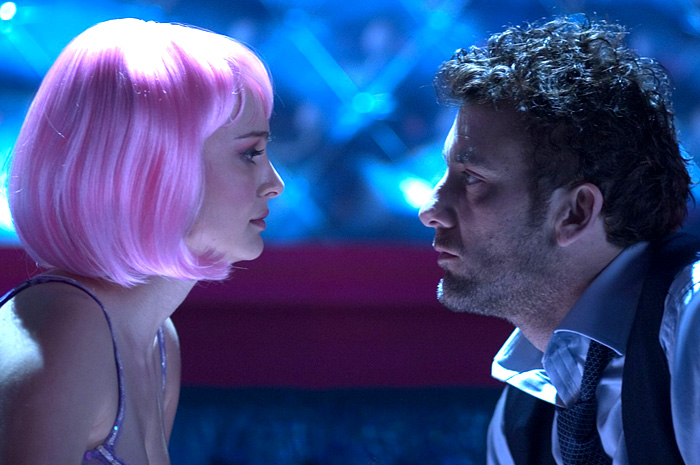
Directed by Nichols based on the play by Patrick Marber, who also wrote the film's screenplay. Closer is a film that doesn't play to the typical formulas of romantic films, instead it is a return to the similar territory of sex and relationships at its most brutal that Nichols' old 1971 film Carnal Knowledge had. Set almost entirely in London, the movie is about four different people, two American women and two British men as they explore their own desires and temptations in love and sex. Starring Julia Roberts, Jude Law, Natalie Portman, and Clive Owen, the film might seem something sweet with a cast like this. Instead, it's a darker, hurtful film that doesn't play nice and it's not the kind of movie anyone wants to bring a date to.

It's a typical day in London as an obituary writer and aspiring author named Dan (Jude Law) runs into a young waitress/stripper named Alice (Natalie Portman) at a crosswalk in London. A cab hits Alice where she was slightly injured as Dan takes her to the hospital where sparks begins to happen. The two have a conversation where Dan takes her to a park where his mother had died. Time goes by as they become a couple where Alice is now a full-time waitress while Dan has just finished a book that is set to be published. Dan takes photos for a photographer named Anna (Julia Roberts) where she is in the middle of a divorce and Dan makes advances towards her. The two kisses but Anna intervenes since she knows Dan has a girlfriend. Alice arrives and suspects something was going on.

Then one night during a sex chat, Dan pretends to be a woman while going on an online chat with a British doctor named Larry (Clive Owen). The chat gets very extreme as Dan, who pretends to be Anna, wants Larry to meet her in an aquarium wearing a white jacket. Larry finally meets Anna but learned that Anna wasn't the person in the chat room as the two get to know each other as Anna is smitten with the rogue, charming Larry. Then a year goes by as Larry and Anna are married while Alice and Dan are having trouble in their relationship as Dan and Anna are rumored to have an affair. At an exhibit Anna made, Larry and Alice meet while Anna and Dan are flirting with each other. Claiming that he has to go on a business trip after the exhibit, Dan gets a cab for Alice and then goes back to the exhibit to flirt with Anna where Larry begins to suspect something.

Then one night as Larry returned home from a business trip, he learns that Anna was having an affair with Dan that had been going on for quite a long time since the night of the exhibit. Alice also learns about it from Dan as she leaves him. Heartbroken and angry, Larry goes to a strip club where he finds Alice where she plays mind games with him. In a room together, Larry demands to know what Alice's name is as she claims its Jane where Alice becomes a sadist in a game of sex. With a divorce for Anna and Larry finalizing, Dan and Anna are officially together until Dan learns that Anna met with Larry for the divorce signing that lead to blackmail. Dan confronts Larry only to learn about something that ruins the relationships for everyone involved as Dan sees Alice for the final time.

While Closer isn't a perfect film, it's still one of the strongest and more subversive efforts from a film studio and director Mike Nichols. Nichols provides a fluid yet momentum-building directing style where he lets the audience get to know the characters. With the story developing in its second and third act, we begin to see the ugliness of everyone involved with the feeling that none of the characters have some sort of resolve in the end. Instead, it's a film where you're not sure who is the innocent one and who was the one driving all of these games. Credit goes to Nichols for not pandering down to a formula where everyone gets happy in the end and instead goes for a human story thanks in large part to Patrick Marber's craftily-structured screenplay that also has wonderful theatrical feel from his own play. Though some might be upset with the cutting of Portman's nude scenes in the film, it doesn't seem necessary since what was shown is enough. If Neil LaBute directed it, he would've done the same thing though his approach of gender studies would be more brutal.

The movie is clearly not a typical Hollywood fare because of Nichols' directing. The script by Marber really has a sense of ambiguity and tension where the characters are trying to discover for themselves what's going on. Also, there's a sense of who is manipulating who in the film and the lines of reality and fantasy are also blurred, especially in the third and final act where the film has an ending where everything is left at a shock to see who was really telling the truth and who wasn't.

The film's masterfully presented technical achievements are spot-on thanks to some non-linear editing style from John Bloom and Antonia Van Drimmlen and the wonderful cinematography of Stephen Goldblatt, notably for his use of lights and colors in the interior scenes. Production designer Tim Hatley and art directors Hanah Mosely and Mark Raggett provide a great look to the film's London look, notably the strip club scenes with Portman and Owen along with Ann Roth's costume design on Portman's stripper costume. Even the sound work of Ivan Sharrock should be complemented for giving the film a distinct sound as if you're watching a theatrical play. Then there's the film's music that features a song that is opened and closed by Damien Rice along with cuts in the strip club scenes by the Prodigy and the Smiths that really sets a sense of intrigue and sadness for its characters.

The heart of the lies in the strong performances of its cast where all the actors refused to play likeable versions of themselves and just get to the point of how the characters should be played along with its complexities. Though Julia Roberts can often be considered to be an overrated and bland actress, this film is her best performance since her Oscar-winning performance in Steven Soderbergh's Erin Brockovich. Roberts is good at playing nice but this is her most mature performance to date where she plays a woman who seeks love but has the same temptations that many older women have. What is more amazing is that Roberts is now stripping down all of her previous likeable roles for something more challenging as Roberts is now getting ready to play an elder stateswoman instead of the Pretty Woman we come to know and love.

Jude Law is wonderful in his role as Dan with his sniveling, cocky attitude and sex appeal. Law brings an understated, restrained performance in the anguished and emotionally tortured Dan. Law also carries a brooding tone in the film's final act where he tries to understand what has happened in a scene with Owen. It's clearly Law at his finest. Clive Owen is the film's biggest standout with his rogue, innocent performance as Larry in the film's first act. Owen has a macho, idiotic sensibility that can be very funny and likeable but as the film begins to darken, we see Owen in a fit of rage where he seems to lose control. Owen has great chemistry with Roberts but in his scene with Natalie Portman, the complexity of heartbreak, anger, confusion, and desire is well balanced in a performance that is a true breakthrough for the British actor.

The film's best and most shocking performance clearly goes to Natalie Portman in what is probably the greatest role of her career. The troubled little girl of The Professional is no more as Portman plays probably the film's most intriguing role in the movie as Alice. Portman brings a sense of lovelorn innocence of the film's first act with her kooky charm and smile where we see why Jude Law falls in love with her. When she's heartbroken, we see the emotional desperation of her character as she is trying to find love but in all of the wrong places. Then when she returns to her world of stripping, Portman goes bare all by not just showing a lot of skin (except for the exposed breasts and other things that got cut) but she also showed a dark, sadistic side that is even more jaw-dropping as she plays games with Owen. Whereas 2003 was the year of her rival Scarlett Johansson who delivered two landmark roles in Lost in Translation and Girl with a Pearl Earring, Portman one-ups Johansson with this performance and her kooky one in Garden State by delivering a sense of beauty, angst, and innocence into a dangerous performance.

Though Closer isn't a perfect film because of its lack of likeable moments, it is still one of the best and more provocative efforts of the year thanks to Mike Nichols' uncompromisingly fluid direction. With credit going to Patrick Marber's script and the performances of Julia Roberts, Jude Law, and most notably Natalie Portman and Clive Owen, Closer is really an adult film that tries to study the behaviors of genders. Though it might not be original, especially compared to Nichols' earlier work and the recent films of Neil LaBute, Closer still works thanks to its story and character study. Though its subversive nature and dialogue might be shocking to a mainstream audience, its performances and director Mike Nichols ability as a storyteller will leave people talking after the movie.

Mike Nichols Films: Who’s Afraid of Virginia Woolf? - (The Graduate) - (Catch-22) - Carnal Knowledge - (The Day of the Dolphin) - (The Fortune) - (Gilda Live) - (Silkwood) - (Heartburn) - (Biloxi Blues) - Working Girl - Postcards from the Edge - (Regarding Henry) - (Wolf (1994 film)) - The Birdcage - (Primary Colors) - (What Planet Are You From?) - (Wit) - (Angels in America) - (Charlie Wilson’s War)

© thevoid99 2010