Directed by Arthur Penn and written by Thomas McGuane, The Missouri Breaks is the story of a rancher who hires a regulator to hunt down a horse thief whose gang has killed one of his men in an act of revenge while his daughter is in love with the head thief. The film is an offbeat western that play into a pursuit with some eccentric characters as it revolves around a man wanting to kill a thief. Starring Marlon Brando, Jack Nicholson, Randy Quaid, Harry Dean Stanton, Frederic Forrest, John McLiam, and Kathleen Lloyd. The Missouri Breaks is a whimsical yet engrossing film from Arthur Penn.
The film revolves around a horse thief whose gang kills a rancher’s foreman who hung their friend over angering a rancher as they would later buy land from that rancher just to piss him off. Yet, the rancher is trying to find out who killed his foreman as he hires an eccentric regulator who plays by his own rules and would later cause all sorts of trouble. It’s a film that is about a thief trying to maintain a life that is honorable and decent yet he also copes with this regulator being around him and causing trouble as well as having issues with a rancher whose daughter he falls for. Thomas McGuane’s screenplay opens with the rancher David Braxton (John McLiam) hanging a young man named Sandy (Hunter von Leer) whose friend is the horse thief Tom Logan (Jack Nicholson) who runs a gang of horse thieves as they learn about their friend’s death. The first act is about Logan and his gang robbing a train to buy land near Braxton’s ranch to start a ranch of their own yet Logan would be the one tending to the ranch while his gang led by Cal (Harry Dean Stanton) travel to Canada to steal horses from the mounted police force.
Logan would meet Braxton’s daughter Jane (Kathleen Lloyd) who is intrigued by Logan though their affair would be kept secret except that her father’s hired regulator in Robert E. Lee Clayton (Marlon Brando) is watching as he suspects Logan involved in the death of Braxton’s foreman. Clayton is this man who is a real oddball as he arrives to the Braxton camp holding on to his horse on the side as if he’s hiding while he has an Irish accent and wears strange costumes. Yet, there’s an aspect of him that is ruthless and cunning in his pursuits though his initial meeting with Logan with Braxton is based on curiosity yet Logan is aware of his reputation as he just tries to not get into trouble. Even as the third act is about Braxton realizing the trouble Clayton is bringing as it would lead to all sorts of chaos in his pursuit of Logan and his gang.
Arthur Penn’s direction is definitely mesmerizing in the way he presents the American West as it is shot on various locations in Wyoming to play into this world of the West and in areas near the Missouri River. Penn’s usage of the wide shots do play into the vast scope and the attention to detail into the landscape from the trees on the mountains as well as the rivers and other parts of the film while he would maintain an intimacy through medium shots and close-ups as it relates to the characters. Penn’s compositions play into moments that are comical such as the train robbery scene as well as the way Clayton introduces himself. Penn would also maintain that air of humor and low-key drama to play into the characters that are trying to do their work in stealing horses or Logan trying to tend to his land. The smaller moments showcase Penn putting time in the characters while letting the action take hold during the third act as it relates to Clayton’s methods and what he does where the violence is intense. Even as it would play into this confrontation between Logan and Clayton with Braxton having some part in playing to the chaos that he’s created. Overall, Penn crafts an exhilarating and quirky film about a horse thief being watched and hunted by an odd regulator.
Cinematographer Michael Butler does brilliant work with the film’s cinematography with its gorgeous yet natural look for many of the daytime exteriors with some stylish and low-key lighting for some of the interior scenes set in the day. Editors Dede Allen, Gerald G. Greenberg, and Steven A. Rotter do excellent work with the editing as it is largely straightforward for some of the dramatic and comedic moments while using some stylish rhythmic cuts for some of Clayton’s antics. Production designer Albert Brenner, with set decorator Marvin March and art director Stephen Myles Berger, does fantastic work with the look of the Braxton home as well as the ranch that Logan runs and the home that his gang live in.
Costume designer Patricia Norris does amazing work with the costumes from the ragged look of Logan and his gang to the odd clothes that Clayton wears including a dress that he would wear as part of his disguise. Sound editor Richard P. Cirincione does terrific work with the sound as it play into the atmosphere of the locations as well as some of the usage of gunfire and other weapons. The film’s music by John Williams is incredible for its offbeat approach to country and folk with some orchestral elements that add to the film’s odd yet enjoyable tone.
The film’s wonderful cast include some notable small roles from James Greene and Luana Anders as a rancher and his wife that Cy would hide out at, Danny Goldman as a baggage clerk during the train robbery, Hunter von Leer as Logan’s friend Sandy who gets hung by Braxton, John P. Ryan and Frederic Forrest as a couple of Logan’s friends in his gang in their respective roles as Cy and Cary, and Randy Quaid in a superb performance as a young member of the gang named Little Tod who gives Logan the idea to rob a train as he is an able though naïve hood who is always helpful. John McLiam is terrific as David Braxton as a rancher who wants retaliation for the death of his foreman as he is also suspicious of Logan buying land near him. Kathleen Lloyd is fantastic as Braxton’s daughter Jane as a young woman who is often caring for her father as she becomes fascinated by Logan whom she sees as someone who has a lot more to offer as well as an escape from her stuffy life. Harry Dean Stanton is excellent as Logan’s right-hand man Cal who gets some of the film’s best lines and dialogue as he’s kind of the conscience of sorts who often puts Logan in his place but also is aware of how dangerous Clayton is.
Jack Nicholson is great as Tom Logan as a horse thief that is trying to go straight and live a decent life while falling for the rancher’s daughter as he becomes aware of Clayton’s presence as it’s a restrained performance from Nicholson where he displays some charm but also a grounded approach of a man that becomes uneasy by what is happening around him. Finally, there’s Marlon Brando in a phenomenal performance as Robert E. Lee Clayton as this offbeat and odd regulator that has Brando sport an Irish-American accent as well as a twangy-western accent in one sequence as it’s a strange yet exuberant performance that has Brando be funny but also ruthless in the way he does his job as it’s one of his more overlooked performances of his career.
The Missouri Breaks is a sensational film from Arthur Penn that features incredible performances from Marlon Brando and Jack Nicholson. Along with its gorgeous visuals, top-notch supporting cast, John Williams’ exhilarating score, and a compelling screenplay by Thomas McGuane. It’s a western that doesn’t play by the rules while maintaining much of the visual tropes and plot devices expected from the genre with elements of dark humor. In the end, The Missouri Breaks is a spectacular film from Arthur Penn.
Arthur Penn Films: (Portrait of a Murderer) – (The Left Handed Gun) – (The Miracle Worker) – (Mickey One) – (The Chase (1966 film)) – (Bonnie and Clyde) – (Flesh and Blood) – (Alice’s Restaurant) – Little Big Man - (Visions of Eight) – (Night Moves (1975 film)) – (Four Friends) – (Target (1985 film)) – (Dead of Winter) – (Penn & Teller Get Killed) – (The Portrait (1993 film)) – (Inside (1996 film))
© thevoid99 2018
Written and directed by James L. Brooks, Broadcast News is the story of a neurotic TV news producer who finds herself torn between her loyalty to a cynical reporter and a charismatic but dim anchorman. The film is an exploration of the world of news media where three people try to help bring news to the world in an ever-changing world. Starring Holly Hunter, Albert Brooks, William Hurt, Joan Cusack, Lois Chiles, Robert Prosky, Peter Hackes, and Jack Nicholson. Broadcast News is a witty yet captivating film from James L. Brooks.
The film revolves around a love triangle between a TV news producer, a veteran reporter, and a new anchorman for a Washington D.C. news station as they all try to report the news and sell it to the public. It’s a film that isn’t just an exploration of the world of news but also the lives of three people who are part of this world as they struggle to find their roles in it. Especially as their professional ideals and lives begin to clash with their own personal lives in this complicated love triangle where they’re all trying to do the same thing despite their different takes on the news. James L. Brooks’ script doesn’t just the explore the conflict about how the news should be presented and sold to the public but also in the ideals of these three characters.
The TV producer Jane Craig (Holly Hunter) is someone that believes that the news should be told and not embellished as it’s something the reporter Aaron Altman (Albert Brooks) also believes though he is more cynical about the way news is being told and commercialized for a mass audience. Coming into their lives is Tom Grunick (William Hurt) who has the looks and charm of a news anchor but isn’t very smart as he knows that where he wants to help as he met Craig during a convention about the ethics of news. Grunick is someone that has the look to report and tell the news to the public as he is everything Altman isn’t as he is nice and not trying to offend anyone. Altman is a prick because he is passionate about wanting to get the facts straight and be true to the news. While Craig doesn’t think highly of Grunick at first, she eventually realizes his potential as well as the fact that he is actually presentable and can do his job.
It’s not just in the development of the story and the characters where Brooks succeeds at but it’s also in the many quirks of the characters such as Craig who is quite neurotic and often cries daily. She is also not in a relationship or involved with anyone other than Altman until Grunick appears as he is a very interesting person despite his lack of intelligence. Altman is baffled by how Grunick would get work so easily yet when Altman is given the chance to cover the news. Grunick gives him a few pointers on how to present himself as it would be a turning point for him but also with some realizations that he must face. The film also features a subplot that comes in its second half as it relates to a dangerous layoff due to budget cuts as it plays into the reality of the TV news world where it’s not just about ratings but also money.
Brooks’ direction is very simple in terms of the compositions he creates yet does manage to infuse some style into the way the newsroom and what goes on behind the scenes are shown. The film opens with a trio of prologues that relates to the main characters as children as it shows exactly who they are and what they would become as adults. Shot largely in Washington D.C. with some parts shot in Maryland and Virginia, the film does play into a world that is very energetic and demanding where Brooks doesn’t use a lot of wide shots as he favors something more intimate in the medium shots and close-ups. There are moments where Brooks’ direction does have some style such as this shot of Grunick in the foreground shot from behind while Craig is in the background very far in a wide shot as it play into what goes on in news reporting.
One notable sequence involving trying to get tape and such for a news report is among one of the most inventive and exciting moments in the film where it does have this air of realism in what Brooks is showing. Even as it shows an editor trying to cut something to the last second and get it to be aired for the evening news. Brooks’ direction is also very light-hearted in scenes where there’s a gathering or moments that are quite comical but not overtly. It’s told with a sense of restraint while not being totally forced as well as some of the drama though it does get quite heavy towards the third act as it relates to the love triangle between Craig, Altman, and Grunick. Especially as it reveals a lot about who they are and what they want for the world of TV news reporting. Overall, Brooks creates an insightful yet riveting film about three people in a love triangle while trying to report the news to the world.
Cinematographer Michael Ballhaus does excellent work with the film‘s cinematography as it‘s mostly straightforward to play into the look of the locations in its daytime/nighttime exteriors as well as some unique lighting for the interior scenes. Editor Richard Marks does brilliant work with the editing as it play into the frenzy of what goes on in the newsroom and behind the scenes along with some straightforward cutting for the dramatic and comedic moments outside of the newsroom. Production designer Charles Rosen and set decorator Jane Bogart does fantastic work with the look of the editing room in the news room and the homes of some of the characters.
Costume designer Molly Maginnis does nice work with the costumes as it is kind of casual with bits of style as well as some of the infamous clothing of the 1980s with fake shoulder pads. Sound editor Robert Grieve does terrific work with the sound from the way the chaos of trying to get a story displayed on television to the sound of the gatherings the characters go to. The film’s music by Bill Conti is wonderful for its score that is mainly a mixture of low-key piano-based music with some electronic keyboards to play into the world of the TV news.
The casting by Ellen Chenoweth is great as it features some notable small roles from Kimber Shoop as the young Grunick, Dwayne Markee as the young Altman, Gennie James as the young Craig, Stephen Mendillo as Grunick’s father, Ed Wheeler as an anchorman in George Wein, Glen Roven and Marc Shaiman as a couple of music composers trying to create a new theme for the news channel, Christian Clemenson as the TV editor Bobby, Leo Burmester as Craig’s father, Marita Geraghty as a date-rape woman that Grunick interviews, and a low-key cameo appearance from a faceless John Cusack as an angry messenger. In another notable small role that is a cameo of sorts, Jack Nicholson is superb as the evening news anchorman Bill Rorish as this legendary reporter that tells the news to the world as he carries some seniority as well as being the one guy everyone has to make sure he looks good. Peter Hackes is excellent as the news station boss Paul Moore who tries to keep things going while dealing with the financial chaos of the station. Joan Cusack is fantastic as Blair Litton as a staff member who is also Craig’s best friend of sorts who has an amazing scene running around the office to bring a tape in and evade all sorts of obstacles.
Lois Chiles is wonderful as anchorwoman Jennifer Mack who takes a liking towards Grunick as she would briefly go out with him. Robert Prosky is brilliant as Ernie Merriman as the station’s manager who tries to keep things afloat while being aware of the layoffs that might emerge. Albert Brooks is phenomenal as Aaron Altman as this very intelligent and idealistic reporter who has always been behind the scenes or covering events around him as he copes with Grunick’s presence as well as his attempts to bring some substance to the world of news. William Hurt is remarkable as Tom Grunick as this dim but kind-hearted reporter that has the looks and charms to be an anchorman as it’s a very complex character as he represents someone that wants to make the news more accessible. Finally, there’s Holly Hunter in an incredible performance as Jane Craig as a TV news producer who is torn between two men while often crying for some odd reason as it’s a very fiery and energetic performance that play into a woman trying to maintain the idea of what TV news should be.
Broadcast News is a marvelous film from James L. Brooks that features great performances from Holly Hunter, William Hurt, and Albert Brooks. It’s a film that is very smart as well as being very funny thanks in part to its witty script as well as a superb supporting cast. In the end, Broadcast News is a sensational film from James L. Brooks.
James L. Brooks Films: (Terms of Endearment) - (I’ll Do Anything) - (As Good as It Gets) - (Spanglish) - (How Do You Know)
© thevoid99 2016
Based on the novel by Ken Kesey, One Flew Over the Cuckoo’s Nest is the story of a criminal who pretends to be mentally ill in order to avoid jail time where he finds himself in a mental hospital where he deals with a world that is far crueler. Directed by Milos Forman and screenplay by Lawrence Hauben and Bo Goldman, the film is an exploration of a small-time thief who hopes to take it easy only to deal with authorities who treat people in the most inhumane way. Starring Jack Nicholson, Louise Fletcher, Will Sampson, Danny DeVito, Christopher Lloyd, Scatman Crothers, William Redfield, and Brad Dourif. One Flew Over the Cuckoo’s Nest is a tremendous yet engrossing film from Milos Forman.
Wanting to avoid jail time by staying in a mental hospital in the hopes that he can relax and have fun, a small-time criminal finds himself dealing with a very strict nurse who treats many patients in very inhumane ways where he rebels against her rules and the system in the hospital. Set in the fall of 1963, the film plays into a man that thinks he will be out of the hospital in 90 days and go back to doing all of the shenanigans he’s done though his crime was statutory rape where he had no clue the girl he slept with was 15. During his stay at this hospital in Oregon, Randall Patrick “Mac” McMurphy (Jack Nicholson) doesn’t just see a world where a group of sick men are being goaded and forced to unload into their own issues but also see that there’s a possibility that they might not get better. By being this rebellious figure who wants to watch baseball and go fishing, McMurphy would be this figure that would antagonize the orderlies and this head nurse in Nurse Ratched (Louise Fletcher).
The film’s screenplay doesn’t just explore this environment that is this mental hospital in Oregon but also the people who are there as many of them have trouble with the real world. Among these men that McMurphy meets include a young man with a bad stutter named Billy (Brad Dourif), a profane and confrontational man in Taber (Christopher Lloyd), a delusionist in Martini, an epileptic in Seflet (William Duell), a man prone to childish tempers in Cheswick (Sydney Lassick), a paranoid intellectual in Harding (William Redfield), and a quiet yet tall Native American that McMurphy calls Chief (Will Sampson). Many of them are revealed to be men with real problems but need the time to feel better as McMurphy helps them have a chance to live normal lives while being antagonistic towards Ratched and the other doctors who believe that McMurphy is dangerous but not entirely crazy until Ratched makes a decision that would change things for the film’s second half.
Especially when McMurphy knows more about the patients in his ward and what is happening to him where it raises a lot of questions into the state of inhumanity that he would endure. Especially as the other patients are also being tested against their will where McMurphy would have some revelations about his own and the people around him. It would cause a series of events for him to revolt and try to escape but also endure the growing state of what Ratched and the doctors at the hospital are doing where it is obvious that the men in the ward really need help and McMurphy is the one person that really seems to care and offer them a glimpse of a world without problems no matter how fucked up it is. Yet, it’s a world that is better and can be organized instead of being pressed on and treated like an animal in this abusive and controlling mental hospital under the control of this heartless bitch.
Milos Forman’s direction is quite intimate for the fact that it was shot largely in Salem, Oregon as well as nearby areas including the Oregon State Hospital where much of the film is shot. While there are some wide shots that occur outside of the hospital including a sequence where McMurphy and the gang go on a fishing trip with one of McMurphy’s girlfriends in a day of fun. Much of the film has Forman use close-ups and medium shots to play into the world of the hospital where it is very controlled as Forman’s compositions would have this sense of repression that looms throughout the film. Once the McMurphy character comes in, it’s as if the hospital is starting to come alive little by little as it also has an air of imagination where McMurphy looks into a TV that isn’t on where he comments about a baseball game.
The direction also has Forman find ways to balance humor and drama where the latter becomes very prevalent in the film’s second half as it relates to what McMurphy is dealing with and the outcome of what he has to endure. The usage of extreme close-ups do come into play it does feel very unsettling in terms of what McMurphy has to be put through as well as the other patients. Some of which are here because they actually need help but are being treated inhumanely. Even as the film’s climax that relates to McMurphy’s attempt to escape and throwing a party for himself and the patients would showcase a group of men needing an escape from their own problems and a chance that there is hope for them in the real world. Yet, it is followed by the harshness of reality in the form of Nurse Ratched who is pretty much a monster that needs to be taken down in the hopes that those who suffer from mental illness can be saved and treated humanely. Overall, Forman creates a riveting yet exhilarating film about a small-time criminal trying to buck the system at a mental hospital.
Cinematographers Haskell Wexler and Bill Butler do amazing work with the film‘s cinematography from the look of the many interiors inside the hospital for the scenes set in day and night as well as some of the exteriors in the locations near Salem, Oregon. Editors Richard Chew, Sheldon Kahn, and Linda Klingman do brilliant work with the editing with its usage of rhythmic cuts to play into the drama and some of the film‘s humor while creating moments that are engaging in some of the livelier moments of the film. Production designer Paul Sylbert and art director Edwin O’Donovan do fantastic work with some of the minimal set pieces created such as the ward room and its bathroom that featured a prop that would be key to the story.
Costume designer Aggie Guerard Rodgers does nice work with the costumes design as it‘s mostly casual for all of the patients as well as the look of Nurse Ratched‘s uniform. The sound work of Mark Berger is superb for the atmosphere that is created in the ward with its usage of calm music to soothe the patients to the raucous sounds that would occur upon McMurphy‘s arrival and presence. The film’s music by Jack Nitzsche is wonderful for its low-key, folk-based score that plays into some of the elements of drama and humor as well as what is going on outside of the hospital.
The casting by Jane Feinberg and Mike Fenton is incredible as it features notable small roles from Nathan George as the attendant Washington, Marya Small as a girlfriend of McMurphy in Candy, Louisa Moritz as Candy’s friend Rose, Kay Lee as a night supervisor at the hospital, and Scatman Crothers in a hilarious performance as the night orderly Turkle who finds himself in big trouble. Other noteworthy small performances as some of the patients in the film include Josip Elic as the somewhat-catatonic Bancini, Michael Berryman as the deformed Ellis, Delos V. Smith as the hippie-like patient Scanlon, Willam Duell as the epileptic Seflet, and Vincent Schaivelli as the annoyed Frederickson. Dean Brooks superb as the hospital administrator Dr. Spivey as a man that is trying to understand what is going on while believing that McMurphy isn’t a totally bad influence despite Ratched’s opinion.
Danny DeVito and Christopher Lloyd are excellent in their respective roles as the delusional Martini and the aggressive Taber who both enjoy McMurphy’s presence while William Redfield is brilliant as the educator Harding who copes with the idea that his wife might be cheating on him. Sydney Lassick does amazing work as the child-like Cheswick as a man who has been repressed by his surroundings where he is fit to have tempers where McMurphy is the one person that can help him. Brad Dourif is phenomenal as Billy Bibbit as a young man with a bad stutter who is reluctant to enter the real world while being given the chance to live through McMurphy. Will Sampson is remarkable as the Chief as a tall and silent Native American who is an observer as well as this mysterious being that McMurphy befriends as well as someone who seems to revel in McMurphy’s presence.
Louise Fletcher is great as Nurse Ratched as this head nurse of a ward that is trying to maintain control and oppress everything as there is this coldness to her along with the fact that she is really just a straight-up bitch. Finally, there’s Jack Nicholson in a tour-de-force performance as Mac McMurphy as a small-time criminal who goes to the hospital to avoid jail time only to find himself in bigger trouble by antagonizing Nurse Ratched as it’s a performance that is manic but also one filled with depth as Nicholson creates a character that we all can root for.
One Flew Over the Cuckoo’s Nest is an outstanding film from Milos Forman that features great performances from Jack Nicholson and Louise Fletcher. Along with a phenomenal supporting cast as well as a compelling screenplay, the film isn’t just a unique study into madness and oppression. It’s a film that also showcases a world of men being treated inhumanely by an unjust world that was supposed to help them only to make them less human. In the end, One Flew Over the Cuckoo’s Nest is a spectacular film from Milos Forman.
Milos Forman Films: (Black Peter) - (Loves of a Blonde) - (The Fireman’s Ball) - (Taking Off) - (Visions of Eight) - (Hair) - (Ragtime) - (Amadeus) - (Valmont) - (The People vs. Larry Flynt) - (Man on the Moon) - (Goya’s Ghost)
© thevoid99 2016
Based on the novel Ten Days That Shook the World by John Reed, Reds is the story of John Reed’s account of the Russian Revolution as he begins an affair with socialite Louise Bryant who joins him in taking part of the revolution. Directed by Warren Beatty and screenplay by Beatty and Trevor Griffiths, the film is an exploration into the world of the Russian Revolution as it is told by those who survived the Revolution as well as dramatic accounts of Reed’s coverage as he is played by Beatty with Diane Keaton as Bryant. Also starring Edward Herrmann, Maureen Stapleton, Jerzy Kosinski, Paul Sorvino, Nicolas Coster, Gene Hackman, and Jack Nicholson as Eugene O’Neill. Reds is an enthralling yet evocative film from Warren Beatty.
Set in the span of five years with interviews from those who lived during a tumultuous period in world history, the film is the story about the life of the journalist John Reed who tries to make a difference where he and his then-wife Louise Bryant would witness the Russian Revolution in 1917 where he would later try to create a similar revolution in the U.S. It’s a film that is sort of a rise-and-fall story where John Reed wants to do something in the world of socialism as he and several intellects want to do something for the workers while living a carefree lifestyle with Bryant who would later join him and become part of his world. Yet, it’s also a love story between these two from the moment they meet in his hometown of Portland, Oregon in 1915 where she aspires to be a journalist to his death in 1920 in Russia. All of which plays into two people wanting to make a difference for a better world where they eventually realize that it’s not as easy as they think it is.
The film’s screenplay by Warren Beatty and Trevor Griffiths, with additional contributions by Elaine May and Robert Towne, explores how Bryant and Reed met where it was merely by accident as Bryant heard of Reed through his work as a journalist as she is a socialite married to a dentist that has become bored of her world. After a series of gatherings, Bryant goes to New York City where she is introduced to Reed’s circle of friends and intellects that include the playwright Eugene O’Neill, Max Eastman (Edward Herrmann), and the renowned anarchist Emma Goldman (Maureen Stapleton). Bryant would be overwhelmed by these people but eventually would come into her own despite some issues with Reed as she feels like she doesn’t fit in. While their relationship had complications often due to Reed’s willingness to do something for the socialist movement in America with Bryant often being on her own where she would have an affair with O’Neill.
The first act would be about Bryant and Reed’s affair and their marriage where they try to have a normal life but things get troubled because of Reed’s frequent absences to cover things like the 1916 election and taking part in activist meetings. The second act would be about their time in Russia where Reed would write his seminal book as Bryant would find a role in giving lectures as the two believe they’ve done something where Reed goes from being a successful writer to trying to succeed in the world of politics where he tries to do something for an American communist party. Even as he would find himself sparing with other members about motives where he goes to Russia in the hope to get some endorsement. Instead, the third act represents Reed’s fall where he is stuck in Russia as he goes to the country illegally while unaware of the tension that is going on between Russia and Finland over ideals as well as the former’s own view of what communism should be prompting Bryant to make her journey to enter Russia illegally that would add a lot of the drama that occurs in the third act.
Beatty’s direction is quite vast as he would create something that is very offbeat in terms of its narrative structure as well as how he would dramatize these events and the real people involved. While his presentation with the interviews of the people such as the novelist Henry Miller, Roger Nash Baldwin, and many other people who were witnesses to these events that Reed and Bryant are simple. Even as they help set up certain stories about the two along with some gossip about what Reed and Bryant were doing as many of Beatty’s images sort of create images that look like paintings but also compositions that are rich and intoxicating. Most notably the scenes in New York and parts of Great Britain as the east coast to play into a time of innocence but also the desire for change as there’s some Americans who oppose going into World War I as they believe it’s all about profit.
For the scenes set in Russia, much of it is shot in Finland as well as a few locations in Spain and Sweden where it plays into a world that is quite big. Notably as Beatty takes great usage of the wide shots for a few scenes of conflict along with large images of rallies and marches that went on in Russia. There is something that feels grand in these scenes but once the film returns to Russia amidst a fallout over American communists disagreeing about what to do. The film does change where it is not just about the fallacies of revolutions but also why communism in America would never work as it would force Reed to see that as well as deal about what is more important as it relates to Bryant. Even as Bryant would go into her own journey to travel to Russia which would be just as adventurous as Reed’s which shows how much they love each other and why that love is more important than some revolution. Overall, Beatty creates an absolutely sensational and entrancing film about John Reed’s life and his love for Louise Bryant.
Cinematographer Vittorio Storaro does incredible work with the film‘s photography as it plays into a sense of naturalistic lighting schemes for some of the interiors and some of the daytime scenes along with its lush usage of lights for some scenes and some stylish filter shots to play into some of the exteriors set at night as it is one of the film‘s major highlights. Editors Dede Allen and Craig McKay do excellent work with the editing with its back-and-forth cutting style with the interviews and the dramatization as well as some rhythmic cuts for the action and dramatic moments in the film. Production designer Richard Sylbert, with set decorator Michael Sierton and art director Simon Holland, does amazing work with the design of some of the places in Russia from the palaces in its pre-revolution settings to the look of the apartments in its post-revolution as well as the homes in America where Reed and Bryant lived in.
Costume designer Shirley Ann Russell does fantastic work with the costumes to display what American socialites wore in the late 1910s as well as the more ragged look of the Russians during the post-revolution days. Sound editor Richard P. Cirincione does superb work with the sound to capture some of the sound work that goes on at the meetings as well as quieter moments though the highlight of the sound editing is in the way the recollections of the people interviewed are used in some of the scenes in the film. The film’s music by Stephen Sondheim and Dave Grusin is brilliant with Sondheim providing some old-school rag-time and jazz music to play into the period of the times while Grusin would bring in some orchestral pieces to play into the drama and action.
The casting by Noel Davis and Patsy Pollock is wonderful as it features notable small appearances from M. Emmet Walsh as a liberal party speaker, Roger Sloman as Vladimir Lenin, Oleg Kerensky as Alexander Kerensky, Stuart Richman as Leon Trotsky, George Plimpton as newspaper editor Horace Whigham, Nicholas Coster as Louise’s first husband Paul Trullinger, Harry Ditson as the political artist Maurice Becker, Max Wright as the literary critic Floyd Dell, William Daniels as a socialist party leader in Julius Gerber, and Gene Hackman in a small yet terrific performance as newspaper editor Peter Van Wherry. Paul Sorvino is excellent as an Italian founder of the American Communist party in Louis C. Fraina who wants to do something for the party but has a hard time trying to get things in order due to the demands of others including Reed.
Jerzy Kosinski is superb as Bolshevik leader Grigory Zinoviev who is trying to instill his idea of socialism as he would have conflicts with Reed over how loyal he is towards the revolution. Edward Herrmann is fantastic as Max Eastman as a friend of Reed who also is part of a socialist movement until things go a little too far as he decides to walk away from the movement. Maureen Stapleton is amazing as Emma Goldman as the renowned and outspoken anarchist who is against America’s participation in World War I as she wants socialism to come to America where she is later exiled to Russia where she becomes disillusioned with their ideas of socialism. Jack Nicholson is brilliant as Eugene O’Neill as the playwright who begins an affair with Bryant as he is a man of passion and care while he copes with wanting to be something for Bryant that Reed couldn’t be as he would later help her in the third act.
Diane Keaton is phenomenal as Louise Bryant as a socialite who aspires to write as she befriends Reed and later becomes his wife where she gets caught up in his world where Keaton brings a lot of weight and charisma to her performance. Finally, there’s Warren Beatty in a remarkable performance as John Reed as a journalist who is eager to do something in the hopes he can do good for the workers of America as he would cover the Russian Revolution and later deal with illness and disillusionment over the way the Russians would run things in its aftermath. Beatty and Keaton have some great chemistry in their scenes together in the way they argue as well as in tender moments as they both provide moments that are truly among the highlights of the film.
Reds is a tremendously sprawling and rich film from Warren Beatty that features great performances from Beatty, Diane Keaton, Maureen Stapleton, Edward Herrmann, Paul Sorvino, and Jack Nicholson. Along with Vittorio Storaro’s gorgeous cinematography as well as some amazing technical work and interviews from those who lived during that period. It’s a film that isn’t just an interesting historical film that explores America’s brief flirtation with socialism and the Russian Revolution but also an insight into a man’s attempt for change nearly cost him everything including the woman he loves. In the end, Reds is an outstanding film from Warren Beatty.
Warren Beatty Films: (Heaven Can Wait) - (Dick Tracy) - (Bulworth) - (Untitled Howard Hughes Project)
© thevoid99 2015
Directed by Mike Nichols and written by Jules Feiffer, Carnal Knowledge is the story of two college roommates who both deal with their respective relationships with women in the course of 25 years. The film explores two different men who cope with their love lives as it also has compelling discussions about sex. Starring Jack Nicholson, Art Garfunkel, Ann-Margaret, Candice Bergen, Rita Moreno, Cynthia O’Neal, and Carol Kane. Carnal Knowledge is a provocative and chilling film from Mike Nichols.
The film revolves around the friendship of two college roommates in the late 1940s as they spend the next 25 years dealing with women and the complexities of their relationship. The film reveals the lives of these two different men who both have an urge to sleep with women and such but with different ideas about love. For the introverted Sandy (Art Garfunkel), he just wants to be with a woman and be in a good relationship with sex involved. For the more extroverted Jonathan (Jack Nicholson), it’s all about getting laid as he would also endure the ideas of relationships which becomes confusing once he is involved with a beautiful but very dysfunctional woman named Bobbie (Ann-Margaret). The film plays into three different time periods and with different women as screenwriter Jules Feiffer explores not just the world of sexual politics but also in how men use women for their own sexual needs.
The first act is set in Amherst College where Jonathan and Sandy are roommates as the latter pursues a student at a nearby college in Susan (Candice Bergen) where they have a relationship but Jonathan’s advice from Sandy would complicate things until Jonathan would have an affair with Susan which becomes secret. The second act is set in New York City in the corporate world where Sandy and Susan are married but it’s not a happy union while Jonathan embarks on this turbulent relationship with Bobbie as it is Jonathan’s attempt to have a steady relationship. What happens plays into the fallacy of relationships as well as what happens when sex gets in the way where there are many discussions between the two men about sex. Some tend to be good but some of it is also bad as it relates to Sandy’s marriage to Susan as Sandy would look for something else prompting Jonathan to do something to help them both. It would lead to a third act as it plays into not just what it means to be adults but also the idea of love and sex.
Mike Nichols’ direction is very engaging for the way it explores the friendship of two men in the span of 25 years as Nichols doesn’t really go for any kind of visual tricks. Instead, it is very straightforward while he manages to let things play out in terms of what happens when it comes to the idea of sex and relationships. The compositions that Nichols create interesting in the way he frames the actors into a film while having one or two characters in the foreground while someone else is in the background. Even as the person in the background is either watching or being the subject of ridicule as there are moments of dark and crass humor involved. Especially as the women in the film do get treated like shit as they call upon Jonathan for his bullshit while Sandy would also get some recourse for his own actions. Even as its third act plays into the eventual destinies that both Sandy and Jonathan endure in their life and what they’re willing to accept. Overall, Nichols create a very compelling and witty film about two men exploring the world of sex and love.
Cinematographer Giuseppe Rotunno does excellent work with the film‘s cinematography to create some unique moments for some of the nighttime interior/exterior scenes to set some dark moods into the film. Editor Sam O’Steen does brilliant work with the editing to convey some of the drama that occurs with a few jump cuts and other rhythmic cuts to play into some of the dramatic tension. Production designer Richard Sylbert, with set decorator George R. Nelson and art director Robert Luthardt, does fantastic work with the set pieces from the apartment Jonathan lived in with Bobbie to the more posh one he would have in the film‘s final moments. Costume designer Anthea Sylbert does terrific work with the costumes from the clothes that the men wear in the different time periods to the stylish clothes of the women. Sound recordist Larry Jost does nice work with the sound as it’s very low-key and to the point while capturing much of the music that is played on film ranging from Glenn Miller, Tommy Dorsey, and Frank Sinatra.
The film’s phenomenal cast includes notable appearances from Carol Kane as Sandy’s second wife Jennifer late in the film, Cynthia O’Neal as a friend of Bobbie that Sandy would date in Cindy, and Rita Moreno in a superb one-scene performance as a hooker that Jonathan meets late in the film. Candice Bergen is excellent as Sandy’s college girlfriend/first wife Susan as she is this woman that is charmed by Sandy’s kindness as she later has an affair with Jonathan that would have her be more outgoing. Ann-Margaret is fantastic as Bobbie as this very attractive but troubled older woman who doesn’t feel she is treated fairly while being someone that seems to depend on the needs of a man.
Art Garfunkel is superb as Sandy as this introverted man that is trying to find ways to be with women as he later becomes disillusioned with the idea of marriage only to realize that there’s so much more to life than just sex. Finally, there’s Jack Nicholson in an incredible performance as Jonathan Fuerst as this very charming and wild man that is eager to get what he wants while becoming frustrated with the constraints of being in a relationship while giving Sandy advice that eventually doesn’t work as he copes with who he is as it’s one of Nicholson’s best performances.
Carnal Knowledge is a riveting yet unsettling film from Mike Nichols that features top-tier performances from Jack Nicholson and Ann-Margaret. It’s a film that manages to very captivating in its exploration of sex as well as the roles of genders during that time. It’s a film that isn’t afraid to be provocative as it is also a film that showcased what was happening during the early 70s when sex is being discussed openly. In the end, Carnal Knowledge is a marvelous film from Mike Nichols.
Mike Nichols Films: Who’s Afraid of Virginia Woolf? - (The Graduate) - (Catch-22) - (The Day of the Dolphin) - (The Fortune) - (Gilda Live) - (Silkwood) - (Heartburn) - (Biloxi Blues) - Working Girl - Postcards from the Edge - (Regarding Henry) - (Wolf (1994 film)) - The Birdcage - (Primary Colors) - (What Planet Are You From?) - (Wit) - (Angels in America) - Closer - (Charlie Wilson’s War)
© thevoid99 2015
Directed by Bob Rafelson and screenplay by Jacob Brackman from a story by Rafelson and Jack Nicholson, The King of Marvin Gardens is the story of two estranged brothers who go to Atlantic City for a real-estate scam where things go wrong. The film is an exploration into the world of brothers as one is an extroverted con man and the other is an introverted and depressed radio disc jockey as they reluctantly work together. Starring Jack Nicholson, Bruce Dern, Ellen Burstyn, and Scatman Crothers. The King of Marvin Gardens is a chilling yet whimsical film from Bob Rafelson.
The film explores the relationship of two different brothers who hadn’t seen each other in two years as the introverted younger radio disc jockey in David Staebler (Jack Nicholson) reluctantly travels to Atlantic City to bail out his older brother Jason (Bruce Dern) who has an idea for a real-estate scam that David unwillingly becomes a part of. Yet, it’s a film that plays into an idea of two brothers who try to create something for themselves but not everything is going great as David is skeptical about what Jason is doing as they’re joined by Jason’s aging beauty queen girlfriend Sally (Ellen Burstyn) and a younger woman in Jessica (Julia Ann Robinson). While all of them have dreams about what they want to do if the scam becomes successful, David tries to remain optimistic as he copes with his own depression as it would play into the fallacies of the American Dream and reality that of what is really happening.
Jacob Brackman’s screenplay doesn’t just explore this unique relationship between brothers but also what they’re trying to do with this scheme that Jason is creating. Especially as Jason wants to break out of his own and live very richly despite years of work and loyalty towards his boss in Lewis (Scatman Crothers). Things eventually complicated as jealousy begins to arise in Jason’s attention towards Jessica making Sally more troubled than she already is as she resents David’s presence though he tries to be nice to her. Yet, David’s skepticism and Sally’s fragile behavior creates a situation that becomes very toxic as Jason seems more eager to succeed though the details of his plan becomes more scarce. David would eventually try to see reason into what is happening as it would lead to a break down in the relationships involving his brother and the women in the scheme.
Bob Rafelson’s direction is truly amazing for the way he captures much of the drama and some of the livelier moments such as Sally’s introduction to David to showcase her beauty queen persona. Yet, the film opens with this very long take of David talking about a story in his radio program where it reveals who he is as this very somber way he tells his story as he prefers to live modestly with his ailing grandfather. Upon his arrival to Atlantic City where it is this lost world where things are still happening but it has lost the sense of prestige where it’s being taken over by crime and corruption. Rafelson brings in something that is improvisational in its direction such as this big scene where Jason, David, Sally, and Jessica are doing a show of their own in an empty theater as Rafelson uses a lot of wide and medium shots for much of the presentation where he also includes a lot of long takes.
Even as the music in the film is presented on location such as Jason and David’s encounter with a marching band that showcases how warm their brotherhood could be. Yet, it wouldn’t last as things do get more dramatic as it involves Sally’s own breakdown as well as revelations about Jason’s own schemes where it would play into the fallacy that is the American Dream. Overall, Rafelson crafts a very engaging and haunting film about two brothers working together in a doomed scam.
Cinematographer Laszlo Kovacs does brilliant work with the film‘s very realistic yet colorful cinematography where he infuses a lot of low-key lights for some of the film‘s nighttime interior/exterior scenes as well as some unique lighting schemes in some of the film‘s more eerie moments. Editor John F. Link II does nice work with the editing as it‘s mostly straightforward in its approach to cutting while using a few rhythmic cuts for its dramatic moments. Art director Toby Carr Rafelson does terrific work with the look of the hotel rooms that the four characters are staying at as well as the abandoned theater where they performed their show. Sound mixer Tom Overton does superb work with the sound from the hollowness of the abandoned theater to some of the craziness that David sees at the hotel involving Jason and the two women.
The casting by Marion Dougherty and Fred Roos is fantastic as it features some notable small roles from Charles Lavine as David and Jason’s grandfather and Scatman Crothers as the elusive yet charming crime boss Lewis. Julia Ann Robinson is wonderful as Jessica as a young woman who dreams of being a beauty queen while becoming more flirtatious as she eventually causes tension with Sally. Ellen Burstyn is great as Sally as this beauty queen who deals with aging as well as Jason’s attention towards Jessica as she starts to have a break down of her own as well as the idea of not being needed anymore. Bruce Dern is excellent as Jason Staebler as this determined con man who is full of charm and exuberance as he is eager to succeed with his scam yet is oblivious into how he will execute these plans. Finally, there’s Jack Nicholson in an incredible performance as David Staebler as this nerdy and introverted radio disc jockey who reluctantly takes part in his brother’s scam while dealing with his own issues as he tries to smooth things out in terms of business as he becomes aware of the chaos that is emerging.
The King of Marvin Gardens is a phenomenal film from Bob Rafelson. Armed with the top-notch performances of Jack Nicholson, Bruce Dern, and Ellen Burstyn plus Laszlo Kovacs’ colorful cinematography. The film isn’t just one of Rafelson’s finest films but also one of the key gems of the New Hollywood movement in its exploration of the American Dream. In the end, The King of Marvin Gardens is an extraordinarily rich film from Bob Rafelson.
Bob Rafelson Films: Head - (Five Easy Pieces) - (Stay Hungry) - (The Postman Always Stay Twice (1981 film)) - (Black Widow) - (Mountains on the Moon) - (Man Trouble) - (Blood and Wine) - (Poodle Springs) - (No Good Deed)
© thevoid99 2014
Directed by Bob Rafelson and written by Bob Rafelson and Jack Nicholson, Head is an off-the-wall film where the pop group the Monkees encounter elements of surrealism as they spoof on themselves. A mish-mash of various genres with political overtones of the late 1960s, the film is an antithesis of the TV show the pop group starred in where it doesn’t play into the comical sensibilities that made them popular. Featuring appearances from Annette Funicello, Sonny Liston, Victor Mature, Frank Zappa, Jack Nicholson, and Timothy Carey. Head is a strange yet exhilarating film from Bob Rafelson and the Monkees.
The film is about the Monkees trying to dismantle their teen-pop image in this crazed, psychedelic-inspired film where a lot happens and nothing really makes sense. All of which involve the Monkees in an array of strange sequences where the fourth wall, at times, gets broken as they’re making a film where they often struggle with what they’re doing. The film’s screenplay by Bob Rafelson and Jack Nicholson has this sense of improvisation where it is clear that they’re making things up as they went along. That sense of improvisation has the Monkees play out fantasies of war and parties along with individual moments to showcase what Micky Dolenz, Davy Jones, Michael Nesmith, and Peter Tork would want. There’s also cameos that get added into the story as some of these people like Frank Zappa appear to guide them but often into strange directions.
Rafelson’s direction starts and ends with this very dizzying sequence of the band jumping off a bridge that would lead to these psychedelic-drenched images with the music of the Monkees playing in the background. Rafelson would create some unique compositions while having the Monkees play out fantasies in war films, Westerns, silent comedy, and a musical along with a live performance of the band to showcase the hysteria they had caused in their hey-day. Though some of these moments are essentially a product of its time as it is set during a turbulent period of the 1960s such as the Vietnam War. Some of the humor in the film that Rafelson presents is either ironic or very dark as it plays into the Monkees struggling with their image as well as their identity and a gigantic Victor Mature. Overall, Rafelson creates a messy yet very enjoyable film about the Monkees going into a strange adventure.
Cinematographer Michel Hugo does excellent work with the film‘s very colorful cinematography with its array of psychedelic lights for some of the parties scenes along with some unique lighting for some scenes inside the box plus some photographic effects in the psychedelic moments. Editor Mike Pozen, with additional work from Monte Hellman, is brilliant for its very stylized approach to rhythms with some fast-cuts, dissolves, dizzying montages, and jump-cuts to play into the film‘s chaotic tone. Art director Sydney Z. Litwack and set decorator Ned Parsons do amazing work with the set pieces such as the box as well as some of the fake sets that plays into the craziness the Monkees encounter. Sound editor James M. Falkinburg does terrific work with the film‘s sound to play into some of the chaos the Monkees encounter as well as the moments that goes on during the filming. The film’s music score by Ken Thorne is mostly comical with its mix of jazz and orchestral pieces while much of the music is made by the Monkees as it features a snarky rendition of their theme song plus original tunes that is written by Gerry Goffin and Carole King, Harry Nilsson, and band members Mike Nesmith and Peter Tork.
The film’s cast is fun to watch as it features appearances from boxing champion Sonny Liston, Frank Zappa as a critic, Jack Nicholson and Bob Rafelson as directors, Teri Garr as a character in a western piece, June Fairchild as a woman threatening to jump, Annette Funicello as a love interest for a film Davy is working on, Toni Basil as a dancer in the Daddy’s Song sequence as she’s also the film’s choreographer, Logan Ramsey as a police officer, Timothy Carey as a tall man who antagonizes the Monkees, and Victor Mature as himself who proves to be a great threat to the Monkees. Finally, there’s the Monkees as themselves as Micky Dolenz, Davy Jones, Michael Nesmith, and Peter Tork bring a lot of off-the-wall humor into their characters as well as deal with the situations they’re in though it sort of pales to the more comical work they did in the TV show.
Head is an excellent film from Bob Rafelson and the Monkees. While it’s a film that is odd and nonsensical at times, it’s also quite funny and refuses to take itself so seriously. While it might be a product of its time, it is still an important film as it would plant the seeds of what is to come from the next decade for American cinema. Fans of the Monkees might be put off by some of the psychedelic aspects and its lack of plot though there is enough music and wit that will entertain them. In the end, Head is an extraordinarily weird yet fun film from Bob Rafelson.
Bob Rafelson Films: (Five Easy Pieces) - The King of Marvin Gardens - (Stay Hungry) - (The Postman Always Stay Twice (1981 film)) - (Black Widow) - (Mountains on the Moon) - (Man Trouble) - (Blood and Wine) - (Poodle Springs) - (No Good Deed)
© thevoid99 2014

Based on the DC Comics by Bill Finger and Bob Kane, Batman is the story about a mysterious vigilante who battles corruption in Gotham City as he deals with a former mob enforcer who would become the Joker who is set to wreak havoc on the city. Directed by Tim Burton and screenplay by Sam Hamm and Warren Skaaren from a story by Hamm, the film is an origin-story of sorts of how Bruce Wayne deals with the loss of his parents in the hands of the man who would become the Joker while falling for a photojournalist. In the role of Wayne/Batman is Michael Keaton while playing the role of the Joker is Jack Nicholson. Also starring Kim Basinger, Robert Wuhl, Michael Gough, Pat Hingle, Tracey Walter, Billy Dee Williams, Jerry Hall, and Jack Palance. Batman is an adventurous yet stylish film from Tim Burton.
The film is about Bruce Wayne and his alter-ego in Batman as he tries to save Gotham from chaos as its bicentennial is approaching. In this role of a vigilante who isn’t accepted by the police, Batman would spread fears into the criminals as he would fight the mob where an encounter with the enforcer Jack Napier at a chemical plant would have some repercussions where Napier falls into a chemical waste as he would survive and become a more psychotic killer in the Joker. The Joker would wreak havoc on Gotham forcing Batman to try and stop him while Wayne would deal with the trauma over his parents death as he falls for the photojournalist Vicki Vale (Kim Basinger) who is helping a reporter in covering a story on Batman. It’s a film that isn’t a traditional origin-story but rather an interpretation into what drives Bruce Wayne into becoming Batman as well as coming to terms with his loss and the man who killed his parents when he was a kid.
The film’s screenplay does subvert a lot of the ideas of the origin story in order to make it a film in not just Jack Napier’s transformation as the Joker but also in how he would get Batman to emerge out of the shadows and save Gotham. When Wayne isn’t Batman, he acts as this reclusive and eccentric billionaire who is sort of aloof to the public including Vicki Vale and her journalist friend Alexander Knox (Robert Wuhl) as it’s just a cover for the fact that he is trying to stop corruption in the hands of mob boss Carl Grissom (Jack Palance). Yet, Grissom would try to kill Napier who had been having an affair with Grissom’s mistress as it would force Napier as the Joker to kill Grissom and take over all of the operations. Yet, the Joker just wants to create chaos and destroy the Batman so he can rule Gotham. This would force Wayne to not only step up against the Joker but also deal with the wounds and trauma so he can gain some peace.
Adding to the dramatic elements of the story is the presence of Vicki Vale as she helps Knox try to find the identity of Batman as she gets close to Bruce Wayne where she and Knox eventually learn about Wayne’s past and his parents death. She would eventually become an object of desire for the Joker who would try to woo her in the most insane ways as it adds to some of the film’s dark humor.
Tim Burton’s direction is very extravagant in some of the set pieces he creates from the Axis chemical plant to the city of Gotham itself as it becomes a playpen of sorts for him. With its emphasis on miniatures and other special effects, Burton creates a film that does have a look that is quite dark but also very offbeat. Much of the staging of the fights and action sequences that is shot at Pinewood Studios in England has Burton going for a world that definitely seems to have a bit of a comic-book look but also a bit of realism. The compositions that Burton creates for those scenes are vast and powerful as it includes the climatic showdown between Batman and the Joker as well as an earlier confrontation at a museum.
The dramatic and humorous scenes are also interesting in the way Burton maintains a certain intimacy in his direction. Especially in the latter as the humor is very dark yet somehow manages to be very funny. There’s an energy to those scenes while the dramatic moments including a flashback scene of the death of Wayne’s parents are quite eerie but also somber in how Wayne tries to cope with that loss. That balance of humor, adventure, drama and suspense somehow manages to create a film that doesn’t have all of the attributes of a great blockbuster film but also something more. Overall, Burton creates a film that does more than what it needed to be while also being a whole lot of fun to watch.
Cinematographer Roger Pratt does excellent work with the film‘s cinematography with its use of shadows and such for some of the film‘s interior scenes at night as well as the elaborate lighting schemes for the parade and some of the exterior settings in Gotham. Editor Ray Lovejoy does brilliant work with the editing with its approach to rhythms that allows each moment to shown while slowing things down in the more dramatic portions of the film. Production designer Anton Furst, with set decorator Peter Young and supervising art director Leslie Tomkins, does fantastic work with the set pieces from the look of Gotham City as well as the places such as Wayne Manor, the Axis Chemicals factory, and other places in Gotham while Keith Short does superb work in the design of the Batmobile.
Costume designers Bob Ringwood and Tony Dunsterville do terrific work with the design of the costumes from the suits of the Joker as well as the costume that Batman wears. Makeup designer Nick Dudman does wonderful work with the design of the makeup that the Joker wears. Visual effects supervisor Derek Meddings does nice work with some of the visual effects that includes some animation and miniatures in some of the designs of the places in Gotham. Sound editor Don Sharpe does some fine work with the sound to create some of the film’s sound effects as well as the chaos that goes on in Gotham. The film’s music by Danny Elfman is great for its bombastic orchestral theme to play into some of the adventure and drama that occurs in the film while the soundtrack features an album of original songs by Prince that plays into the film‘s humor as it‘s mixture of funk and soul music with a bit of rock adds a unique flavor to the film.
The casting by Marion Dougherty is incredible for the ensemble that is created as it features some notable small appearances from William Hootkins as the corrupt Lt. Eckhardt, Lee Wallace as Gotham’s Mayor Borg, Tracey Walter as Jack’s right-hand man, David Baxt and Sharon Holm as Bruce’s parents in the flashback scene, Charles Roskilly as the young Bruce Wayne, Hugo E. Blick as the young Jack Napier, and Jerry Hall as Carl Grissom’s mistress Alicia. Jack Palance is excellent as Jack’s boss Carl Grissom who tries to have Jack whacked only to deal with the more psychotic Joker. Billy Dee Williams is terrific as the new district attorney Harvey Dent while Pat Hingle is superb as Commissioner James Gordon. Alfred Gough is wonderful as the very resourceful Alfred Pennyworth who helps Bruce in all sorts of things. Robert Wuhl is brilliant as the reporter Alexander Knox as he says some funny things while being the guy trying to get Vale not to get too close.
Kim Basinger is pretty good as Vicki Vale as this determined photojournalist who falls for Bruce Wayne while becoming the unwilling object of affection of the Joker. Jack Nicholson is magnificent as Jack Napier/the Joker as a mob guy who likes to take care of business only to become this very strange psychotic who always has some funny things to say while being a complete psychopath as it’s definitely one of Nicholson’s best roles. Finally, there’s Michael Keaton in a marvelous performance as the titular character/Bruce Wayne as Keaton brings this very restrained performance that has this brooding quality to both personas as well as a bit of aloofness in his approach to Wayne while being the badass as Batman.
Batman is a remarkable film from Tim Burton that features outstanding performances from Michael Keaton and Jack Nicholson. Along with a strong supporting cast and great set designs, it’s a film that definitely serves as a standard-bearer for many superhero blockbuster films while it’s also a film that is very fun to watch. In the end, Batman is an incredible film from Tim Burton.
Tim Burton Films: (Pee-Wee’s Big Adventure) - Beetlejuice - (Edward Scissorhands) - Batman Returns - Ed Wood - (Mars Attacks!) - (Sleepy Hollow) - (Planet of the Apes (2001 film)) - (Big Fish) - (Charlie & the Chocolate Factory) - (Corpse Bride) - (Sweeney Todd: The Demon Barber of Fleet Street) - (Alice in Wonderland (2010 film)) - (Dark Shadows) - (Frankenweenie) - (Big Eyes) - (Miss Peregrine's Home for Peculiar Children) - (Dumbo (2019 film)) - Beetlejuice Beetlejuice
Batman Films: (Batman (1966 film)) - Batman Forever - Batman & Robin - Batman Begins - The Dark Knight - The Dark Knight Rises - Batman v Superman: Dawn of Justice - The Lego Batman Movie - The Batman (2022 film)
© thevoid99 2014
Directed by Jan Harlan, Stanley Kubrick: A Life in Pictures is a documentary film about the life and works of one of cinema’s revered and controversial filmmakers of the 20th Century. With narration by Tom Cruise, the film explores the films that Kubrick has made in his career as well as the controversy he had received for each one. With filmmakers like Steven Spielberg, Martin Scorsese, Alex Cox, Alan Parker, Sydney Pollack, and Woody Allen providing insight about his work. The film also features interviews with Kubrick’s wife Christiane Kubrick as well as people and collaborators who appeared in his films like Cruise, Nicole Kidman, Jack Nicholson, Matthew Modine, Peter Ustinov, and Malcolm McDowell. The result is a fascinating documentary on one of cinema’s great filmmakers.
The documentary is balanced between the works of Stanley Kubrick as well as a look into his very private personal life that he had been guarding for so many years. Through Tom Cruise’s calm yet insightful narration, the film explores many aspect of Kubrick’s life including his childhood and his days when he worked as a photographer for Look magazine. While there’s not a lot of discussion of his early shorts with the exception of Day of the Fight, there are some discussion about his feature film work from Fear and Desire to Eyes Wide Shut.
While it is no surprise that many of his collaborators and the actors who appeared in his films will admit that Kubrick is difficult. Many of them reveal that a lot of the stories about Kubrick’s eccentricities and his meticulous detail where some of which were exaggerated by the press. There were more funnier eccentricities about the way he leaves notes to his family about taking care of pets. The film also features rare footage of Kubrick as a child as well as his family life with his wife Christiane and their children as his daughters discuss many of Kubrick’s persona as well as the fact that he didn’t like to do a lot of press coverage or be in the spotlight. One of them did reveal that just before the release of Eyes Wide Shut, Kubrick was planning to do a few interviews just to set things straight about what had been said about him.
The documentary also reveals a few things about the unrealized projects that Kubrick had wanted to work on. One was a bio-pic on Napoleon Bonaparte that he was fascinated by as he wrote a very detailed screenplay but shelved it due to the box-office failure of a period film similar to that called Waterloo. There were also brief discussions of his shelved 1990s Holocaust film Aryan Papers and the film A.I. Artificial Intelligence that he had storyboarded and conceptualized before turning the project to Steven Spielberg as a collaborative project. Spielberg along with other filmmakers also talk about Kubrick’s filmmaking style and the themes that he plays into his work.
Through the camera work of Manuel Harlan and editing of Melanie Viner Cuneo, Jan Harlan creates a film that is quite compelling and insightful as he’s also interviewed since he is Kubrick’s brother-in-law. Harlan allows the film to not just be a tribute to Kubrick but also a look into why people seem to love him just as a person. In the end, Stanley Kubrick: A Life in Pictures is an extraordinary documentary about the revered filmmaker. It’s a film that fans of Kubrick must have as a companion piece to all of his films as well as an insight into the man who had been deemed as a taskmaster and such in his work. In the end, Stanley Kubrick: A Life in Pictures is a wonderful documentary from Jan Harlan.
Stanley Kubrick Films: Fear and Desire - Killer's Kiss - The Killing - Paths of Glory - Spartacus - Lolita - Dr. Strangelove, or How I Learned to Stop Worrying and Love the Bomb - 2001: A Space Odyssey - A Clockwork Orange - Barry Lyndon - The Shining - Full Metal Jacket - Eyes Wide Shut
Related: The Auteurs #18: Stanley Kubrick
© thevoid99 2012
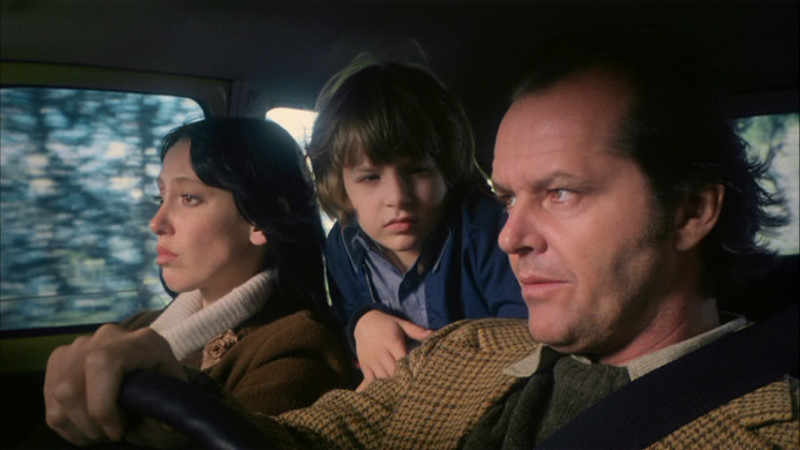
Based on the novel by Stephen King, The Shining is the story of a writer who is asked to become a caretaker for an isolated hotel as he brings his family along where things go wrong as he starts to become insane and terrorize his family. Directed by Stanley Kubrick and screenplay by Kubrick and Diane Johnson, the film is an exploration into madness as well as the world of the supernatural in a strange hotel. Starring Jack Nicholson, Shelley Duvall, Scatman Crothers, and Danny Lloyd. The Shining is a terrifying yet visually-entrancing film from Stanley Kubrick.
After taking a job to be a caretaker for the Overlook Hotel in the middle of Colorado, writer Jack Torrance (Jack Nicholson) brings his wife Wendy (Shelley Duvall) and their son Danny (Danny Lloyd) to the place where they’ll stay for five months during the winter time where the hotel is closed for the time being. Jack hopes to use the time to write a novel as he and Wendy meet up with the people running the hotel as it includes a chef named Dick Hallorann (Scatman Crothers). Dick notices that Danny as telepathic powers that communicate with other people with their minds as they briefly talk as Dick asks Danny not to go to the mysterious room 237. A month goes by as Jack’s novel is going nowhere while Wendy and Danny spend most of their time looking around the hotel and its many sites including a maze outside of the hotel.
When winter arrives with a terrible snowstorm, things start to get strange after Danny runs into a couple of twins (Lisa and Louise Burns) while noticing that someone left room 237 open. After Jack wakes up from a nightmare and Wendy notices bruises on Danny’s neck believing that Jack did it, Jack goes into the Gold Room where he talks to its ghostly bartender Lloyd (Joe Turkel) where Jack gets to vent. When Wendy talks to Jack claiming it was a woman at room 237 who attacked Danny, Jack goes to room 237 where he encounters some strange moments as he decides to stay at the hotel to live up to work. After attending a party at the Gold Room where he meets a waiter whose name is Grady (Philip Stone), Jack realizes he was the previous caretaker who had rumored to have killed his wife and two daughters. Yet, Grady says that Jack had always been the caretaker and what he did to his family was correct them.
After getting a psychic connection with Danny who has been seeing things that are becoming true, Dick decides to fly from Florida to Colorado to see what is going on at the hotel. Wendy meanwhile, notices that Jack’s behavior has gone out of control after she suggests that she should take Danny away from the hotel as Jack starts to go insane. After knocking Jack out and locking him inside the pantry, Wendy realizes that she and Danny could not escape as the snowstorm is getting worse. When Jack manages to get out of the pantry, all hell breaks loose as he goes after his wife and child in an insane quest to get rid of them.
What happens when a man decides to be a caretaker at a hotel in middle of nowhere as he starts to go insane in this mysterious hotel? That is simply the premise of the film as it is an exploration into the supernatural and madness. Yet, it’s a film that shows a man completely losing touch with reality as he starts to see things around him where he starts to vent his frustrations on his wife for disrupting his work. Notably as his wife is becoming concerned about their son who has these strange visions along with an imaginary friend called Tony. When the boy starts to realizes that the images he saw prior to going to the hotel are coming true, he goes into a trance as Tony starts to take over leaving the boy’s mother to finally worry as she starts to realize what is going on.
The film’s screenplay by Stanley Kubrick and Diane Johnson is quite eerie in the way it explores a man’s descent into insanity. Yet, it is a script that takes its time to let the mystery unravel though there’s a lot that is revealed early in the film that Jack Torrance seems to ignore such as the fact that the previous caretaker killed his family and later himself in a strange incident similar to what Jack went through. Another noted fact is that the hotel was built on an old Indian burial ground which definitely explains a lot of supernatural elements that occurs in the story. Then there’s Jack Torrance himself as he’s a man with a dark past as he once an alcoholic who had accidentally broken his son’s arm as he’s unaware that he’s a danger to himself and everyone. For his wife Wendy, she becomes more unsure about Jack just as she was starting to regain his trust as it leads to all sorts of trouble.
Danny is another key element to the film as he’s this boy with telepathic powers where he communicate people with their minds as he meets this very kind chef named Dick Hallorann who also has telepathic powers. Dick realizes that Danny has these visions as he gives Danny a warning about not entering this very strange room yet thing suddenly go wrong when the room’s door opens. It becomes a major plot point that leads to all sorts of moments where Jack starts to descend further into madness after meeting a ghost as they would tell Jack to deal with the situation about his family. This leads to a third act where it becomes this very chilling-suspense thriller as Jack goes insane and terrorizes his family.
Kubrick’s direction is very entrancing for the way he presents the film such as the opening sequence of Jack’s car driving around the Rocky Mountains in Colorado through these sprawling wide shots from a helicopter. Kubrick’s direction is also very stylized such as the way he shoots wide shots of conversations where the camera is far away from the actors. It’s part of the style that Kubrick wants to convey where it’s not just him capturing the conversation but the locations themselves as it establishes the world that Jack and his family are about to enter. Immediately, the audience will think that this nice hotel is a nice place to stay but once it’s just Jack, Wendy, and Danny all alone in this hotel. That’s where things start to go wrong. It’s not just the sense of isolation that eventually starts to take a toll on Jack but also his writer’s block.
Once the Torrance family stays in the hotel for a month where Kubrick utilizes these stylish steadicam shots to capture Danny’s movements on the big wheel tricycle along with the scenes in the maze. It shows that Danny and Wendy are having fun but Jack is troubled as it features that famous Kubrick stare of Jack who is slowly descending. This definitely leads to an element of suspense that Kubrick builds in a very slow, meticulous to have things unravel bit by bit. Through these montages that includes a pool of blood coming out of an elevator and all of these strange images, it is to reveal what is to come. Along with some amazing tracking shots and camera movements to maintain that air of suspense, Kubrick plays up the stakes that Wendy and Danny had to go through.
It’s not just Jack and the supernatural they have to face but also nature itself as they do whatever they can to survive Jack’s terror. This would eventually play out to the horror that occurs as Kubrick maintains this very unsettling atmosphere that occurs not just in the hotel but outside. Even as Kubrick would intensify the camera movements and scenery to play up the horror up to the fullest. Overall, Kubrick creates a mesmerizing yet unsettling horror film that does more than its premise offers.
Cinematographer John Alcott does fantastic work with the film‘s evocative photography from the lush look of the film‘s daytime exterior scenes including the gorgeous ones during the snow to the more stylized yet entrancing look of the scenes at night in the interior scenes as well as the exteriors during the maze sequence at night as Alcott‘s work is a major highlight. Editor Ray Lovejoy does brilliant work with the editing to create some unique rhythmic cuts to play out the film‘s structure and suspense along with some stylized jump-cuts and dissolves for the transitions including some very eerie montages for Danny‘s visions. Production designer Roy Walker and art director Leslie Tomkins do amazing work with many of the film’s interiors for the scenes in the hotel from the carpets that Danny plays at to the Gold Room and its stylish bathroom along with the other hotel rooms the characters encounter.
Costume designer Milena Canonero does wonderful work with the costumes from the dresses that Wendy wears to costumes worn by the ghosts at the Gold Room party. The makeup work of Barbara Daly and Tom Smith, along with the hair by Leonard, is terrific for the scenes at the Gold Room party that plays up to the period that Jack is entranced by. Sound editor Dino Di Campo, Jack T. Knight, and Winston Ryder do excellent work on the sound from the way the Big Wheel sounds on the floors to the atmosphere it creates in some of the film‘s most chilling moments as the sound work is another major highlight of the film. The film’s superb music soundtrack consists of a variety of pieces from the opening electronic score by Wendy Carlos and Rachel Elkind to set a dark mood to the film to an array of eerie orchestral pieces from Gyorgi Ligeti, Bela Bartok, and Krzysztof Penderecki as well as old standard pop music from Henry Hall, Ray Noble, Al Bowlly, Jimmy Campbell, Reginald Connelly, and Harry Woods.
The casting by James Liggat is great for the ensemble that is created as it features notable small roles from Lisa and Louise Burns as the Grady twins, Anne Jackson as a doctor who visits Danny early in the film, Tony Burton as Dick’s friend Larry, Barry Nelson as the hotel manager Stuart Ullman, Joe Turkel as the friendly ghost bartender Lloyd, and Philip Stone as the brooding waiter Delbert Grady. Scatman Crothers is excellent as Dick Hallorann who shares his telepathic gift with Danny while noticing something is wrong as he tries to see what is going on. Danny Lloyd is brilliant as Danny as he displays a performance of a kid troubled by these premonitions while making strange voices whenever he acts as Tony as it’s a truly incredible performance for the young kid.
Shelley Duvall is amazing as Wendy as she starts out as this very kind and fun woman excited about staying in a hotel for months only to deal with the terror of her husband as Duvall displays an eerie intensity to her role in the way she deals with everything. Finally, there’s Jack Nicholson in one of his most iconic performance as Jack Torrance. Nicholson’s performance is riveting for the way he explores a man’s descent into madness as Nicholson brings a lot of dark humor to the role as well as a determination to man hell-bent on maintaining his job as caretaker where it’s a performance that has Nicholson go all out and more making it one of the great performances in film.
The Shining is a harrowing yet intriguing horror film from Stanley Kubrick that features outstanding performances from Jack Nicholson and Shelley Duvall. The film is definitely an interesting yet thrilling take on madness and isolation as it also explores horror at its most extreme. It’s also a film that strays from the conventions of typical horror films in order to have the audience be engaged by the visuals and the events that occur. In the end, The Shining is a magnificent film from Stanley Kubrick.
Stanley Kubrick Films: Fear & Desire - Killer's Kiss - The Killing - Paths of Glory - Spartacus - Lolita - Dr. Strangelove or How I Learned to Stop Worrying and Love the Bomb - 2001: A Space Odyssey - A Clockwork Orange - Barry Lyndon - Full Metal Jacket - Eyes Wide Shut
Related: Stanley Kubrick: A Life in Pictures - The Auteurs #18: Stanley Kubrick
© thevoid99 2012