Thursday, July 16, 2020

Thursday Movie Picks: Male Buddy Movies


In the 29th week of 2020 for Wandering Through the Shelves' Thursday Movie Picks. We delve into the subject of male buddy movies as it’s about guys being bros and having a good time. Here are my three picks as they star the hilarious duo of Simon Pegg and Nick Frost:

1. Shaun of the Dead


Simon and Nick play a couple of slackers who likes to chill out, have a good time, go to a pub, and play video games. Yet, Simon is the one with the job and a girlfriend who thinks Nick is holding him back and she’s sort of right. Then comes a mysterious zombie apocalypse and all hell breaks loose as the two buds plus Simon’s girlfriend, his mum, and two other friends hide out at the pub where things don’t go great as even Simon’s friendship with Nick starts to unveil some flaws yet Simon and Nick remain loyal to each other as they do whatever they can to kill off zombies with whatever they have including some vinyl records. And yes, I too like Second Coming.

2. Paul


From Greg Mottola is a film that has Simon and Nick as two sci-fi writers going on a road trip to America where they meet an alien and all sorts of crazy shit occur. Here, both Simon and Nick play it straight and Seth Rogen as the titular alien is the comic relief. Still, Simon and Nick get to be funny while they’re later joined by Kristen Wiig and Blythe Danner for the fun while being pursued by Jason Bateman, Bill Hader, and Joe Lo Truglio as well as a surprise cameo from a legendary killer of aliens.

3. The World's End


The duo’s third collaboration with Edgar Wright that concludes a trilogy of sorts all based on flavors of cornetto ice cream cones. This film has Pegg being the outrageous and funny one as a man whose life hasn’t gone great as he is eager to finish a pub crawl he and his buddies took part in when they were teens but never finished. Joining him are Paddy Considine, Eddie Marsan, and Martin Freeman as well as a reluctant Frost. There, things become troubling as the pub crawl all the way to the titular bar is filled with panic and all sorts of strange shit with Frost ultimately losing it and going ape-shit.

© thevoid99 2020

Tuesday, July 14, 2020

House of Bamboo


Directed by Samuel Fuller and screenplay by Harry Kleiner with additional dialogue by Fuller, House of Bamboo is the story of an American military official who goes to Japan to learn about a former GI who has formed a gang with former soldiers and Japanese locals to steal weapons and such from the military. A loose remake of The Street with No Name that was co-written by Kleiner, the film is a noir-inspired film set in the world of American bases in Japan following the post-war years as it play into corruption from the military and a man trying to comprehend what is going on. Starring Robert Ryan, Robert Stack, Shirley Yamaguchi, and Cameron Mitchell. House of Bamboo is a riveting and compelling film from Samuel Fuller.

The film explores a series of incidents that involve the robbery of military weapons, ammunition, and smoke bombs that belonged to the U.S. army as well as the death of a few American soldiers prompting an undercover military official to go to Japan and infiltrate this gang led by a former GI. It’s a film that has a man hired by the U.S. army after a thief had been killed by one of the men in the gang as he is revealed to have married a Japanese woman who reluctantly agrees to help the undercover agent. Harry Kleiner’s screenplay that would feature additional dialogue by Samuel Fuller is an exploration of a man trying to figure out what this outfit led by this American GI and other Americans with Japanese locals wanting to make lots of money as much of the motives from its leader Sandy Dawson (Robert Ryan) who was dishonorably discharged from the U.S. military and wants to stick it to the U.S. army and Japanese authorities.

Dawson’s actions forced the Army to bring in Eddie Spanier (Robert Stack) who had just been released from prison to infiltrate Dawson’s gang since Spanier was a friend of a man who was killed by one of Dawson’s men during a botched heist. Spanier would get into contact with the Japanese wife of one of the thieves who was killed during the botched heist in Mariko (Shirley Yamaguchi) as she is reluctant to help but wants to know who killed her husband and why as they form a relationship of sorts despite the fact that interracial marriages/relationships remain taboo from both the Americans and Japanese. Even as Mariko makes some chilling discoveries that would have her help Spanier as well as uncover some dark truths into Dawson’s criminal empire.

Fuller’s direction is definitely wondrous in not just capturing post-war Japan life through the gorgeous usage of the Cinemascope as it captures the growing prosperity of the country as it is shot on locations in Tokyo, Yokohama, and various countryside areas. In wanting to get a sense of realism in the film and to capture post-war life, Fuller would use hidden cameras with wide and medium shots to get a glimpse of this life in Japan where people go into parks, temples, and anywhere else in the cities. Fuller would also showcase a world where there is still this post-war tension between the Americans and Japanese as it relates to how some the locals react towards Americans though American military officials and Japanese police officers try to maintain a sense of peace despite Dawson’s activities where it’s only the Japanese workers that are often injured in these heists unless guns are involved as they get killed. Fuller also maintains an intimacy in the medium shots and close-ups as it relates to Spanier and his growing friendship with Mariko that also include Mariko’s approach to creating poached eggs.

Fuller would also use crane and wide shots to get a scope of the locations as well as in some of the compositions that relate to the drama and suspense. Fuller also play into this air of taboo in how Japanese react to one of their own such as Mariko for her time with Spanier as if she had done something really offensive and dishonorable. Yet, Fuller show that Dawson is way crueler than the locals while he and a few of people in the gang will kill their own over something wrong as Spanier becomes concerned with Dawson’s increasing paranoia. The film’s third act has Fuller definitely take great usage of the locations in Tokyo as well as this attention to detail in the street corners as well as a rooftop theme park where Fuller creates some unique compositions and suspense to play into the intensity of the showdown. Overall, Fuller crafts a gripping and thrilling film about a U.S. military officer infiltrating a gang of former American soldiers engaging themselves in thievery and corruption.

Cinematographer Joseph MacDonald does brilliant work with the film’s colorful cinematography with its usage of DeLuxe Color to capture the beauty of the Japanese locations as well as creating some unique interior lighting for the scenes set at night as it is a highlight of the film. Editor James B. Clark does excellent work with the editing as it is largely straightforward with some rhythmic cuts to play into the suspense. Art directors Addison Hehr and Lyle R. Wheeler, along with set decorators Stuart A. Reiss and Walter M. Scott, do amazing work with the look of Dawson’s lavish yet traditional Japanese home as well as the look of the home that Spanier would live in. The sound work of Harry M. Leonard and John D. Stack do fantastic work with the sound as it play into the atmosphere of the locations as well as the sounds of gunfire and smoke bombs. The film’s music by Leigh Harline is wonderful for its mixture of lush and bombastic orchestral music and traditional Japanese string music as it help play into the suspense and drama.

The film’s superb ensemble cast feature some notable small roles from Elko Hanabusa as a screaming Japanese woman in the film’s opening sequence, Sandro Giglio as a corrupt cop in Ceram, Biff Elliot as the wounded thief Webber who is also Mariko’s husband, Brad Dexter as the American official Captain Hanson whom Spanier reports to, Sessue Hayakawa as the Japanese police investigator Kitz who works with Hanson, and DeForest Kelley as one of Dawson’s top goons in Charlie. Cameron Mitchell is terrific as Dawson’s right-hand man Griff who is suspicious about Spanier as he is also ruthless towards those who screw things up during a heist. 

Shirley Yamaguchi is amazing as Mariko as a Japanese woman who had married an American soldier only to die due to his involvement with Dawson as she is reluctant to help out Spanier while also learning more about Dawson as she becomes close to Spanier. Robert Stack is excellent as Eddie Spanier as a U.S. army official who goes undercover as he copes with his job while dealing with the corruption that Dawson has created while becoming close with Mariko whom he wants to protect. Finally, there’s Robert Ryan in an incredible performance as Sandy Dawson as a disgraced American soldier who teams up with Japanese locals and other disgraced American soldiers as a way to stick it to the army as well as make money.

House of Bamboo is a phenomenal film from Samuel Fuller that features great performances from Robert Ryan, Robert Stack, and Shirley Yamaguchi. Along with its gorgeous cinematography, wondrous music score, and its mixture of noir, suspense, and drama set in post-war Japan. It is a film that explores post-war Japan as relations with Americans remain tense with some wanting to create chaos and mistrust prompting a few to do what is right for both countries. In the end, House of Bamboo is a sensational film from Samuel Fuller.

Samuel Fuller Films: I Shot Jesse James - The Baron of Arizona - The Steel Helmet - Fixed Bayonets! - Park Row - Pickup on South Street - (Hell and High Water) - (China Gate) - Run of the Arrow - Forty Guns - Verboten! - The Crimson Kimono - Underworld U.S.A. - Merrill's Marauders - Shock Corridor - The Naked Kiss - (Shark!) - (Dead Pigeon on Beethoven Street) – The Big Red One - White Dog - (Thieves After Dark) - (Street of No Return) - (The Madonna and the Dragon)

© thevoid99 2020

Saturday, July 11, 2020

John Wick: Chapter 3-Parabellum


Directed by Chad Stahelski and screenplay by Derek Kolstad, Shay Hatten, Chris Collins, and Marc Abrams from a story by Kolstad, John Wick: Chapter 3-Parabellum is the third film in the John Wick series that has the titular character going on the run as a $14 million bounty is placed on his head to due to events that he created. The film explores a man who was once considered the finest assassin as he is now hunted over an incident that pushed him to the edge as Keanu Reeves reprises his role as the titular character. Also starring Ian McShane, Laurence Fishburne, Marc Dacascos, Asia Kate Dillon, Lance Reddick, Anjelica Huston, and Halle Berry as Sofia. John Wick: Chapter 3-Parabellum is a rapturous yet exhilarating film from Chad Stahelski.

After breaking a taboo at the Continental Hotel in New York City and with a $14 million bounty on his head that increases, the film revolves around the infamous assassin who goes on the run as he also tries to find help with many reluctant to do so in fear that they would be destroyed by the High Chair. It’s a film with a simple premise as it plays into a man being hunted by the people he used to work for as he tries to find some form of redemption for his actions although it’s not an easy thing to do to win over the elders of the High Chair. The film’s screenplay doesn’t have much of a plot as it’s more about the sins of John Wick and how he survives being hunted as he also uses a few sacred objects to get help and reach those in the High Chair. Yet, even those who had helped him in the past like Continental Hotel manager Winston (Ian McShane) and the Bowery King (Laurence Fishburne) are both in trouble with the High Chair who send the Adjudicator (Asia Kate Dillon) to handle the situation as the director of the Ruska Roma (Anjelica Huston) is forced to take punishment in order to maintain her loyalty to the High Chair. Another ally of Wick who reluctantly helps him is Morocco’s Continental Hotel manager Sofia as a way to repay a favor that he did for her years ago.

Chad Stahelski’s direction is stylish as it picks up just a few hours after the events of the previous film where Wick and his dog both are on the run during a rainy night in New York City as it establishes the limited amount of time Wick has where he would be officially declared excommunicated. Shot on location in New York City and parts of Morocco, the film does play into a man on the run as he is trying to survive and figure out his next move. Stahelski’s usage of the wide and medium shots don’t just establish some of the locations that Wick is in but also this underworld that involves the Continental and the High Chair where Wick used to be a part of as it had its own set of rules. Stahelski also establishes what is going on as he definitely takes his time to showcase what is happening whenever Wick is fighting someone where he also uses a few long shots to play into the brutality of the action.

Stahelski also knows when to take a break from the action as it relates to the drama that Wick had caused where Winston and the Bowery King are given a week to settle their affairs as the latter finds fault about the rule of the High Chair leading him into some serious trouble with the Adjudicator and her hired assassin named Zero (Marc Dacascos). Yet, Zero is someone who is an admirer of Wick as he sees him as a true warrior where things become complicated in the eventual showdown in the third act where Wick returns to New York City with a task that he must do yet it would be at great cost of what he had already lost. Yet, it would have a chilling aftermath into not just the many flaws of the High Chair and those in power but also Wick’s revelations about the oath he had taken years ago as an assassin and then walking free for a life of his own. Overall, Stahelski crafts a gripping and intense film about an assassin becoming hunted over a taboo that he broke in the criminal underworld.

Cinematographer Dan Laustsen does incredible work with the film’s cinematography with its stylish usage of lights for many of the scenes set at night along with the usage of greyish colors for some of the daytime exterior scenes in New York as well as a naturalistic look for the scenes in Morocco. Editor Evan Schiff does amazing work with the editing as it emphasizes a lot on style but it also has a rhythm in its approach to the action while allowing shots to linger to establish what is going on as it is a major highlight of the film. Production designer Kevin Kavanaugh, with set decorators Letizia Santucci and David Schlesinger plus supervising art director Chris Shriver, does brilliant work with the look of Winston’s glass office at the Continental and its vault as well as the look of the High Chair elder’s tent home. Costume designer Luca Mosca does fantastic work with the look of the black suit that Wick wears as well as the stylish look of the Adjudicator and the robe that Sofia wears.

Hair designer Kerrie Smith and makeup designer Stephen Kelly do terrific work with the look of some of the characters as well as the tattoos many in the underworld wear to play into the gritty world they live in. Special effects supervisor Steven Kirshoff, along with visual effects supervisors Robert Nederhorst and Rafa Solorzano, does excellent work with not just the special effects that occur in the action but also in the visuals as much of the visual effects are used as set dressing but also help maintain the atmosphere for the film’s visuals. Sound designers Luke Gibleon, Alan Rankin, and Martyn Zub, with sound editor Mark P. Stoeckinger, do superb work with the sound in capturing the atmosphere of the locations as well as the sounds of gunfire and other noises that occur in the cities or in a room. The film’s music by Tyler Bates and Joel J. Richard is wonderful for its usage of pulsating and brooding electronics with some heavy string arrangements that help play into the suspense and drama while music supervisor Kevin J. Edelman provides a soundtrack that mixes elements of classical music pieces along with some rock and electronic music cuts.

The casting by Salah Benchegra, Marisol Roncali, and Mary Vernieu is marvelous as it feature some notable small roles from Boban Marjanovic as a tall hitman Wick fights at a library, Randall Kim Duk as a doctor that Wick knew as he reluctantly helped before Wick’s official declaration of being excommunicated, Jason Mantzoukas as one of the Bowery King’s men, Cecep Arif Rahman and Yayan Ruhian as a couple of Zero’s students who also admire Wick, Jerome Flynn as Sofia’s former boss Berrada who does something wrong to Sofia to get into trouble with her and Wick, Tobias Segal as a hitman who works for the Bowery King, and Said Taghmaoui as the High Chair Elder as a mysterious figure who gives Wick another chance but with a major price for Wick. Anjelica Huston is fantastic as the Director as a woman who runs a Russian mob outfit as she reluctantly gives Wick a chance to leave New York City but would pay a price for her actions. Lance Reddick is superb as the Continental Hotel concierge Charon who is kind of the film’s conscience as he would also keep an eye on Wick’s dog when he leaves the city.

Asia Kate Dillon is excellent as the Adjudicator as a spokesperson for the High Chair who oversees what is going on as she makes some moves in order to get those affiliated with Wick punished. Marc Dacascos is amazing as Zero as a Japanese assassin who works at a sushi shop in NYC as he is hired by the Adjudicator to find and kill Wick although he’s a fan of Wick’s work from the past as he also sees himself as an equal as he gives Wick the chance to fight man-to-man as an act of honor. Laurence Fishburne is brilliant as the Bowery King as an underworld crime boss who aided Wick in the past as he is aware of what he did but finds himself at odds with the people at the High Chair. Ian McShane is incredible as Winston as the manager of the Continental Hotel in New York City as he deals with his decision to atone for his actions in aiding Wick or to defy the High Chair as he is a man who is just trying to survive and do what he does best.

Halle Berry is phenomenal as Sofia as a former assassin who runs the Continental Hotel in Morocco as she is an old friend of Wick who isn’t eager to see him but does owe him a favor for what he did for her as she reluctantly helps him only to realize the extremes of the High Chair prompting her to team up with Wick for a brief period of time. Finally, there’s Keanu Reeves in a sensational performance as the titular character as a once revered and feared assassin who is now on the run with a massive bounty on his head as he copes with being the hunted as he also tries to atone for his actions but then questions what he’s giving up as it this chilling yet intense performance from Reeves.

John Wick: Chapter 3-Parabellum is a spectacular film from Chad Stahelski that features a great performance from Keanu Reeves in the titular role as well as an incredible supporting appearance from Halle Berry. Along with its ensemble cast, gorgeous visuals, hypnotic score, and intense yet visceral action and fighting. The film is definitely an action-suspense film that has a lot of thrills but also a study of a man being hunted for his actions while trying to figure out what to do next as his back is against the wall. In the end, John Wick: Chapter 3-Parabellum is a tremendous film from Chad Stahelski.

Related: John Wick - John Wick: Chapter 2 - John Wick Chapter 4 - (Ballerina (2024 film))

© thevoid99 2020

Friday, July 10, 2020

Hardcore (1979 film)


Written and directed by Paul Schrader, Hardcore is the story of a conservative businessman who goes on a search for his daughter as it is believed that she has taken part in the culture of pornography. The film is a study of a man who enters into a subculture of sadomasochism and pornography to find his daughter believing she has descended into a world of decadence and exploitation. Starring George C. Scott, Season Hubley, Peter Boyle, and Dick Sargent. Hardcore is a haunting yet rapturous film from Paul Schrader.

The film is set in the subculture of pornography, prostitution, and other forms of adult entertainment where the daughter of a Calvinist businessman from Grand Rapids, Michigan has disappeared into that world during a trip to Los Angeles as she never returned prompting her father to go into the world to find her. It’s a film that has a man with strong conservative values as he is a single father trying to run various businesses he owns in this small town of Grand Rapids while raising his daughter the right way with the help of his sister and her husband who have a family of their own. Paul Schrader’s screenplay has a straightforward narrative yet it’s more about a man venturing into a dark underworld of sex as it is far removed from everything he knows about as he seeks the help of a private investigator who is warning him about what he’s about to enter and maybe not want to have his daughter return home.

For Jake Van Dorn (George C. Scott), his journey to find his daughter and return her home forces him to enter this dark world and learn about its culture of sadomasochism, 8mm porno films, peep shows, prostitution and such that he has never been in contact with despite the fact that there is a porno theater in his home town where he would see his daughter Kristen (Ilah Davis) in a 8mm porno film. Kristen was part of a Calvinist-sponsored trip to California with her cousin only to not return as Van Dorn and his brother-in-law Wes (Dick Sargent) go to Los Angeles where they try to get help from the police as they turn to an unconventional private detective in Andy Mast (Peter Boyle) who doesn’t do things by the book as he also visits porno shoots and such to find out what happened to Kristen. Yet, Van Dorn is forced to do things himself as well as dress sleazier to be part of the world where he meets a young prostitute/porn actress in Niki (Season Hubley) who knows the men that was in the film that Kristen was in. Niki would take him closer to this world as she would finally find someone she can talk to other than just be used for sex.

Schrader’s direction is largely straightforward though he doesn’t go too far into showcasing the dark world of pornography as there’s nothing explicit shown as it is more about Van Dorn’s reaction of what he is seeing and the world his daughter has ventured into. Shot on locations in and near Grand Rapids, Michigan as well as parts of Los Angeles, San Diego, and San Francisco, Schrader uses Grand Rapids as a place of peace, decency, and ty of people that know and respect each other. It’s sort of disconnected by what is going on in society yet there are places that not even Van Dorn is aware of. Schrader’s usage of the medium and wide shots help play into that world as well as a sense of intimacy that is prevalent into Van Dorn’s home and the home of his sister. Schrader’s usage of close-ups would play into the emotional turmoil that Van Dorn would endure as his portrayal of California’s pornography scene is raw and uncompromising despite the lack of male full-frontal nudity.

Schrader’s direction also play into this fish out of water mentality that Van Dorn would feel as he would change his clothes from straight-laced suits to a look that is reminiscent of pimps and producers. Notably as he would pretend to be a porn producer and try to find the actors who appeared in the porno his daughter was in. The film’s third act that has Van Dorn traveling to San Diego and San Francisco to find an actor who might know Kristen’s whereabouts does show Schrader easing up the drama as Van Dorn is accompanied by Niki as it play into Van Dorn’s own faults as a man as well as the fact that he just tries to provide Kristen with a good life while he also shows concern for Niki, who is stuck in the world of porn and prostitution, as he offers a chance to leave this world. Still, there is that air of reality and cynicism that Van Dorn has to endure as well as revelations about his daughter and what she went through. Overall, Schrader crafts a visceral yet intense film about a father going into the dark world of pornography to find his daughter.

Cinematographer Michael Chapman does excellent work with the film’s cinematography with its usage of stylish lights for the scenes set at night that also include some naturalistic lighting for some of the daytime exterior scenes. Editor Tom Rolf does terrific work with the editing as it is largely straightforward as it play into the drama with a few stylish cuts that play into Van Dorn’s confrontations with a few individuals involved with Kristen’s disappearance. Production designer Paul Sylbert, with set decorator Bruce Weintraub and art director Edwin O’Donovan, does fantastic work with the look of some of the seedy brothels, strip clubs, and other porno places in California including the theater in Grand Rapids.

Sound mixer Bud Maffett does superb work for the sound in capturing the mood of the locations as well as some effects that occur in some of intense moments of action. The film’s music by Jack Nitzsche is wonderful for its mixture of blues and country to play into some of the sleaziness that Van Dorn encounters while the soundtrack also features original electronic music pieces by Jill Fraser and Rob Miller that play into the dark night life of California while the rest of the soundtrack feature a mixture of blues, country, and rock as it feature pieces by Mink Deville, Susan Raye, Byron Berline, and Crosby, Stills, Nash, & Young.

The casting by Vic Ramos is great as it feature some notable small roles from Tracey Walters as a porno store teller, Bibi Besch as a designer for Van Dorn’s company, Bobby Kosser as a porn director, Ed Begley Jr. as an actor playing a soldier for a porn film, Hal Williams as an African-American porn actor that auditions for a fake film Van Dorn is producing who spouts some hilarious lines, Marc Alaimo as a controversial porn figure in Ratan, Leonard Gaines as the sleazy porn producer Bill Ramada, Gary Graham and Will Walker as a couple of porn actors who appeared in the film that Kristen was in, and Ilah Davis as Van Dorn’s daughter Kristen as a young woman who disappears and then reappears in an 8mm porno film. Dick Sargent is superb as Van Dorn’s brother-in-law Wes DeJong as a man who becomes concerned with Van Dorn’s well-being as well as going to the police and later Mast for help.

Peter Boyle is brilliant as Andy Mast as an unconventional yet pessimistic detective who makes some chilling discoveries about Kristen while warning Van Dorn to not go any further as he is a flawed man that likes young girls and can be cruel but he is also someone who doesn’t bullshit when it comes to the dark realities of the world. Season Hubley is amazing as Niki as a porn actress/prostitute whom Van Dorn meets as she knows one of the actors in Kristen’s film as she helps Van Dorn while trying to understand his values as she sees a father figure in him as it play into her own troubled life and need for salvation. Finally, there’s George C. Scott in a phenomenal performance as Jake Van Dorn as a devoted Calvinist who is also a successful businessman in Grand Rapids who is given a rude awakening about what happened to his daughter as he copes with the world she’s in and the denial he might be carrying as it is an eerie and tormented performance from Scott who definitely provides some intense emotional moments as a man just dealing with things he might not be ready to cope with.

Hardcore is an incredible film from Paul Schrader that features a great performance from George C. Scott. Along with strong supporting work from Peter Boyle and Season Hubley as well as its study of a man entering into the decadent world of pornography to find his daughter. It is an unsettling yet engrossing film that explores a man being tested as well as be forced to examine his own faults as a man and as a father. In the end, Hardcore is a phenomenal film from Paul Schrader.

Paul Schrader Films: Blue Collar - American Gigolo - Cat People (1982 film) - Mishima: A Life in Four Chapters - (Light of Day) – (Patty Hearst) – (The Comfort of Strangers) – (Light Sleeper) – (Witch Hunt) – (Touch) – Affliction - (Forever Mine) – (Auto Focus) – (Dominion: Prequel to the Exorcist) – (The Walker) – (Adam Resurrected) – (The Canyons) – Dying of the Light - (Dog Eat Dog) – First Reformed - (The Card Counter)

© thevoid99 2020

Thursday, July 09, 2020

Thursday Movie Picks: Globetrotting Movies


In the 28th week of 2020 for Wandering Through the Shelves' Thursday Movie Picks. We venture into the subject of globetrotting as it play into people going on a trip through various continents around the world and such. Often does wonder for movies around the world and all sorts of stuff. Here are my three picks:

1. National Lampoon’s European Vacation


The second film in the Vacation film series, this film is often overlooked by both its predecessor and its 1989 Christmas sequel. Still, this is a pretty funny film that is directed by Amy Heckerling as it play into the Griswalds winning a trip to Europe after appearing on a game show and so much shit goes wrong. It features a recurring cameo appearance from Eric Idle who gets hurt all the time and all sorts of strange shit as well as a hilarious dream sequence of what each Griswald wants to imagine being in Europe with Audrey scared over all of the fine cuisine in the continent, Rusty being an idol in his imagined European tour, Ellen meeting the British Royal Family with Clark turning Princess Diana down to dance with his wife, and Clark dreaming about his own version of The Sound of Music.

2. Until the End of the World


Wim Wenders’ 1991 film is the ultimate road movie as it goes into many places all over the world and in its original runtime of nearly five hours is one of the most immersive cinematic experiences of its time. It revolves two people traveling all over the world before a nuclear satellite is about to land on Earth before the end of the millennium. One is a thief and the other is the son of a reclusive yet revered scientist who carries an object that might save humanity as they band together. Wenders just goes all out with the film as it goes to places in Europe, the U.S., Japan, China, and Australia with a music soundtrack that play features the likes of U2, Peter Gabriel, Talking Heads, Depeche Mode, Patti Smith, Can, R.E.M., and many others.

3. Eurotrip


A road movie of sorts set largely in Europe is definitely one of the more underrated comedies of the 2000s that’s deservingly becoming a cult classic. Four post-high school graduates go to Europe as one of them is trying to find a German girl he had been chatting with after he sent some an awful email mistaking her name to be a guy’s name. There, hilarity ensues as it involves Manchester United hooligans, French robot performers, Fred Armisen saying “scuse”, some strange drunken shit in Eastern Europe, S&M, and other weird shit. Oh, and there’s a cameo by Matt Damon early in the film about having nasty freaky sex with some high school girl he hooked up with.

© thevoid99 2020

Thursday, July 02, 2020

Thursday Movie Picks (Seven Deadly Sins Edition): Wrath


In the 27th week of 2020 for Wandering Through the Shelves' Thursday Movie Picks. We return to the seven deadly sins with the theme of wrath. Defined mainly as anger or rage, it is one of the most deadly of sins as it play into people who are just really fucking pissed off. Here are my 3 picks:

1. Star Trek II: The Wrath of Khan


The second film of the franchise series based on the TV show remains the standard bearer for all of the films of that franchise. It is a simple revenge film of sorts as it relates to the titular character who was known from an episode in the series after his encounter with Captain Kirk and his crew many years ago. In this film, he seeks revenge on Kirk and the crew of the Enterprise as Ricardo Montalban just owns the role that he played back in the 1960s on one of episodes of the show. Here, he’s far more cunning while the scene where he gets his revenge on Kirk has him deliver this incredible monologue that is followed by Kirk’s rage of… KHAN!!!!!!

2. Revenge of the Sith


The best film of the prequels trilogy in the Skywalker Saga and certainly a better film than The Rise of Skywalker is a film about wrath. The wrath coming from the Sith who would re-emerge in secrecy and manipulate a young Anakin Skywalker to join them. When Palpatine made the announcement of Order 66 to his Stormtroopers, the sequence of Stormtroopers killing off the Jedi and Anakin taking part in the executions is an incredible sequence as it also shows the few Jedis who would survive this purge.

3. John Wick


What happens when a former mob hitman, who has retired and lives a quiet life with a new dog his late wife has given him, is robbed, has his car stolen, and dog killed? Well, if that is the man you send to kill the boogeyman. You’re absolutely fucked. Starring Keanu Reeves in the titular role, it is a film that isn’t just a revenge film but a film about what happens when you fuck with the wrong motherfucker and he will destroy whatever empire that is in front of him all because a stupid kid whose father is a mob boss decides to rob the guy and kill his dog. It is a phenomenal film that has created a franchise as well as give audiences the unexpected phenomenon that is… the Keanussance.

© thevoid99 2020

Tuesday, June 30, 2020

Films That I Saw: June 2020


Half of 2020 is almost over yet it does feel like a world is coming to an end with more than 10 million cases and over half a million have died in this pandemic as here in the U.S., we have 2.6 million cases and more than 127,000 have died. Amidst all of this chaos including the fact that a man was killed in Atlanta by cops at a Wendy’s parking lot is further proof that the world is going to shit. Especially as I’m now thinking about my father who died exactly one year ago today as I’m starting to think it’s kind of a blessing in disguise. If the cancer didn’t kill him, the idea of not watching sports and not really going anywhere as well as not hang out with friends and such would kill him. Plus, I’d think he’d be extremely appalled by the culture in general with people wanting to cancel certain people, pieces of art, and all of these things as it would just suck the life out of him. It hurts and it also pisses me off as I began to understand that some of the things my dad said about all of this political correctness and what is and isn’t offensive was right.

Now I may not have rated a film like Gone with the Wind highly amongst the many films I had seen but putting a disclaimer in the film I don’t think helps. It’s just making things worse while I’m really upset that Mike Henry has been forced by this culture to step down in voicing Cleveland Brown of Family Guy. I never watched the show but I enjoyed its spin-off The Cleveland Show as I was aware that Henry was white and he was voicing African-American characters but I had no problem with it. It’s not just these things that are going on that is just making my eyes roll but there’s also the world of professional wrestling as it relates to a lot of sexual assault/harassment incidents in Britain and in some promotions in the U.S. that are just horrendous. Realizing that Joey Ryan, who is famous for oiling himself and being involved in intergender matches as well as getting his opponents to touch his dick for a stupid comedy move, is really one of the sleaziest people ever and I can’t watch him anymore.


This month has been a really trying time for professional wrestling as AEW has at least managed to do a good job in handling the pandemic with wrestlers being tested frequently although two of them in Q.T. Marshall and current AEW world champion Jon Moxley both came into contact with those with COVID-19 as they both sat out in order to not affect anyone else. The latter unfortunately is married to WWE interviewer Renee Young who has been tested positive for COVID though it’s good to know she’s doing fine as I hope she leaves WWE for good. The way WWE has handled the pandemic has been horrendous. You have a multi-billion dollar company that had a lot of resources to handle this but they prefer to try and sell the idea that they’re an essential business in Florida and they put smiles in people’s faces. Having several of your employees tested positive for COVID while not doing much to bring actual tests makes them look like assholes. AEW and New Japan at least put their resources to make sure their wrestlers are OK as the latter company have done a hell of a lot more to make sure their employees are safe with some stars and executives in New Japan at least made the decision to make pay cuts to help themselves. WWE however is proof that they don’t give a fuck about anyone as long as they can money and be seen as leaders of sports entertainment.


In the month of June 2020, I saw a total of 24 films in 12 first-timers and 12 re-watches with only one first-timer being directed by a woman as part of the 52 Films by Women pledge. The highlight of the month has definitely been my Blind Spot choice in Satyajit Ray’s The Big City. Here are my top 5 first-timers that I saw for June 2020:

1. Wildlife


2. Capernaum


3. The Housemaid


4. 8:46


5. Be Water


Monthly Mini-Reviews

3 Brothers: Radio Raheem, Eric Garner, and George Floyd


Spike Lee is right now the voice in American cinema that people need more than ever as he just uses footage from his own film Do the Right Thing and video footage of what happened to both Eric Garner and George Floyd. It shows how little things have changed since 1989 and so on as it’s just 3 minutes of uncompromising truth. Lee has used this time during the pandemic to be really creative as well as just telling it like it is and based on what I’ve seen so far in his new film Da 5 Bloods, it is clear that Lee hasn’t just got his mojo back but is now becoming this elder statesman in cinema that is embarking on a new phase in his career where there is nothing that’s going to stop him.

Stuber


This was an OK action film about an Uber driver who has to accompany a detective who had just gotten laser-eye surgery to go after a drug dealer who killed his partner months before. It’s got some funny moments and some nice action though the story doesn’t have enough depth to keep things interest despite the performances of Dave Bautista and Kumail Nanjiani as well as a nice cameo from Karen Gillan as Bautista’s partner in the film’s opening minutes. Other than that, it is just a typical mismatched buddy film that had some laughs but not enough to be a total recommendation but it’s not a total dud.

Peckinpah Suite


This documentary that was shown on Turner Classic Movies about a famous hotel suite where Sam Peckinpah lived in a small town in Montana is really more about his daughter trying to get know the father she didn’t know much about aside from scattered memories. It showcases the world that Peckinpah lived in during his times of exile from the world of film but also commentary about his complicated legacy as a filmmaker from locals and various film historians. It’s something fans of Peckinpah should seek out as it does feature this nice intimate story of a woman trying to learn about her father.

Vadim Mister Cool


Another documentary film about a filmmaker shown on Turner Classic Movies is about Roger Vadim who was considered the idea of cool in the 1950s and 1960s beginning with And God Created Woman that made Brigitte Bardot an international icon. It’s a film told largely through archival audio and video footage with comments from those who knew him. It is a fascinating documentary that also explore the director’s decline in the 70s and 80s until his marriage to actress Marie-Christine Barrault in 1990 where his 1990s TV films showcased a new direction that reflected his happy life until his passing in February of 2000.

Be Water


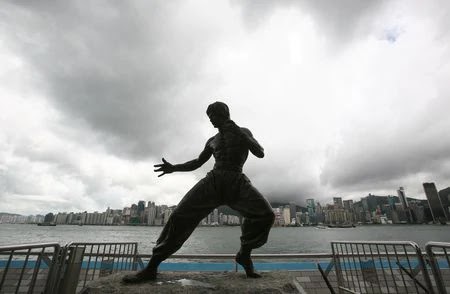
From 30 to 30 is a new episode as it focuses on the life and influence of Bruce Lee. Told largely through audio interviews with those who knew him including his daughter Shannon reading her father’s letters. The film focuses on not just Lee’s influence in the world of martial arts but also some of the prejudice he endured as an Asian-American including the culture of how Asians were depicted in the 20th Century before and during Lee’s arrival to the world of entertainment. It is definitely one of the best films that 30 for 30 has created as it also show some insight into Lee’s philosophy as a man and what he wanted to do for the world including his children that includes a brief tidbit on his late son Brandon.

8:46


In these trying of times, comedians often find a way to say something but also make us laugh but Dave Chappelle did something much bigger and grander. A 27-minute film for Netflix is a Joke YouTube page has Chappelle talking to a small audience about George Floyd and the state of the world. There are some funny moments but Chappelle doesn’t hold back into what needed to be said. He talks about the shit that is the year 2020 as well as the lack of response from African-American celebrities as he states like anyone gives a fuck about what they think. He also goes off on African-American conservative commentator Candace Owens as he gives that cunt words that are beyond insulting and for the right reasons. While it’s great to see Chappelle doing bits, his social commentary is what the world needs as his uncompromising words is exactly the kind of things that Richard Pryor and George Carlin would be proud of.

Crazy Rich Asians


I saw this film on scattered bits for about a year on HBO as it’s a film my mom likes a lot as she’s always into films about Asian culture. While I don’t think it’s as great as some say it is, it is a film that does have value in its exploration of social classes and how it play into the world of rich Asians in Singapore. The story may not be original but the characters at least are interesting and engaging as the performances of Constance Wu, Henry Golding, Awkwafina, Gemma Chan, and Michelle Yeoh are incredible. Especially as they manage to provide some laughs and heartfelt moments as it’s just a nice film to watch and relax while not taking anything seriously.

Top 10 Re-watches

1. Terminator 2: Judgement Day


2. Crimson Peak


3. The Terminator


4. Ad Astra


5. Lady and the Tramp


6. Hanna


7. The Lego Movie 2: The Second Part


8. The Running Man


9. That Thing You Do!


10. Joker


Well, that is it for June 2020 and half of this awful fucking year. In July, I will focus largely on films from Samuel Fuller, John Ford, and other American films including recent movies as well as Da 5 Bloods. Speaking of Ford, my next Blind Spot will be The Grapes of Wrath as I want to try to explore some of the finer aspects of what America was as it’s now become a fucking laughing stock around the world. I know I’m approaching my 20th anniversary of becoming a critic on July 5th but I don’t have anything planned and probably won’t do anything at all as I’d rather focus on watching films and writing about them. Until then, this is thevoid99 signing off and hoping everyone stays safe and fight the power.

© thevoid99 2020

Saturday, June 27, 2020

2020 Blind Spot Series: The Big City


Based on the stories Abataranika and Akinchan by Narendranath Mitra, Mahanagar (The Big City) is the story of a woman who decides to get a job to support her family much to the protests of her bank-clerk husband amidst the struggles of their working class life. Written for the screen, scored, and directed by Satyajit Ray, the film is a study of a woman trying to find her own identity in the modern world during a time of social change in India. Starring Anil Chatterjee, Madhabi Mukherjee, Jaya Bhaduri, Haren Chatterjee, Sefalika Devi, Prasenjit Sarkar, Haradhan Banerjee, and Vicky Redwood. Mahanagar is a riveting and evocative film from Satyajit Ray.

The film follows a family as a housewife decides to take a job to help her family despite her bank-clerk husband’s reluctance as he believes a wife’s place is in the home amidst social changes around them in Calcutta. It’s a film that is set during a time in Calcutta where cities were becoming bigger as this middle-class family is trying to adjust to these changes with the bank clerk’s parents struggling to comprehend everything as his father feels out of step with the changing times. Satyajit Ray’s screenplay follows a simple and straightforward narrative of this family who lived in a cramped home nearby Calcutta as Subrata Mazumdar (Anil Chatterjee) is a bank clerk who is doing well but not enough for his family that includes his wife Arati (Madhabi Mukherjee), their young son Pintu (Prasenjit Sarkar), Subrata’s teenage sister Bani (Jaya Bhaduri), and his parents in Sarojini (Sefalika Devi) and his father in former professor Priyagopal (Haren Chatterjee). Arati suggests in taking a job to help out though Subrata isn’t sure while Priyagopal isn’t fond of the idea.

Taking the job as a door-to-door saleswoman, Arati would find happiness in her work while befriending the Anglo-Indian colleague Edith (Vicky Redwood) who isn’t given a great reputation by their boss Mr. Mukherjee (Haradhan Banerjee) while Arati’s family is also disapproving of the friendship. It’s a small subplot in the film that play into Arati’s own independence as it makes Subrata insecure as he thinks about getting a second job while his father isn’t immediately fond of Arati’s success as he turns to old students for help as he prefers not to speak to his son. Much of these stories take place during the first half of the film as Ray explores one generation’s struggle in these changing times with the younger generation seeing the benefits of these social changes but also some of its faults.

Ray’s direction is mesmerizing for the way he presents the world of late 1950s/early 1960s Calcutta at a time of social changes as it is shot on location in areas in and around Calcutta. Much of the direction at the Mazumdar home is intimate as it play into how small the home is and how cramped to establish Subrata’s need to give his family a better life and a bigger home despite his father’s reluctance to leave. The usage of close-ups and medium shots add to these constraints while there’s looser images in the scenes in the city including the bank that Subrata works at and the posh streets where Arati would get people to buy things. Ray’s usage of wide shots and hand-held cameras add to the splendor yet overwhelming tone of the city as Arati seems to enjoy what it offers. For Priyagopal, the city is just this monster where he’s walking with a cane in need of new glasses and money from former pupils who care about him yet the atmosphere is immense for a simple man like Priyagopal. Also doing the film’s score, Ray uses elements of strings and traditional Indian string and percussive music to help play into the drama as well as creating pieces that help maintain a somber tone where Ray doesn’t dwell too much into melodrama with his music nor with the scenes he creates to play into the struggles that his characters endure.

Notably in the second half as it relates to Subrata who encounters a harsh reality of what is going on socially in Calcutta as he has to rely on his wife’s job for security but also to swallow his pride as a man. Particularly in a scene at a restaurant where he is in the background listening to Arati from afar as she is talking to a client with some lies about her husband with claims that he’s really successful. The third act is about the role of the breadwinner in the family though it’s a role that isn’t easily accepted by Arati as it relates to the fact that she has to take a lot responsibilities while dealing with how badly mistreated Edith is because she’s Anglo-Indian. It all plays into Arati not only thinking of herself but also her husband who realizes what must be done for both of them and their family to share the role of breadwinner. Overall, Ray crafts a touching and rapturous film about a middle-class family trying to adapt to changes and new prospects in Calcutta.

Cinematographer Subrata Mitra does brilliant work with the film’s black-and-white photography as it is largely straightforward with its lighting for the scenes at night inside the Mazumdar home with some lush imagery for the exterior scenes in the day at the posh area of Calcutta. Editor Dulal Dutta does excellent work with the editing as it is straightforward for much of the film with some rhythmic cutting for the dramatic moments. Art director Bansi Chandragupta does amazing work with the look of the homes that the Mazumdar family live in as well as the more refined homes of Priyagopal’s students and the building where Arati works at. The sound work of Atul Chatterjee, Debesh Ghosh, and Sjit Sarkar do superb work with the sound in capturing the atmosphere of the locations as well as the array of sounds surrounding the city to play into its overwhelming nature in contrast to the more subdued posh areas in the city and at the home of the Mazumdar family.

The film’s incredible cast feature notable small roles that include Bibhuti Banerjee, Shyamal Ghosal, and Shailen Mukherjee as a trio of former students of Priyagopal that help him out, Haradhan Banerjee as Arati’s boss Mr. Mukherjee, Prasenjit Sarkar as Subrata and Arati’s young son Pintu, Jaya Bhaduri as Subrata’s teenage sister Bani, Sefalika Devi as Subrata’s mother Sarojini, and Vicky Redwood as the Anglo-Indian Edith whom Arati befriends as she endures prejudice and questions about her background and worth as a saleswoman. Haren Chatterjee is fantastic as Subrata’s father Priyagopal as a former professor who refuses help from his daughter-in-law in his belief to do things himself despite being an old man while feeling ashamed that Arati is the breadwinner as it plays into a man whose ideals have now become irrelevant.

Anil Chatterjee is remarkable as Subrata as a bank clerk who was the primary breadwinner of his family as he tries to help out as he is reluctant to let his wife work only to lose some pride and later appreciation from his father where he later copes with circumstances beyond his control. Finally, there’s Madhabi Mukherjee in a phenomenal performance as Arati Mazumdar as a housewife who decides to take a job to help her family where she finds a sense of freedom and sense of pride while dealing with some of its faults as well as injustices around her as it is a radiant and graceful performance from Mukherjee.

Mahanagar is an outstanding film from Satyajit Ray that features great performances from Anil Chatterjee and Madhabi Mukherjee. Along with its themes of social changes as well as women’s role in these changes as well as its visuals and Ray’s eerie music score. The film is a fascinating study of social changes that is emerging in late 1950s/early 1960s India and how women prosper with these changes despite some of its faults as well as its look into racism towards mixed-races in the country. In the end, Mahanagar is a tremendous film from Satyajit Ray.

Satyajit Ray Films: Pather Panchali - Aparajito - (Parash Pathar) – The Music Room - Apur Sansar - Devi – (Teen Kanya) – (Rabindranath Tagore) – (Kanchenjunghar) – (Abhijan) – Charulata - (Two) – (Kapurush) – (Mahapurush) – The Hero (1966 film) - (Chiriyakhana) – (Goopy Gyne Bagha Byne) – (Aranyer Din Ratri) – (Pratidwandi) – (Sikkim) – (Seemabaddha) – (The Inner Eye) – (Ashani Sanket) – (Sonar Kella) – (Jana Aranya) – (Bala) – (Shatranj Ke Khilari) – (Joi Baba Felunath) – (Hirak Rajar Deshe) – (Pikoo) – (Sadgati) – (Ghare Baire) – (Sukumar Ray) – (Ganashatru) – (Shakha Proshakha) – (Agantuk)

© thevoid99 2020