Showing posts with label ellen burstyn. Show all posts

Saturday, January 16, 2021

Lucy in the Sky


Directed by Noah Hawley and screenplay by Hawley, Brian C. Brown, and Elliott DiGiuseppi from a story by Brown and DiGiuseppi, Lucy in the Sky is the story of an astronaut whose experience in space has her lose sight with reality. The film is a drama where a woman deals with life back on Earth as it is sort of based on the real life story of Lisa Nowak and her criminal activities relating to her romantic affair with a fellow astronaut. Starring Natalie Portman, Jon Hamm, Zazie Beetz, Dan Stevens, Nick Offerman, Tig Notaro, Jeffrey Donovan, Colman Domingo, and Ellen Burstyn. Lucy in the Sky is a messy and nonsensical film from Noah Hawley.

The film follows an astronaut who is eager to return to space but becomes disconnected with reality just as she begins an affair with another astronaut that eventually becomes troublesome. It’s a film that plays into a woman’s emotional and mental descent as she embarks on a tumultuous affair with a colleague as well as trying to go back to outer space despite the presence of a younger candidate who wants her spot. The film’s screenplay play into the descent that its protagonist Lucy Cola (Natalie Portman) endures as well as her desire to relive the experience of being in outer space yet it also goes into places where the narrative isn’t sure where it wants to go and what it wants to be. Notably as it doesn’t do enough to explore Lucy’s mental issues following her return from space as she believes she is alright despite the concerns of Dr. Will Plimpton (Nick Offerman). The man Lucy has an affair with in a fellow astronaut in Mark (Jon Hamm) is someone who says a lot of things but he also has kids and not much is known whether he’s married or divorced as he also has interest in Lucy’s new rival in Erin (Zazie Beetz).

If the script’s problems in establishing characters and its lack of exploration of Lucy’s disconnect with reality, Noah Hawley’s direction for the film is what makes everything fall apart. Shot on location in Southern California with some of it as part of Texas and Florida, the film has no clue on what it wanted to be where Hawley wanted to make this drama of a woman’s mental struggles but also this romantic drama with no sense of cohesive direction. Even in some of Hawley’s approach to wide and medium shots have him using different aspect ratios where some of the scenes on Earth including Lucy’s home with her husband Drew (Dan Stevens) and their niece Blue Iris (Pearl Amanda Dickson) are shot in a 1:33:1 aspect full-frame ratio where there’s some scenes shot in 1:85:1 and 2:35:1 aspect ratios as it gets confusing. Even where Hawley is trying to use the framing devices as a form of style but it ends up being a total distraction to the story as it would change every time until Hawley until sticks with one for its third act.

Hawley does use some close-ups that includes a scene where Lucy is training underwater as water went inside her helmet during the training scenario as she was able to finish it but raises concern about her mental state. It’s a rare good scene in a film that just gets crazier as the third act includes scenes that needed humor. Especially in light of the real-life stories that the film is based on yet it never goes there as Hawley just makes it dramatic leading up to this insane confrontation between Lucy and Mark as the aftermath of it is just a hollow and underwhelming resolution into what happened to her in the end. Even as it feels like it has been rushed and without explanation of how she got to the end as it’s just lazy storytelling. Overall, Hawley crafts an idiotic and humorless film about an astronaut who loses grip with reality as she engages into an affair with another astronaut that leads to chaos and stupidity.

Cinematographer Polly Morgan does excellent work with the film’s cinematography in its emphasis on low-key lights for many of the interiors in the day and night as well as some vibrant lighting for the scenes at the training stations. Editor Regis Kimble does a fine job in the editing despite the over-usage of jump-cuts to play into Lucy’s paranoia and troubled state of mind as it really does make the film jarring for much of it. Production designer Stefania Cella, with set decorator Jon J. Bush and art director Samantha Avila, does fantastic work with the look of the home that Lucy and her husband live in as well as Mark’s office. Costume designer Louise Frogley does nice work with the costumes as it is largely casual including the clean-cut look of Drew.

Special effects supervisor Mark R. Byers and visual effects supervisors Matthew Bramante do terrific work with the visual effects for the scenes in space though one sequence that involves Lucy moving through walls and into another location is one of the dumbest effects moments in the film. Sound designers Ai-Ling Lee and Tobias Poppe do superb work with the sound as it play into some of the natural locations though it does go overboard as it play into Lucy’s paranoia. The film’s music by Jeff Russo is good with its mixture of orchestral flourishes and ambient music while music supervisor Maggie Phillips provides a decent soundtrack that includes the B-52s, Riders in the Storm, Mel Tillis, and Norah Jones but it also features a horrendous cover of the Beatles’ Lucy in the Sky with Diamonds by Jeff Russo and vocalist Lisa Hannigan.

The casting by Ronna Kress is alright despite the fact that a lot of the actors don’t get much to do while being hampered by a terrible script and poor direction. Performances from Nick Offerman as the psychiatrist Dr. Will Plimpton, Tig Notaro as the astronaut Kate Mounier, Jeffrey Donovan as the astronaut trainer Jim Hunt, and Colman Domingo as the mission director Frank Paxton aren’t just severely underused but never really do anything to be involved with the narrative with the exception of Domingo’s character who plays a key role in the third act as it relates to Lucy’s mental state. Pearl Amanda Dickson is wonderful as Drew and Lucy’s niece Blue Iris as a young girl who is concerned about her aunt’s mental state as she reluctantly joins her for the road trip in the film’s third act. Zazie Beetz’s performance as Lucy’s rival Erin Eccles is severely underwritten as she’s just there to be this romantic/competitive rival with not much to do while Ellen Burstyn’s performance as Lucy’s grandmother Nana Holbrook has a few funny lines and such but never gets the chance to be used more as her one appearance in the film’s third act is just dumb.

Dan Stevens is alright in his performance as Lucy’s husband Drew as someone who is religious and kind-hearted yet becomes concerned about Lucy’s activities as he is hampered by the fact that he is underwritten and is just there to be a cuckold. Jon Hamm’s performance as the astronaut Mark Goodwin where it has its charm but is hampered by the film’s script as someone who is a manipulator and a womanizer as he ends up being one-dimensional. Finally, there’s Natalie Portman in a stellar though flawed performance as Lucy Cola as this astronaut whose experience in space has made her lose touch with reality as Portman does what she can to play into that disconnect but she is held back by the film’s awful script while her Texan accent is spotty at times and having to sport one of the worst haircuts ever on film.

Lucy in the Sky is a lousy and horrendous film from Noah Hawley. Despite Natalie Portman’s attempt to give a fiery performance, the film’s terrible script, messy presentation, and lack of humor as it relates to the real-life story the film is inspired by. It is a film that wants to be a lot of things yet its lack of cohesion and idiotic presentation makes it a total chore to watch. In the end, Lucy in the Sky is a fucking awful film from Noah Hawley.

© thevoid99 2021

Tuesday, November 07, 2017

The Yards


Directed by James Gray and written by Gray and Matt Reeves, The Yards is the story of a convict who has been released from parole as he finds himself being part in a crime scheme with a friend for a subway rail yard leads to trouble. The film is a crime drama set in New York City where a man who went to jail for his friend deals with being drawn into a world that might put him back in prison as he also copes with loyalty and doing what is right. Starring Mark Wahlberg, Joaquin Phoenix, Charlize Theron, Faye Dunaway, Ellen Burstyn, and James Caan. The Yards is an evocative and mesmerizing film from James Gray.

The film follows a young man who has returned from prison for a crime he didn’t commit as he is eager to lead a straight-and-narrow life only to be coerced by his best friend to be involved in the world of corruption relating to the subway train yards only for things to go wrong. It’s a film that is a bit about redemption but also about the fallacy of loyalties in the streets as this young man is just trying to find work and not get in trouble but he is lured into a world he doesn’t want to go back to. The film’s screenplay by James Gray and Matt Reeves explore the motivations of its characters such as the protagonist Leo Handler (Mark Wahlberg) who returns home as he learns that his mother Val (Ellen Burstyn) is dealing with a heart condition and wants to set things right for her. At his homecoming party that is attended by his mother, his aunt Kitty (Faye Dunaway), his cousin Erica (Charlize Theron), and best friend Willie Gutierrez (Joaquin Phoenix), Leo learns that Kitty’s new husband Frank Olchin (James Caan) could get him a job working at the railway car repair company.

Yet, Frank is unable to give Leo a job immediately though he offers to fund his studies for a two-year machinist program as Leo chooses to work closely with Willie, who also works for Frank, where he does bribes and such to get contracts against competing companies. It may give Leo some money in his pocket but he becomes uneasy as he also learns what Willie and his friends do in ruining other companies in order to get contracts where one night in an attempt to sabotage another company’s trains would lead to chaos as Leo gets into a scuffle with a police officer (David Zayas) and knocks him unconscious. Yet, that is nothing compared to what was happening at the same time where a yard master is killed as Leo becomes a suspect where he goes into hiding with a few people to trust. Among them is Erica whom Leo is close to, despite the fact that she’s engaged to Willie, as she would look after her aunt for Leo as she becomes aware of what had happened as she turns to her stepfather for help.

Gray’s direction does have elements of style in terms of the compositions that he creates as it play into the suspense and drama. Shot on location in New York City with much of it set in the boroughs of Queens, the film does play into this world that is away from the usual aspects of the city which is often set in Manhattan. Instead, Gray plays into this world that is a mixture of upper-class suburbia as it relates to the home that Frank and his family live in as well as the apartment that Leo shares with his mother. Gray’s approach to the compositions does having him using some wide shots not just in establishing the location but also this world where there is so much at stake in the world of the subways where companies are trying to compete to get contracts where it eventually becomes deadly.

Gray’s approach to the drama is more straightforward in the compositions where he uses some medium shots and close-ups as it relate to what the characters are reacting as well as what they’re dealing with. One noted scene is where Leo is being asked to kill the cop he knocked unconscious as a way to solve all of his problems where Gray uses the space of the room and everything in it to play into the suspense. It says a lot of who Leo is as well as the conflict he has in his loyalty to his friends but he’s also thinking about the fact that he might return to prison. It’s an effective scene as would the third act where it is about family as it relate to Leo’s relationship with his mother and Erica where he really cares about them with the latter as someone he can really trust. Even as he would make a bargain to ensure that he and the family would be safe despite the fact that he could still be public enemy number one against those he would rat out. Overall, Gray crafts a gripping yet compelling film about a former convict being lured into a deadly scheme where his loyalty towards friends is being tested.

Cinematographer Harris Savides does incredible work with the film’s cinematography with its usage of low-key yet grimy lighting for the scenes set at night including scenes during black-outs and low-light situations while maintaining something natural for the daytime exterior scenes. Editor Jeffrey Ford does excellent work with the editing as it is very straightforward to play into the drama and suspense which includes a scene of Leo dealing with a hood wanting to kill him. Production designer Kevin Thompson, with set decorator Ford Wheeler and art director Judy Rhee, does fantastic work with the look of the home that Frank lives in with the family as well as the apartment that Leo lives with his mother.

Costume designer Michael Clancy does nice work with the costumes as it is mostly casual with some of the stylish clothes that Erica wears. Sound editor Phil Benson, along with sound designers Kyrsten Mate and Gary Rydstrom, does superb work with the sound in creating that atmosphere of how trains are repaired as well as the atmosphere of the streets including the hospital room scene which is very low-key yet also chilling. The film’s music by Howard Shore is brilliant for its orchestral-driven score that play into the suspense and drama while music supervisor Dana Sano provide a mixture of music from acts and artists like Macy Gray, Brand New Heavies, KRS-One, Peggy Lee, George Benson, and Petula Clark.

The casting by Douglas Aibel is wonderful as it feature some notable small roles from Chad Aaron as Erica’s little brother Bernard, David Zayas as Officer Jerry Rifkin whom Leo would knock unconscious, Joseph Ragno as Leo’s parole officer, Robert Montano as a railway yard contractor in Hector Gallardo whom Willie doesn’t like, Steve Lawrence as a boroughs president who wants to keep the murder quiet until after the election, and Tomas Milian as a rival contractor who feels cheated by Frank’s company and the politicians over contracts. Faye Dunaway is fantastic as Erica’s mother Kitty as a woman that doesn’t approve of the engagement between Erica and Willie as she is also concerned with what Frank is doing with his business. Ellen Burstyn is superb as Leo’s mother Val as a woman who is happy to see her son as she also copes with what is happening to him as it is affecting her health but knows that he hasn’t done anything wrong. James Caan is excellent as Frank Olchin as a railway repair contractor who wants to help Leo out in finding a good job as he later copes with the murder of yard securities officer where he tries to do some cover-up as well as make decisions that would later be troubling.

Charlize Theron is brilliant as Erica as Leo’s cousin/Willie’s girlfriend who is happy to see Leo back as she becomes concerned with what’s happening to him after being accused of murder while taking care of her aunt where she would learn about what happened which disturbs her. Joaquin Phoenix is remarkable as Willie Gutierrez as Leo’s best friend who is part of a crew that helps sabotage rival subway trains as well as bribe officials where he goes too far into his work to the point that he thinks about getting rid of his best friend. Finally, there’s Mark Wahlberg in a marvelous performance as Leo Handler as convict who is on parole that is trying not to get into trouble as it’s a very restrained performance from Wahlberg as someone that is quiet as well as knowing what he had to do to save himself and those he cares about.

The Yards is a phenomenal film from James Gray. Featuring a great cast, top-notch cinematography, a chilling score, and captivating themes on loyalty and corruption. It’s a film that explores a world that is very competitive with those being caught in the middle of a dark and violent game where a man is forced to live by the code of the streets or do what is right. In the end, The Yards is a sensational film from James Gray.

James Gray Films: Little Odessa - We Own the NightTwo LoversThe Immigrant (2013 film) - The Lost City of ZAd Astra - The Auteurs #67: James Gray

© thevoid99 2017

Wednesday, October 19, 2016

2016 Blind Spot Series: The Exorcist


Directed by William Friedkin and written by William Peter Blatty that is based on the novel by the latter, The Exorcist is the story of a 12-year old girl who has been possessed by a demon as her mother calls upon two priests to save the girl. The film is a study into the concept of possession, evil, and what men must do to save the life of an innocent girl. Starring Ellen Burstyn, Linda Blair, Lee J. Cobb, Kitty Winn, Jason Miller, Mercedes McCambridge, Jack McGowran, and Max von Sydow. The Exorcist is a visceral and terrifying film from William Friedkin.

The film is a simple story of a girl who is possessed by a demon as she inhabits strange and destructive behaviors as her mother calls upon a priest to find out what is going on after doctors and scientists come to no conclusion. It’s a film that is about faith but also evil at its most diabolical where a girl is possessed by this demon where a troubled priest has to find out what he’s facing as he would call upon someone who is experienced with the idea of exorcism. William Peter Blatty’s screenplay is very complex in its approach to the narrative where it takes this simple premise and broaden it to create something grand and engaging. While the film is largely set in the Georgetown section of Washington D.C. where the actress Chris MacNeil (Ellen Burstyn) is living for a film shoot as she has taken her daughter Regan (Linda Blair) to the production. The film begins in Iraq where an elderly priest in Father Lankester Merrin (Max von Sydow) is doing archeology work as he makes a chilling discovery that would set the tone for the entire film.

One of the unique aspects of the script is the strand of multiple narratives that are told as there is the story about Chris and her daughter Regan as the latter becomes possessed. Their narrative starts off as a normal story of a mother and daughter living in Georgetown with Chris being a normal mother despite her demanding profession. When Regan starts to feel sick and do strange thing, the story becomes more intense where Regan would eventually be possessed as the voice of this strange demon would emerge harming Regan and those who come close to her. Another part of the narrative involves a priest in Father Damien Karras (Jason Miller) as a psychiatrist for a nearby church in Georgetown who has just lost his mother and blames himself where he would also lose his faith. Father Karras’ narrative would show a man unsure if he can do his duty as he is lost while he reluctantly helps Chris after meeting the police detective Lt. William F. Kinderman (Lee J. Cobb) who investigates a murder nearby the MacNeil home.

Blatty’s script also succeeds in its structure where the second act is where Father Karras and Chris would meet as it play into the concept of exorcism. It’s where Father Karras would meet the possessed Regan for the first time as he is aware of what must be done but he’s also conflicted due to his lack of faith. The film’s third act is about the exorcism where Father Merrin comes in as he knows how to perform the exorcism. The climax that is about the exorcism is definitely intense as well as intriguing for the fact that these two priests are dealing with a little girl who is speaking the words of evil.

William Friedkin’s direction is definitely evocative in terms of the compositions and the mood he creates for these moments of terror and suspense. While much of the film is shot largely in Washington D.C. as the home where Regan and Chris live in is shot in New York City as some of its exteriors are also shot. The film begins with this beautiful sequence in Mosul, Iraq as it is an odd way to start a horror film but it does play into what Father Merrin would discover during a typical archeology find. What he sees would set the tone for what would come as the first ten minutes set in Iraq would then shift into Washington D.C. where everything is calm and straightforward at first. The usage of the wide and medium shots help play into the locations where Friedkin isn’t trying to establish certain locations but is more about playing into a city that is becoming haunted by strange events.

Friedkin’s approach to the suspense and horror is slow-building as well as be in unexpected moments such as the spider-crawl sequence as well as a moment where doctors try to treat Regan only to be baffled by what they saw. The moments of violence is quite intense as well as being very scary for some of the sequences where Regan, in her possessed state, would attack her own mother. Some of Friedkin’s compositions are ravishing for the way it displays the severity of the situation as it would come to ahead in this climatic third act where Father Merrin would make another appearance since the film’s opening sequence for this exorcism. The exorcism sequence goes on for a good 30 minutes as it has a lot going on as well as moments that are very scary as it play into the idea of good vs. evil and faith where the latter has Father Karras is still haunted by his own sins. What happens in this sequence isn’t about saving a girl’s life but what men would do to rid of evil from the world. Overall, Friedkin creates an intoxicating yet riveting film about priests trying to save a possessed young girl from the clutches of evil.

Cinematographer Owen Roizman does brilliant work with the film‘s cinematography for the many interior lighting and shading for the scenes at the MacNeil house to some of the nighttime exteriors set in Washington D.C. as well as some of the daytime scenes with Billy Williams providing some beautiful photography for the scenes set in Iraq. Editors Norman Gay and Evan A. Lottman do amazing work with the editing as it has these unique rhythms that play into the suspense with some jump-cuts as well as some other stylish cuts that help create that sense of terror. Production designer Bill Malley, with set decorator Jerry Wunderlich and art director John Robert Lloyd, does excellent work with the look of the MacNeil home and its rooms as well as Regan‘s that include the bed when it shakes plus the homes and places of the other characters. Costume designer Joseph Fretwell III does nice work with the costumes as it is mostly casual with the exception of the pea-stained nightgown of Regan that is filled with all sorts of crazy shit.

Makeup artist Dick Smith, with special effects makeup work by Rick Baker, does incredible work with the look of Regan in her possessed state as well as the look of Father Merrin as this elderly-looking priest. The sound work Robert Knudson and Chris Newman, with additional sound editing by Richard King and sound design by Steve Boeddeker for the 2000 re-release, is fantastic for the sound effects that are created as well as those eerie moments in Regan‘s room during the exorcism sequence. The film’s music soundtrack is this great mixture of ambient-based pieces as well as some classical music that is played in the background from composers like Krzysztof Penderecki and Anton Weber as well as cuts by Les Baxter and the film’s theme music by Mike Oldfield that is just one of the most chilling piece of music on film.

The casting by Louis DiGiaimo, Nessa Hyams, and Juliet Taylor is great as it feature some notable small roles from writer William Peter Blatty as an associate of the director on the film Chris is working on, Tito Vandis as Karras’ uncle, Vasiliki Maliaros as Karras’ ailing mother, Rudolf Schundler as Chris’ servant Karl, Gina Petrushka as Karl’s wife Willi, Barton Heyman as Dr. Klein who suggests that Regan gets some special help, Peter Masterson as a doctor in the clinic, and Father William O’Malley as Father Joseph Dyer as a priest who is a friend of Karras as he tries to make sense of what is going on. Jack MacGowran is superb as Chris’ director Burke Dennings as this guy that likes to drink where he would antagonize Karl and have a very dark encounter with Regan. Kitty Winn is terrific as Chris’ friend/personal assistant Sharon who helps Chris whatever she can as she would get a close look at the horror that is the possessed Regan. Lee J. Cobb is brilliant as Lt. William F. Kinderman as a detective who investigates a murder nearby the MacNeil home as he has some very keen observation as well as being an eccentric due to his love for films.

Linda Blair is amazing in her role as Regan as this innocent and playful 12-year old girl who becomes ravaged by her possession as she maintains this great sense of physicality and terror with Mercedes McCambrige providing some great voice work as the demon who possesses Regan. Jason Miller is excellent as Father Damien Karras as this troubled priest who had lost his faith where he tries to return to some normalcy only to see what happened to Regan as he does whatever he can to help her. Max von Sydow is remarkable in a small but crucial role as Father Lankester Merrin as a Catholic priest who sees the danger of a demon’s return as he would lead the exorcism to save Regan as it’s one of von Sydow’s defining performances. Finally, there’s Ellen Burstyn in a phenomenal performance as Chris MacNeil as Regan’s mother who is trying to make sense of what has happened to her daughter as it’s just this riveting performance of a woman calling upon whoever can save her daughter.

The Exorcist is an outstanding film from William Friedkin that features astounding performances from Ellen Burstyn, Max von Sydow, Jason Miller, Linda Blair, and Lee J. Cobb. Along with a intriguing screenplay, gorgeous visuals, eerie music and sound effects, and moments that are definitely scary. The film is truly not just a standard for the genre of horror but it’s also one of the most daring and confrontational films about faith and the ideas of good vs. evil. In the end, The Exorcist is a magnificent film from William Friedkin.

William Friedkin Films: (Good Times) - (The Birthday Party) - (The Night They Raided Minsky’s) - (The Boys in the Band) - The French Connection - Sorcerer - (Brink’s Job) - Cruising - (Deal of the Century) - To Live and Die in L.A. - (Rampage (1987 film)) - (The Guardian (1990 film)) - (Blue Chips) - (Jailbreakers) - (Jade) - (12 Angry Men (1997 TV film)) - (Rules of Engagement) - (The Hunted (2003 film)) - Bug - Killer Joe

© thevoid99 2016

Monday, July 20, 2015

Alice Doesn't Live Here Anymore


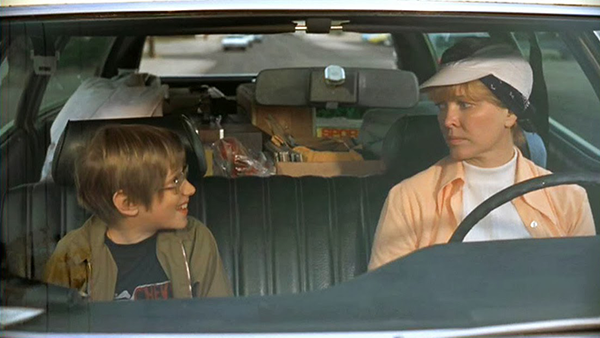
Directed by Martin Scorsese and written by Robert Getchell, Alice Doesn’t Live Here Anymore is the story of a widow who travels to the American Southwest with her young son in the hopes that she can find a better life for them. The film plays into a woman trying to start over as she struggles to find love and a new job as well as raise her pre-teen son who is going through growing pains. Starring Ellen Burstyn, Kris Kristofferson, Alfred Lutter, Diane Ladd, Jodie Foster, and Harvey Keitel. Alice Doesn’t Live Here Anymore is a mesmerizing yet compelling film from Martin Scorsese.

Following the death of her husband in an auto accident, the film revolves around a widow and her 11-year old son trying to start over in the American Southwest on their way to her hometown of Monterrey, California as she would struggle to find work and love. It’s a film that plays into a woman trying to live something that is very ideal but has to contend with the reality of her situation as well as raising a son who is quite bratty and going through growing pains. Though Alice (Ellen Burstyn) was once a singer, she realizes that finding a job to be one is difficult where she would eventually work as a waitress and later meet a kind rancher named David (Kris Kristofferson). Still, Alice would struggle to keep her son Tommy (Alfred Lutter) intact as he would eventually act out and later befriend a troublemaker named Audrey (Jodie Foster).

Robert Getchell’s screenplay plays into Alice’s trials and tribulations as the first act has her coping with the death of her husband despite their turbulent relationship as she realizes that she needs to move from New Mexico and back to her hometown of Monterrey. Much of the film’s first half is a road movie where Alice and Tommy try to find a place to live as well as a job for Alice as she would get a job as a singer for a bar but it wouldn’t last due to an unfortunate tryst with a young man named Ben (Harvey Keitel). The second half would have Alice finally settle in Tuscon, Arizona hoping it would be temporary as she realize the only job she can get is a diner waitress where is later guided by the waitress Flo (Diane Ladd). At the same time, Alice ponders if she can have a relationship as the film also has a feminist message of sorts about what Alice really wants and what she needs to do for herself and for her son.

Martin Scorsese’s direction is very intimate in the way he captures Alice’s turbulent life as well as the world that she has to deal with that is quite chaotic. The film opens in the style of a melodrama and in a full-frame aspect ratio where it shows a young Alice fantasizing about being a singer in the farm that she’s in. When she then says something profane, it becomes clear that this is not a 1950s melodrama as it shifts into a widescreen aspect format to play into Alice’s troubled life with her husband and son Tommy who is listening to Mott the Hoople in loud volume. It establishes that Alice hasn’t reached her goal as she deals with a neglectful husband and a bratty kid where things would change once her husband dies. Much of Scorsese’s compositions are very simple as he does take advantage of the beauty in the many locations in the American Southwest in places in New Mexico and Arizona.

For many of the scenes at the motels and at the diner, Scorsese would employ a lot of hand-held camera tracking shots to play into the drama as well as to capture Alice trying desperately to look good so she can get a job. Even the scenes in the diner shows how frenetic things are where Scorsese would maintain that intimacy with a sense of style in the hand-held camera shots. There are also moments where Scorsese would play into something that feels very loose in the way Tommy would go into his own adventures with Audrey as it would play into his own sense of acting out. Especially as it would boil the tension between him and Alice as it relates to what Alice wants in her life but also what she needs to do for herself and Tommy. Overall, Scorsese creates a very engrossing yet spirited film about a woman starting over with her son.

Cinematographer Kent L. Wakeford does excellent work with the film‘s cinematography to capture the sunny look of the locations in its exteriors along with some unique lighting for some of the scenes set at night including the scenes in Phoenix where Alice would spend time with Ben. Editor Marcia Lucas does nice work with the editing as it is straightforward with some rhythmic cuts for some of the comedic and more heavier moments in the drama. Production designer Toby Carr Rafelson does fantastic work with the look of the motels Alice and Tommy lived in as well as the diner and David‘s ranch. Sound mixer Don Parker does terrific work with the sound in capturing the atmosphere of the diners and bars as well as some of the music that is played on location. The soundtrack would feature not just a few pop standards but also contemporary music from Mott the Hoople, T-Rex, Elton John, Leon Russell, and Dolly Parton.

The film’s amazing cast includes some notable small roles including an early un-credited appearance from Laura Dern as a young girl in glasses eating an ice cream cone at the diner, director Martin Scorsese as a diner customer, Lane Bradbury as a woman who has some connection with Ben, Harry Northup as a bartender that helps Alice in Phoenix, Billy “Green” Bush as Alice’s late husband Donald who appears early in the film, Leila Goldoni as Alice’s best friend Bea who helped her with the move, Valerie Curtin as the shy and timid waitress Vera, and Vic Tayback as the diner’s owner/short-order cook Mel. Harvey Keitel is superb as Ben as this man who meets Alice at a bar in Phoenix as they would have a brief relationship that doesn’t last. Jodie Foster is wonderful as a teenage tomboy named Audrey whom Tommy would meet in Tucson as she would introduce him trouble as well as saying very foul language.

Diane Ladd is fantastic as the waitress Flo as a sass-talking woman who is quite hardened as she helps Alice in keeping her head straight as it’s a performance that is just fun to watch. Kris Kristofferson is excellent as David as a kind rancher who understands what Alice is going through as he wants to help her and Tommy while dealing with Tommy’s bratty behavior. Alfred Lutter is brilliant as Tommy as this pre-teen kid who is very talkative as he copes with being bored as well as finding somewhere to be at as it’s a very wild yet naturalistic performance for the actor. Finally, there’s Ellen Burstyn in an incredible performance as Alice as this widow who is forced to start over as her dreams of being a singer is pulled by the wayside in order to care and raise her son as well as find out what she really wants in her life as it’s a funny but also gripping performance from Burstyn.

Alice Doesn’t Live Here Anymore is a remarkable film from Martin Scorsese that features a magnificent performance from Ellen Burstyn. While it is a very different film from some of the more urban films that Scorsese is known for. It is still one of his finest in terms of character study as well as being a feminist film of sorts where a widow is trying to come to terms with what she has to do with her life and for her son. In the end, Alice Doesn’t Live Here Anymore is a phenomenal film from Martin Scorsese.

Martin Scorsese Films: (Who’s That Knocking on My Door?) - (Street Scenes) - Boxcar Bertha - (Mean Streets) - Italianamerican - Taxi Driver - New York, New York - American Boy: A Profile of Steven Prince - (The Last Waltz) - Raging Bull - The King of Comedy - After Hours - The Color of Money - The Last Temptation of Christ - New York Stories-Life Lessons - Goodfellas - Cape Fear (1991 film) - The Age of Innocence - (A Personal Journey with Martin Scorsese Through American Movies) - (Casino) - (Kundun) - (My Voyage to Italy) - Bringing Out the Dead - (The Blues-Feel Like Going Home) - Gangs of New York - (The Aviator) - No Direction Home - The Departed - Shine a Light - Shutter Island - (A Letter to Elia) - (Public Speaking) - George Harrison: Living in the Material World - Hugo - The Wolf of Wall Street - (The 50 Year Argument) - Silence (2016 film) - (The Irishman) - Killers of the Flower Moon - (An Afternoon with SCTV)

© thevoid99 2015

Sunday, November 09, 2014

Interstellar


Directed by Christopher Nolan and written by Christopher and Jonathan Nolan, Interstellar is the story of an engineer who takes part into an interstellar mission to find a habitable planet through wormholes in the hopes he can save humanity including the children he’s leaving behind. The film is an exploration into the world of outer space and the world beyond where a man joins a space crew to find salvation just as Earth is in ruins. Starring Matthew McConaughey, Anne Hathaway, Jessica Chastain, Casey Affleck, Wes Bentley, and Michael Caine. Interstellar is a grand yet exhilarating film from Christopher Nolan.

Set in a world where planet Earth is being destroyed by dustbowls and are forced to live on whatever agricultural resources they have, the film is about an engineer who is asked to go to outer space to find a habitable planets through a wormhole as he is forced to leave his children behind. Through this mission, Cooper (Matthew McConaughey) tries to find a world in the hopes to save humanity but things become complicated as time becomes sparse due to time dilation. Back on Earth, Cooper’s daughter Murph (Jessica Chastain) tries to finish a theory left behind by Professor Brand (Michael Caine) in the hope that her father comes back. It’s a film that plays into ideas of theory of relativity as well as a man trying to do whatever to save humanity and return home to his family.

The film’s screenplay by Christopher and Jonathan Nolan doesn’t just explore the concept of interstellar travel where time becomes very complex where an hour spent in a planet can actually take years on Earth or any part of the galaxy. It adds to the dramatic aspect of the story and Cooper’s desire to hoping to come home and make a difference as his absence made it hard for his daughter to deal with. Even as Murph as she gets older becomes resentful while wondering if there was any kind of hope to the mission at hand. There’s also a sense of desperation that occurs between Cooper and Brand’s daughter Amelia (Anne Hathaway) who is part of the mission as she is trying all she can to make sure they succeed but complications ensue where their encounters with a planet to retrieve data from previous missions begin to fall apart.

While the script does have a traditional structure where its first act is set on Earth as Cooper tries to uncover a series of mysterious messages he found with a younger Murph (Mackenzie Foy) that lead him to be contacted by Professor Brand. Yet, what Cooper is asked to do by Brand would be a hard decision to make as it would hurt him to leave Murph and his son Tom (Timothee Chalamet) as the film’s second act is about Cooper’s mission in space with Amelia and two other astronauts in Romilly (David Gyasi) and Doyle (Wes Bentley) where it takes them two years to travel from Earth to the wormhole near Saturn. Then comes this third act where it crisscross the narratives of both Cooper and the adult Murph where the latter tries to finish Brand’s theory as well as figure out the codes that she encountered as a child. Especially as they both have to deal with forces that would prevent a reunion between father and daughter from happening.

Christopher Nolan’s direction is definitely astonishing in terms of the visual scope that he presents. Shot in this 2:35:1 aspect ratio in 35mm film, which is also blown up for 70mm, as it has this grand look in terms of scale for the scenes not just set in outer space but also in some of the planets the characters are in. Some of it is shot in Iceland while scenes set on Earth are shot in Alberta, Canada as it plays into something that feels like a Midwest film that are shot very naturally while the scenes on these mysterious planets have something that feels very alien-like. The usage of wide shots with some crane cameras and other shooting styles add to the massive scope of the film that includes this sequence in these strange mountain-like locations where it adds to a sense of mystique about what might be out there.

Still, it is a film about a father and a daughter trying to reunite as the former is trying to find some kind of hope where it feels like a few years for him but it’s much longer than that on Earth. The complexity of the film’s narrative and sense of time is very prevalent which does add to some of the exposition that occurs on film though it does get overwhelming at times. Even in its third act where there is a sense of conventional drama that occurs as it does take away some of the unconventional aspects of the film that was working though there is a payoff that is satisfying which plays to the emotional crux of the film. Overall, Nolan creates a very rapturous yet evocative film about a man going to outer space to save his daughter and humanity in the hopes to find a new world.

Cinematographer Hoyte van Hoytema does brilliant work with the film‘s cinematography from the naturalistic look of the farmland locations in Canada to the array of lights and shading for much of the film‘s interior setting including the shots set in outer space. Editor Lee Smith does amazing work in creating some very straightforward cuts for the drama while going for unique rhythms in the space travels including the wormhole sequence along with some intense moments in the film. Production designer Nathan Crowley, with set decorator Gary Fettis and supervising art director Dean Wolcott, does excellent work with the design of the space ships Cooper and his team travel in as well as the robots they‘re accompanied with along with the NASA base that Professor Brand would work at.

Costume designer Mary Zophres does nice work with the costumes from the casual look of the characters on Earth to the design of the astronaut suits. Visual effects supervisor Paul Franklin does fantastic work with the visual effects for some of the scenes set in outer space to the movement of the robots plus some set-dressing for some of the planets. Sound editor Richard King does superb work with the sound to convey the sense of silence of exterior scenes in space as well as the sounds of rockets and some of the locations in its surroundings. The film’s music by Hans Zimmer is incredible for its mixture of soaring orchestral textures mixed in with minimalist electronic music to play into the sense of mystique that is prevalent in the film.

The casting by John Papisdera is phenomenal as it features some notable small roles from David Oyelowo as Murph’s school principal, William Devane as a NASA official, Matt Damon as a scientist who been part of an earlier mission, Topher Grace as a doctor friend of Murph, Leah Cairns as Tom’s wife, Liam Dickinson as Tom’s son Coop, Timothee Chalamet as the young Tom, and John Lithgow in a terrific role as Cooper’s father-in-law Donald who says some of the film’s funniest lines. Voice performances from Josh Stewart as CASE and Bill Irwin as TARS are excellent as they bring some soul to the machine as these robots that help the team in space with the latter being the most humorous. Casey Affleck is superb as Murph’s older brother Casey who also misses his father as he tries to cope with loss and saving the family farm.

Wes Bentley is wonderful as the geographer Doyle who tries to understand the wormholes and planets while David Gyasi is fantastic as the physicist Romilly who tries to understand the idea of space and time itself. Michael Caine is great as Professor Brand as a scientist who tries to prove a theory about how to save Earth as he copes with trying to do what is right as well as deal with the implications. In the roles of Murph, there’s Mackenzie Foy in a great performance as the young Murph who tries to cope with her father’s departure while Jessica Chastain is amazing as the older Murph as a woman filled with resentment as she tries to finish Professor Brand’s theory. In the brief role of the eldest Murph, Ellen Burstyn is brilliant in telling the story of what it was like in the dustbowl to explain the severity of the mission.

Anne Hathaway is incredible as Amelia Brand as a fellow astronaut who tries to keep things going while dealing with her own emotional baggage as tries to make sense of the stakes of the mission. Finally, there’s Matthew McConaughey in a magnificent performance as Cooper as this former pilot turned engineer who takes on a mission to space in the hopes that his family can survive beyond the dustbowl as he struggles with his own emotional baggage as well as the mission at hand.

Interstellar is a sensational film from Christopher Nolan. Armed with a great ensemble cast led by Matthew McConaughey as well as intriguing concepts about space, interstellar travel, and theories of relativity and time. It’s a film that is sci-fi at its most complex with some astonishing visuals that is backed up with a powerful story of a man trying to bring a future of hope for his children. In the end, Interstellar is a remarkable film from Christopher Nolan.

Christopher Nolan Films: Following - Memento - Insomnia - Batman Begins - The Prestige - The Dark Knight - Inception - The Dark Knight Rises - Dunkirk - Tenet - Oppenheimer - The Auteurs #13: Christopher Nolan

© thevoid99 2014

Saturday, July 19, 2014

The Last Picture Show


Based on the novel by Larry McMurtry, The Last Picture Show is the story of a group of teens who deal with their lonely surroundings as they also meet aging souls as they would contemplate their own future. Directed by Peter Bogdanovich and screenplay by Bogdanovich and McMurtry, the film is a look into a world where the old values of America starts to fall apart as it’s set into a small town in the middle of Texas circa 1951. Starring Jeff Bridges, Cybill Shepherd, Timothy Bottoms, Cloris Leachman, Ellen Burstyn, Eileen Brennan, Ben Johnson, Randy Quaid, and Clu Gulager. The Last Picture Show is an entrancing yet somber film from Peter Bogdanovich.

Set in this small yet lonely Texas town in the early 1950s in the span of nearly a year, the film explores the lives of three teenagers as well as various adult figures dealing with their environment in a world that is changing around them. Leading the pack is a high school senior in Sonny Crawford (Timothy Bottoms) who is unsure of what to do after high school as he spends much of his time hanging out at a pool hall, a diner, and other places in his small town with nothing to do. With his friend Duane (Jeff Bridges) and Duane’s rich girlfriend Jacy (Cybill Shepherd), Sonny spends nearly a year trying to figure things out where he has an affair with his coach’s lonely wife Ruth Popper (Cloris Leachman) while Jacy is eager to lose her virginity to Duane while her mother Lois (Ellen Burstyn) warns her about being with someone like Duane. All of which plays into a world of uncertainty in this small town that is just dying.

The film’s screenplay by Peter Bogdanovich and Larry McMurtry explore this world where even though it is set in nearly a year from October of 1951 to September of 1952. It feels like a film that is set into a very different time period where much of the loose morality of the 1960s and early 1970s come into play as Sonny, Duane, and Jacy would all deal with growing pains as they’re eager to leave the small town they’re in. Especially as there’s a world that is filled with so much change that these three want to be a part of but Sonny is still attached to the small town as he is guided by the town’s local figure Sam the Lion (Ben Johnson) who owns the diner, the pool hall, and movie theater that the people often go to. With Duane in tow, Sonny would often get into mischief as it showcases their lack of direction where their friendship would get complicated to do Duane’s immaturity which eventually played into his break-up with Jacy who wanted more.

The script also plays into the role of peer pressure as Jacy is eager to be with the crowd as she would skinny-dip while wanting to lose her virginity so that she can be with a popular boy in school. It would play into her own development as a young woman as she is guided by her mother Lois about the trappings of love affairs and such as well as being with someone like Duane. Yet, Lois is a woman that is lost in her own marriage and affair as it reveals that she did love someone and has regretted leaving that man while Ruth is a woman in an unhappy marriage as she deals with loneliness where Sonny helps her out and lead to their affair. Ruth, Lois, and Jacy are three of four women who play into Sonny’s life as the other is the diner waitress Genevieve (Eileen Brennan) who is a weary observer, like Lois and Sam, that has seen a lot in the small town and knows what is going on as she would also guide Sonny into finding his way. Even if it means leaving the small town that he has lived for all of his young life.

Bogdanovich’s direction opens and ends with this eerie image of the small Texan town where it feels like a ghost town with hard winds being heard and tumbleweeds passing by. It sets the tone of a film where it has this feel of aimlessness but also something that is quite entrancing where it is set in a crucial moment in time where everything is black-and-white with little contact of the world outside of this small town. Bogdanovich creates some unique shots to play into this emergence of a new world of sexuality that is emerging where Jacy is quite hesitant in some parts of the film but is also eager to fit in with the crowd such as the skinny dipping sequence. There’s also some very chilling scenes where Sonny, Duane, and their friends try to get the mute boy Billy (Sam Bottoms) to lose his virginity to a prostitute as it starts off comically but ends up being very somber where Sonny and his friends feel bad about what happened with Duane not owning up to his mistake.

Much of the direction is shot with some unique wide shots and some medium shots plus a few close-ups to play into the drama that is unfolding as Sonny deals with growing pains and temptation as it concerns Jacy. Especially as things become much grimmer in its third act as parts of this small town is starting to die while the sense of uncertainty starts to loom. Much of it would include some revelations about the town and the people that Sonny has known where he isn’t sure if he has to escape or just be part of it for good. Overall, Bogdanovich creates a very haunting yet intoxicating film about a group of people living in a desolate town in the middle of Texas.

Cinematographer Robert Surtees does brilliant work with the film‘s black-and-white photography as it has this very timeless look to the film where it plays into that sense of a ghost town in its location in Texas as well as some unique lighting schemes and such to play into the mood of the drama. Editor Don Cambern does excellent work with the editing as it features bits of stylistic uses of jump-cuts and dissolves to play into the sense of dramatic energy in the film as well as the sense of aimlessness.

Production/costume designer Polly Platt and art director Walter Scott Herndon do amazing work with the set pieces from the look of the town in its desolate setting as well as the pool hall and movie theater while the costumes are terrific to play into the personality of the characters. Sound editor James M. Falkinburg does superb work with the sound from the way wind sounds to some of the moments in the film’s locations along with the film’s music as much of it is played on location as it features pieces by Hank Williams and other artists in country and pop music of the times.

The casting by Ross Brown is fantastic as it features some notable small roles from Sharon Taggart as Sonny’s girlfriend Charlene early in the film, Bill Thurman as Ruth’s husband, Gary Brockette as the popular senior Bobby that Jacy wants to be with, Sam Bottoms as the mute boy Billy that always hung around Sonny and Sam the Lion, Clu Gulager as Lois’ lover Aibilene who would later meet Jacy in a very haunting moment, and Randy Quaid as a rich kid named Lester who would take Jacy to the skinny-dipping party. Eileen Brennan is excellent as the kind-hearted waitress Genevieve who often serves Sonny and the other locals as she would help Sonny around and give him some guidance and food. Ellen Burstyn is superb as Jacy’s mother Lois who tries to warn her daughter about dating someone like Duane as she is embroiled in an empty affair of her own as she comes to term with her own regrets and what she doesn’t want her daughter to do.

Ben Johnson is amazing as the town leader Sam the Lion as this old man that had seen everything as he also displays some sentimentality about how simple things were in the past as he is aware of changing times as he guides Sonny into doing what is right. Cloris Leachman is radiant as the lonely housewife Ruth Popper as this middle-aged woman who has been neglected and depressed as she finds solace in the company of Sonny as there is a moment at the end of the film that is just astonishing as she is just riveting to watch. Cybill Shepherd is brilliant as Jacy Farrow as this young woman who is eager to fit in with the rest of her classmates as she is in love with Duane while becoming frustrated with her lack of prospects as she tries to come to terms with what she wants to do with her life.

Jeff Bridges is superb as Duane as an aloof young man who likes to party and such as he has very little idea into what Jacy wants while being forced to grow up and think about his own future. Finally, there’s Timothy Bottoms in an incredible performance as Sonny Crawford where Bottoms brings a boyish quality to a young man unsure of what to do as he begins an affair with a middle-aged woman while dealing with the tasks he’s given as well as temptation as it’s a truly mesmerizing performance from Bottoms.

The Last Picture Show is a tremendous film from Peter Bogdanovich. Featuring a brilliant ensemble cast as well as an astonishing look and presentation, it’s a film that explores a world that is truly American but cut-off from the rest of the country. Especially in a world that is changing where the youth of this small town is forced to make decisions about what to do with this new world that is emerging. In the end, The Last Picture Show is a phenomenal film from Peter Bogdanovich.

Peter Bogdanovich Films: Targets - (Voyage to the Planet of Prehistoric Women) - (Directed by John Ford) - (What’s Up Doc?) - Paper Moon - (Daisy Miller) - (At Long Last Love) - (Nickelodeon) - (Saint Jack) - (They All Laughed) - (Mask (1985 film)) - (Illegally Yours) - (Texasville) - (Noises Off) - (The Thing Called Love) - (To Sir, with Love II) - (The Price of Heaven) - (Rescuers: Stories of Courage: Two Women) - (Naked City: A Killer Christmas) - (A Saintly Switch) - (The Cat’s Meow) - (The Mystery of Natalie Wood) - (Hustle (2004 film)) - (Runnin’ Down a Dream) - (She’s Funny That Way) - The Great Buster: A Celebration

© thevoid99 2014

Thursday, July 17, 2014

The King of Marvin Gardens


Directed by Bob Rafelson and screenplay by Jacob Brackman from a story by Rafelson and Jack Nicholson, The King of Marvin Gardens is the story of two estranged brothers who go to Atlantic City for a real-estate scam where things go wrong. The film is an exploration into the world of brothers as one is an extroverted con man and the other is an introverted and depressed radio disc jockey as they reluctantly work together. Starring Jack Nicholson, Bruce Dern, Ellen Burstyn, and Scatman Crothers. The King of Marvin Gardens is a chilling yet whimsical film from Bob Rafelson.

The film explores the relationship of two different brothers who hadn’t seen each other in two years as the introverted younger radio disc jockey in David Staebler (Jack Nicholson) reluctantly travels to Atlantic City to bail out his older brother Jason (Bruce Dern) who has an idea for a real-estate scam that David unwillingly becomes a part of. Yet, it’s a film that plays into an idea of two brothers who try to create something for themselves but not everything is going great as David is skeptical about what Jason is doing as they’re joined by Jason’s aging beauty queen girlfriend Sally (Ellen Burstyn) and a younger woman in Jessica (Julia Ann Robinson). While all of them have dreams about what they want to do if the scam becomes successful, David tries to remain optimistic as he copes with his own depression as it would play into the fallacies of the American Dream and reality that of what is really happening.

Jacob Brackman’s screenplay doesn’t just explore this unique relationship between brothers but also what they’re trying to do with this scheme that Jason is creating. Especially as Jason wants to break out of his own and live very richly despite years of work and loyalty towards his boss in Lewis (Scatman Crothers). Things eventually complicated as jealousy begins to arise in Jason’s attention towards Jessica making Sally more troubled than she already is as she resents David’s presence though he tries to be nice to her. Yet, David’s skepticism and Sally’s fragile behavior creates a situation that becomes very toxic as Jason seems more eager to succeed though the details of his plan becomes more scarce. David would eventually try to see reason into what is happening as it would lead to a break down in the relationships involving his brother and the women in the scheme.

Bob Rafelson’s direction is truly amazing for the way he captures much of the drama and some of the livelier moments such as Sally’s introduction to David to showcase her beauty queen persona. Yet, the film opens with this very long take of David talking about a story in his radio program where it reveals who he is as this very somber way he tells his story as he prefers to live modestly with his ailing grandfather. Upon his arrival to Atlantic City where it is this lost world where things are still happening but it has lost the sense of prestige where it’s being taken over by crime and corruption. Rafelson brings in something that is improvisational in its direction such as this big scene where Jason, David, Sally, and Jessica are doing a show of their own in an empty theater as Rafelson uses a lot of wide and medium shots for much of the presentation where he also includes a lot of long takes.

Even as the music in the film is presented on location such as Jason and David’s encounter with a marching band that showcases how warm their brotherhood could be. Yet, it wouldn’t last as things do get more dramatic as it involves Sally’s own breakdown as well as revelations about Jason’s own schemes where it would play into the fallacy that is the American Dream. Overall, Rafelson crafts a very engaging and haunting film about two brothers working together in a doomed scam.

Cinematographer Laszlo Kovacs does brilliant work with the film‘s very realistic yet colorful cinematography where he infuses a lot of low-key lights for some of the film‘s nighttime interior/exterior scenes as well as some unique lighting schemes in some of the film‘s more eerie moments. Editor John F. Link II does nice work with the editing as it‘s mostly straightforward in its approach to cutting while using a few rhythmic cuts for its dramatic moments. Art director Toby Carr Rafelson does terrific work with the look of the hotel rooms that the four characters are staying at as well as the abandoned theater where they performed their show. Sound mixer Tom Overton does superb work with the sound from the hollowness of the abandoned theater to some of the craziness that David sees at the hotel involving Jason and the two women.

The casting by Marion Dougherty and Fred Roos is fantastic as it features some notable small roles from Charles Lavine as David and Jason’s grandfather and Scatman Crothers as the elusive yet charming crime boss Lewis. Julia Ann Robinson is wonderful as Jessica as a young woman who dreams of being a beauty queen while becoming more flirtatious as she eventually causes tension with Sally. Ellen Burstyn is great as Sally as this beauty queen who deals with aging as well as Jason’s attention towards Jessica as she starts to have a break down of her own as well as the idea of not being needed anymore. Bruce Dern is excellent as Jason Staebler as this determined con man who is full of charm and exuberance as he is eager to succeed with his scam yet is oblivious into how he will execute these plans. Finally, there’s Jack Nicholson in an incredible performance as David Staebler as this nerdy and introverted radio disc jockey who reluctantly takes part in his brother’s scam while dealing with his own issues as he tries to smooth things out in terms of business as he becomes aware of the chaos that is emerging.

The King of Marvin Gardens is a phenomenal film from Bob Rafelson. Armed with the top-notch performances of Jack Nicholson, Bruce Dern, and Ellen Burstyn plus Laszlo Kovacs’ colorful cinematography. The film isn’t just one of Rafelson’s finest films but also one of the key gems of the New Hollywood movement in its exploration of the American Dream. In the end, The King of Marvin Gardens is an extraordinarily rich film from Bob Rafelson.

Bob Rafelson Films: Head - (Five Easy Pieces) - (Stay Hungry) - (The Postman Always Stay Twice (1981 film)) - (Black Widow) - (Mountains on the Moon) - (Man Trouble) - (Blood and Wine) - (Poodle Springs) - (No Good Deed)

© thevoid99 2014

Thursday, December 09, 2010

The Fountain


After two back-to-back acclaim hits and a devoted cult following, Darren Aronofsky was becoming the hot director of the moment. Even as his 2000 film Requiem for a Dream became a massive hit, Aronofsky was attached to a number of projects including a chance to revive the Batman franchise. Though Aronofsky was involved as a producer and writer in a project called Below for David Twohy in 2002. He was focused on making an ambitious project called The Fountain that was to star Brad Pitt and Cate Blanchett with Warner Brothers studio backing him. Yet, production issues and cost overruns led to the departures of Pitt and Blanchett. In 2004, the project was revived on a much smaller scale for a $35 million budget with Hugh Jackman taking on the lead role with Aronofsky’s then-girlfriend Rachel Weisz as the female lead.

Directed and scribed by Darren Aronofsky with a story co-written with Ari Handel. The Fountain tells three different stories that all parallel through different time periods. The first tells the story of a conquistador searching for the Tree of Life for his queen while in 2005, a man is trying to find a cure for his wife’s illness. The third storyline revolves around the future as the same man is trying to revive the Tree of Life through outer space. Recalling on Aronofsky’s themes of struggle, ambition, and fear of death. The film is considered to be Aronofsky’s most personal work at the time. Also starring Aronofsky regulars Ellen Burstyn and Mark Margolis plus Cliff Curtis, Stephen McHattie, Donna Murphy, Sean Patrick Thomas, and Ethan Suplee. The Fountain, despite its ambitions, is a film that falls flat on its ideas.

In the 16th Century, an inquisitor named Silecio (Stephen McHattie) is planning a coup against Queen Isabella of Spain (Rachel Weisz) as her captain Tomas (Hugh Jackman) is sent on a mission. Along with Captain Ariel (Cliff Curtis) and a Franciscan priest named Avila (Mark Margolis), they go on a quest to find the Tree of Life in order to stop Silecio. Meanwhile in 2005, a doctor named Tommy (Hugh Jackman) is trying to find a cure to stop a brain tumor that is wife Izzi (Rachel Weisz). With Izzi trying to finish a story, Tommy finds a breakthrough with his associates through an experiment on a chimpanzee. Still, the experiments become controversial as a fellow surgeon in Dr. Lillian Guzetti (Ellen Burstyn) believes Tommy is going too far.

Yet, Izzi’s illness is worsening as Tommy wants to know more about the progress of the experiment. Meanwhile, in the future, a man named Tom (Hugh Jackman) is traveling inside a bubble with the Tree of Life in hopes to revive the Tree to a nebula.

While the film does recall many themes that Aronofsky has explored in the past. It’s the theme of death and how to live with it that is very prominent throughout the film. Even as its key protagonist is desperate to bring life to the ailing woman that he loves. With Aronofsky using the legend of the Tree of Life with relations to the Mayans and Spain’s search for the New World. All of these ideas seem very promising. The problem is that there’s not a lot of weight to the legend of the Tree of Life and some of the ideas end up becoming comical. For a film that is meant to be dramatic with all of these science fiction ideas. It seems like whatever ideas the film had in its earlier incarnation got stripped down to give audiences a story that ends up not saying very much.

Though the love story between Tom and Izzi, in their various incarnations, does drive the motivation of its protagonist. Aronofsky does make the love story compelling but it ends up being bogged down a bit by the typical romantic formula. For the audience, they pretty much know what will happen and what will be the outcome which ends up being very unsatisfying. Notably when part of the film has Tom trying to discover a cure through elements from the Tree of Life. The legend of the Tree of Life is sort of wasted though its climatic ending through the incarnation of Tomas is presented in such a bad way that it ends up being unintentionally funny.

It’s not just Aronofsky’s screenplay that has some issues with what kind of story it wants to tell. His direction, though often engaging and filled with dazzling visuals, is sort of flat in the presentation. Notably for the staging of scenes in some parts of the film. While the camera does move quite seamlessly at times along with moments to just stop and observe the performance. There’s times when the zooms and close-ups become quite repetitive as if he’s trying to make some stylistic choices that don’t work. While he does create some fascinating scenes and visual cues for the film. It’s also an indication of Aronofsky playing it safe for a film that is meant to be high concept only to fall very short.

Cinematographer Matthew Libatique creates a look to the film that is filled with not much light except yellowish hues and candles to encompass a very eerie atmosphere. The problem is that the look ends up being annoying at times where some scenes needed to be brightened where the audience isn’t sure where they’re at. When the white light does come in, the look of the film does improve though its stylization really hurts the film. Editor Jay Rabinowitz does a nice job with the editing though the pacing of the film lags at time while some of the transitions from period to period isn’t as smooth in some parts.

Production designer James Chinlund, along with a team of set decorators and art directors, do an excellent job in creating a regal look for Queen Isabella’s palace along with the hospital and home that Tommy frequents. Even the look of the Tree of Life is extraordinary with help from visual effects producers Keith Cooper and Rob Myers as the look of the outer space sequences are great. Costume designer Renee April does some spectacular work with the dress of Queen Isabella as well as the period costumes for the 16th Century sequence while the costumes for everything else is very good also. Sound designers Stephen Barden, Brian Emrich, and Craig Henighan do a fantastic job in creating layers of sound for each period sequence where the 16th is quiet and unsettling while the future scenes are nearly silent throughout..

Longtime Aronofsky collaborator Clint Mansell creates a score that is definitely one of the film‘s highlights. Performed by the Kronos Quartet and the indie-rock group Mogwai. The score is a mixture of melancholic orchestral pieces to play up to the film’s emotions along with bombastic arrangements for the more intense scenes. While it isn’t up to par with Mansell’s other work for Aronofsky’s films, it is a fantastic score.

The casting by Mary Vernieu is another of the film’s highlights as the film does have some memorable small performances. Among them are Ethan Suplee, Donna Murphy, and Sean Patrick Thomas as fellow surgeons of Tommy who are baffled by his experiments. Stephen McHattie is very good as fearsome inquisitor who is threatening the Queen while Mark Margolis is also good as Father Avila. Cliff Curtis is excellent as Captain Ariel who is convinced that the quest for the Tree of Life is a curse while Ellen Burstyn is superb in a memorable supporting role as Tommy’s lead surgeon who pleads with him to stop with the experiments.

Rachel Weisz is wonderful in her roles as Queen Isabella and Izzi. For Queen Isabella, she displays a regality that is stunning to watch while being mysterious. For Izzi, Weisz displays a bit of humor and innocence while showing great strength in her vulnerability as it’s one of her more underrated performances. Hugh Jackman gives, what is probably his most overlooked performance as Tomas/Tommy/Tom. Jackman’s performance is really the heart and soul of the film as a man hell-bent on a quest to save his beloved while having troubles to really be there for that person. Jackman really shows great dramatic weight to the role despite the lack of weight in the screenplay. It’s still one of his finest performances of his career.

The 2007 Region 1 DVD from Warner Brothers presents the film in both the full-screen format and the 1:85:1 aspect ratio for widescreen. Also in 5.1 Dolby Surround sound for French and English plus English, French, and Spanish subtitles. The special features in the DVD include the theatrical trailer and a one-hour six-part special featurette called Inside The Fountain: Death & Rebirth. The documentary is essentially a making of the film of sorts where Darren Aronofsky and various crew members dwell into the early stages of the film. The original idea was to shoot the film in Australia following a trip to Central America for a look into the ruins. When that early stage into the production fell apart, it took Aronofsky two more years to get it going. The documentary is pretty entertaining in some parts as it includes some funny moments as well as great insight into what the production could’ve been in its first incarnation.

Despite some of its shortcomings in the story and in the direction of Darren Aronofsky. The Fountain is an interesting film with some great visual effects and some great performances of Hugh Jackman and Rachel Weisz. Fans of Aronofsky, no doubt, will be divided about this film as some might think it’s a fantastic meditation on death while others might find it to be overly-pretentious. There’s even room for those in the middle who are unsure about the film. It’s not a failure nor is it a triumph either. In the end, The Fountain is a decent film from Darren Aronofsky that just falls very short on the themes it tried to explore.

Darren Aronofsky Reviews: Pi - Requiem for a Dream - The Wrestler - Black Swan - Noah - mother!


© thevoid99 2010

Wednesday, December 08, 2010

Requiem for a Dream


Originally Written and Posted at Epinions.com on 1/14/09 w/ Additional Edits & Expanded Content.


After the success of his 1998 debut film Pi, Darren Aronofsky had arrived as a new director on the rise. His debut film was a low-budget sci-fi thriller that captivated audiences for his high-octane, intelligent take on mathematics and the mysteries of life. Following the success of Pi, Aronofsky was approached to take over the Batman franchise following the poorly-received 1997 film Batman & Robin. Though he would go back and forth into the development through the years along with attached projects for Ronin and Watchmen. Aronofsky instead focused on a novel by Hubert Selby Jr. about addiction of all kinds that would become the basis for his 2000 based on the novel of the same name entitled Requiem for a Dream.

Directed by Darren Aronofsky with a script co-written with novelist Hubert Selby Jr., Requiem for a Dream tells various different stories of addiction from various characters. An elderly woman dealing with her addiction to pills that altered her state of reality while her son, his girlfriend, and a friend deal with their own escape through drugs that would collide with harsh realities. A study of addiction, the mind, and alternate realities, it's a film that explores the psyche of individuals dealing with drug addiction. Starring Ellen Burstyn, Jared Leto, Jennifer Connelly, Marlon Wayans, Christopher McDonald, Keith David, Louise Lasser, and from Pi, Mark Margolis, Sean Gullette, and Ben Shenkman. Requiem for a Dream is a harrowing, surreal, and mesmerizing masterpiece from Darren Aronofsky and company.

It's summer in Brighton Beach as Sara Goldfarb (Ellen Burstyn) spends all day at her apartment watching an infomercial hosted by Tappy Tibbons (Christopher McDonald). Alone and widowed, her son Harry (Jared Leto) only visits to take her TV so he can sell it to Mr. Rabinowitz (Mark Margolis) who often gives the TV back to Sara. One day, Sara receives a phone call that she's going to be on TV as she is excited but needs to lose weight to wear a red dress. Harry meanwhile, is a dealer/heroin addict along with his friend Tyrone (Marlon Wayans) where they hope for some big scores. With Harry's girlfriend Marion (Jennifer Connelly), also an addict, the money made in the summer brings some hope as Harry and Marion hope to open a shop for Marion's fashion designs while Tyrone hopes to use the money to get out of the street and make his mother proud.

With Sara desperate to lose weight, she turns to her friend Ada (Louise Lasser) who suggests getting a prescription from a doctor. Sara takes prescription pills that allowed her to lose weight but her behavior has become strange as she starts to have weird imaginations of herself on TV. During a visit, Harry notices his mother's strange behavior and the pills she's been using as he is horrified by what happened. Then as the fall arrived, Tyrone gets caught by the police following a shootout between dealers as the money he and Harry made were spent on Tyrone's bail. With little money and dope for them to feed their addictions, Marion makes a move to get money from her family shrink Arnold (Sean Gullette) that would cause a rift between her and Harry.

With Sara's behavior becoming increasing erratic as she has weird visions in her head, her confusion between reality and fiction increases as she's desperate to be on TV with her pill dosage increasing. With Harry, Tyrone, and Marion desperate for dope as the winter arrives, Harry and Tyrone decide to go to Florida to get some dope in hopes to make some money again. With Marion left behind, she decides to engage in prostitution to feed her addiction as she has become a regular client for a rich man (Keith David). With Harry's health suddenly deteriorating and Sara's state of mind becoming increasingly troubled, it becomes clear that whatever hope they're all latching on seems far away.

The film can be described as an anti-drug film in terms of its message but that seems too easy to say. The film is really about people latching on to dreams and hopes through drugs only to be betrayed by them. With each main character hoping to reach for that goal, it becomes crippled by reality or an alternate reality in the case of Sara where their addiction to drugs, whether legal or illegal, takes a toll on all of them. The film's title alone is about the death of dreams through various states of substances. Novelist Hubert Selby Jr. and co-screenwriter Darren Aronofsky do an amazing job in exploring that theme of the lost dream as well as creating a unique structure for the film. The first act in the summer represents hope, the second act represents failure and the collision of harsh realities in the fall, and the third act in the winter is about the culmination of the downward spiral for all of the characters. The script overall is truly unique with its stylish dialogue and harrowing themes.

Aronofsky's direction is truly mesmerizing from start to finish as everything he had done in Pi has the director stepping up his game. Instead of going for the grainy, black-and-white minimalism of Pi, Aronofsky uses everything he's given to create a film that is truly atmospheric and haunting. With the use of split-screens, slow-motion shots, weird angles, spinning cameras, and striking compositions. It's clear that Aronofsky is trying to go into the mind of the characters as they deal with harsh realities or alternate realities with scenes that range from the bizarre to the harshest moments of realism that it's often ugly. Particularly some scenes with heavy sexual content, in its director's cut version of the film, that are very heavy to show the sense of desperation and struggle. Some of the scenes were Sara's state of mind becomes increasing troubled are done at times with very claustrophobic shots in its framing device. Overall, Aronofsky makes a film that is hard to watch yet engaging in its surrealism and harsh realities.

Cinematographer Matthew Libatique does an amazing job with the various colors he's given for the film's unique structure from the yellowish-look of the summer scenes in the first act from its exterior look to the a wonderful interior scene between Harry and Sara. For the second act, the look becomes more tinted with blue to display the mood of the characters while the third is darker, more intimate, and more surreal to display the grittiness and struggle of the characters. Libatique's work is truly phenomenal in its display of mood and atmosphere. Editor Jay Rabinowitz does superb work with the cutting to give the film a sense of repetition in the use of drugs along with some fast, rhythmic cutting and speedy moments for the film's atmospheric approach to what the characters are doing. With some jump-cuts on some sequences, Rabinowitz's editing is brilliant in creating speeds and slow movements to convey the sense of surrealism in the mind of Sara.

Production designer James Chinlund along with set decorator Ondine Karady and art director Judy Rhee do fantastic work with the looks of Sara's apartment and the place that Harry and Marion stays. One fantastic sequence involving the recreation of Sara's apartment as a set is wonderful for all of its bizarre qualities and movement of the refrigerator. Costume designer Laura Jean Shannon does wonderful work with the film's costumes from the street clothes that Harry, Tyrone, and Marion wear to the red dress that Sara wears for her TV appearance. Visual effects supervisors Jeremy Dawson and Dan Schrecker do an excellent job of creating the distorted looks of Tappy and Sara in one of Sara's weird, surreal dream sequences. Sound editor Nelson Ferreira and designer Brian Emrich do brilliant work with the film's sound for the banging of the refrigerator, location settings, and the use of objects to create an atmosphere about addiction and Sara's own surreal world.

The music by Clint Mansell with contributions from the Kronos Quartet is truly intense and atmospheric with Mansell's haunting arrangements of beats and electronics to convey the world of Harry's addiction and journey. The contributions of the Kronos Quartet features some dramatic, eerie pieces to convey the world of Sara and her surreal state with string scratches and stuff. Along with pieces from Paul Oakenfold and conga pieces remixed by James Murphy of the DFA label. The film's music and soundtrack is truly mesmerizing in its mix of electronic music and string quartet pieces.

The casting by Ann Goulder, Anne McCarthy, and Mary Vernieu is truly superb with cameo appearances from several actors from the film Pi like Ajay Naidu as a mailman, Samia Shoab as a nurse, Ben Shenkman as a doctor, Mark Margolis as a friend of Sara, and Sean Gullette as Marion's family shrink. Other appearances from Dylan Baker as a doctor, Denise Dowe as Tyrone's mother, Aliya Campbell as Tyrone's girlfriend, Darren Aronofsky as a man at a party, Keith David as a customer of Marion's, novelist Hubert Shelby Jr. as a prison guard, Aronofsky's parents in roles as a man on a train and a friend of Sara, and Louise Lasser as Ada, a close friend of Sara are truly excellent in their small roles. Christopher McDonald is great as Tappy Tibbons, a man from an infomercial who is trying to sell a product with a lot of gusto as McDonald's performance is truly memorable in every scene he's in.

Marlon Wayans is excellent as Tyrone, a young drug dealer with hopes to get a better life despite his addiction, shows Wayans in a rare dramatic role where he plays it straight and with a bit of optimism until he gets into trouble while dealing with Harry's deteriorating health. While Wayans get to say some funny lines, his dramatic performance proves that there's more to him than just being silly. Jennifer Connelly is brilliant as Marion, a young woman with hopes to her run her own fashion shop that is forced to succumb to prostitution. Connelly's performance is truly haunting as a woman whose addictions and desperation leads her into a downward spiral. Jared Leto is great as Harry, a young, irresponsible addict who has hopes for a life outside of drugs despite his use until he discovers what his mother is doing. It's a performance where Leto is restrained and engaging as he creates a sympathetic character who really cares for his mother and friends despite his own mistakes.

Finally, there's Ellen Burstyn in a phenomenal performance from the actress who, prior to this film, was relegated to TV movies and small film roles. Burstyn's unique, complex, and mesmerizing performance is really the highlight of the film. With her body language from being still to nerve-wracking as her character succumbs to erratic behaviors, Burstyn displays all of the troubles of a woman looking for a dream to be on TV. Yet, her surreal mind even has her playing a crazed, comical double with weird hair and make-up that proves how much range she can bring. It's a powerful performance from the veteran actress who got nominated for an Oscar for this role.

***Additional DVD Content Written on 12/2/10-12/7/10***

The 2001 Region 1 Director’s Cut DVD of Requiem for a Dream presents the film in the 1:85:1 widescreen theatrical aspect ratio for 16x9 widescreen televisions plus 5.1 Dolby Digital Surround Sound. The DVD features two audio commentary tracks for this special director’s cut of the film. The first is from director Darren Aronofsky. Aronofsky talks about the novel and the changes he made with novelist Hubert Selby Jr. for the film. Notably the character of Tappy Tibbons which was a new character made for the film. Aronofsky reveals that a lot of the locations came from his own childhood memories growing up while revealing that some of those landmarks of Coney Island were destroyed after filming.

Aronofsky also goes into detail about the cast as he has a lot of praise towards Ellen Burstyn. Even as she had to put on some prosthetics to make herself look heavier while giving her all with the role. Aronofsky also praises Leto and Connelly, the latter of which he was a fan of since her debut in Sergio Leone’s Once Upon a Time in America. Aronofsky also was surprised by Marlon Wayans who managed to play his role quite straightforward throughout. Aronofsky also goes into many of the film’s technical details and cameos, many of which were in Pi. He also goes into the issues the film had with the MPAA, notably scenes involving drugs and some sexual content in which he was forced to make cuts. The overall commentary is engrossing but also witty as Aronofsky tries to keep the viewer interested while adding some humor.

The second commentary track is from cinematographer Matthew Libatique. While it’s mostly a technical-driven commentary, Libatique reveals the numerous lenses and film stocks he used throughout the film. He also comments on why the film in three different palettes for the three seasons. Even with the lighting schemes while he credits production designer James Chinlund for helping him to create sets so he could move the camera around. Libatique also comments on the film and the performances while he had a hard time shooting Ellen Burstyn because of how good she was. The commentary is a relaxed yet informative in how the film looked the way it was.

The 35-minute making-of documentary shows an in-depth look into the creation of the film. Shot by Brian Costello with commentary by Darren Aronofsky, the documentary reveals how a few scenes are made including Sara cleaning her home in a speedy presentation and how it was shot which took 40 minutes in one entire take. Other scenes created were Sara’s nightmare scene, Marion having dinner with her shrink, and the stuff involving Harry’s arm. Aronofsky also showed scenes where both Ellen Burstyn and Marlon Wayans got to wear the Snorricam for their scenes. The latter of which was able to run very fast with 40 pounds of camera equipment, though he was out of breath. The last thing shown on the documentary is Clint Mansell and the Kronos Quartet working on the film’s score at Skywalker Ranch, which was a big deal to Aronofsky.

The deleted scenes section features nine deleted scenes and alternate takes which also feature optional commentary tracks. The first five deleted scenes revolve around Harry, Marion, and Tyrone all trying to stop using drugs. The first deleted scene is Marion suggesting they should stop using for a bit while the next two scenes are alternate takes of the three watching the Home Shopping Network as they try to resist as all three scenes use multiple split screens. The fourth scene is a very short clip of three multiple screens on top of another of the characters’ eyes. The fifth scene is the pay off where they all realize that stopping is not that big of a deal. The sixth deleted scene revolves around mothers as Tyrone confesses to Harry about his love for his own mother prompting Harry to call Sara. Yet, she is trapped in a closet afraid of the refrigerator as she pleads to come to the apartment but is unable to.

The seventh deleted scene is an outtake of Marlon Wayans doing Jar Jar Binks of Star Wars Episode I: The Phantom Menace where he says all sorts of funny shit. The last two deleted scenes involve the film’s original novelist Hubert Selby Jr. The first is him reading excerpts of the book to Ellen Burstyn in her hospital scenes while the second is an extended scene of Selby as the prison guard taunting the character of Tyrone. In the commentary tracks, Aronofsky reveals that the first five deleted scenes were all part of a sequence of Harry, Marion, and Tyrone trying to quit. The reason he cut those scenes was because he felt it slowed down the entire film. The sixth deleted scene was cut because of pacing issues while Marlon Wayans’ Jar Jar Binks impression scene was really Aronofsky allowing Wayans to be funny. The other two deleted scenes feature no commentary from Aronofsky.

The six-minute Anatomy of a Scene special from the Sundance Channel has Aronofsky talking about a few scenes where Harry wants to give his mother a present while it would go to a scene of her manically cleaning her apartment. Aronofsky reveals how long it took to shoot. The 20-minute Memories, Dreams, and Addictions featurette is an interview with Hubert Selby Jr. that is conducted by Ellen Burstyn. Selby talks about his experiences as a writer and meeting various famous people. Burstyn and Selby also talk about how much motherhood is important which was a key inspiration of Selby’s writing, notably in Requiem for a Dream. The interview is a very interesting piece where Selby brings some humor to his own experiences while talking about his writing process. Even as he wants to give readers something to experience when they read his writing.

The special features include a section of trailers including two theatrical trailers and two TV spots plus a look into the film’s website. Also included are cast and crew information for the people involved in the film and production notes where Aronofsky talks about the film and the book. A special Easter egg feature is the full infomercial of Tappy Tibbons. The DVD booklet includes two essays. One from Darren Aronofsky about Hubert Selby Jr., his book, and how it changed his life that would lead to him making the film. The second essay is from Ain’t It Cool News film critic Harry Knowles who gives the film a wild, glowing review while predicting that Ellen Burstyn would win the Oscar for Best Actress (Julia Roberts won that year for Erin Brokovich). The DVD is truly one of the best for its special features and presentation of the film itself.

***End of DVD Content***

Released in 2000, the film premiered at the Cannes Film Festival to rave reviews as it would later be released in the U.S. to a limited release that fall. The film would eventually become a modest hit as it gave Ellen Burstyn a comeback along with an Oscar nomination for Best Actress. The film also gave Darren Aronofsky some creative power as he was given the chance to do whatever he wanted while being attached to the development of the Batman re-boot franchise.

Requiem for a Dream is a haunting yet powerful film from Darren Aronofsky featuring a superb cast led by Ellen Burstyn's radiant performance. Fans of Aronofsky will no doubt consider this his best work as well as great place to start for his films. Along with great supporting work from Jared Leto, Jennifer Connelly, Marlon Wayans, and Christopher McDonald. It's a film that has strong themes and messages that reveals something far more as it's a faithful yet unique adaptation to Herbert Selby Jr.'s acclaimed novel. In the end, for a film that is haunting yet intriguing to watch. Requiem for a Dream by Darren Aronofsky is the film to go see.

Darren Aronofsky Films: Pi - The Fountain - The Wrestler - Black Swan - Noah - mother!


© thevoid99 2010