Showing posts with label jessica harper. Show all posts

Sunday, November 27, 2022

Bones and All


Based on the novel by Camille DeAngelis, Bones and All is the story of two young lovers who embark on a road trip while dealing with the fact that they’re both cannibals. Directed by Luca Guadagnino and screenplay by David Kajganich, the film is a road film that follows two young people who deal with their cannibalistic urges while meeting other cannibals during their trip through the U.S. Starring Timothee Chalamet, Taylor Russell, Michael Stuhlbarg, Andre Holland, Chloe Sevigny, David Gordon Green, Jake Horowitz, Jessica Harper, and Mark Rylance. Bones and All is an intoxicating and harrowing film from Luca Guadagnino.

Set in the 1980s, the film revolves around a young woman who has cannibalistic urges as she travels from Maryland to Minnesota to find out about her mother where she meets a young man who is also revealed to be a cannibal as they go on the road to be away from their urges. It is a film that play into these two young people who both have this hunger to eat people but ponder if they’re the only ones while meeting others along the way as they realize they’re not alone but also live very complicated lives. David Kajganich’s screenplay largely follows Maren Yearly (Taylor Russell) who lives with her father Frank (Andre Holland) as he would lock her in her room until she sneaked out to attend a sleepover with some school friends where something bad happened as she and Frank flee their home in Virginia and relocate to Maryland where Frank has abandoned her though he left her some money, her birth certificate, and a tape recording explaining why he left and aspects about who she is. Upon seeing her birth certificate and the identity of her mother, she decides to travel to Minnesota to find her.

The first act is about Maren’s life and the constant need to relocate as she decides to go to Minnesota despite the little money she has as she would make a stop at Columbus, Ohio where she meets an old man named Sully (Mark Rylance) who is revealed to be a cannibal with some eccentric views as well as what he does to those he eats. It is a key moment in the first act that play into Maren identifying other cannibals through her smell as it is how she meets Lee (Timothee Chalamet) as they both go on the road after Lee kills a man for verbally abusing a woman at a market. The second act is about the two going on the road where they meet a couple of cannibals in Jake (Michael Stuhlbarg) and Brad (David Gordon Green) as the latter was not born a cannibal but chose to become one while the former has a unique view on cannibalism as well as what he likes to do that makes both Maren and Lee uncomfortable. Even as it play into the former searching for her mother and weather she’s alive or not as it leads to all sorts of questions for herself but also for Lee who would briefly return home as the third act is about them dealing with their hunger as well as the people they kill.

Luca Guadagnino’s direction is mesmerizing for not just capturing Middle America in its most rural and open spaces but also in blending many genres in a film that is romantic but also scary in its approach to horror. Shot on various locations in Ohio, Nebraska, Kentucky, and Michigan, Guadagnino creates a film that does feel like a road movie since it starts off at a small town in Virginia where Maren is playing piano at a school where she meets with a classmate in Sherry (Kendle Coffey) who asks her to be at her sleepover. Guadagnino’s usage of the wide shots add a lot of depth of field into the locations including the scenes in Nebraska during the third act as it play into this crossroads that both Lee and Maren are dealing with. Still, Guadagnino does maintain some intimacy in the way he has characters interact with one another with some unique close-ups including a major moment in the film’s second act where Maren meets an old woman in Barbara Kerns (Jessica Harper) who would provide Maren some answers but with great reluctance.

Guadagnino’s presentation to the idea of cannibalism is terrifying such as the moment in the sleepover as it is shocking but the image of Maren and Sully eating an old woman who just died as blood is all over both of them is really terrifying though it’s the aftermath that makes it more discomforting. Notably when Lee and Maren meet Jake and Brad at a park near a watering hole as they all drink beer is when things are scary. It is a moment in the second that sets the tone for the struggles that Lee and Maren have as well as going into extremes as a cannibal where Lee would do something involving a carnival worker named Lance (Jake Horowitz) where it would raise questions into who they are and what are they doing. The film’s third isn’t just about Maren’s encounter with someone at a mental hospital who doesn’t just provide answers about who Maren is but also why her father never told her about her mother. It also leads to a second encounter with Sully that is way more discomforting as it play into the dangers of cannibalism that has Maren wanting to lead a normal life with Lee in the hopes that they won’t hurt anyone ever again. Overall, Guadagnino crafts a haunting yet evocative about cannibal lovers going on the road through America while trying to get of their hunger for human flesh.

Cinematographer Arseni Khachaturan does incredible work with the film’s cinematography as it play into the naturalistic exteriors as well as the scenes at night with its emphasis on low-key lighting as it is a highlight of the film. Editor Marco Costa does excellent work with the editing as it has a few jump-cuts and some stylish cuts to play into the drama and suspense. Production designer Elliott Hostetter, along with art director Victoria Resendez plus set decorators Merissa Lombardo and Rebecca Steele, does brilliant work with the look of the house Sully stayed in as well as some of the places Lee and Maren go to including the home of a man Lee killed that is filled with a lot of records. Costume designer Giulia Piersanti does fantastic work with the costumes as it plays into a more casual look including the torn-up jeans that Lee wears along with some of the weirder clothes that Sully wears.

Makeup designer Mark Garbarino and hair designer Massimo Gattabrusi do terrific work with the look of the characters from the colorful look of Lee as well as the look of Sully with his long hair and collection of hair that he has. Visual effects supervisors Virginia Cefaly, Alessio Bertotti, and Filippo Robino do nice work with some of the film’s minimal visual effects that include one major scene involving a character. The sound work of Michele Gualdrini, Geoff Maxwell, and Jim Morgan is superb for its sound in capturing the atmosphere of the locations as well as the sound of bones crunching to add to the element of horror. The film’s music by Trent Reznor and Atticus Ross is phenomenal with its mixture of folk-based instrumentation with guitars by George Doering as it also has elements of ambient and classical bits as the score is among the highlights of the film while music supervisor Robin Urdang assembles a soundtrack that features an original song by Reznor and Ross with Mariqueen Maandig Reznor as well as contributions from Duran Duran, Joy Division, New Order, George Strait, Kiss, and other music ranging from country and pop from the 1980s.

The casting by Francine Maisler is marvelous as it feature some notable small roles from Kendle Coffey as a schoolmate of Maren in Sherry, Sean Bridgers as a man harassing a mother and her kids at a grocery store, Burgess Byrd as a nurse at a mental hospital, Max Solis as a mechanic late in the film in Nebraska, Anna Cobb as Lee’s younger sister Kayla who doesn’t know about Lee’s condition as she is a reason for why Lee is protective of her, Jake Horowitz as a carnival worker that Lee meets as a target where things go wrong, and Jessica Harper in a terrific one-scene performance as an old woman who gives Maren some answers about her mother. Chloe Sevigny is fantastic in her one-scene role as a woman Maren meets at a mental hospital who had eaten her own hands as she would provide Maren some answers through a letter. Andre Holland is excellent as Maren’s father Frank as a man who often worries about his daughter’s condition and the danger she brings where he would leave only to leave her a recorded tape message that allows her to figure things out for herself.

David Gordon Green is superb in his small role as Brad as a friend of Jake who had discovered the world of cannibalism and has embraced the lifestyle while Michael Stuhlbarg is amazing as Jake who is a born cannibal that has some very intriguing views as well as what he does with those he eats as it is a chilling performance. Mark Rylance is incredible as Sully as this old man who has a strong sense of smell as he teaches Maren about how to track other cannibals while is also someone who is extremely creepy in his methods and how he tracks other cannibals. Timothee Chalamet is phenomenal as Lee as a young cannibal who is often on the road as he accompanies Maren in her journey while he kills those who feel are terrible though he would eventually question his own methods while also reveal more about himself. Finally, there’s Taylor Russell in a tremendous performance as Maren Yearly as an 18-year old woman who is just trying to understand more about herself as she goes on the road while dealing with her hunger and such as Russell showcases a lot of angst, confusion, and depth into her performance as it is a true breakout performance for the young actress.

Bones and All is a magnificent film from Luca Guadagnino that features great performances from Taylor Russell, Timothee Chalamet, and Mark Rylance. Along with its supporting ensemble cast, blend of genres, gorgeous locations, ravishing visuals, and an intoxicating music score by Trent Reznor and Atticus Ross. It is a film that isn’t afraid to play into the idea of cannibalism but it is also this riveting love story set in 1980s America where two people deal with themselves and their need to not bring havoc around people. In the end, Bones and All is an outstanding film from Luca Guadagnino.

Related: (null 14)

Luca Guadagnino Films: (The Protagonists) - (Tilda Swinton: The Love Factory) - (Mundo civilzado) - (Cuoco contadino) - (Melissa P.) - (The Love Factory No. 3 Pippo Delbono - Bisogna morire) – I Am Love - (Bertolucci on Bertolucci) – A Bigger Splash - Call Me By Your Name - Suspiria (2018 film) - The Staggering Girl - (Fiori, Fiori, Fiori) – (Salvatore: Shoemaker of Dreams) – (We Are Who We Are (2020 TV series)) – Challengers (2024 film) - (Queer) - (After the Hunt)

© thevoid99 2022

Monday, October 26, 2020

2020 Blind Spot Series: Phantom of the Paradise


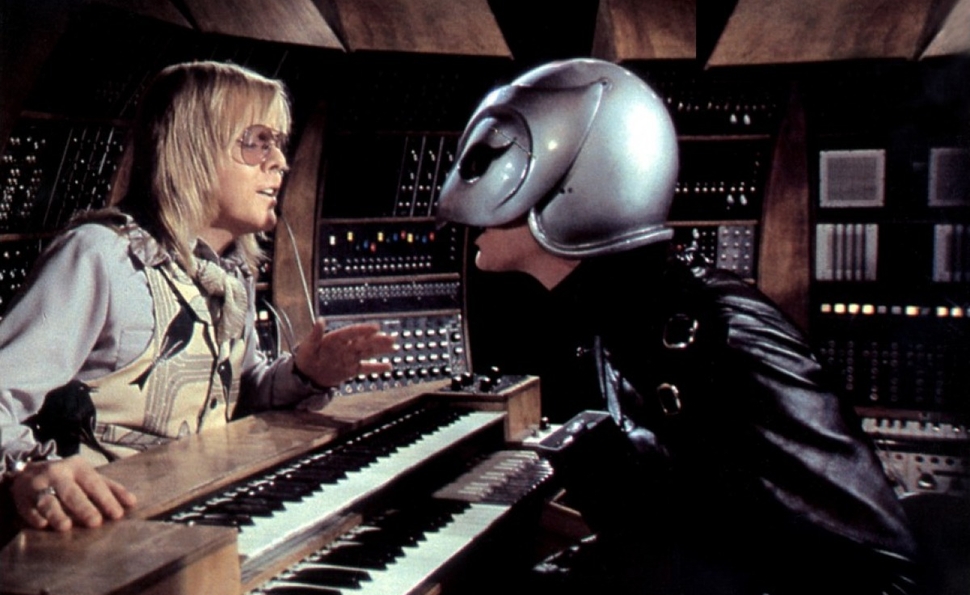
Written and directed by Brian de Palma, Phantom of the Paradise is the story of a disfigured composer whose music he had written had been stolen by a record producer for his own palace prompting the composer to take on a new identity in an act of revenge. The film is a genre-bending film that mixes horror, comedy, suspense, and the musical where a musician who is trying to win over the woman he’s in love with his music suddenly finds his creation be taken away for someone else’s gain. Starring Paul Williams, William Finley, and Jessica Harper. Phantom of the Paradise is a stylish and exhilarating film from Brian de Palma.

The film revolves around a music composer whose music he wrote was stolen by a producer as an incident left the composer’s face disfigured where he creates a new identity but also makes an uneasy deal with the producer to get his music made while they fight over a woman who wants to become a singing star. It’s a film that is inspired by all sorts material such as Phantom of the Opera, Faust, and The Picture of Dorian Grey but set in a world where a music is eager to latch on to anything and create his rock n’ roll palace where he would get all the talent of the world and make money off of them. The film’s screenplay by Brian de Palma, that features uncredited contributions from Louisa Rose, is largely straightforward as it play into this musician named Winslow Leach (William Finley) who plays at this club during an intermission as he catches the attention of the music producer known as Swan (Paul Williams).

Swan believes that Leach has the right music for his new music palace as he gets his right-hand man Arnold Philbin (George Memmoli) to steal Leach’s music while Leach’s attempts to reach Swan fail as he is sent to prison for a false drug possession charge where Leach breaks out of prison after a rendition of one of his songs being played. During the chase, he becomes disfigured where he adopts a new identity as he’s discovered by Swan who offers him a deal that would become troubling. It all play into these elements of deals with the devil but also the stakes as Leach is someone who just wants to create music but Swan is the one who can bring it to everyone while there is also something mysterious about who Swan is.

The film’s direction by de Palma definitely evokes a lot of style as a lot of it is shot largely on location in New York City while it plays into this world of music and clubs where people go out and see what is considered cool. The film has de Palma create this world that is outlandish as it represents a world of nostalgia, decadence, and wondrous as if it’s a fantasy for anyone that wants to be a star in the world of music. The usage of wide shots add to the scope of this world that Swan has created yet much of de Palma’s compositions emphasizes on close-ups and medium shots as it play into the conversations between Leach and Swan as well as in some of the film’s musical performances. With the help of choreographer Peter Elbling, the performances has this air of camp as it play into Swan’s vision and his take on Leach’s music as it is presented in different styles ranging from 1950s doo-wop rock, 1960s surf music, and the glam rock of the 1970s. It also play into this world that allows Swan to thrive as it adds intrigue into what kind of deal Leach made with him. Even as a young singer named Phoenix (Jessica Harper) comes in as Leach has feelings for her but Swan wants something else for her leading to this lavish climax that relates to ambition and identity. Overall, de Palma crafts a majestic yet chilling film about a songwriter’s uneasy deal with a producer as he would later seek revenge on him.

Cinematographer Larry Pizer does excellent work with its usage of stylish lights for the performances as well as in the usage of low-key lights for some of the exterior/interior scenes at night. Editor Paul Hirsch does brilliant work with the editing as it has some stylish jump-cuts that help play into the humor and musical performances as well as montages that play into Leach and Swan at work. Production designer Jack Fisk does amazing work with the look of the sets including the sets for the stage performances that are lavish and over-the-top as it include some additional set dressing from Fisk’s wife in actress Sissy Spacek. Costume designer Rosanna Norton does fantastic work with the costumes from the look of Leach’s clothes when he becomes the Phantom as well as the lavish clothes of the musical performers including Phoenix and the clothes of Swan.

Makeup designers John Chambers and Thomas R. Burman do terrific work with the look of the disfigured Leach as well as some of the glam makeup for some of the musical performers. The special effects work of Greg Auer is wonderful for a few of the effects that play into some of the musical performances and presentation. The sound work of James M. Tanenbaum is superb for some of the sound effects as well as how instruments sound in a live setting as well as the sounds of crowds. The film’s music by Paul Williams is phenomenal as it is a major highlight of the film for its mixture of piano ballads, stylish rock songs, pop, and all sorts of songs as it help tells the story as Williams also does a lot of Leach’s own singing while music supervisors Michael Arciaga and Jules Chaikin help provide various people to sing those songs that include Raymond Louis Kennedy as the voice for the glam vocalist Beef.

The casting by Sylvia Fay, Geno Havens, and Peggy Taylor is marvelous as it feature some notable small roles from Rod Serling as the film’s unseen narrator in its opening minutes, Janus Blythe as a groupie, the trio of Archie Hahn, Jeffrey Comanor, and Peter Elbling as a trio of vocalists who moonlight as a trio of acts in the 50s nostalgia act the Juicy Fruits, the surf-rock tribute band the Beach Bums, and a modern band in the Undead, Gerrit Graham as the glam-rock singer Beef who is Swan’s original choice until he is confronted by Leach, and George Memmoli as Swan’s right-hand man Arnold Philbin as a handler who looks like a 1950s greaser as he also manages some of Swan’s businesses. Jessica Harper is brilliant as Phoenix as a woman wanting to sing as she meets Leach at an audition as he believes she is the right singer where she would succeed but used as a tool for Swan to get what he wants.

Paul Williams is incredible as Swan as this mysterious producer who wants to create the ultimate music palace while maintaining this ambiguity about his importance as Williams brings this devilish charm to his role that is a joy to watch. Finally, there’s William Finley in an amazing performance as Winslow Leach and the titular character as a singer-songwriter wanting to create music that he believes has something to say only to go through obstacles and later become a disfigured artist who watches from afar as his music is played but also copes with the troubling deal he made with Swan.

Phantom of the Paradise is a spectacular film from Brian de Palma. Featuring a great cast, gorgeous set designs, dazzling visuals, and a rapturous music soundtrack from Paul Williams. The film is an outlandish yet whirlwind genre-bender that doesn’t play by the rules nor hide its influences to create a story set to the world of rock n’ roll. In the end, Phantom of the Paradise is a sensational film from Brian de Palma.

Brian de Palma Films: (Murder a la Mod) – (Greetings) – (The Wedding Party) – (Dionysus in ’69) – (Hi, Mom!) – (Get to Know Your Rabbit) – Sisters (1973 film) - Obsession – Carrie - The Fury - (Home Movies) – Dressed to Kill - Blow Out - Scarface - Body Double – (Wise Guys) – The Untouchables - Casualties of War - The Bonfire of the Vanities - Raising Cain - Carlito's Way - Mission: Impossible - Snake Eys - Mission to Mars - Femme Fatale - The Black Dahlia - (Redacted) – Passion (2012 film) - (Domino (2019 film))

© thevoid99 2020

Sunday, November 04, 2018

Suspiria (2018 film)


Based on the 1977 film by Dario Argento that was written by Argento and Daria Nicolodi that partially based on Thomas de Quincey’s essay Suspiria de Profundis (Sighs from the Depths), Suspiria is the story of an American ballet student who travels 1977 West Berlin to enroll at a prestigious dance academy unaware that it’s run by a coven of witches. Directed by Luca Guadagnino and screenplay by David Kajganich, the film is a homage to Argento’s film while exploring the many mysteries a young woman encounters at this dance academy. Starring Dakota Johnson, Chloe Grace Moretz, Mia Goth, Angela Winkler, Ingrid Craven, Sylvie Testud, Fabrizia Sacchi, Malgosia Bela, with special appearances from Jessica Harper, Lutz Ebersdorf, and Tilda Swinton. Suspiria is an enthralling and horrifying film from Luca Guadagnino.

Set in the fall of 1977 in Berlin during one of the city’s most tumultuous events relating to the German Autumn involving the kidnapping and murder of industrialist Hanns Martin Schyleyer as well as the Lufthansa Flight 181 hijacking. The film is about an American ballet student who is accepted at a prestigious dance school unaware that it’s run by a coven of witches as mysterious disappearances and events occur during the school. While the film is similar to its original film by Dario Argento in 1977, it’s told in a different take as it is set during a moment in time where a generation of young Germans cope with the sins of World War II and the guilt they have over the events of the past. Even as this coven believe they have something that can bring them back to prominence following a period of seclusion following World War II.

David Kajganich’s screenplay is told through six acts plus an epilogue as it explore the life of a dance studio in 1977 Berlin where it’s divided by the Berlin Wall as the studio is set in West Berlin just close to the wall. The main protagonist in Susie Bannion (Dakota Johnson) is a newcomer to the studio as she is revealed to come from a Mennonite community in Ohio where she is dealing with the her ailing mother (Malgosia Bela). Bannion’s arrival comes in at the right moment when a dancer in Patricia Hingle (Chloe Grace Moretz) had left the school mysteriously where lead choreographer Madame Blanc (Tilda Swinton) takes great notice of Bannion’s gift as a dancer believing she has something special to offer for a special dance piece she wants to direct. While Bannion would adjust to her new living situation and befriend fellow dancer Sara Simms (Mia Goth), she would notice that something is up as would Simms who becomes concerned with another disappearance of a dancer.

Hingle would play a key element to the plot early in the film as she drops off a diary and notes to psychotherapist Dr. Josef Klemperer (Lutz Ebersdorf) who is dismissive of her claims until he notices that she has disappeared where he believes something isn’t right as he would later turn to Simms for help. During the course of the film, there is a discussion among those who run the school about who should become the coven’s new leader as many prefer the mysterious Mother Markos (Tilda Swinton) instead of Madame Blanc who is concerned with this venture just as many in the coven believe that Bannion is the one to bring the coven back to prominence with Madame Blanc watching closely. Even as the eventual performance would play into everything Madame Blanc has been preparing for, it also has these elements that prove that it’s something much bigger in what is to come for Bannion to discover.

Luca Guadagnino’s direction is definitely riveting in terms of the setting, the time period, and the sense of intrigue that is happening in and out of the dance academy along with bits of scenes at Ohio which Bannion would think about from time to time. Shot on various locations in Varese, Italy and parts of Berlin, the film does play into this moment in time where it is chaotic with protests over what is happening in Germany in relation to the events of the times. Guadagnino’s direction would emphasize on stylistic shots that do bear elements of what Dario Argento did with the original film but it’s more restrained in the compositions with an emphasis on the physicality of the dancing. With the aid of choreographer Damien Jalet, the dancing and ballet has an intensity in the movements where it helps tell the story as well as play into something much bigger relating to the world of the witches as well as the mysteries that is happening inside the dance studio. Guadagnino would use wide and medium shots for some of the dancing to get a scope of the performances as well as some terrifying moments in Bannion’s performance in close-ups that would be inter-cut with something else happening that play into what the coven wants.

Guadagnino would also emphasize on atmosphere since the film is set during the autumn and winter of 1977 where there is a more realistic look rather than the more heightened usage of colors that Argento did in the original. Particularly as it help play into the sense of terror that is coming relating to this ceremony where Bannion is at the center of the ceremony unaware of what her role is. There is not just this idea of surrealism but also horror of the most extreme with revelations about a world that proves to be no different from what is happening in 1977 Germany with the political and social turmoil that is happening. Even as it emphasizes this element of guilt of past actions that a future generation has to cope with as well as the idea of motherhood in what one expects to teach a younger generation right from wrong. Overall, Guadagnino crafts an evocative yet visceral film about a young American woman being accepted at a prestigious dance academy run by a mysterious coven of witches in 1977 Berlin.

Cinematographer Sayombhu Mukdeeprom does brilliant work with the film’s cinematography with its emphasis on low-key colors and lighting that help play into the eerie tone of the film without being overly stylized as well as using light for the interiors as well as the big dance number in the film. Editor Walter Fasano does amazing work with the editing as its usage of rhythmic and jump-cuts help play into the energy of the dance and suspense as well as in some of the film’s dramatic moments. Production designer Inbal Weinberg, with set decorators Christin Busse and Merissa Lombardo plus art directors Merlin Ortner and Monica Sallustio, does excellent work with the look of the dance studio as well as some of the rooms and secret places including the room of mirrors and the homes of Dr. Klemperer in both East and West Berlin. Costume designer Giulia Piersanti does fantastic work with the costumes from the stylish late 1970s dresses the women wore when they go out to the costume they wear for the dance scene.

Prosthetic makeup designer Mark Coulier does incredible work with the makeup for some eerie sequences that include elements of the third act in the unveiling of Mother Markos as well as other things including a horrendous scene early in the film. Special effects supervisor Franco Ragusa and visual effects supervisor Luca Saviotti do superb work with the special effects that include some of the moments of horror as well as bits of set-dressing in some parts of the film. Sound designer Frank Kruse does marvelous work with the sound as it help play into the atmosphere of the locations and dance numbers to showcase how sparse the sound of movements are as it is one of the film’s highlights. The film’s music by Thom Yorke is phenomenal for its mixture of low-key piano-based orchestral music, ambient, and Krautrock-inspired cuts as it help play into the suspense and drama while music supervisor Robin Urdang provides a soundtrack that features bits of classical music pieces and some of the music that was popular in Germany at the time.

The casting by Stella Savino is remarkable as it feature some notable small roles and appearances from Fred Keleman and Mikael Olsson as a couple of police investigators who try to investigate the academy following claims from Dr. Klemperer, Malgosia Bela as Bannion’s ailing mother, Alek Wek as one of the dance teachers in Miss Millius, Vanda Capriolo as a dancer in Alberta who shows Bannion how to jump high for the dance, Sylvie Testud as the big glasses-wearing yet mysterious Miss Griffith who never says anything, Renee Soutendijk as a teacher in Miss Huller, Ingrid Caven as another teacher who kind of runs the place in Miss Vendegast, and Jessica Harper in a brief yet terrific one-scene cameo as Dr. Klemperer’s wife Anke. Elena Fokina is superb as a Soviet dancer in Olga Ivanova who is despondent over Patricia’s disappearance as she suspects the school staff while Angela Winkler is wonderful as Miss Tanner as a teacher who is Madame Blanc’s most trusted confidant as she knows something doesn’t feel right. Chloe Grace Moretz is fantastic as Patricia Hingle as it’s a small yet crucial performance of a dancer who is on the run as she’s made some discoveries about the dance academy.

Mia Goth is excellent as Sara Simms as a dancer who befriends Bannion and becomes her closest confidant while being aware that something isn’t right as it relates to the disappearances where she would help out Dr. Klemperer. Dakota Johnson is brilliant as Susie Bannion as a young American dancer who travels to Berlin from a sheltered environment as she deals with her gifts as a dancer as well as her own sexual awakening through the dance and coping with the mysteries surrounding the academy. Lutz Ebersdorf is amazing as Dr. Josef Klemperer as a psychotherapist still pondering about the whereabouts of his wife as he deals with what Hingle has discovered believing that some form of evil is emerging. Finally, there’s Tilda Swinton in an incredible dual performance as Mother Marko and Madame Blanc as she only appears briefly as the former due to its look while provides a straightforward yet maternal approach in the latter as someone who is trying to run a school and do things for the coven while being aware that something is off just as she is becoming concerned for Bannion’s physical and mental state of mind.

Suspiria is a tremendous film from Luca Guadagnino. Featuring a phenomenal ensemble cast, eerie visuals, Thom Yorke’s intoxicating score, brooding sound design, and a provocative story that touches upon many themes of guilt, identity, and motherhood. It’s a film that is confrontational in its themes but also play into the idea of a world that a young woman is about to venture into that is just as terrifying as the real world that is happening around her. In the end, Suspiria is an outstanding film from Luca Guadagnino.

Related: Suspiria (1977 film) - (Goblin-Suspiria OST) - (Thom Yorke-Suspiria OST)

Luca Guadagnino Films: (The Protagonists) - (Tilda Swinton: The Love Factory) - (Mundo civilzado) - (Cuoco contadino) - (Melissa P.) - (The Love Factory No. 3 Pippo Delbono - Bisogna morire) - I Am Love - (Bertolucci on Bertolucci) – A Bigger Splash - Call Me by Your Name - The Staggering Girl - (Fiori, Fiori, Fiori) – (Salvatore: Shoemaker of Dreams) – (We Are Who We Are (2020 TV series)) – Bones & All – Challengers (2024 film) - (Queer) - (After the Hunt)

© thevoid99 2018

Friday, October 23, 2015

2015 Blind Spot Series: Suspiria


Based on the essay Suspiria de Profundis by Thomas De Quincey, Suspiria is the story of an American ballet student who attends a German ballet academy as she deals with its surroundings and a series of strange events. Directed and narrated by Dario Argento and screenplay by Argento and Daria Nicolodi, the film is an exploration into the supernatural and a woman who goes into the unknown as she copes with fear of this unknown. Starring Jessica Harper, Stefania Casini, Flavio Bucci, Miguel Bose, Alida Valli, Udo Kier, and Joan Bennett. Suspiria is a rapturous yet terrifying film from Dario Argento.

A young American ballet student arrives in Munich to attend a prestigious ballet academy where she encounters a series of strange events that led to the deaths of a few who either left the academy or were forced out. It’s a film that plays into a woman who wonders if this academy that she was asked to be in has some kind of secret where the first thing she sees on her arrival is a young woman leaving in terror as she screams some words during the rain. The film’s screenplay by Dario Argento and Daria Nicolodi doesn’t exactly play into traditional horror as it’s more about Suzy Bannon (Jessica Harper) coping with her surroundings but also the strange events that is happening where her roommate Sarah (Stefania Casini) believes that something is going on. Especially when certain things happen around Munich to a few characters as it seems like the ones who are killed are those who have antagonized someone in the academy. It adds to the since of intrigue and suspense where Suzy would ask questions about what is going on just as the pile of deaths start to get bigger.

Argento’s direction is very mesmerizing for not just the usage of the anamorphic lenses which captures a great depth of field of the rooms at the academy. It also helps establish a world that is unlike anything from its usage of the locations in Munich to the places some of the characters go to. Much of it is presented in a very stylish manner with lots of red as a backdrop of sorts as well as some lavish colors in some of the hotels and places where the film takes place. Argento’s approach to wide shots as well as some intricate dolly, tracking shots, and some stylish crane shots help play into the atmosphere of some scenes where it’s not about the suspense or horror but rather to play into what these characters are doing at the ballet studio. Even a simple scene where a child stares at a blind man’s dog would have a lot to say but would also create moments to slowly set-up the suspense.

The scenes of terror such as a sequence early in the film where this young woman named Pat (Eva Axen) who had just left the academy ponders what is chasing her. The moments of terror are swift as red definitely serves as a symbolic color not just because it’s the color of blood but also something much more. Argento’s approach to using colored lights help add to the atmospheric tone of the film while knowing where to play with the rhythms of suspense. Especially in the film’s climax where Suzy is forced to wonder what is really going on in this academy as it slowly unveils itself as there is also that sense of dread of something bad is about to happen. Overall, Argento crafts an intoxicating yet unsettling film about a young woman who goes to a place where dark things happen that she doesn’t know about.

Cinematographer Luciano Tovoli does incredible work with the film‘s cinematography with its usage on lights and color for many of the interior scenes including the ones set at night as it adds a lot to the look and tone of the film as it is one of the film‘s major highlights. Editor Franco Fraticelli does excellent work with the editing with its usage of jump-cuts and other stylish cuts to help play into the film‘s suspense and horror. Production designer Giuseppe Bassan does fantastic work with the design of the apartment the character Pat goes to early in the film as well as the look of the academy in its interior/exterior settings. Costume designer Pierangelo Cicoletti does brilliant work with the costumes as they all have an air of style to distinguish some of the characters including the very innocent Suzy who wears simple dresses and other clothes to play into her personality.

Makeup supervisor Pierantonio Mecacci does terrific work with the makeup for some of the characters including those who get killed in some of the most gruesome ways. The special effects work of Germano Natali are superb for some of the key elements that play into some of the film‘s terrifying moments including a very chilling scene at a plaza. Sound recordist Mario Dallimonti and the sound effects work of Luciano Anzellotti do amazing work with the sound as it helps create an air of suspense and atmosphere into some of the scenes as well in some of the film’s quieter moments. The film’s music by Dario Argento and the progressive rock band Goblin is phenomenal as it is another major highlight of the film with its discordant approach to progressive rock with its haunting keyboard textures, bombastic percussions, chilling string pieces, and all sorts of arrangements as doesn’t just help play to the horror but manages to do a lot for the film as it is one of the finest scores in horror.

The film’s remarkable cast include some notable small roles from Franca Scagnetti as a mysterious cook, Jacopo Mariani as a young boy living at the academy named Albert, Eva Haxen as the student who fled the academy in Pat Hingle, Barbara Magnolfi as the vivacious ballerina Olga, Udo Kier as a psychologist Suzy talks to about what is happening, and Rudolph Schundler in a superb performance as Professor Milius as a man who tells Suzy what he might know about what is happening at the academy. Miguel Bose is terrific as the silent but chilling servant Mark who always deliver food and wine to Suzy during her illness while Flavio Bucci is excellent as the blind pianist Daniel who gets accused of having his dog attack Albert.

Joan Bennett is fantastic as the academy co-director Madame Blanc as this mysterious woman who starts off as very kind and always listening to Suzy but has an element of ambiguity that makes her more compelling. Alida Valli is brilliant as Miss Tanner as this dance instructor who is stern but fair as she is also very ambiguous while being very antagonistic towards those who either question or criticize the academy. Stefania Casini is amazing as Sarah as a ballerina who believes something is up as she tries to figure out what is going on while giving notes to Suzy in case something happens to her. Finally, there’s Jessica Harper in a remarkable performance as Suzy Bannon as an American ballet student who arrives at this mysterious academy where she becomes ill as she wonders what is going as it’s a performance that does contain the conventions of horror but also one that is engaging.

Suspiria is a magnificent film from Dario Argento. Filled with a great ensemble cast, exotic visuals, intricate art direction, and a hellacious score by Goblin. The film is truly not just one of the finest films for the horror genre but also one that isn’t afraid to be style over substance. Especially as it plays into a heightened sense of reality where no one is safe and everything could be some form of dark reality with lots of blood. In the end, Suspiria is an outstanding film from Dario Argento.

Dario Argento Films: (The Bird with the Crystal Plumage) - (The Cat o’ Nine Tails) - (Four Flies on Grey Velvet) - (The Five Days) - (Deep Red) - (Inferno) - (Tenebrae) - (Phenomena) - (Opera (1987 film)) - (Two Evil Eyes) - (Trauma (1993 film)) - (The Stendahl Syndrome) - (The Phantom of the Opera (1998 film)) - (Sleepless (2001 film)) - (The Card Player) - (Do You Like Hitchcock?) - (The Mother of Tears) - (Giallo) - (Dracula 3D)

Related: Suspiria (2018 film)


© thevoid99 2015

Thursday, June 13, 2013

Love and Death


Written, directed, and starring Woody Allen, Love and Death is the story about two people going into various discussions about everything during the Napoleonic era in Russia. Inspired by the Russian literature of Fyodor Dostoyevsky and Leo Tolstoy, the film is a parody of sorts of their work where it plays into big themes about philosophy and such. Also starring Diane Keaton, James Tolkan, Jessica Harper, and Harold Gould. Love and Death is a hilarious and intelligent film from Woody Allen.

The film is set in the 19th Century in Russia where Napoleon Bonaparte (James Tolkan) has invaded the country as war is happening between Russia and France. Yet, it revolves around a man named Boris (Woody Allen) and his distant cousin Sonja (Diane Keaton) as they endure many events during this period where Boris reluctantly becomes a soldier and a war hero while Sonja marries an old man only to have many lovers but no sense of love. When the two are brought together after a duel that Boris had taken part in, questions about love and death emerge while Napoleon has taken Moscow. The two eventually plan an assassination on Napoleon where things don’t go well as the two begin to questions about the moralities of death and such.

Allen’s screenplay explores the relationship between Boris and Sonja where they are both very smart but also flawed as Boris is a coward who is more interested in art than fighting for his country. Sonja is a woman that is in love with one of Boris’ brothers as she resigned her fate to marry old men for money where she takes on many lovers that leaves her unfulfilled. When fate brings them together, they both have aspirations for what they want to do with their lives yet Allen creates a second act where both Boris and Sonja face their own existential crises that would eventually make way for their trek to Moscow to kill Napoleon. Along the way, Allen puts in dialogue that is filled with a lot of discussions on existentialism as well as the idea of love and death which plays into the development of its lead characters.

Allen’s direction is definitely ambitious in the way he presents the film as it’s shot on location in parts of France and Hungary to create a world where things are absurd as well as chaotic. The direction has Allen employing some stylistic gags and comedic moments but also displaying something that is filled with rich imagery including an ode to compositional shots of Ingmar Bergman. Some of the more light-hearted moments in the comedy has Allen utilizing shots that are still filled with some elegance while keeping the comedy subtle. There’s also moments where Allen is taking shots at the period film by employing some anachronistic moments such as him playing cheerleader during a battle or quoting poems and such that came out after the Napoleonic period. Overall, Allen creates a very funny and smart comedy about love and death in all of its absurdities.

Cinematographer Ghislain Choquet does excellent work with the film‘s photography from the use of naturalistic shots in some of the film‘s exterior settings to more stylish looks for its interiors including some of the party scenes that happen. Editors Ralph Rosenblum, Ron Kalish, and George Hively do amazing work with the editing by creating some dazzling rhythmic cuts for some of the film‘s battle scenes as well as some of its comedic moments. Art director Willy Holt does wonderful work with the set pieces to play up the look and splendor of early 19th Century houses and rooms.

Costume designer Gladys de Segonzac does fantastic work with the period costumes from the uniforms that Boris wears to the dresses that Sonja wears. Sound mixer Daniel Brisseau does nice work with the sound to capture some of the gags that are played out in some of the funny moments as well as the atmosphere of the battle scenes. The film’s music features pieces by Sergei Prokofiev that is a mix of traditional Russian folk music with orchestral string arrangements to play up some of the film’s humor.

The casting by Miriam Brickman, Juliet Taylor, and Blanche Wiesenfeld is brilliant as it features appearances from Jessica Harper as Sonja’s cousin Natasha, Zvee Scooler as Boris’ idiotic father, Alfred Lutter as the young Boris, Olga Georges-Picot as Countess Alexandrovna whom Boris sleeps with, Harold Gould as the Countess’ fiancée Anton Ivanovich Lebedokov who challenges Boris to a duel, and James Tolkan in a very funny performance as Napoleon Bonaparte and his dim-witted double. Finally, there’s the duo of Woody Allen and Diane Keaton in fantastic performances in their respective roles as Boris and Sonja where the two really brings a sense of energy and wit to their roles with Allen as his nebbish persona and Keaton as the more straight person where they are really the highlights of the film.

Love and Death is a phenomenal film from Woody Allen that features great leading performances from Allen and Diane Keaton as well as providing a witty commentary on the Napoleonic period of Russia. It’s also a film that pays tribute to the literature of the time as well as European cinema while balancing it with Allen’s off-kilter approach to humor. In the end, Love and Death is a tremendous film from Woody Allen.

Woody Allen Films: What's Up Tiger Lily? - Take the Money and Run - Bananas - Everything You Always Wanted to Know About Sex* (*But Were Afraid to Ask) - Sleeper - Annie Hall - Interiors - Manhattan - Stardust Memories - A Midsummer’s Night Sex Comedy - Zelig - Broadway Danny Rose - The Purple Rose of Cairo - Hannah and Her Sisters - Radio Days - September - Another Woman - New York Stories: Oedipus Wrecks - Crimes & Misdemeanors - Alice - Shadows & Fog - Husbands & Wives - Manhattan Murder Mystery - Don’t Drink the Water - Bullets Over Broadway - Mighty Aphrodite - Everyone Says I Love You - Deconstructing Harry - Celebrity - Sweet & Lowdown - Small Time Crooks - The Curse of the Jade Scorpion - Hollywood Ending - Anything Else - Melinda & Melinda - Match Point - Scoop - Cassandra’s Dream - Vicky Cristina Barcelona - Whatever Works - You Will Meet a Tall Dark Stranger - Midnight in Paris - To Rome with Love - Blue Jasmine - Magic in the Moonlight - Irrational Man - (Cafe Society)

The Auteurs #24: Woody Allen Pt. 1 - Pt. 2 - Pt. 3 - Pt. 4

© thevoid99 2013

Tuesday, March 06, 2012

Stardust Memories


Written, directed, and starring Woody Allen, Stardust Memories is about a filmmaker who finds himself compromised as he yearns to make more serious films while dealing with fans who preferred his earlier, funnier work. Meanwhile, the filmmaker is also dealing with the women in his life as he thinks about an old girlfriend of his. The film has Allen paying tribute to one of his favorite filmmakers in Federico Fellini as he pays homage to Fellini’s 1963 classic 8 ½ in grand style. Also starring Charlotte Rampling, Jessica Harper, Marie-Christine Barrault, and Tony Roberts. Stardust Memories is a whimsical yet ravishing film from Woody Allen.

After a successful period in making comedies and then suddenly going into more serious work, filmmaker Sandy Bates (Woody Allen) is struggling to finish a new film as studio executives and producers want him to create a new ending. Meanwhile, Bates is asked to go to a film festival of his own work as he reluctantly decides to attend as he faces various questions from fans and admirers who question about his more recent work as they all prefer his earlier and funnier films of the past. During his stay at the Stardust Hotel for the festival’s duration, Bates is haunted by memories of his old girlfriend Dory (Charlotte Rampling) whom he constantly thinks about while is currently dating a French woman named Isobel (Marie-Christine Barrault) who had just left her husband.

During the festival, Sandy befriends a classical violinist named Daisy (Jessica Harper) whose boyfriend Jack (John Rothman) is a fan of Sandy’s work as the two talk about various things. Sandy also endures memories of his past while continually being confronted by people over his work and contributing to society as his friend Tony (Tony Roberts) attends the festival to talk with fans about Sandy’s work. Still haunted by memories of Dory, Sandy and Daisy take a drive around town where they would encounter a festival about aliens landing on Earth. For Sandy, the event would only add to his own existential issues about what to do with his life and career.

The film is about a filmmaker whose work as an artist comes into question by everyone as he attends a film festival of his work where he deals with fans, critics, and a French girlfriend with two kids leading to an existential crisis that also involves memories of an old flame. All of these stories is told in a very loose, chaotic script as Woody Allen explores the world of fame and art in a very surreal yet humorous fashion as he pays tribute to Federico Fellini’s 8 ½. The screenplay has Allen delving into these themes while playing with the world of fiction and non-fiction as his Sandy Bates character is a man who is struggling to deal with himself as he wonders what should he do in his life as he has all of these people around him.

Allen’s direction exudes style in the way he pays homage to Fellini’s 8 ½ by opening the film in the same way Fellini opened that film as it is later followed strange surreal moments only to be cut as studio executives and producers stop the picture criticizing what Bates is trying to do. With a lot of gorgeous compositions and scenes where’s there’s lots of characters surrounding Bates as they talk and talk. It’s a film where Allen explores the downside of fame and being an artist while showing a man who had lost his muse and is struggling to deal with this French woman who had left her husband and brings her children along. Allen has his character deal with a lot of these issues while going into strange encounters where a lot of is Fellini-esque to emphasize Bates’ ordeal as he tries to ponder what to do. Overall, Allen creates a very witty tribute to Federico Fellini as well as an engaging piece on the trappings of fame.

Cinematographer Gordon Willis does a brilliant job with the film‘s black-and-white cinematography to play up the Fellini-esque visual style that Allen wants as there‘s some amazing daytime scenery of the beach scenes to more entrancing shots with shades for some of the film‘s interior shots. Editor Susan E. Morse does a fantastic job with the editing to create rhythmic cuts for some of the film’s fanatical scenes involving fans while utilizing some amazing jump-cuts for Bates’ recollection of his last meeting with Dory as it is one of the most touching moments of the film.

Production designer Mel Bourne, along with set decorator Steven J. Jordan and art director Michael Molly, do wonderful work with the set pieces such as the Stardust hotel that Bates stays in to the apartment he lives in filled with famous photographs in the background. Costume designer Santo Loquasto does a nice job with the costumes as it‘s mostly casual clothing to more stylish dresses to represent the different women in Bates‘ life. Sound editor Dan Sable does a terrific job with the sound that is most notable in the film’s opening scene as Bates is talking but his voice isn’t heard due to the fantasy that he’s living in. The film’s music soundtrack includes an array of jazz and standard pieces from people like Louis Armstrong, Cole Porter, Django Reinhardt, Glenn Miller, and Chick Webb.

The casting by Juliet Taylor is the major highlight of the film for the people that is cast including the extras to maintain a certain look that is in tribute to the strange world of Federico Fellini. Making small appearances include Daniel Stern as a young actor, Amy Wright as a fan who wants to sleep with Bates, Anne De Salvo as Bates’ needy sister, longtime Allen muse Louise Lasser in a cameo as Bates’ secretary, Laraine Newman as a studio executive, Judith Roberts as a lounge singer. Helen Hanft as festival host/film critic Vivian Orkin, John Rothman as Daisy’s boyfriend Jack, and in her film debut, Sharon Stone as an ingenue who Bates sees in the film’s opening sequence. Tony Roberts is very good as Bates’ friend and actor Tony who tries to help Bates deal with his issues while Marie-Christine Barrault is wonderful as Bates’ caring girlfriend Isobel.

Jessica Harper is excellent as the smart and low-key Daisy who befriends Bates as she is interested in his views of the world as she reveals her own frustrations in being a classical musician. Charlotte Rampling is radiant as Bates’ former flame Dory who appears in strange flashback scenes as she plays the woman Bates thinks is perfect only to be hampered by her own insecurities as it’s a truly mesmerizing performance for the British actress. Finally, there’s Woody Allen in a very funny performance as Sandy Bates as Allen takes his usual persona to explore a man going into an existential crisis while dealing with fame and all sorts of things in a performance that is a joy to watch.

Stardust Memories is a charming yet very playful comedy from Woody Allen. Featuring great performances from Charlotte Rampling and Jessica Harper, the film is among one of Allen’s most stylish and confrontational films as he explores the downside of fame. Notably as it pays tribute to Federico Fellini in a grand way that Fellini fans will definitely enjoy. In the end, Stardust Memories is a marvelous film from Woody Allen.

Woody Allen Films: What’s Up Tiger Lily? - Take the Money & Run - Bananas - Everything You Always Wanted to Know About Sex (But Were Afraid to Ask) - Sleeper - Love & Death - Annie Hall - Interiors - Manhattan - A Midsummer Night’s Sex Comedy - Zelig - Broadway Danny Rose - The Purple Rose of Cairo - Hannah & Her Sisters - Radio Days - September - Another Woman - New York Stories-Oedipus Wrecks - Crimes & Misdemeanors - Alice - Shadows & Fog - Husbands & Wives - Manhattan Murder Mystery - Don't Drink the Water - Bullets Over Broadway - Mighty Aphrodite - Everyone Says I Love You - Deconstructing Harry - Celebrity - Sweet & Lowdown - Small Time Crooks - The Curse of the Jade Scorpion - Hollywood Ending - Anything Else - Melinda & Melinda - Match Point - Scoop - Cassandra’s Dream - Vicky Cristina Barcelona - Whatever Works - You Will Meet a Tall Dark Stranger - Midnight in Paris - To Rome with Love - Blue Jasmine - Magic in the Moonlight - Irrational Man - (Cafe Society)

The Auteurs #24: Woody Allen: Pt. 1 - Pt. 2 - Pt. 3 - Pt. 4

© thevoid99 2012