Showing posts with label jodie foster. Show all posts

Saturday, March 28, 2020

Be Natural: The Untold Story of Alice Guy-Blache


Directed and edited by Pamela B. Green and written by Green and Joan Simon with narration by Jodie Foster, Be Natural: The Untold Story of Alice Guy-Blache is a film about the life and career of one of cinema’s early pioneers who was also considered to be one of the first real auteurs who also owned and ran her own studio. The film showcases the woman’s career as well as the films she created as well as why she was often overlooked during her career and the re-discovery of her work. The result is an engrossing and wondrous film from Pamela B. Green.

In 1895, a secretary for engineer/industrialist Leon Gaumont attended a private screening of a film entitled Workers Leaving the Lumiere Factory by Auguste and Louis Lumiere. The secretary that is Alice Guy saw a new medium as from 1896 to 1920, she made hundreds of films that would not just pioneer cinema as an art form but also would create techniques and ideas that would be the basis of cinema itself. Like the Lumiere Brothers, Georges Melies, and Edwin Porter, they would create short films that would showcase cinema’s tool in the world of storytelling yet it would be Guy that would take the format much further prompting others including Melies to step up their game. In 1907, Guy married Englishman Herbert Blache as he would be Gaumont’s production manager in the U.S. until 1910 when she and Blache formed the Solax Company to make their own films as she would use the slogan “be natural” to those who worked at the studio in Fort Lee, New Jersey.

One of Guy-Blache’s innovations in filmmaking was the creation of the Gaumont Chronophone system that allowed her actors to lip-sync to pre-recorded music and use the music to sync up to the film footage as it was the early ideas of sound heard in film. Guy was also ambitious as she made a 25-part series of shorts relating to Jesus Christ as it was quite bold for its time. Another form of innovation that she did during her time in New Jersey was make a film with an entirely black cast in A Fool and His Money as it was made because white actors didn’t want to work with black actors prompting Guy-Blache to just hire an all-black cast regardless of prejudice. She also made films that had gender roles reversed as well as tackle subject matters that not many were willing to go into.

Then came World War I as business started to hurt Guy-Blache’s studio but also this emergence of businessmen wanting to take over the world of cinema including Thomas Edison prompting many studios to move to California rather than work with Edison who wanted to have a lot of control on the world of film through his own equipment and such. Herbert Blache would also move to California due to his affairs with other women leading to the two to divorce in 1922 as she returned to France with their children never making films again. Especially as she wouldn’t receive the proper credit for her work with Gaumont becoming more of a businessman in running his own studio as things would get tougher during the Great Depression and World War II though Gaumont would try to rectify his faults in giving her proper credit despite people around him telling him not to.

The documentary also has Pamela B. Green who also serves as the film’s editor not just trying to find out more about Guy-Blache and her films but also asking many other filmmakers, historians, actors, and such including Julie Taymor, Peter Bogdanovich, Evan Rachel Wood, Ava Duvernay, Peter Farrelly, Andy Samberg, Julie Delpy, Lake Bell, Gillian Armstrong, cinematographer John Bailey, and many others about Guy-Blache as many of them admit to never having heard of her. There is also the story of Green not just trying to find information about her films and her life but also meeting those who knew someone who knew Guy-Blache including descendants of Guy-Blache such as her great-great granddaughter as well as descendants of Leon Gaumont as there’s a scene where the descendants of Guy-Blache and Gaumont would go to various locations where Guy-Blache made some of her films. Much of Green’s direction and editing is straightforward with a few montages of film archivists finding some of Guy-Blache’s work while also going into the difficulty of restoring her work.

The film also features archival interviews from Guy-Blache from the late 1950s and early 1960s with narration by Jodie Foster who reads some of Guy-Blache’s comments and letters with a rare audio interview between Guy-Blache and a film historian in Brussels who wonders why she isn’t credited for her work. Notably as historians dating back to the 1940s would often omit her as some claim there was a lot of resentment towards her because she was a woman as some even question the validity of her claims in the mid-1970s after she had died in 1968. It would be Guy-Blache’s daughter Simone and other historians that would keep Guy-Blache’s name alive while Green would also talk to relatives who found old letters, photos, and notebooks that lead to many clues that show proof of Guy-Blache’s claims. Upon discovering the shorts of Guy-Blache, cinematographer John Bailey and others at the Academy Arts and Science would try to recreate one of her shorts with comedy actors Chris Kattan and Horatio Sanz with the same camera that Guy-Blache used.

Sound editors Casey Langfelder and Daniel Saxlid, along with sound designers Marcello Dubaz and Kent Sparling, do superb work in providing many of the audio archives from Guy-Blache’s interview with the Belgian film historian that his grandson had kept all of these years while also capturing all of the people who are interviewed for the film as they all talk about discovering Guy-Blache and her importance in film history. The film’s music by Peter G. Adams is terrific for its mixture of low-key electronic music and ambient pieces as it play into the search for Guy-Blache’s films and everything about her. Even as Green showcases old photos of the studio she created in New Jersey as well as visual recreation of the studio itself and where filming took place in the studio.

Be Natural: The Untold Story of Alice Guy-Blache is a phenomenal film from Pamela B. Green. It’s a film that anyone interested in film history or film itself must see as it not only does some correcting into some of the real stories about cinema’s birth but also in showcasing one of its pioneers and her innovative work. Especially as it showcases the woman’s work and her brief yet illustrious career that proved how influential she was. In the end, Be Natural: The Untold Story of Alice Guy-Blache is a sensational film from Pamela B. Green.

Related: The Short Films of Alice Guy-Blache Vol. 1

© thevoid99 2020

Wednesday, November 16, 2016

Panic Room


Directed by David Fincher and written by David Koepp, Panic Room is the story of a woman and her daughter who hide inside a secret room where robbers have invaded their new home. The film is a thriller in which a woman has to outsmart and hide from a trio of burglars who want something to steal as well as take care of her diabetes-stricken daughter. Starring Jodie Foster, Kristen Stewart, Jared Leto, Dwight Yoakam, and Forest Whittaker. Panic Room is a chilling yet engaging film from David Fincher.

What happens when a woman and her daughter buy a new home only to be invaded by burglars who are there to rob the house because of a safe they believe is in there? That is pretty much the premise of the film as it is a simple home invasion story where a woman and her daughter are forced to hide in a panic room after a trio of burglars broke into their home. David Koepp’s screenplay follows the recently-divorced Meg Altman (Jodie Foster) and her daughter Sarah (Kristen Stewart) as they try to find a new home unaware that it was the home of a reclusive millionaire who had created a panic room with cameras due to his paranoia. Once the two move in, their night of terror would begin with the trio of robbers who had hoped that no one was in the house but once they see Meg and Sarah who would lock themselves in the panic room. All hell breaks loose where things become very tense not just for Meg and Sarah but also for the burglars.

Leading the trio is Junior (Jared Leto) who knows about the house as he brings two men with great skill as one of them in Burnham (Forest Whitaker) is a skilled safecracker with a conscience as he immediately learns who is in the house as he is reluctant to do anything but knows he needs the money. The wildcard of the team is Raoul (Dwight Yoakam) who is new as Junior brought him in as he is someone that just wants the money by any means necessary. Adding to the tension of being inside the panic room is the fact that Sarah is diabetic as she is in need of an insulin shot or else she could die which only make things more tense. All of which play into a game of wits between the burglars and Meg.

David Fincher’s direction is definitely stylish for not just the fact that much of the film is set inside a townhouse around New York City but also for the tense atmosphere of the house once it is invaded. While Fincher would use medium shots and close-ups to create an intimacy into the compositions and the sense of claustrophobia that looms throughout the film. It is his approach to tracking and long shots that are the most interesting parts such as a sequence, with the aid of visual effects, where the burglars arrive into the home and it is this single take that follows every aspect of the house for the burglars to try to get in from the outside. It sets the tone for what is to come while the usage of video cameras surveying every aspect of the house show what Meg and Sarah are watching but don’t exactly hear what the burglars are saying.

Fincher’s direction also maintains that air of suspense as it play into the moments where the burglars try to break their way or even find a way for Meg and Sarah to leave the panic room. It has this air of ingenuity into who can outsmart who as it would intensify the suspense as well as the fact that things start to unravel among the burglars where Raoul would go into great extremes to get things done with Burnham being the most reasonable one. Even as Sarah’s condition becomes a plot device that would amp up the suspense yet it is effective where the burglars try to figure out what to do where one could care less about Sarah yet Burnham is the one that is concerned. A showdown does occur with Meg’s husband Stephen (Patrick Bauchau) coming into the third act where he finds himself in serious trouble prompting Meg to be the one to step up and fight for herself and her daughter. Overall, Fincher creates a gripping yet mesmerizing about a mother and daughter dealing a home invasion from burglars.

Cinematographers Darius Khondji and Conrad W. Hall do brilliant work with the film‘s cinematography from the few bits that are shot in the daytime exteriors to the usage of low-key lights and shadows to play into the suspense as well as the way the scenes inside the panic room are lit. Editors James Haygood and Angus Wall do excellent work with the editing from the way it plays up the suspense and drama as it relies on some slow-motion cuts for stylistic reasons while being very straightforward. Production designer Arthur Max, with set decorators Jon Danniels and Garrett Lewis and art directors Keith Neely and James E. Tocci, does amazing work with the look of the house in many of its interiors of the house in the way the rooms look like as well as the panic room itself as it is one of the highlights of the film. Costume designer Michael Kaplan does nice work with the costumes as it is mostly casual in the clothes that the characters wear.

Visual effects supervisor Kevin Tod Haug does fantastic work with the visual effects from the way some of the camera movements around the house occur to some of the scenes involving gas and fire is presented. Sound designer Ren Klyce does superb as it play into the suspense with its usage of sound in all of the aspects of the house from sparse yet low-key textures to moments that are loud. The film’s music by Howard Shore is wonderful for its orchestral-based score that play into the suspense and drama with its string arrangements and bombastic percussions to create that swell of terror.

The casting by Laray Mayfield is terrific as it feature some notable small roles from Ann Magnuson as real estates dealer Lydia Lynch, Ian Buchanan as a man giving Meg and Sarah a tour of the house, Paul Schulze and Mel Rodriguez as a couple of police officers who show up late in the film, Patrick Bauchau as Meg’s ex-husband Stephen, and the voice of Nicole Kidman as Stephen’s new girlfriend. Jared Leto is superb as Junior as the leader of the three as the one who has a tip about the house as the presence of Meg and Sarah ruin the plans as he tries to figure out what to do while also being evasive about certain things at the house. Dwight Yoakam is excellent as Raoul as a burglar who is all about getting the money by any means necessary as he spends much of the film wearing a ski mask which makes him very menacing as it’s a very dark performance from Yoakam.

Forest Whitaker is brilliant as Burnham as a burglar who takes the job for money as he is skilled with a lot of what happens but doesn’t want to harm Meg and Sarah where he becomes conflicted into what is happening where he tries to do what is right and the job. Kristen Stewart is amazing as Sarah as a young girl who is just a typical young girl that finds herself being terrorized as she stays in the panic room with her mother as she starts to get sicker due to her diabetes. Finally, there’s Jodie Foster in a phenomenal performance as Meg Altman as a woman who tries to protect her daughter anyway she can while having to outwit the burglars as it’s a performance that is just engaging to watch as it is one of her defining performances.

Panic Room is a sensational film from David Fincher that features great performances from Jodie Foster, Kristen Stewart, and Forest Whitaker. Armed with a strong supporting cast, a simple yet effective premise, gorgeous visuals, and a chilling music score. The film isn’t just one of Fincher’s most accessible films but also a fine example of suspense when it is just simple and to the point. In the end, Panic Room is an incredible film from David Fincher.

David Fincher Films: Alien 3 - Se7en - The Game - Fight Club - Zodiac - The Curious Case of Benjamin Button - The Social Network - The Girl with the Dragon Tattoo (2011 film) - Gone Girl

Related: 15 Essential Music Videos by David Fincher - The Auteurs #61: David Fincher

© thevoid99 2016

Monday, July 20, 2015

Alice Doesn't Live Here Anymore


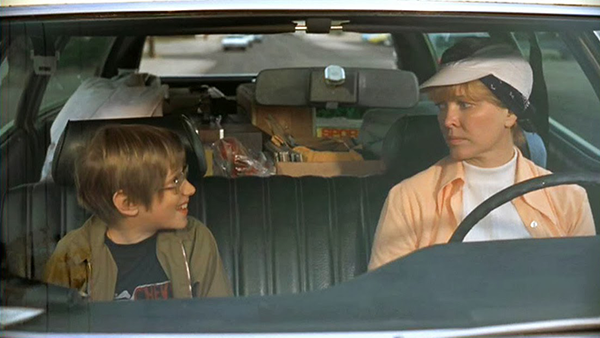
Directed by Martin Scorsese and written by Robert Getchell, Alice Doesn’t Live Here Anymore is the story of a widow who travels to the American Southwest with her young son in the hopes that she can find a better life for them. The film plays into a woman trying to start over as she struggles to find love and a new job as well as raise her pre-teen son who is going through growing pains. Starring Ellen Burstyn, Kris Kristofferson, Alfred Lutter, Diane Ladd, Jodie Foster, and Harvey Keitel. Alice Doesn’t Live Here Anymore is a mesmerizing yet compelling film from Martin Scorsese.

Following the death of her husband in an auto accident, the film revolves around a widow and her 11-year old son trying to start over in the American Southwest on their way to her hometown of Monterrey, California as she would struggle to find work and love. It’s a film that plays into a woman trying to live something that is very ideal but has to contend with the reality of her situation as well as raising a son who is quite bratty and going through growing pains. Though Alice (Ellen Burstyn) was once a singer, she realizes that finding a job to be one is difficult where she would eventually work as a waitress and later meet a kind rancher named David (Kris Kristofferson). Still, Alice would struggle to keep her son Tommy (Alfred Lutter) intact as he would eventually act out and later befriend a troublemaker named Audrey (Jodie Foster).

Robert Getchell’s screenplay plays into Alice’s trials and tribulations as the first act has her coping with the death of her husband despite their turbulent relationship as she realizes that she needs to move from New Mexico and back to her hometown of Monterrey. Much of the film’s first half is a road movie where Alice and Tommy try to find a place to live as well as a job for Alice as she would get a job as a singer for a bar but it wouldn’t last due to an unfortunate tryst with a young man named Ben (Harvey Keitel). The second half would have Alice finally settle in Tuscon, Arizona hoping it would be temporary as she realize the only job she can get is a diner waitress where is later guided by the waitress Flo (Diane Ladd). At the same time, Alice ponders if she can have a relationship as the film also has a feminist message of sorts about what Alice really wants and what she needs to do for herself and for her son.

Martin Scorsese’s direction is very intimate in the way he captures Alice’s turbulent life as well as the world that she has to deal with that is quite chaotic. The film opens in the style of a melodrama and in a full-frame aspect ratio where it shows a young Alice fantasizing about being a singer in the farm that she’s in. When she then says something profane, it becomes clear that this is not a 1950s melodrama as it shifts into a widescreen aspect format to play into Alice’s troubled life with her husband and son Tommy who is listening to Mott the Hoople in loud volume. It establishes that Alice hasn’t reached her goal as she deals with a neglectful husband and a bratty kid where things would change once her husband dies. Much of Scorsese’s compositions are very simple as he does take advantage of the beauty in the many locations in the American Southwest in places in New Mexico and Arizona.

For many of the scenes at the motels and at the diner, Scorsese would employ a lot of hand-held camera tracking shots to play into the drama as well as to capture Alice trying desperately to look good so she can get a job. Even the scenes in the diner shows how frenetic things are where Scorsese would maintain that intimacy with a sense of style in the hand-held camera shots. There are also moments where Scorsese would play into something that feels very loose in the way Tommy would go into his own adventures with Audrey as it would play into his own sense of acting out. Especially as it would boil the tension between him and Alice as it relates to what Alice wants in her life but also what she needs to do for herself and Tommy. Overall, Scorsese creates a very engrossing yet spirited film about a woman starting over with her son.

Cinematographer Kent L. Wakeford does excellent work with the film‘s cinematography to capture the sunny look of the locations in its exteriors along with some unique lighting for some of the scenes set at night including the scenes in Phoenix where Alice would spend time with Ben. Editor Marcia Lucas does nice work with the editing as it is straightforward with some rhythmic cuts for some of the comedic and more heavier moments in the drama. Production designer Toby Carr Rafelson does fantastic work with the look of the motels Alice and Tommy lived in as well as the diner and David‘s ranch. Sound mixer Don Parker does terrific work with the sound in capturing the atmosphere of the diners and bars as well as some of the music that is played on location. The soundtrack would feature not just a few pop standards but also contemporary music from Mott the Hoople, T-Rex, Elton John, Leon Russell, and Dolly Parton.

The film’s amazing cast includes some notable small roles including an early un-credited appearance from Laura Dern as a young girl in glasses eating an ice cream cone at the diner, director Martin Scorsese as a diner customer, Lane Bradbury as a woman who has some connection with Ben, Harry Northup as a bartender that helps Alice in Phoenix, Billy “Green” Bush as Alice’s late husband Donald who appears early in the film, Leila Goldoni as Alice’s best friend Bea who helped her with the move, Valerie Curtin as the shy and timid waitress Vera, and Vic Tayback as the diner’s owner/short-order cook Mel. Harvey Keitel is superb as Ben as this man who meets Alice at a bar in Phoenix as they would have a brief relationship that doesn’t last. Jodie Foster is wonderful as a teenage tomboy named Audrey whom Tommy would meet in Tucson as she would introduce him trouble as well as saying very foul language.

Diane Ladd is fantastic as the waitress Flo as a sass-talking woman who is quite hardened as she helps Alice in keeping her head straight as it’s a performance that is just fun to watch. Kris Kristofferson is excellent as David as a kind rancher who understands what Alice is going through as he wants to help her and Tommy while dealing with Tommy’s bratty behavior. Alfred Lutter is brilliant as Tommy as this pre-teen kid who is very talkative as he copes with being bored as well as finding somewhere to be at as it’s a very wild yet naturalistic performance for the actor. Finally, there’s Ellen Burstyn in an incredible performance as Alice as this widow who is forced to start over as her dreams of being a singer is pulled by the wayside in order to care and raise her son as well as find out what she really wants in her life as it’s a funny but also gripping performance from Burstyn.

Alice Doesn’t Live Here Anymore is a remarkable film from Martin Scorsese that features a magnificent performance from Ellen Burstyn. While it is a very different film from some of the more urban films that Scorsese is known for. It is still one of his finest in terms of character study as well as being a feminist film of sorts where a widow is trying to come to terms with what she has to do with her life and for her son. In the end, Alice Doesn’t Live Here Anymore is a phenomenal film from Martin Scorsese.

Martin Scorsese Films: (Who’s That Knocking on My Door?) - (Street Scenes) - Boxcar Bertha - (Mean Streets) - Italianamerican - Taxi Driver - New York, New York - American Boy: A Profile of Steven Prince - (The Last Waltz) - Raging Bull - The King of Comedy - After Hours - The Color of Money - The Last Temptation of Christ - New York Stories-Life Lessons - Goodfellas - Cape Fear (1991 film) - The Age of Innocence - (A Personal Journey with Martin Scorsese Through American Movies) - (Casino) - (Kundun) - (My Voyage to Italy) - Bringing Out the Dead - (The Blues-Feel Like Going Home) - Gangs of New York - (The Aviator) - No Direction Home - The Departed - Shine a Light - Shutter Island - (A Letter to Elia) - (Public Speaking) - George Harrison: Living in the Material World - Hugo - The Wolf of Wall Street - (The 50 Year Argument) - Silence (2016 film) - (The Irishman) - Killers of the Flower Moon - (An Afternoon with SCTV)

© thevoid99 2015

Sunday, July 14, 2013

Shadows and Fog


Written, directed, and starring Woody Allen, Shadows and Fog is the story about a clerk who is asked by a vigilante group to help him capture a serial killer where he later meets a circus performer as they spend an entire night encountering strange things. Based on Allen’s one-act play called Death, the film is a tribute to the works of Franz Kafka as well as the German Expressionism films of early 20th Century as Allen explores the world of death and love. Also starring Mia Farrow, John Malkovich, Madonna, John Cusack, Jodie Foster, Kenneth Mars, Kathy Bates, Philip Bosco, Lily Tomlin, John C. Reilly, Kurtwood Smith, and Wallace Shawn. Shadows and Fog is a visually-entrancing though sort of messy film from Woody Allen.

A killer (Michael Kirby) is on the loose during a shadowy and foggy night in the early 20th Century where a nebbish clerk named Kleinman (Woody Allen) is reluctantly part of a vigilante group to capture this killer. Meanwhile, a circus performer named Irmy (Mia Farrow) leaves her boyfriend Paul (John Malkovich) after catching him making out with another circus performer. Kleinman and Irmy would cross paths where they would encounter more vigilantes who believe Kleinman is the killer as well as all sorts of strange things in the course of an entire night. It’s a story that definitely recalls some of the work of German Expressionist filmmakers like Fritz Lang as well as the ideas of writer Franz Kafka.

Yet, not everything in Woody Allen’s script works as it’s obvious that Allen wants to create a blend of suspense, comedy, and drama with themes of existentialism and bravery. Unfortunately, all of those ideas couldn’t come together to make something cohesive where things get messy while the Kleinman character is not one of Allen’s great creations.

Allen’s direction is quite entrancing as he definitely wants to go for that look of not just film noir but also German Expressionism as he sets the film in the early 20th Century where it’s always filled with a lots of shadows and fog to create an atmosphere. Filled with some very exotic shots in many of the film’s exteriors as it’s all shot in a studio along with some long-takes to play out this very strange world. There’s also some sequences where Irmy would seek refuge from prostitutes to give the film a break from the suspense for something more relaxing though it does hurt the film’s pacing a bit. While Allen’s approach to humor isn’t anything new, it does have some moments that are fun to watch though the scenes of Kleinman often being accused and such does get tiresome. Overall, Allen creates a fine though messy film about a man and a woman going after a serial killer.

Cinematographer Carlo Di Palma does brilliant work with the film‘s stylish black-and-white photography for many of the film‘s exteriors to create shadows and shades to set the mood while keeping things more straightforward in the interior scenes with the exception of the scenes at the circus. Editor Susan E. Morse does nice work with the editing to play up some of its suspense and humor with its straightforward approach to cutting. Production designer Santo Loquasto, with art director Speed Hopkins and set decorators George DeTitta Jr. and Amy Marshall, does amazing work with the set pieces from the look of the exterior sets to the look of the circus and brothel the characters encounter.

Costume designer Jeffrey Kurland does terrific work with the costumes from the look of the prostitutes and circus performers to the clothes the police and vigilantes wear. Sound editor Robert Hein does excellent work with the sound to play up many of the film‘s suspense with its sparse sounds and other moments to emphasize its humor. The film’s music largely consists of circus music as well as the works of Kurt Weill and Bertolt Brecht to play up the period of the time.

The casting by Juliet Taylor is fantastic for the ensemble that is created as it features appearances from Michael Kirby as the killer, Donald Pleasence as a doctor doing autopsies, John C. Reilly and William H. Macy as police officers, Wallace Shawn as a business rival of Kleinman, Julie Kavner as Kleinman’s ex-fiancee who wants to kill him, Kate Nelligan as Kleinman’s girlfriend who is upset when he asks if Irmy could crash at her place, Charles Chagrin as a mysterious spiritualist named Spiro, James Rebhorn, David Odgen Stier, Daniel von Bargen, Kurtwood Smith, and Fred Gwynne as vigilantes, Josef Sommer as a priest, Philip Bosco as Kleinman’s cruel boss, and Kenneth Mars as the circus magician Armstead whom Kleinman adores.

Other notable small performances includes Madonna as a circus performer Paul makes out with, John Cusack as a student who frequently goes to the brothels, and as the trio of prostitutes, Jodie Foster, Kathy Bates, and Lily Tomlin as they give very wonderful performances. John Malkovich is excellent as Paul as a circus performer who wants to be respected as he cheats on Irmy where he later tries to find her and gain her forgiveness. Mia Farrow is amazing as Irmy as a sword-swallowing performer who is frustrated by Paul as she seeks to find herself while helping Kleinman catch the killer. Finally, there’s Woody Allen in a fine performance as Kleinman as a man who reluctantly takes part in finding a killer though he has no idea what to do as he’s often being cowardly.

Shadows and Fog is a good film from Woody Allen though it’s a messy one despite its gorgeous visuals and a brilliant ensemble cast. Though it’s definitely one of Allen’s weaker films, it is still engaging for the way he is able to create a suspense-comedy in the form of German Expressionism and make it enjoyable. In the end, Shadows and Fog is a terrific film from Woody Allen.

Woody Allen Films: What's Up Tiger Lily? - Take the Money & Run - Bananas - Everything You Always Wanted to Know About Sex* (*But Were Afraid to Ask) - Sleeper - Love and Death - Annie Hall - Interiors - Manhattan - Stardust Memories - A Midsummer's Night Sex Comedy - Zelig - Broadway Danny Rose - The Purple Rose of Cairo - Hannah & Her Sisters - Radio Days - September - Another Woman - New York Stories: Oedipus Wrecks - Crimes & Misdemeanors - Alice - Husbands & Wives - Manhattan Murder Mystery - Don’t Drink the Water - Bullets Over Broadway - Mighty Aphrodite - Everyone Says I Love You - Deconstructing Harry - Celebrity - Sweet & Lowdown - Small Time Crooks - The Curse of the Jade Scorpion - Hollywood Ending - Anything Else - Melinda & Melinda - Match Point - Scoop - Cassandra’s Dream - Vicky Cristina Barcelona - Whatever Works - You Will Meet a Tall Dark Stranger - Midnight in Paris - To Rome with Love - Blue Jasmine - Magic in the Moonlight - Irrational Man - (Cafe Society)

The Auteurs #24: Woody Allen Pt. 1 - Pt. 2 - Pt. 3 - Pt. 4

© thevoid99 2013

Thursday, February 21, 2013

Taxi Driver


Directed by Martin Scorsese and written by Paul Schrader, Taxi Driver is the story of a former U.S. marine who has become a taxi driver in New York City. Alienated by his surroundings and unable to connect, he decides to plot an assassination against a political candidate while he befriends a 12-year old hooker as he wonders what to do. The film is an exploration into a man dealing with his isolation and the world he’s surrounded by as he tries to connect while becoming unhinged by what’s happening around him. Starring Robert de Niro, Cybill Shepherd, Jodie Foster, Harvey Keitel, Albert Brooks, and Peter Boyle. Taxi Driver is a dark yet mesmerizing film from Martin Scorsese.

The film is about this lonely man who works as a taxi driver in New York City as he is troubled by what goes on in the city. Unable to connect with people as he makes various attempts that fail. He starts to go mad as he hopes to kill a famed political candidate in order to get some attention as he is also intrigued by a 12-year old prostitute who he hopes to help. In this journey that Travis Bickle (Robert de Niro) ventures into, it’s the story of this lonely man who feels isolated by the world around him as he’s just trying to make a living yet is troubled by his surroundings. He does descend into madness after a date with a campaign volunteer in Betsy (Cybill Shepherd) doesn’t go well due to his lack of social skills. There, he turns into dark and violent thoughts while wanting to help this young hooker named Iris (Jodie Foster) so she can return home and stay away from this dark world that includes a pimp named Sport (Harvey Keitel).

Paul Schrader’s screenplay explores a man’s isolation and his descent as he finds himself dealing with the chaos that he’s in. Yet, there is a semblance of humanity in Travis Bickle as he tries whatever it takes to connect with people as he often confides in another cab driver named Wizard (Peter Boyle). Still, his attempts are often misguided when he takes Betsy on a date by going to a porn theater. It’s not just that Bickle has poor social skills, it’s just that he is in a world that is in ruins and some of the passengers he meets are very despicable people including Sport whom he treats Iris like a father figure and a lover. Driven by this sense of isolation and the duty to wanting to set things right. He decides to go after this political candidate named Palantine (Leonard Harris) in order to bring things back to balance but things eventually become complicated. With Iris’ troubles, Bickle offers to help her out but she is unsure if she wants to come home as it gives Bickle a reason to do something.

Schrader’s script is very layered in terms of its presentation as it features a lot of voice-over narration to reflect on Bickle’s isolation and paranoia as he would state things like “I’m God’s lonely man”. There’s elements of film noir in the narration and in the narrative of the script but there’s also a bit of plot schematics of the western that is involved. A lot of which had to do with Bickle playing cowboy in order to save Iris from this dark and seedy world. Yet, in the wake of what Bickle might do. There comes a lot of questions about the aftermath whether Bickle has become better for his actions or has it made him worse.

Martin Scorsese’s direction is very entrancing for the way he explores a man’s isolation set in mid-1970s New York City where it’s a place that is truly troubled by its decay. Notably as he uses a lot of unique framing devices and stylish presentation to convey this sense of isolation and intimacy that is present in the mind of Travis Bickle. With the use of slow-motion camera shots that would either convey a desire that Bickle wants or to establish his descent. There is something in the film’s direction where Scorsese that is unsettling yet very hypnotic in the way he slowly goes for a close-up and to play out Bickle’s madness. Even in one of the film’s most famous moments in which Bickle talks to himself in a mirror and say “you’re talking to me” as it shows Bickle ready to take on the world.

While Scorsese also presents some moments of intimacy in the way Bickle interacts with various characters in some medium shots or in close-ups. Some of it is shown with simplicity but there are moments where it adds a mood to the film as it maintains Bickle’s slow descent. By the third act where Bickle gets ready to kill Palantine, there is that element of suspense of whether Bickle will do something but there is also that sense of trouble where he might just back off. Then there’s the film’s violence where it is very stylized not just in the way Scorsese presents the action but also its impact as it is very disturbing in the way blood looked and such. Overall, Scorsese crafts a very gripping yet visceral film about madness and isolation.

Cinematographer Michael Chapman does amazing work with the film‘s very grimy cinematography from the eerie nighttime look of the city to some of the more haunting interior colors in some scenes set at night. Editors Marcia Lucas, Tom Rolf, and Melvin Shapiro do great work with the editing as it plays an air of style with its jump-cuts and various rhythms to play out the sense of action that occurs throughout the film. Art director Charles Rosen and set decorator Herbert F. Milligan do terrific work with the look of Bickle’s apartment to establish his personality as well as the more colorful look of Iris’ room.

Costume designer Ruth Morley does excellent work with the costumes from the clothes that Iris wears when she works to the stylish clothes of Betsy. Sound mixer Les Lazarowitz does nice work with the sound to capture the chaos of many of the film‘s exterior setting as well as some of the tense moments inside the cab. The film’s music by Bernard Herrmann is truly ravishing for the sense of melancholia that is played in its jazz-based score filled saxophone and jazz scales to capture that sense of decay where it’s seductive but also disturbing as it’s one of Herrmann’s best scores.

The casting by Juliet Taylor is brilliant as it features some wonderful small performances from director Martin Scorsese as a passenger wanting to kill his wife, Leonard Harris as the political candidate Palantine, Richard Higgs as a Secret Service agent, Steve Prince as a gun salesman, and Albert Brooks as a fellow co-worker of Betsy who provides some funny moments in the film. Peter Boyle is great as the veteran cabbie Wizard who provides a lot of insight and wisecracks about what it takes to be a great cab driver. Harvey Keitel is amazing as the pimp Sport as he brings a lot of charisma to a role that is very complex as he’s very fatherly to Iris while he has some very cool exchanges with de Niro. Cybill Shepherd is excellent as Betsy as this woman who is intrigued by Bickle but is also disturbed by his lack of social skills.

Jodie Foster is brilliant as the young prostitute Iris who is curious about why Bickle wants to save her as she is a young girl who is just very confused about what she’s doing as it’s very chilling yet sprawling performance for the actress who was only in her teens at the time. Finally, there’s Robert de Niro in an outstanding performance as Travis Bickle. In this role of a troubled cab driver, de Niro displays the sense of loneliness in his voiceover narration as well as an awkwardness to a man who is really struggling to connect as de Niro also provides a craziness to his performance as it’s definitely one of his best.

Taxi Driver is a magnificent film from Martin Scorsese that features a chilling yet fantastic performance from Robert de Niro. Along with strong supporting performances from Jodie Foster, Cybill Shepherd, Harvey Keitel, and Peter Boyle. It’s definitely one of Scorsese’s great films as well as one of the most eerie studies in isolation and madness thanks in part to Paul Schrader’s harrowing script. In the end, Taxi Driver is a tremendous film from Martin Scorsese.

Martin Scorsese Films: (Who’s That Knocking on My Door?) - (Street Scenes) - Boxcar Bertha - (Mean Streets) - Italianamerican - Alice Doesn’t Live Here Anymore - New York, New York - American Boy: A Profile of Steven Prince - (The Last Waltz) - Raging Bull - The King of Comedy - After Hours - The Color of Money - The Last Temptation of Christ - New York Stories-Life Lessons - Goodfellas - Cape Fear (1991 film) - The Age of Innocence - (A Personal Journey with Martin Scorsese Through American Movies) - (Casino) - (Kundun) - (My Voyage to Italy) - Bringing Out the Dead - (The Blues-Feel Like Going Home) - Gangs of New York - (The Aviator (2004 film)) - No Direction Home - The Departed - Shine a Light - Shutter Island - (A Letter to Elia) - (Public Speaking) - George Harrison: Living in the Material World - Hugo - The Wolf of Wall Street - (The Fifty Year Argument) - Silence (2016 film) - (The Irishman) - Killers of the Flower Moon - (An Afternoon with SCTV)

© thevoid99 2013

Saturday, January 21, 2012

Carnage (2011 film)


Based on the play God of Carnage by Yasmina Reza, Carnage is the story of a two parental groups discussing about an incident involving a fight between their two sons leading to an all-out chaotic war between the four people inside an apartment. Directed by Roman Polanski and adapted into script by Polanski and Reza, the film is an exploration adolescent fighting where four parents try to make a discussion where things go wrong. Starring Jodie Foster, John C. Reilly, Christoph Waltz, and Kate Winslet. Carnage is an insane yet thrilling comedy form Roman Polanski.

The film is this kid who hits another kid with a stick as trouble brews. Their respective parents try to sort it all out in a typical afternoon where things go from pleasant to devolve into full-on anarchy. That’s pretty much it for what the film is about in a 76-minute running time. Still, that doesn’t make it exciting as Yasmina Reza and Roman Polanski start the film out with the actual fight between the two boys in its opening credit scene and then cut to their parents all talking about what to do. Yet, there’s a lot that happens in the middle of this discussion as there’s a woman named Penelope (Jodie Foster) that wants to maintain some form of civility. Her husband Michael (John C. Reilly) wants to play it cool as he is later interrupted by phone calls from his mother. Nancy (Kate Winslet) wants the same thing as Penelope though her husband Alan (Christoph Waltz) is more interested in the business he conducts from his cell phone.

While Penelope and Michael serve as hosts to Nancy and Alan by giving them apple/pear cobbler, coffee, and later scotch. The conversation they have is all about the boys and wanting Nancy and Alan’s son to apologize for hitting Penelope and Michael’s son. Yet, it becomes more complicated as these four different people start to delve into their own theories about the way the world works and possibly consider that it’s Penelope and Michael’s son fault and vice versa. Eventually, discussions about sexism, violence, morality, suffering, and all sorts of subjects come into play where things like vomit, destruction, and all sorts of childish behavior occurs. The screenplay that Reza and Polanski create is very engaging into these themes as it ups the ante once the story progresses and the characters become not just despicable but also enjoyable in a very strange way.

Polanski’s direction is truly exhilarating in the way he can take this premise about four people in an apartment to discuss something be very exciting. Notably as he maintains an air of theatricality where all of the actors are in a frame discussing what they want to talk about. At one point, three could be talking while one is still somewhere doing something else. There is an energy to the way Polanski captures the conversation through the dialogue that plays into different rhythms as his compositions and framing are very vibrant in its very straightforward approach. There is also humor that is prevalent in the film where the actors definitely loosen up and go all out as it ranges from bawdy to juvenile. The overall work that Polanski does is sensational as he crafts what is truly a very fun yet crazy comedy that doesn’t get very dull.

Cinematographer Pawel Edelman does an excellent job with the cinematography to set the mood of the interior settings as the film gets darker and crazier in its approach to lighting. Editor Herve de Luze does a superb job with the editing as it maintains a very brisk pace and rhythmic cuts to play up the intensity of the dialogue and the action that occurs from the characters. Production designer Dean Tavoularis and set decorator Franckie Diago do nice work in the look of the apartment and its hallway outside of the apartment to maintain an upper-middle class look for the home of Michael and Penelope.

Costume designer Milena Canonero does some very good work with the costumes from the suits and more posh clothing of Alan and Nancy to the more casual look of Michael and Penelope. Visual effects supervisor Mikael Tanguy does some terrific work in the minimal visual effects uses by creating some exterior New York background of buildings as the film is shot on location in Paris. Sound editor Thomas Desjonqueres does a wonderful job with the sound to capture some of the backgrounds outside of the apartment along with its intimacy inside. The film’s score by Alexandre Desplat is fantastic for its bombastic arrangements as it only appears in the film’s opening and closing credits.

The casting by Fiona Weir is great as it features appearances from Eliot Berger and Elvis Polanski as the two kids who get into a fight along with a cameo from Roman Polanski as a neighbor of Michael and Penelope peering briefly when the two couples argue outside. Christoph Waltz is wonderfully charming as the very distracted and business-talking Alan who always talk into his cell phone and say snide things where he finds a comrade in Michael. John C. Reilly is fantastic as the laid-back Michael who starts off being nice and gracious only to become crude in his view about genders and parenting. Jodie Foster is excellent as determined Penelope who wants civility in the conversation only to lose it as she is under attack for socialist views on the world. Kate Winslet is phenomenal as the gracious Nancy who wants to go to the point until she becomes sick and annoyed as she starts to lash out at everyone in a drunken state.

Carnage is an extraordinary yet provocative comedy from Roman Polanski. Featuring an outstanding ensemble cast led by Jodie Foster, John C. Reilly, Kate Winslet, and Christoph Waltz. It’s a film that does a whole lot more than its premise suggests while giving its actors a chance to display their range in a theatrical setting and go all out. While the idea of watching four people argue for 76 minutes might not seem like a fun film to watch. It does take its time once things get to unfold as Polanski and his actors definitely raise the bar in terms of bawdy behavior and crass subject matters. In the end, Carnage is another glorious yet out-there film from Roman Polanski.

Roman Polanski Films: Knife in the Water - Repulsion - Cul-de-Sac - The Fearless Vampire Killers - Rosemary’s Baby - Macbeth (1971 film) - (What?) - Chinatown - The Tenant - Tess - (Pirates) - Frantic - Bitter Moon - Death and the Maiden - The Ninth Gate - The Pianist - Oliver Twist (2005 film) - The Ghost Writer - (Venus in Fur) - (Based on a True Story) - (An Officer and a Spy) - (The Palace)

© thevoid99 2012

Saturday, November 12, 2011

The Dangerous Lives of Altar Boys


Originally Written and Posted at Epinions.com on 10/24/05 w/ Additional Edits & Revisions.


Based on the teen novel by the late Chris Fuhrman, The Dangerous Lives of Altar Boys is about two comic-book fanatics in the 1970s with desires to create their own comic while dealing with their authoritive nun and growing up while planning a huge prank. Adapted into a script by Michael Petroni and Jeff Stockwell with Jodie Foster serving as a producer for the directorial debut of British music video director Peter Care. The movie is a part comic-book film with animation sequences from Spawn creator Todd McFarlane and live action sequences that blurs the realities and fantasy for the young boys. Starring Keiran Culkin, Jena Malone, Emile Hirsch, Vincent D'Onofrio, and Jodie Foster. The Dangerous Lives of Altar Boys is a whimsical, coming-of-age story that is filled with a lot of imagination.

Tim Sullivan (Kieran Culkin) and Francis Doyle (Emile Hirsch) are two teenage Catholic schoolboys who likes to cause trouble in their Southern environment. While they also serve as altar boys for Father Casey (Vincent D'Onofrio), they're also trying to create a comic book with their friends Wade (Jake Richardson) and Joey (Tyler Long) as Tim is the editor and Francis is the creative force. Francis meanwhile, falls for Margie Flynn (Jena Malone) as the two become attracted to each other. Though the boys had to deal with the strict authority of the one-legged nun Sister Assumpta (Jodie Foster), Tim and Francis always find a way to deal with her while she becomes the inspiration for their comic antagonist in Nunzilla.

The comic called Atomic Trinity has Tim modeled as MuscleMan, Francis as Brakken, Wade as Captain Asskicker, and Joey as Major Screw while Francis created another character in Sorcerella modeled after Margie for a storyline about regaining a pearl from Nunzilla to restore order. During a trip to the zoo, Tim gets an idea about a prank he wants to do on Sister Assumpta involving a cougar he sees at the zoo. Yet, the boys decides to do a prank that involves them stealing a school statue that leaves Sister Assumpta angry. Francis' relationship with Margie begins to blossom though Margie reveals an unsettling secret that mentions her older brother Donny (Arthur Bridgers) whom Francis knows. Francis reluctantly tells Tim as he asks him to keep it a secret as the two and Margie go to the zoo so that Tim can try and capture the cougar that doesn't go well.

With Tim still wanting to make plans for the prank, Tim is suddenly shaken by an encounter with a wounded dog during a marijuana binge as Francis notices something odd about Tim's behavior. Things eventually unravel as Tim accidentally spills the secret to Donny during P.E. as Francis' relationship with Margie starts to fall apart due to more things unveiled. The two boys get expelled over what Sister Assumpta found though Father Casey thinks that what they're doing isn't really wrong. Tim and Francis decide to go ahead with their prank as Wade and Joey join them where the plan suddenly goes wrong leaving Francis haunted by everything he's gone through.

While the idea of fantasy and reality is mixed very well, for a massive audience, the approach might be confusing and uneven. Particularly since the reality and the live-action sequences of the film dominate a large part of the film more. It's in the animated sequences that comes into the film every once in a while that really serves as Francis' fantasy and ideas for his comic. While some might find the approach to the script and Peter Care's direction to be handled very well. Some though will find it to be uneven to the point of where it comes from in Francis' mind. Still, the film carries a lot of strong moments, notably the scene where Tim and Francis find the wounded dog that would foreshadow in what's to come in the film's end.

Still, the real theme of the story is these young people growing up and it's about how love can disrupt things whether it's Francis' friendship with Tim or his romance with Margie. Both are dysfunctional yet there's so much to come afterwards, especially for Francis in the end since the story really revolves around him. The subplot about Margie and her relationship with her brother is very interesting since it forces Francis to realize that nothing is as it seems. It's a story about growing up and it's handle very wonderfully by Peter Care by presenting the performances in a natural, realistic way.

Helping Care in capturing the visual style of the South is production designer Gideon Ponte and art director Geoffrey S. Grimsman who help capture the suburban, urban decay area of the south. The costume design of Marie France is very realistic from the school clothing to the 70s casual clothing the kids wear in the film. While editor Chris Peppe does a nice job in editing the animation sequences and live-action scenes into the film in its 105-minute pacing. The real star in terms of capturing the visual style of the film is Care's longtime cinematographer Lance Acord.

Using the same photography, hand-held style for such later works like Spike Jonze's Adaptation and his greatest work in Sofia Coppola's Lost in Translation, Acord uses sunlight and natural coloring for many of the film's exterior scenery while in the interiors, brings an atmospheric tone to the film in its school sequences and the attic room Margie lives with her constellation light-map. For the film's score, there's some nice orchestral pieces in the comic book sequences by Marco Beltrami but a lot of the music is dominated by Queens of the Stone Age leader Josh Hommes who helps capture the 1970s with his gritty, raw metal guitar sound as well as some acoustic music to bring the film its innocence.

The film's small cast is wonderfully used, especially Arthur Bridgers as Donny and Scott Simpson as the stoner/comic book clerk. Jake Richardson and Tyler Long are excellent in their respective roles as Wade and Joey, who both bring an extra edge to the friendship of Tim and Francis while as a gang, they all have something different to bring to the table as both young actors do excellent work. While Vincent D'Onofrio's character is small, every scene he's in has D'Onofrio being very laid back and more of a mentor as opposed to be a figure of authority, especially in a scene with Francis about sin while he smokes a cigarette. Jodie Foster gives a wonderful performance as the strict Sister Assumpta while in her alter-ego Nunzilla, she brings a lot of humor and evilness to that character. Foster as the nun is more restrained yet despite her strictness and hold on authority, she gives the character a sense of morals as Foster brings another wonderful performance.

Jena Malone gives an amazing performance as the troubled yet sweet ingenue Margie Flynn. While she brings a similar, graceful quality that a young Diane Lane had in the early 80s, Malone brings more grit and dysfunctions to her character while making her very complex in the development of the story. Malone has wonderful chemistry with Hirsch while bringing a lot of brilliance to every moment she's in. Kieran Culkin is the film's comic relief and he really gives the best performance of the movie with every scheme he's concocting and always have an upbeat, trouble-making where it really is a disguise for everything he's surrounded by. Especially in the scene with the wounded dog as Culkin brings a lot more depth to his character while maintaining a wonderful tension and chemistry with Hirsch. Emile Hirsch is wonderful as the film's leading protagonist Francis. Hirsch brings an innocence to his role as a dreamer who wants something more in his life while dealing with newfound love and his friendship with Tim. Hirsch is really the film's emotional center and core as he gives a great performance.

While it's not for everyone, The Dangerous Lives of Altar Boys is still a wonderfully imaginative debut from director Peter Care. With a great cast led by Kieran Culkin, Jena Malone, and Emile Hirsch along with the support of Jodie Foster and Vincent D'Onofrio, the film's got a lot going for. Particularly in Josh Homme's rock score and the lush cinematography of Lance Acord. Fans whose aware of Peter Care's video work for R.E.M. will certainly find those same elements. The film's got a lot for comic book fans as well thanks to the animation work of Todd McFarlane. For anyone who loves comics with a bit of humor and development, The Dangerous Lives of Altar Boys is the film to see.

(C) thevoid99 2011

Friday, September 23, 2011

A Very Long Engagement


Originally Written and Posted on 6/28/08 w/ Additional Edits & Revisions.


The worldwide success of 2001's Amelie brought recognition and attention to French director Jean-Pierre Jeunet as the film was considered to be one of the finest films ever made. The film also made actress Audrey Tautou an international star as she continued to make films in her native France as well as starring in Stephen Frears' 2002 film Dirty Pretty Things. For their next film, Jeunet and Tautou collaborated again for an adaptation of Sebastian Japrisot's novel about a woman's search for her fiancee who might have been killed in a battle during World War I.

Directed by Jean-Pierre Jeunet with an adapted script co-written with Guillaume Laurant, Un Long Dimanche de Fiancailles (A Very Long Engagement) is a love story set in World War I about a young woman who makes a desperate search for her fiancee during World War I. A more epic yet dream-like film that is similar to Amelie but more of a mix of different genres. Jeunet creates a film that is evocative as well as harrowing with Audrey Tautou in the role of Mathilde Donnay. Also starring Jeunet regulars Dominique Pinon, Jean-Claude Dreyfus, and Ticky Holgado, plus an all-star cast that includes Gaspard Ulliel, Marion Cotillard, Julie Depardieu, Andre Dussollier, Tcheky Karyo, and Jodie Foster. Un Long Dimanche de Fiancailles is an epic, sweeping film from Jean-Pierre Jeunet.

It's late in World War I in the dark trences of Bingo Crepescule as five men are set to be executed in no man's land including Manech (Gaspard Ulliel) for acts of cowardice. Yet, their walk into this dark land would have them lost as Manech's fiancee Mathilde Donnay wonders what happened to him three years later. Knowing Manech since childhood, Mathilde longs for his return as she recalls memories as she had dealt with the death of her parents at age three while being with polio as she lives with her Aunt Benedict (Chantal Neuwirth) and Uncle Sylvain (Dominique Pinon). Mathilde's life with Manech was great until the war came as Mathilde wonder what happened to him as she meets a former lieutenant named Esperanza (Jean-Pierre Becker) who reveals what went on in that battle as did Captain Favourier (Tcheky Karyo) who reveals more that involved a report to be sent to Commandant Lavroye (Jean-Claude Dreyfus).

With Mathilde knowing more about other men that included a welder named Six-Soux (Denis Lavant), a soldier named Bastoche (Jerome Kircher), an ex-pimp called Bassignano (Dominique Bettenfeld), and a farmer named Benoit Notre-Dame (Clovis Cornillac). She turns to an investigator in Germaine Pire (Ticky Holgado) and a family friend Pierre-Marie Rouvieres (Andre Dussollier) for help in the search for Manech's status. Pire goes to a town to find Bassignano where he meets a former lover in Tina Lombardi (Marion Cotillard) who is revealed to be a mysterious killer seeking revenge. Mathilde and Rouvieres go through war records where they encounter classified information while learning about Lombardi who encounters Bastoche's girlfriend Veronique (Julie Depardieu). Yet, Mathilde meets Benjamin "Biscuit" Gordes (Jean-Pierre Darroussin) who tells her more which leads her to meet Bastoche's widow Elodie (Jodie Foster).

After hearing Elodie's story where Elodie had an affair with Bastoche as things become more questionable. When an officer named Celestin Poux (Albert Dupontel) reveals Mathilde with revelations about the battle, he reveals what he saw though he was unsure who survived while revealing that Cpt. Favourier had pardon papers for those men during the battle. With Sylvain accompanying both of them to the land, they meet a German woman (Elina Lowensohn) who has clues while news that Lombardi has been captured. Mathilde meets Lombardi, before her execution, who gives final information about someone who knows what might've happened.

For a film that is epic and sweeping with huge images, what Jean-Pierre Jeunet and co-screenwriter Guillaume Laurant create is a film about a woman trying to keep hope alive that her beloved will return. Though it's a story that's been heard before recently in films like Anthony Mingella's adaptation of Cold Mountain back in 2003 and the recent adaptation of Atonement by Joe Wright. This film is different since it takes place after the war and is more about a woman's investigation into finding clues into the possibilities that her lover could be alive though the news of the outcome will be heartbreaking no matter what. While the story is filled with multiple subplots that tell clues of what might happen. Jeunet and Laurant make things interesting for the mystery though at times, it's hard to follow despite the narration by Florence Thomassain. Yet, the emotional outcome in the end makes the story worth it.

Jeunet's direction is truly superb in every frame and presentation he creates. Though his approach to the epic isn't perfect due to its pacing where it feels a bit overlong. Taking a period film with huge canvas and jaw-dropping visuals is truly majestic as he creates a world that is France but from another time. From its grimy, eerie depiction of war to the look and beauty of post World War I France including Paris. The look of the French countryside and sea plus Jeunet's look of the interiors where he takes the camera to create a world that is dream-like. The scope and look of the film and the compositions of where the characters are at and how they're in the frame of the scene. The result is truly magnificent as Jean-Pierre Jeunet creates an epic film that lives up to its richness and scale.

Cinematographer Bruno Delbonnel does a wonderful job with the film's dream-like look awashed with yellow, sepia-like colors for the film's 1920 sequences to convey the sense of sunlight and beauty of France. Delbonnel also explores different color schemes for the film's war sequences where everything looks a bit de-saturated and grey to convey the film's bleakness. Delbonnel's work is truly superb for his coloring and look to help emphasize Jeunet's unique vision. Editor Herve Schneid does a great job with the film's stylized editing with the use of dissolves, transitions, and rhythmic jump-cuts. Particularly the film's investigation sequences where scenes are blended together while maintaining a leisurely yet engrossing pacing that goes well throughout though at times, is a bit slow.

Longtime set designer Aline Bonetto with set decorator Veronique Melery does a wonderful job in the recreation of 1920s France with its exteriors as well as the World War I war sequences of the trenches and hospital base during one notable scene. Costume designer Madeline Fontaine does a wonderful job with the film's period look with its hats, underwear, dresses, and suits to convey the look and feel of the film with standout clothing for characters like Mathilde and Tina. Sound editors Marilena Cavola and Gerard Hardy does a great job with the film's war sequences with the sounds of explosions, gun shots, bomb dropping, and such to convey the horror of war as well as other sequences including the busy sound of 1920 Paris. Visual effects supervisor Alain Carsoux does some wonderful visual effects for a few scenes of the war and a great shot of the sky of the lighthouse to emphasize the film's dream-like look.

Music composer Angelo Badalamenti, famous for his work with David Lynch, does an amazing job with the film's dreamlike yet sweeping film score. Filled with huge arrangements, flourishing strings, and a grand atmosphere, Badalmenti's score is full of wondrous melodies and arrangements that sweep up the scenery without overdramatizing or underplaying the film's emotions. Badalamenti’s score is truly one of the film's highlights.

The casting by Pierre-Jacques Benichou, Marie-Sylvie Caillierez, and Valerie Espagne is truly magnificent for its diverse array of actors including appearances from Jeunet regulars Rufus as a man named Breton and Urbain Cancelier as a priest plus notable small appearances from Julie Depardieu, Elina Lowensohn, Francois Levantal as one of the evil officers named Thouvenal, Jean-Paul Rouve as a postman, Michel Robin as an old man showing Mathilde the battlefield, Christian Pereira as an archives officer, and Phillippe Duquesne as the bartender Favart. Tcheky Karyo is great as a captain who tries to get everyone into battle while learning of a betrayal concerning the soldiers who were supposed to be executed. Jean-Claude Dreyfus is excellent as the conniving Commandant Lavrouye as is Jean-Pierre Becker as Esperanza. Denis Lavant, Jerome Kircher, and Dominique Bettenfeld are great as the three of the five soldiers who are to be executed as each actor have an individual moment.

Clovis Cornillac is great as the mysterious yet tough Benoit Notre-Dame who tried to help Manech during their time in no man's land while proving to be the toughest of them all. Jean-Pierre Darroussin is good as Benjamin "Biscuit" Gordes as a man who tries to get out of the war only to have his heart broken until seeing that Bastoche is to be executed. Andre Dussollier and Jeunet regular Ticky Holgado are great as the two men investigating Manech's possible whereabouts and death as Dussollier plays the more serious of the two with Holgado as the more upbeat individual. Albert Dupontel is great as Celeste Poux, the soldier who reveals what he saw at the battle as he raises the hope of Mathilde. Chantal Neuwirth is wonderfully funny as Aunt Benedicte who likes the sound of dog farts and making food for other people. Jeunet regular Dominique Pinon is also funny as Uncle Sylvain who is often annoyed by the arrival of the postman while enjoys having fun with Celeste Poux.

Jodie Foster is brilliant in a rare performance, where doesn't act all frantic in some of her recent films, as she speaks perfect French as a widow who reveals to Mathilde in a letter about her affair with Basconte and the damage it caused to his friendship with her husband. Marion Cotillard is amazing as the mysterious yet sexy Tina Lombardi, an assassin-of-sorts wanting vengeance as she reveals secrets to Mathilde about the men she killed. Cotillard is truly magnificent as he brings a complexity to a woman who might seem evil but her intentions are for the right reasons as she and Tautou, in the lone scene they're in are great consider that they're two of France's finest actresses. Gaspard Ulliel is excellent as Manech, Mathilde's lover who is desperate to be with her as it's the one that's trying to keep him alive while his whereabouts remain unknown.

Finally, there's Audrey Tautou in another powerful performance from the French actress. Though not as whimsical or as lively as her title role in Amelie, Tautou's determined, grand performance is truly spectacular as she delves into her emotions as a woman desperate to try and find the truth. Even in scenes where she's playing a tuba, there's a lot of emotions carried out by doing so little. Tautou breathes a lot of life into the character of Mathilde, even with her limp and flaws, Tautou makes her into a character whose journey is thrilling to watch.

While not as brilliant as Amelie, Un Long Dimanche de Fiancailles is still a spectacular epic film from Jean-Pierre Jeunet and star Audrey Tautou. Fans of Jeunet will no doubt enjoy the director's dream-like vision to the sweeping, romantic-epic genre mixed in with the harsh imagery of war. With a superb cast that includes standout performances from Marion Cotilliard and Jodie Foster, this is a film lives up to its grand presentation. In the end, for a film that is romantic, big, and certainly emotional, Un Long Dimanche de Fiancailles is the film to see.

Jean-Pierre Jeunet Films: Delicatessen - The City of Lost Children - Alien: Resurrection - Amelie - Micmacs - (The Young and Prodigious Spivet) - The Auteurs #20: Jean-Pierre Jeunet

(C) thevoid99 2011