Based on an article by Sidney A. Glass, Blue Collar is the story of a three men who decide to rob a safe at a union headquarters building as a way to deal with the mistreatment they receive from their bosses as well as those working for the union. Directed by Paul Schrader and screenplay by Paul and Leonard Schrader, the film is a study of three men who deal with money issues as well as the fact that they’re not being treated fairly where they make a chilling discovery of what is going on at the union. Starring Richard Pryor, Harvey Keitel, and Yaphet Kotto. Blue Collar is a witty yet compelling film from Paul Schrader.
Set in Detroit, the film revolves around three men who work at an auto plant in the city as they struggle to get by as they feel mistreated by their foreman while their union representative doesn’t listen to their case prompting them to steal from the main office. It’s a film that play into the sense of indifference that blue collar workers are dealing with as they would struggle with finances as two of them have families to take care of. The film’s screenplay by Paul and Leonard Schrader follow the lives of two African-American workers in Zeke Brown (Richard Pryor) and Smokey James (Yaphet Kotto) and a Polish-American in Jerry Bartowski (Harvey Keitel) as they all work in the auto plant with many others in Detroit. Like everyone else, they work hard all day and go to the bar at night to relax and then return home.
Still, there are some problems at the plant as Zeke’s locker has been busted and has to open the locker through a hole which has damaged his pinky finger. Smokey owes money to a loan shark while Jerry has to get money for his daughter’s braces and Zeke finds himself in trouble with the IRS as they decide to rob a nearby union headquarters believing there is money. Yet, what they would find instead would impact so much more during the film’s second half as it play into what they found relating to criminal activities within the union. Notably in the third act as the three men find themselves to be big targets as it would involve blackmail and other dark ideas.
Paul Schrader’s direction is straightforward in terms of the compositions he creates as well as the fact that he shoots the film on location in Detroit where many cars are built. While there are some wide shots in Schrader’s direction, much of his approach to the compositions involve medium shots and close-ups while he play into the atmosphere of not just the auto plant but also the nearby bar and the homes of the three characters. Schrader’s direction also play into the atmosphere of the auto plant where it’s grimy and on-going as there’s a character in the film who is unable to get a cold drink from a vending machine which still hasn’t been fixed. Schrader also play into the struggles that these three men endure while they would have the time to relax and party but the idea of becoming rich starts to fade during the third act.
Even as the Zeke, Jerry, and Smokey were approached by a federal agent in John Burrows (Cliff DeYoung) who believes something is up but they don’t want to become rats and get everyone else in trouble. Still, the dramatic stakes that occur in the third act in a couple of intense key sequences showcase a couple of the protagonists deal with something dangerous. Even as these events would force the protagonists to make uneasy decision that becomes more about themselves than everyone else. Overall, Schrader crafts a gripping yet engaging film about three auto plant workers trying to stick it to their bosses.
Cinematographer Bobby Byrne does excellent work with the film’s cinematography as it is straightforward for many of the exterior scenes while using some stylish and low-key lighting for some of the exteriors and interior scenes set at night. Editor Tom Rolf does terrific work with the editing as it is straightforward while featuring some rhythmic cuts for some of the film’s humor and suspense. Production designer Lawrence G. Paull and set decorator Peg Cummings do fantastic work with the look of the homes of the characters as well as the bar they go to after work.
The sound work of Willie D. Burton, Marvin Lewis, and Winfred Tennison is superb for the way the auto plant sounds with its machines and atmosphere as well as the scenes at the bar. The film’s music by Jack Nitzsche is brilliant as it’s a mainly a mixture of blues, rock, rhythm and blues, and country with additional contributions from Ry Cooder who provides a soundtrack of music including pieces from Lynyrd Skynyrd, Howlin’ Wolf, Ike & Tina Turner, David Willis, Byron Berline and Sundance, and Captain Beefheart.
The casting by Vic Ramos is wonderful as it feature some notable small roles and appearances from Jimmy Martinez as a friend of Smokey in Hernandez who tried to help Smokey with their issues, Leonard Gaines as an IRS official who meets with Zeke, Chip Fields as Zeke’s wife Caroline, Lucy Saroyan as Jerry’s wife Arlene, Boran Silver as the auto plant foreman that everyone calls Dogshit Miller, and Ed Begley Jr. as an auto plant worker in Bobby Joe who shares the frustrations of his fellow co-workers. Lane Smith is superb as Clarence Hill as a union representative who tries to help out the workers yet is really involved in other activities as he is someone that Zeke dislikes. Cliff DeYoung is terrific as John Burrows as a federal agent who is trying to get information from the workers with claims he wants to protect them when is really someone that wants them to snitch on their fellow workers.
Harry Bellaver is fantastic as union leader Eddie Johnson who listens to Zeke’s complaints while being aware that there is this air of corruption happening yet is also a man that is cynical about the ways of the world. Yaphet Kotto is incredible as Smokey James as a maintenance man at the auto shop who is suspicious of what is going on as he needs the money to pay off debts while trying to maintain the idea that everyone has to work together to make things happen. Harvey Keitel is marvelous as Jerry Bartowski as a Polish-American auto worker who is the last to join on the scheme due to his daughter’s need for braces on her teeth as he deals with the dangers of the aftermath of the scheme prompting him to make an uneasy decision. Finally, there’s Richard Pryor in a phenomenal performance as Zeke Brown as an auto worker who is frustrated with management’s indifference towards everyone as he would take charge of the scheme to rob from the local office only to discover something bigger as it would later cause all sorts of conflicts for himself as he would make an uneasy decision that would help his family.
Blue Collar is a sensational film from Paul Schrader that features great performances from Richard Pryor, Harvey Keitel, and Yaphet Kotto. Along with its study of working class environments and corruption within those trying to help the common man, it’s a film that play into three men wanting to stick it to their bosses only to get way over their head into a world that is far more complicated and troubling. In the end, Blue Collar is a phenomenal film from Paul Schrader.
Paul Schrader Films: Hardcore – American Gigolo - Cat People (1982 film) - (Mishima: A Life in Four Chapters) – (Light of Day) – (Patty Hearst) – (The Comfort of Strangers) – (Light Sleeper) – (Witch Hunt) – (Touch) – Affliction – (Forever Mine) – (Auto Focus) – (Dominion: Prequel to the Exorcist) – (The Walker) – (Adam Resurrected) – (The Canyons) – Dying of the Light – (Dog Eat Dog) – First Reformed - (The Card Counter)
© thevoid99 2018
Based on the play Indians by Arthur Kopit, Buffalo Bill and the Indians, or Sitting Bull’s History Lesson is the story of Buffalo Bill trying to stage a Wild West show where he gets the services of a deposed chief in hoping to present a show for the American president. Directed by Robert Altman and screenplay by Altman and Alan Rudolph, the film is an unconventional western that explores a man’s desire to uphold his own mythological persona while dealing with the realities around him including his own conflicts with Native Americans. Starring Paul Newman, Geraldine Chaplin, Joel Grey, Shelley Duvall, Harvey Keitel, Will Sampson, and Burt Lancaster. Buffalo Bill and the Indians, or Sitting Bull’s History Lesson is a whimsical yet engrossing film from Robert Altman.
Set in 1885 during the last years of a conflict involving Native Americans, the film revolves around a legend of the West who learns he’s gotten the services of the famed Chief Sitting Bull (Frank Kaquitts) for his show celebrating the West as it would prove to be more troubling as he would have to stage it in front of President Grover Cleveland (Pat McCormick). It’s a film that explores some of the behind-the-scenes moments of Buffalo Bill Cody (Paul Newman) trying to stage this show as he wants to present the ideas of the West as something wild and with its own sense of mythology. The film’s screenplay by Robert Altman and Alan Rudolph doesn’t just explore Cody trying to present his stage show as this façade of what the Wild West was but is forced to cope with the realities of what really happened. Especially when he meets Sitting Bull who he thought was this savage that enjoys killing people but it’s revealed to be this very calm, quiet, and morally pure which complicate everything that Cody wants to stage to the people.
The script also showcase Cody’s attempt to play up this persona he’s created as he becomes upset over not just Sitting Bull’s presence but also the fact that Sitting Bull doesn’t want to compromise very much as his interpreter Halsey (Will Sampson) has to speak up for him. Cody would also get into some tension with some of the players including Annie Oakley (Geraldine Chaplin) who is more sympathetic towards Sitting Bull. After a stage show with Sitting Bull where Cody expected him to be booed, it goes the other way around as it destroys everything Cody wanted to present in his idea of the American West. Adding to this turmoil is the fact that Cody isn’t just getting older but he’s having a hard time living up to the persona he’s created as his loyal nephew Ed Goodman (Harvey Keitel) is forced to realize this while his biographer Ned Buntline (Burt Lancaster) is trying to tell many about the many myths of Cody and romanticize to the people working at the show.
Altman’s direction is definitely stylish for not just creating a film that is quite chaotic and loose but also play up into this conflict of reality vs. myth with the West as its backdrop. Shot on location at the Stoney Indian Reservation in Alberta, Canada, the film does play into this idea of a man trying to recreate the Wild West in the middle of a forest near the Rocky Mountains as Altman would use some wide shots to establish the beauty of the location. Yet, he would go for more intimate shots in the usage of close-ups and medium shots as it play into the events happening behind the scenes as everyone is trying to stage the show. The presentation of the shows are quite lavish including the recreation of the Battle of Little Big Horn which shows Cody trying to show the battle from his view but the reality turns out to be more troubling.
The conflict of reality vs. myth is what is at stake in the film as Altman showcases these scenes where Cody is surrounded by things that aren’t real as he has opera singers as lovers, a biographer trying to embellish his legend, and people working with Cody trying to create the greatest show possible. Yet, there are things in the second half that showcase Cody’s struggle to create this myth in a moment where Sitting Bull and some of his people from his tribe have left as Cody and his men try to find them. What happens is that unveiling of the reality that Cody couldn’t face as he has to maintain his persona as this mythological figure of the West to President Grover. Though there are times the sense of looseness in the film does meander a bit for the film’s pacing, Altman does try to maintain a sense of liveliness to capture a moment in time with its protagonist being unaware of what is ahead. Overall, Altman creates a very intoxicating yet offbeat film about a legend of the Wild West trying to stage the ultimate show to present his vision of that world.
Cinematographer Paul Lohmann does brilliant work with the film’s cinematography in using some gorgeous natural lighting to capture the beauty of the locations in the day along with some lights for some of the scenes set at night. Editors Peter Appleton and Dennis M. Hill do terrific work with the editing as it’s mostly straightforward with a few jump-cuts to play into some of the humor and moments of the show. Production designer Anthony Masters, with set decorator Dennis J. Parrish and art director Jack Maxsted, does amazing work with the look of the sets for the stage show as well as the room where Cody sleeps in as well as the bar and a few other places at the circus area.
Costume designer Anthony Powell does excellent work with the costumes from the clothes that Cody wears as well as some of the actors to the simpler look of Sitting Bull and his tribe. Makeup artist Monty Westmore does nice work with the look of Cody as well as some of the makeup the characters wear during a performance. Sound editors Richard Oswald and William A. Sawyer do superb work with the sound as it play into the raucous sounds such as the overlapping dialogue and other things in and around the field for the stage show and circus. The film’s music by Richard Baskin is wonderful as it’s mainly an orchestral score filled with woodwinds and brass instruments that is often played on location to create this sense of pageantry into Cody’s own legend.
The film’s incredible ensemble cast include some Jerri and Joy Duce as cowboy trick riders, Bert Remsen as the bartender Crutch, Robert DoQui as an African-American actor who would often play the Indian chiefs in the stage performances, Bonnie Leaders and Evelyn Lear as a couple of opera singers who try to entertain Cody with the latter being the one who would sing in front of the president, Patrick Reynolds as the president’s aide, Patrick McCormick as President Grover Cleveland, and Shelley Duvall as the First Lady. Will Sampson is terrific as Sitting Bull’s right-hand man and interpreter Halsey as a man that is just trying to keep the peace and explain Sitting Bull’s view of things while Frank Kaquitts is superb as Sitting Bull as the revered Indian chief who rarely says anything as he maintains this presence of purity throughout the film.
John Considine is fantastic as Frank E. Butler as the husband of Annie Oakley who would often be the person holding her targets as well as deal with the chaos of the show. Kevin McCarthy is excellent as Major Burke as a military official who would be the one to get Sitting Bull to be involved as he’s this boisterous individual that likes to have fun and make sure everyone have fun. Joel Grey is brilliant as the producer Nate Salisbury as a man trying to keep everything in control while being announcer for the stage shows while Harvey Keitel is amazing as Cody’s nephew Ed Goodman as an assistant for Cody who is trying to keep him calm and deal with Halsey and Sitting Bull.
Burt Lancaster is marvelous as Ned Buntline as a journalist who is writing Cody’s biography as he tries to maintain that air of mystique for Cody though he is aware that the idea of myth won’t last. Geraldine Chaplin is remarkable as Annie Oakley as the famed sharpshooter who is seen with her right arm in a sling as she copes with not just her injury but the treatment of Sitting Bull as she becomes frustrated with Cody and his desire to present his idea of what the Wild West is. Finally, there’s Paul Newman in a phenomenal performance as Buffalo Bill Cody as a man that is trying to live up to the mythical persona he’s created as he copes with not just the reality of the West but also himself as it’s a performance with charm but also humility as it’s one of his finest performances of his career.
Buffalo Bill and the Indians, or Sitting Bull’s History Lesson is a vivacious film from Robert Altman that features an incredible leading performance from Paul Newman. Along with its great supporting cast, gorgeous visuals, and themes on mythology vs. reality, it’s a film that doesn’t play by the rules into the ideas of the Wild West though it does have a few flaws in its pacing. In the end, Buffalo Bill and the Indians, or Sitting Bull’s History Lesson is a sensational film from Robert Altman.
Robert Altman Films: (The Delinquents) – (The James Dean Story) – Countdown - (That Cold Day in the Park) – M.A.S.H. - Brewster McCloud – McCabe & Mrs. Miller - (Images) – Thieves Like Us - The Long Goodbye - California Split - Nashville - 3 Women - (A Wedding) – (Quintet) – (A Perfect Couple) – (HealtH) – Popeye - (Come Back to the Five and Dime, Jimmy Dean, Jimmy Dean) – (Streamers) – (Secret Honor) – (O.C. and Stiggs) – Fool for Love - (Beyond Therapy) – (Aria-Les Boreades) – (Tanner ’88) – (Vincent & Theo) – The Player - Short Cuts - Pret-a-Porter - (Kansas City) – (The Gingerbread Man) – Cookie's Fortune - Dr. T & the Women - Gosford Park - The Company (2003 film) - (Tanner on Tanner) – A Prairie Home Companion
© thevoid99 2017
Written and directed by Paolo Sorrentino, Youth is the story of two old men who travel to a holiday spa in Switzerland as they reflect on their life as they also cope with aging and their longing to be youthful as they meet other people young and old. The film is a study on the ideas of youth, aging, and the struggle about what to do with the time that is left in one’s life. Starring Michael Caine, Harvey Keitel, Rachel Weisz, Paul Dano, and Jane Fonda. Youth is a ravishing yet evocative film from Paolo Sorrentino.
Set in Swiss Alps in a holiday spa, the film follows two men who are vacationing there as they cope with what is ahead as one of them is a famed composer trying to enjoy retirement while his friend is a filmmaker eager to make one more film and get a big-time actress to star in it. During their time, the two discuss things they can and can’t remember as well as the fact that they’re in their final years unsure of when death will arrive. Especially as the two also have children who are married to each other where something unexpected happens as they would also meet various characters in the course of their vacation. Paolo Sorrentino’s screenplay doesn’t just explore the ideas of youth, aging, life, and death but also the struggle for identity and meaning in the world. Even as these two men try to see if they still matter or have already contributed to the world and be forced to realize they have nothing to prove anymore.
The composer Fred Ballinger (Michael Caine) and the filmmaker Mick Boyle (Harvey Keitel) both try to deal with their roles in life as the former copes with the task of performing a concert for Queen Elizabeth II and her husband for the latter’s birthday while the latter is trying to make a film which he believes will be his greatest work. During the course of their stay, they befriend an actor named Jimmy (Paul Dano) who is doing research for a role while Fred is accompanied by his daughter Lena (Rachel Weisz) who just went through a life-changing event making her stay at the spa much longer. Around the same time, Fred and Mick also encounter many eccentrics during their stay as they also comment on their past as well as their own faults as men where Fred admits to not being a good father to Lena as well as the fact that he wasn’t faithful to his wife where he copes with the fact that he couldn’t do his greatest piece without her.
Sorrentino’s direction is gorgeous for the way he presents this world of tranquility and peace that is like paradise. Shot largely on location in Flims, Switzerland at the Waldhaus Flims hotel with some shots at the Hotel Schatzalp in Davos and additional scenes set in Rome and Venice. Sorrentino creates some unique compositions to play into something that is idyllic in terms of where the elderly would go to relax as well as the fact that it’s a place for those in their prime as well as the young. Sorrentino’s usage of wide shots play into the look as well as some of the intimate moments that involve many of the residents at the spa where they’re shot in groups. The intimacy would also be used in the close-ups and medium shots as Sorrentino knows where to frame the actors or create something that is adds a lot to this air of tranquility and calm as these residents are given the chance to relax but also do some activities and listen to music.
The direction also has moments that are quite surreal as it play into this air of fantasy that some of the characters embark on. These sequences not only are dream-like but also play into some of the fear some of the characters endure but also moments that play into their sense of desire. Even as they are these odd moments that do make sense as well as showcase that feeling of existence where it would be overshadowed by the harshness of reality. Notably in a sequence in the third act which relates to the lives of Fred and Mick as the former is still carrying some form of grief and regret while the latter would face heartbreak of the worst kind. All of which these two men would be forced to carry for the remainder of their lives. Overall, Sorrentino creates an enchanting yet rapturous film about two old friends going on a holiday in the Swiss Alps coping with the remaining moments of their lives.
Cinematographer Luca Bigazzi does brilliant work with the film‘s cinematography from the usage of its natural and colorful look for many of its daytime exteriors the usage of lights and moods for many of the scenes set at night. Editor Cristiano Travaglioli does nice work with the editing as it has some stylish rhythmic cuts to play into the offbeat moments while much of it is straightforward. Production designer Ludovica Ferrario, with set decorator Noel Godfrey and art directors Daniel Newton and Marion Schramm, does amazing work with the look of the rooms the residents live in as well as some of the design of the rooms and places they would go to. Costume designer Carlo Poggioli does excellent work with the different array of clothes of the many residents who are at the spa as well as the look of the actress that Mick wants to work with.
Hair/wig designer Aldo Signoretti and makeup designer Maurizio Silvi do fantastic work with the look of the actress that Mick wants to work with in her diva-esque persona as well as the look for Mick‘s own surreal moment. Visual effects supervisor Andrew Morley does terrific work with some of the visual effects as it play into the elements of surrealism that the characters would encounter or dream about. Sound editor Dario Calvari does superb work with the sound in playing up that sense of tranquility as well as the layer of sounds that Fred would hear in a surrealistic moment. The film’s music by David Lang is wonderful for its mixture of somber folk with elements of orchestral flourishes that play into the serenity of the locations as it would also feature additional contributions by Mark Kozelek who appears in the film as himself in creating some songs that are performed including Fred‘s famed composition that is sung in the final credits by the soprano singer Sumi Jo.
The casting by Shaheen Baig, Laura Rosenthal, and Anna Maria Sambucco is great as it feature some notable small roles from the British pop vocalist Paloma Faith as herself, Ed Stoppard as Lena‘s husband/Mick‘s son, Alex MacQueen as an emissary for Queen Elizabeth II, Ian Keir Attard as the emissary‘s assistant, Madalina Diana Ghena as Miss Universe, and Roly Serrano as an overweight and ailing version of the famed futbol icon Diego Maradona. In the roles of the screenwriters who work with Mick on his story, there’s Tom Lipinski, Chloe Pirrie, Alex Beckett, Nate Dern, and Mark Gessner as these different writers who provide Mick different ideas as well as try to come up with the ending as they‘re all fun to watch. Luna Mijovic is wonderful as a young masseuse that Fred befriends while Robert Seethaler is superb as a mountain climbing instruction that Lena takes interest in. In a small but crucial role as the diva-esque actress Brenda Morel, Jane Fonda is incredible as this longtime collaborator of Mick who makes this appearance as she represents some of the harshness of reality that Mick faces where she just owns that scene.
Paul Dano is excellent as Jimmy Tree as a young actor who befriends Fred and Mick where he shares their frustration with their work as he’s famously known for playing a robot where he hopes to find a role that could give him more. Rachel Weisz is amazing as Lena as Fred’s daughter who is also his assistant as she makes an unexpected return to the retreat where she copes with some of the bitter aspects of her relationship with her father. Harvey Keitel is phenomenal as Mick Boyle as a filmmaker eager to try and create one final film that would define his legacy while dealing with aspects of his life along with his friendship with Fred. Finally, there’s Michael Caine in a remarkable performance as Fred Ballinger as this music composer trying to retire as he is dealing with the demands of his former career in doing a concert for Queen Elizabeth II and write a memoir while dealing with his own faults as a man, a father, and as a husband where he also recalls things he can and can’t remember.
Youth is a spectacular film from Paolo Sorrentino that features brilliant performances from Michael Caine, Harvey Keitel, Rachel Weisz, Paul Dano, and Jane Fonda. Along with memorable performances from the rest of its ensemble cast, gorgeous visuals, strong themes on life and death, and superb music. It’s a film that explores many of the ideas about getting old as well as the idea of capturing some element of youth in an old age. In the end, Youth is a tremendous film from Paolo Sorrentino.
Paolo Sorrentino Films: (One Man Up) - (The Consequences of Love) - (The Family Friend) - (Il Divo) - (This Must Be the Place) - (The Great Beauty)
© thevoid99 2016
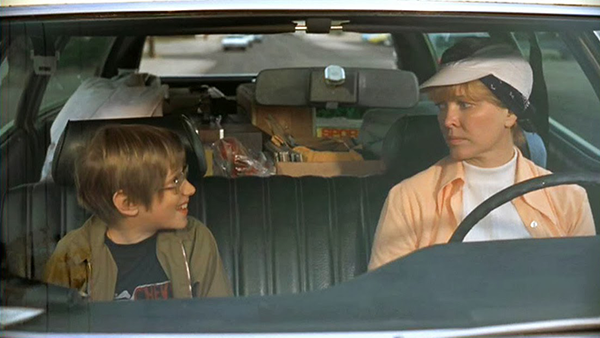
Directed by Martin Scorsese and written by Robert Getchell, Alice Doesn’t Live Here Anymore is the story of a widow who travels to the American Southwest with her young son in the hopes that she can find a better life for them. The film plays into a woman trying to start over as she struggles to find love and a new job as well as raise her pre-teen son who is going through growing pains. Starring Ellen Burstyn, Kris Kristofferson, Alfred Lutter, Diane Ladd, Jodie Foster, and Harvey Keitel. Alice Doesn’t Live Here Anymore is a mesmerizing yet compelling film from Martin Scorsese.
Following the death of her husband in an auto accident, the film revolves around a widow and her 11-year old son trying to start over in the American Southwest on their way to her hometown of Monterrey, California as she would struggle to find work and love. It’s a film that plays into a woman trying to live something that is very ideal but has to contend with the reality of her situation as well as raising a son who is quite bratty and going through growing pains. Though Alice (Ellen Burstyn) was once a singer, she realizes that finding a job to be one is difficult where she would eventually work as a waitress and later meet a kind rancher named David (Kris Kristofferson). Still, Alice would struggle to keep her son Tommy (Alfred Lutter) intact as he would eventually act out and later befriend a troublemaker named Audrey (Jodie Foster).
Robert Getchell’s screenplay plays into Alice’s trials and tribulations as the first act has her coping with the death of her husband despite their turbulent relationship as she realizes that she needs to move from New Mexico and back to her hometown of Monterrey. Much of the film’s first half is a road movie where Alice and Tommy try to find a place to live as well as a job for Alice as she would get a job as a singer for a bar but it wouldn’t last due to an unfortunate tryst with a young man named Ben (Harvey Keitel). The second half would have Alice finally settle in Tuscon, Arizona hoping it would be temporary as she realize the only job she can get is a diner waitress where is later guided by the waitress Flo (Diane Ladd). At the same time, Alice ponders if she can have a relationship as the film also has a feminist message of sorts about what Alice really wants and what she needs to do for herself and for her son.
Martin Scorsese’s direction is very intimate in the way he captures Alice’s turbulent life as well as the world that she has to deal with that is quite chaotic. The film opens in the style of a melodrama and in a full-frame aspect ratio where it shows a young Alice fantasizing about being a singer in the farm that she’s in. When she then says something profane, it becomes clear that this is not a 1950s melodrama as it shifts into a widescreen aspect format to play into Alice’s troubled life with her husband and son Tommy who is listening to Mott the Hoople in loud volume. It establishes that Alice hasn’t reached her goal as she deals with a neglectful husband and a bratty kid where things would change once her husband dies. Much of Scorsese’s compositions are very simple as he does take advantage of the beauty in the many locations in the American Southwest in places in New Mexico and Arizona.
For many of the scenes at the motels and at the diner, Scorsese would employ a lot of hand-held camera tracking shots to play into the drama as well as to capture Alice trying desperately to look good so she can get a job. Even the scenes in the diner shows how frenetic things are where Scorsese would maintain that intimacy with a sense of style in the hand-held camera shots. There are also moments where Scorsese would play into something that feels very loose in the way Tommy would go into his own adventures with Audrey as it would play into his own sense of acting out. Especially as it would boil the tension between him and Alice as it relates to what Alice wants in her life but also what she needs to do for herself and Tommy. Overall, Scorsese creates a very engrossing yet spirited film about a woman starting over with her son.
Cinematographer Kent L. Wakeford does excellent work with the film‘s cinematography to capture the sunny look of the locations in its exteriors along with some unique lighting for some of the scenes set at night including the scenes in Phoenix where Alice would spend time with Ben. Editor Marcia Lucas does nice work with the editing as it is straightforward with some rhythmic cuts for some of the comedic and more heavier moments in the drama. Production designer Toby Carr Rafelson does fantastic work with the look of the motels Alice and Tommy lived in as well as the diner and David‘s ranch. Sound mixer Don Parker does terrific work with the sound in capturing the atmosphere of the diners and bars as well as some of the music that is played on location. The soundtrack would feature not just a few pop standards but also contemporary music from Mott the Hoople, T-Rex, Elton John, Leon Russell, and Dolly Parton.
The film’s amazing cast includes some notable small roles including an early un-credited appearance from Laura Dern as a young girl in glasses eating an ice cream cone at the diner, director Martin Scorsese as a diner customer, Lane Bradbury as a woman who has some connection with Ben, Harry Northup as a bartender that helps Alice in Phoenix, Billy “Green” Bush as Alice’s late husband Donald who appears early in the film, Leila Goldoni as Alice’s best friend Bea who helped her with the move, Valerie Curtin as the shy and timid waitress Vera, and Vic Tayback as the diner’s owner/short-order cook Mel. Harvey Keitel is superb as Ben as this man who meets Alice at a bar in Phoenix as they would have a brief relationship that doesn’t last. Jodie Foster is wonderful as a teenage tomboy named Audrey whom Tommy would meet in Tucson as she would introduce him trouble as well as saying very foul language.
Diane Ladd is fantastic as the waitress Flo as a sass-talking woman who is quite hardened as she helps Alice in keeping her head straight as it’s a performance that is just fun to watch. Kris Kristofferson is excellent as David as a kind rancher who understands what Alice is going through as he wants to help her and Tommy while dealing with Tommy’s bratty behavior. Alfred Lutter is brilliant as Tommy as this pre-teen kid who is very talkative as he copes with being bored as well as finding somewhere to be at as it’s a very wild yet naturalistic performance for the actor. Finally, there’s Ellen Burstyn in an incredible performance as Alice as this widow who is forced to start over as her dreams of being a singer is pulled by the wayside in order to care and raise her son as well as find out what she really wants in her life as it’s a funny but also gripping performance from Burstyn.
Alice Doesn’t Live Here Anymore is a remarkable film from Martin Scorsese that features a magnificent performance from Ellen Burstyn. While it is a very different film from some of the more urban films that Scorsese is known for. It is still one of his finest in terms of character study as well as being a feminist film of sorts where a widow is trying to come to terms with what she has to do with her life and for her son. In the end, Alice Doesn’t Live Here Anymore is a phenomenal film from Martin Scorsese.
Martin Scorsese Films: (Who’s That Knocking on My Door?) - (Street Scenes) - Boxcar Bertha - (Mean Streets) - Italianamerican - Taxi Driver - New York, New York - American Boy: A Profile of Steven Prince - (The Last Waltz) - Raging Bull - The King of Comedy - After Hours - The Color of Money - The Last Temptation of Christ - New York Stories-Life Lessons - Goodfellas - Cape Fear (1991 film) - The Age of Innocence - (A Personal Journey with Martin Scorsese Through American Movies) - (Casino) - (Kundun) - (My Voyage to Italy) - Bringing Out the Dead - (The Blues-Feel Like Going Home) - Gangs of New York - (The Aviator) - No Direction Home - The Departed - Shine a Light - Shutter Island - (A Letter to Elia) - (Public Speaking) - George Harrison: Living in the Material World - Hugo - The Wolf of Wall Street - (The 50 Year Argument) - Silence (2016 film) - (The Irishman) - Killers of the Flower Moon - (An Afternoon with SCTV)
© thevoid99 2015

Written and directed by Wes Anderson from a story by Anderson and Hugo Guinness, The Grand Budapest Hotel is the story of a concierge who asks for the help of a young lobby boy to prove his innocence following the death of an old woman as the woman’s son and his associates try to kill him. Inspired by the writings of Stefan Zweig, the film is set between two world wars in a fictional European country where the story involves theft, love, mischief, and all sorts of things that is expected in a Wes Anderson film. Starring Ralph Fiennes, Tony Revolori, F. Murray Abraham, Matheiu Almaric, Adrien Brody, Willem Dafoe, Jeff Goldblum, Jude Law, Harvey Keitel, Bill Murray, Edward Norton, Saoirse Ronan, Lea Seydoux, Jason Schwartzman, Tilda Swinton, Tom Wilkinson, Owen Wilson, and Bob Balaban. The Grand Budapest Hotel is a rapturous yet exquisite film from Wes Anderson.
Read by a young girl who visit’s the fictional European country of Zubrowka, the film is multi-layered story about the recollections of a young lobby boy who worked for a prestigious hotel in the country that is run by a charming concierge who takes the young boy named Zero Moustafa (Tony Revolori) as his protégé. After the death of an old lady (Tilda Swinton) whom the concierge Gustave (Ralph Fiennes) had romanced, Gustave is inherited a prized painting much to the dismay of the old lady’s son Dmitri (Adrien Brody) who would have Gustave sent to prison over claims that Gustave killed his mother. With the help of Zero and a young baker named Agatha (Saoirse Ronan), Gustave would do whatever to prove his innocence as the older Zero (F. Murray Abraham) tells this story to a young author (Jude Law) at the hotel his mentor had cherished where the author (Tom Wilkinson) would turn it into a book many years later that the young girl is reading.
Wes Anderson’s screenplay delves into not just themes of nostalgia but also set it into a place in time where things were simpler and had a certain amount of respect where it is largely set in a hotel that was once a place of prestige and elegance where the film is set in three different time periods in 1932, 1968, and 1985 where the ‘68 and ‘85 portions involve the young author reflecting on the story he has created. Much of the narrative is set in 1932 where old Moustafa tells the young author his story where the Grand Budapest Hotel was his home and how he became a part of the world that Gustave has cherished until the death of an old lady would change everything. Especially as her son Dmitri would do whatever to get what he feels he’s supposed to inherit as he would send his henchman J.G. Jopling (Willem Dafoe) to take care of things.
It’s not just the story that makes the film so engaging but also the characters as Gustave is a man who likes to sleep with old ladies and give them the time of their lives while his greatest love is for the Grand Budapest Hotel in which he ensures that it maintains that sense of respect as the hotel of Zubrowska. It would be something that Gustave would have Zero do as it would be the role that Zero would play where this unique friendship between the two starts to form. Especially as Gustave would help Zero woo Agatha into a romantic relationship where the two would help Gustave get out of jail and evade the authorities and Dmitri where the third act would have the trio not only go back to the hotel but also deal with the sense of a world that is changing that would greatly affect the reputation of the hotel.
Anderson’s direction is definitely what is expected from him in terms of his approach to stylish compositions and attention to detail. Yet, he also manages to take some risks with his direction in not just the compositions he creates but also in the framing devices he goes into. Much of the scenes shot in 1932 is presented in a full-frame 1:33:1 aspect ratio to play into that period of time. Anderson’s direction is definitely controlled with that aspect ratio while adding a sense of looseness into the direction in the way he approaches humor. There’s also moments where Anderson utilizes that framing device to create some dazzling medium shots and wide shots where he creates scenes that is a mixture of stop-motion animation, miniature set designs, and some visual effects to play into that world that is Zubrowka.
The scenes between Mr. Moustafa and the young writer are shot in a 1:85:1 widescreen aspect ratio while the scenes involving the old author and the girl reading the book at present time is shot at a 2:35:1 aspect ratio. The 1968 sequence is once again filled with a lot of spectacular wide shots but also present a world that is filled with a sense of loss and sentimentality where the young writer looks into the history of this once great hotel. Anderson’s mixture of humor, drama, action, and adventure adds to many of the aspects of the film’s visual style not matter what aspect ratio is in where he maintains something that is visually-enriching but also captivating in the way he presents the story and the characters in the film. Overall, Anderson creates a very extravagant yet touching film about a concierge and his protégé trying to prove the former’s innocence in a strange murder plot.
Cinematographer Robert Yeomen does amazing work with the film‘s cinematography from the vibrant interior lights for the scenes at the hotel to some of the exterior settings in day and night to play up the rich look of the country as it‘s shot on location in Germany. Editor Barney Pilling does excellent work with the editing in creating some stylish cuts for some of the film‘s action and humor while also to help structure the story with its different timelines. Production designer Adam Stockhausen, with art directors Stephen O. Gessler, Gerald Sullivan, and Steve Summergill and set decorator Anna Pinnock, does phenomenal work with the set pieces from the look of the hotel itself as well as the design of the bakery boxes that Agatha works for and other decorative pieces as the art direction is a highlight of the film.
Costume designer Milena Canonero does dazzling work with the costumes from the uniforms of the people at the hotel to the lavish clothes of the guests as well as the dark look of Dmitri and his family/associates. Hair and makeup supervisor Heike Merker does brilliant work with the look of the Madame D. character in the way she looks as well as in some of the prosthetic makeup some of the other characters wear including the Mexico birthmark on Agatha‘s face. Visual effects supervisors Andrea Block, Christian Haas, and Gabriel Sanchez do fantastic work with some of the film‘s minimal visual effects while getting additional help from miniatures designer Frank Schegel and stop-motion animator Andy Biddle to play into the look of the hotel and some of its features.
Sound editor Wayne Lemmer does superb work with the sound to play into the atmosphere of the hotel as well as the prison and other locations in the film. The film’s music by Alexandre Desplat is just awesome for its mixture of Eastern European-based string music that is dominated by the balalaika that is mixed with some orchestral flourishes as it‘s definitely of Desplat‘s best scores while music supervisor Randall Poster brings in a few pieces of the times to add to the tone of the film.
The casting by Douglas Aibel and Jina Jay is just incredible for the ensemble that is created as it features appearances from Larry Pine as the Grand Budapest Hotel manager, Jella Niemann as the girl reading the book the author write, Giselda Voldi as Serge’s sister, and as members of a secret society of concierges that Gustave is in, Bob Balaban, Wallace Wolodarsky, Fisher Stevens, and Waris Ahluwalia. Other notable small roles include Lea Seydoux as a housemaid of Madame D., Mathieu Almaric as a servant of Madame D. who would provide crucial information for Gustave, Tom Wilkinson as the older author in the 1980s scene, Owen Wilson as a concierge who fills in for Gustave, Jason Schwartzman as the hotel concierge in the 1968 sequence, and Bill Murray in a very funny performance as a fellow concierge in M. Ivan who is also a member of the secret society of concierges.
Tilda Swinton is wonderful as the aging Madame D. who has cherished Gustave’s kindness as she would leave him a prestigious painting. Harvey Keitel is terrific as the prisoner Ludwig that Gustave would meet as they help each other break out of prison. Jeff Goldblum is superb as the hotel overseer Deputy Kovacs who is also Madame D.’s executor while Edward Norton is excellent as the army inspector Henckels who tries to do what is right while being a friend of Gustave. F. Murray Abraham is amazing as the older Zero Moustafa as a man who displays such grace in his role as a man reflecting on his past while Jude Law is great as the young author who listens to Zero’s story and reflects on a lost place in time.
Adrien Brody is fantastic as the very devilish son of Madame D. in Dmitri who is angry over what Gustave is getting while Willem Dafoe is brilliant as the very chilling J.G. Jopling who seems to have no problem in killing people as it’s definitely a role fitting for Dafoe. Saoirse Ronan is remarkable as the very brave Agatha whose talent for designing elaborate sweets is matched by her ability to do dangerous things in order to help Gustave and Zero. Tony Revolori is marvelous as the young Zero Moustafa as a young man trying to find his place in this hotel while helping Gustave to prove his innocence as it’s a major breakthrough for the young actor who manages to have some great moments with Fiennes. Finally, there’s Ralph Fiennes in a performance for the ages as Gustave as it’s one that is so full of charm where Fiennes really showcases his sense of wit where he is always funny from start to finish while proving to be a man who will fight for the people he cares for.
The Grand Budapest Hotel is a magnificent film from Wes Anderson. Armed with a glorious ensemble cast led by Ralph Fiennes as well as dazzling technical work and a fun score by Alexandre Desplat. The film is definitely one of Anderson’s finest in terms of its technical brilliance as well as an engaging story about friendship and finding a home in a troubled world. In the end, The Grand Budapest Hotel is a spectacular film from Wes Anderson.
Wes Anderson Films: Bottle Rocket - Rushmore - The Royal Tenenbaums - The Life Aquatic with Steve Zissou - Hotel Chevalier - The Darjeeling Limited - Fantastic Mr. Fox - Moonrise Kingdom - Castello Cavalcanti - Isle of Dogs - The French Dispatch - Asteroid City - The Wonderful Story of Henry Sugar - The Swan - The Rat Catcher - Poison - The Phoenician Scheme - The Auteurs #8: Wes Anderson
Wes Anderson Soundtracks: Bottle Rocket - Rushmore - The Royal Tenenbaums - The Life Aquatic with Steve Zissou - Seu Jorge-The Life Aquatic Studio Sessions - The Darjeeling Limited - Fantastic Mr. Fox - (Moonrise Kingdom) - (The Grand Budapest Hotel) - (Isle of Dogs)
© thevoid99 2014

Directed by Jane Campion and written by Jane and Anna Campion, Holy Smoke! is the story about an Australian family who hires an American counselor to retrieve their daughter who had just ventured into a religious cult. The film is an exploration into the world of spirituality and sexuality as it is a mixture of drama and comedy. Starring Harvey Keitel, Kate Winslet, Sophie Lee, Paul Goddard, and Pam Grier. Holy Smoke! is a witty and compelling film from Jane Campion.
When one finds spiritual enlightenment, it is for someone to fulfill itself through God in some form. Yet, the search for spiritual enlightenment can also be dangerous if it involves cults as a young woman named Ruth (Kate Winslet) seems to lose herself in enlightenment forcing her family to take action by bringing her to the Australian Outback where they hire a man named PJ Waters (Harvey Keitel) who is known for bringing people back to the real world after dealing with some dangerous religious cults. Yet, he faces some challenges in Ruth as he also becomes attracted to her where it conflicts with his intentions as his attempts to bring her back into the real world would end up having dire consequences for both of them.
The screenplay by Anna and Jane Campion explores the world of religious cults where Ruth’s trip to India has her embracing this figure known as Baba much to the concern of family and friends where Ruth’s mother (Julie Hamilton) travels to India to make claims that Ruth’s father (Tim Robertson) suffered a stroke in order to get her home. Once Ruth returns to Australia and learns the truth, she’s understandably upset as she is forced to live in the Outback with PJ while her family live in a house nearby. Still, things become difficult as PJ tries to break into Ruth’s mind as she tries to use her sex appeal to play up his machismo where it would work as PJ is eventually becoming confused as he starts to fall for her. Trouble eventually happens as the Campions do explore a man’s cynicism towards faith against a woman’s love for it yet the way it becomes a bit muddy towards the third act. Notably as it involves PJ’s own realization about himself while Ruth questions herself about who she is where it leads to an ending that is a bit overdrawn.
Jane Campion’s direction is quite interesting for the way she explores the world of spirituality and a man’s attempt to stray a woman away from that world to get back to reality. Campion creates a lot of mesmerizing images including some visual effects scenes that plays to Ruth’s enlightenment as if she did find God. Still, Campion remains grounded in reality as she shoots the film largely in the Outback as well as scenes in Sydney and India. Campion uses close-ups, medium shots, and wide shots to capture the dramatic tension between Ruth and PJ while also adding a sense of comedy for the scenes involving Ruth’s family. Campion also pokes fun a bit at the world of religious cult while exploring the world of sexual power play to see who can outwit who. Though Campion balances that mixture of comedy and drama for the first two acts, the script’s unevenness in the third act does sort of mess things up for her. Overall, Campion creates a very fascinating and unique film about spirituality that sort of falters a bit in its third act.
Cinematographer Dion Bebe does excellent work with the film‘s very colorful and lush cinematography for the many location scenes set in India and Australia in its exteriors as well as some rich lighting schemes for some of the film‘s interiors. Editor Veronika Jenet does nice work with the film‘s stylized editing with the use of some stylized montages in Ruth‘s enlightenment scenes as well as jump-cuts to play with some of the film‘s dramatic and comedic moments. Production/costume designer Janet Patterson, with art director Tony Campbell and set decorators Rebecca Cohen and Lisa Thompson, does wonderful work with the look of the houses in the Outback as well as a bar that Ruth and PJ attend with some of Ruth‘s family members while Patterson also creates costumes from the black clothes of PJ to the white sari of Ruth.
Visual effects supervisor Andy Brown does some terrific work with some of the film‘s minimal visual effects to play out the world of spiritual enlightenment that Ruth is hit by. Sound designer Lee Smith does some very good work with the sound to capture some of the intimacy of the locations as well as the chaos in the scenes in India. The film’s music by Angelo Badalamenti is brilliant for its haunting yet low-key orchestral score to play out some of the drama that occurs in the film. The soundtrack features an array of music from artists like Neil Diamond, Alanis Morrisette, the Shirelles, and Annie Lennox.
The film’s cast is remarkable as it features some standout performances from Paul Goddard and Daniel Wyllie as Ruth’s brothers, Sophie Lee as Ruth’s sister-in-law who tries to seduce PJ, Julie Hamilton and Tim Robertson as Ruth’s parents, and Pam Grier as PJ’s girlfriend/accomplice Carol who shows up late in the film to see exactly what PJ is trying to do. Harvey Keitel is excellent as PJ Waters as a man who is trying to deprogram Ruth only to face new challenges as he’s attracted to her while dealing with his own faults as a man. Kate Winslet is fantastic as Ruth as a woman who believes she’s found faith only to realize that she could really be lost while trying to find something to believe in.
Holy Smoke! is a stellar yet captivating film from Jane Campion that is highlighted by the performances of Kate Winslet and Harvey Keitel. While it’s a film that is quite flawed at times while having some nice commentary about the world of faith and some of its downsides involving cults. It is still an engaging film for the way it reveals a man’s attempt to take away a woman’s enlightenment only to face his own faults. In the end, Holy Smoke! is a very good film from Jane Campion.
Jane Campion Films: Sweetie - An Angel at My Table - The Piano - The Portrait of a Lady - In the Cut - Bright Star - Top of the Lake (TV miniseries) - (Top of the Lake-China Girl) - The Power of the Dog - The Auteurs #25: Jane Campion
© thevoid99 2013
Directed by Martin Scorsese and written by Paul Schrader, Taxi Driver is the story of a former U.S. marine who has become a taxi driver in New York City. Alienated by his surroundings and unable to connect, he decides to plot an assassination against a political candidate while he befriends a 12-year old hooker as he wonders what to do. The film is an exploration into a man dealing with his isolation and the world he’s surrounded by as he tries to connect while becoming unhinged by what’s happening around him. Starring Robert de Niro, Cybill Shepherd, Jodie Foster, Harvey Keitel, Albert Brooks, and Peter Boyle. Taxi Driver is a dark yet mesmerizing film from Martin Scorsese.
The film is about this lonely man who works as a taxi driver in New York City as he is troubled by what goes on in the city. Unable to connect with people as he makes various attempts that fail. He starts to go mad as he hopes to kill a famed political candidate in order to get some attention as he is also intrigued by a 12-year old prostitute who he hopes to help. In this journey that Travis Bickle (Robert de Niro) ventures into, it’s the story of this lonely man who feels isolated by the world around him as he’s just trying to make a living yet is troubled by his surroundings. He does descend into madness after a date with a campaign volunteer in Betsy (Cybill Shepherd) doesn’t go well due to his lack of social skills. There, he turns into dark and violent thoughts while wanting to help this young hooker named Iris (Jodie Foster) so she can return home and stay away from this dark world that includes a pimp named Sport (Harvey Keitel).
Paul Schrader’s screenplay explores a man’s isolation and his descent as he finds himself dealing with the chaos that he’s in. Yet, there is a semblance of humanity in Travis Bickle as he tries whatever it takes to connect with people as he often confides in another cab driver named Wizard (Peter Boyle). Still, his attempts are often misguided when he takes Betsy on a date by going to a porn theater. It’s not just that Bickle has poor social skills, it’s just that he is in a world that is in ruins and some of the passengers he meets are very despicable people including Sport whom he treats Iris like a father figure and a lover. Driven by this sense of isolation and the duty to wanting to set things right. He decides to go after this political candidate named Palantine (Leonard Harris) in order to bring things back to balance but things eventually become complicated. With Iris’ troubles, Bickle offers to help her out but she is unsure if she wants to come home as it gives Bickle a reason to do something.
Schrader’s script is very layered in terms of its presentation as it features a lot of voice-over narration to reflect on Bickle’s isolation and paranoia as he would state things like “I’m God’s lonely man”. There’s elements of film noir in the narration and in the narrative of the script but there’s also a bit of plot schematics of the western that is involved. A lot of which had to do with Bickle playing cowboy in order to save Iris from this dark and seedy world. Yet, in the wake of what Bickle might do. There comes a lot of questions about the aftermath whether Bickle has become better for his actions or has it made him worse.
Martin Scorsese’s direction is very entrancing for the way he explores a man’s isolation set in mid-1970s New York City where it’s a place that is truly troubled by its decay. Notably as he uses a lot of unique framing devices and stylish presentation to convey this sense of isolation and intimacy that is present in the mind of Travis Bickle. With the use of slow-motion camera shots that would either convey a desire that Bickle wants or to establish his descent. There is something in the film’s direction where Scorsese that is unsettling yet very hypnotic in the way he slowly goes for a close-up and to play out Bickle’s madness. Even in one of the film’s most famous moments in which Bickle talks to himself in a mirror and say “you’re talking to me” as it shows Bickle ready to take on the world.
While Scorsese also presents some moments of intimacy in the way Bickle interacts with various characters in some medium shots or in close-ups. Some of it is shown with simplicity but there are moments where it adds a mood to the film as it maintains Bickle’s slow descent. By the third act where Bickle gets ready to kill Palantine, there is that element of suspense of whether Bickle will do something but there is also that sense of trouble where he might just back off. Then there’s the film’s violence where it is very stylized not just in the way Scorsese presents the action but also its impact as it is very disturbing in the way blood looked and such. Overall, Scorsese crafts a very gripping yet visceral film about madness and isolation.
Cinematographer Michael Chapman does amazing work with the film‘s very grimy cinematography from the eerie nighttime look of the city to some of the more haunting interior colors in some scenes set at night. Editors Marcia Lucas, Tom Rolf, and Melvin Shapiro do great work with the editing as it plays an air of style with its jump-cuts and various rhythms to play out the sense of action that occurs throughout the film. Art director Charles Rosen and set decorator Herbert F. Milligan do terrific work with the look of Bickle’s apartment to establish his personality as well as the more colorful look of Iris’ room.
Costume designer Ruth Morley does excellent work with the costumes from the clothes that Iris wears when she works to the stylish clothes of Betsy. Sound mixer Les Lazarowitz does nice work with the sound to capture the chaos of many of the film‘s exterior setting as well as some of the tense moments inside the cab. The film’s music by Bernard Herrmann is truly ravishing for the sense of melancholia that is played in its jazz-based score filled saxophone and jazz scales to capture that sense of decay where it’s seductive but also disturbing as it’s one of Herrmann’s best scores.
The casting by Juliet Taylor is brilliant as it features some wonderful small performances from director Martin Scorsese as a passenger wanting to kill his wife, Leonard Harris as the political candidate Palantine, Richard Higgs as a Secret Service agent, Steve Prince as a gun salesman, and Albert Brooks as a fellow co-worker of Betsy who provides some funny moments in the film. Peter Boyle is great as the veteran cabbie Wizard who provides a lot of insight and wisecracks about what it takes to be a great cab driver. Harvey Keitel is amazing as the pimp Sport as he brings a lot of charisma to a role that is very complex as he’s very fatherly to Iris while he has some very cool exchanges with de Niro. Cybill Shepherd is excellent as Betsy as this woman who is intrigued by Bickle but is also disturbed by his lack of social skills.
Jodie Foster is brilliant as the young prostitute Iris who is curious about why Bickle wants to save her as she is a young girl who is just very confused about what she’s doing as it’s very chilling yet sprawling performance for the actress who was only in her teens at the time. Finally, there’s Robert de Niro in an outstanding performance as Travis Bickle. In this role of a troubled cab driver, de Niro displays the sense of loneliness in his voiceover narration as well as an awkwardness to a man who is really struggling to connect as de Niro also provides a craziness to his performance as it’s definitely one of his best.
Taxi Driver is a magnificent film from Martin Scorsese that features a chilling yet fantastic performance from Robert de Niro. Along with strong supporting performances from Jodie Foster, Cybill Shepherd, Harvey Keitel, and Peter Boyle. It’s definitely one of Scorsese’s great films as well as one of the most eerie studies in isolation and madness thanks in part to Paul Schrader’s harrowing script. In the end, Taxi Driver is a tremendous film from Martin Scorsese.
Martin Scorsese Films: (Who’s That Knocking on My Door?) - (Street Scenes) - Boxcar Bertha - (Mean Streets) - Italianamerican - Alice Doesn’t Live Here Anymore - New York, New York - American Boy: A Profile of Steven Prince - (The Last Waltz) - Raging Bull - The King of Comedy - After Hours - The Color of Money - The Last Temptation of Christ - New York Stories-Life Lessons - Goodfellas - Cape Fear (1991 film) - The Age of Innocence - (A Personal Journey with Martin Scorsese Through American Movies) - (Casino) - (Kundun) - (My Voyage to Italy) - Bringing Out the Dead - (The Blues-Feel Like Going Home) - Gangs of New York - (The Aviator (2004 film)) - No Direction Home - The Departed - Shine a Light - Shutter Island - (A Letter to Elia) - (Public Speaking) - George Harrison: Living in the Material World - Hugo - The Wolf of Wall Street - (The Fifty Year Argument) - Silence (2016 film) - (The Irishman) - Killers of the Flower Moon - (An Afternoon with SCTV)
© thevoid99 2013
Written and directed by Quentin Tarantino from an original story by Tarantino and Roger Avary, Pulp Fiction is a multi-layered story about intersecting events around Los Angeles involving a mysterious briefcase, a gold watch, and a crime boss’s wife. The film is an exploration into the world of crime, drugs, and other situations involving various people in the span of a few days in Los Angeles. Starring John Travolta, Uma Thurman, Samuel L. Jackson, Eric Stolz, Christopher Walken, Rosanna Arquette, Maria de Medeiros, Tim Roth, Amanda Plummer, Ving Rhames, Harvey Keitel, and Bruce Willis. Pulp Fiction is a thrilling and captivating film from Quentin Tarantino.
The film is essentially a multi-layered story revolving around various people in the course of a few days in Los Angeles. The first involves two gangsters named Vincent Vega (John Travolta) and Jules Winnfield (Samuel L. Jackson) retrieving a mysterious briefcase for their boss Marsellus Wallace (Ving Rhames) where things eventually go wrong following as they‘re forced to call on a man known as the Wolf (Harvey Keitel). Another story involves Vincent Vega taking Wallace’s wife Mia (Uma Thurman) to dinner where things go wrong when she accidentally overdoses on heroin. Then there’s the story about a gold watch that belongs to a boxer named Butch Coolidge (Bruce Willis) who doesn’t throw a fight under Wallace’s orders where he eventually crosses paths with the man that leads to all sorts of trouble involving some seedy individuals.
It’s all part of this unique world that Quentin Tarantino sets up where it doesn’t play into the traditional schematics of a crime film. Instead, it’s about the lives of various people who are part of a world full of drugs and violence along with those who don’t want any part of it. Tarantino takes the approach of what legendary French filmmaker says about narrative structure where the film has a beginning, a middle, and an end but doesn’t necessarily have to follow in that order. Even as the film opens with a scene involving a couple named Pumpkin (Tim Roth) and Honey Bunny (Amanda Plummer) eating a diner as they’re about to rob it as the film would later return to this couple towards its ending. Then the narrative cuts to the first half of Vincent and Jules story where they would get the mysterious briefcase and kill the young man who had it.
This would then go into the Vincent-Mia narrative that opens with a scene where Wallace tells Butch Coolidge to throw the fight and then goes directly to Vincent’s story. The narrative would then go into Butch’s story that opens with a prologue about this gold watch that belonged to his father as he would retrieve it only to encounter all sorts of trouble including Wallace himself. The narrative then goes back to Vincent and Jules’ story where it would reach its ending involving Pumpkin and Honey Bunny. It’s all part of the schematics Tarantino wants to set up to tell a story that doesn’t follow a traditional narrative but rather to help use this unconventional approach for its dramatic impact.
It’s not just the way Tarantino takes this unconventional approach to the narrative that makes the screenplay unique but the character themselves. Vincent Vega is a hitman who has just returned from Europe that has a love for heroin and having a good time though he is quite flawed about some of the things he does and the trouble he brings. Jules Winnfield is another hitman who would always have a biblical quote to say something before he kills someone where an incident would have him face some very deep questions about his own existence. Mia Wallace is a woman who loves to do cocaine as she was once an actress who starred in a failed pilot. Butch Coolidge is an aging prizefighter who loves his father’s gold watch as he has a French girlfriend named Fabienne (Maria de Medeiros). Marsellus Wallace is an intimidating crime boss with a big presence but also a man who will show a bit of mercy if necessary.
Tarantino’s direction is intoxicating for the way he presents the film with its sense of style and graphic depiction of violence. Particularly in the way he opens the film with this chat between Pumpkin and Honey Bunny at a diner where he maintains a sense of intimacy as well as stylized shots for this conversation. Tarantino would maintain this kind of intimacy in many group shot scenes while creating a world that is stylized. From the suits Jules and Vincent wears to the clothes that Mia wears at her dinner with Vincent. It’s all part of this very unique world that these characters live in where they live by their own rules and talk in their own language. Even in the places these characters go into such as the 50s/60s style restaurant that Vincent and Mia go into where waiters and waitresses dress up like icons of that time.
Another aspect of Tarantino’s direction is the way he depicts graphic violence where it is very stylized but also realistic in terms of its impact. Notably in some key scenes such as Vincent and Jules meeting with a young man or Butch’s encounter with Marsellus where they meet a couple of sick men who will do very awful things to them. Tarantino does find ways to create interesting framing devices to maintain an element of suspense in some scenes while knowing when not to show too much. There’s also the MacGuffins in both the gold watch and the mysterious brief case. While there is information known about the gold watch, there is nothing known about what’s inside the brief case as Tarantino maintains a sense of ambiguity throughout the film. Overall, Tarantino creates a truly engaging yet exciting film that explores the world of crime in Los Angeles.
Cinematographer Andrzej Sekula does brilliant work with the film‘s very colorful and vibrant cinematography from the look of the nighttime exteriors in Los Angeles to the daytime exteriors along with some very colorful shots of some of the locations such as Marsellus Wallace‘s bar and the restaurant that Vincent and Mia eat at. Editor Sally Menke does amazing work with the editing to help play out the film‘s unconventional narrative style along with some rhythmic cuts for some of the film‘s violent moments along with the rhythm to Vincent and Mia‘s dance scene. Production designer David Wasco, along with set decorator Sandy Reynolds-Wasco and art director Charles Collum, does wonderful work with the set pieces such as the home of Marsellus and Mia Wallace to the stylized look of the restaurant that Vincent and Mia go to.
Costume designer Betsy Heimann does nice work with the look of the suits Jules and Vincent wear along with the clothes that Mia Wallace wears as well as the Wolf‘s tuxedo. Sound editor Stephen Hunter Flick does terrific work with the sound to capture the atmosphere of the restaurant as well as the tense intimacy of the scene where Butch and Marsellus are inside a place run by two sick fucks. Music supervisor Karyn Rachtman does fantastic work with the film’s soundtrack that is a wide mix of soul, rock, rockabilly, country, surf music, and pop ranging from acts like Dusty Springfield, Dick Dale, Kool and the Gang, the Tornadoes, Ricky Nelson, Chuck Berry, the Centurions, Urge Overkill, Maria McKee, the Revels, the Statler Brothers, and the Lively Ones.
The casting by Ronnie Yeskel and Gary M. Zuckerbrod is incredible for the large ensemble that is created for the film as it features some notable small performances from Julia Sweeney as a junkyard owner’s daughter, Quentin Tarantino as Jules’ friend Jimmie, Frank Whaley as the man who had the briefcase named Brett, Phil LaMarr as Brett’s friend Marvin, Alexis Arquette as a man who tries to kill Jules and Vincent, Steve Buscemi as a waiter dressed up as Buddy Holly, Angela Jones as a death-obsessed cab driver, Kathy Griffin as a car crash witness, and the duo of Duane Whitaker and Peter Greene as the two sick fucks who try to torment Butch and Marsellus.
Christopher Walken is great in his small but unforgettable performance as Captain Koons who tells a young Butch about the significance of the gold watch that belongs to Butch’s father. Eric Stolz and Rosanna Arquette are excellent in their respective roles as the drug dealer Lance and his wife Jody where they would take part in one of the film’s most tense moments. Ving Rhames is wonderful as the very intimidating crime boss Marsellus Wallace while Maria de Medeiros is very good as Butch’s French girlfriend Fabienne. Tim Roth and Amanda Plummer are terrific as the diner-robbing couple Pumpkin and Honey Bunny. Harvey Keitel is superb as the professional Winston Wolf who makes sure Jules and Vincent clean up their mess in a short span of time.
Bruce Willis is marvelous as the aging prizefighter Butch Coolidge who deals with Marsellus wants him to do only to get himself into serious trouble as he tries to get back his father’s gold watch. Uma Thurman is brilliant as Marsellus’ wife Mia who has a love for cocaine and five-dollar milkshakes while proving herself to be an engaging person to hang out with as it’s definitely one of Thurman’s great roles. Samuel L. Jackson is amazing as the hitman Jules Winnfield who loves to do bible quotes before he kills as he maintains an air of intimidation while going into an existential frame of mind following a chilling moment. Finally, there’s John Travolta in an outstanding performance as the very cool Vincent Vega as a hitman who is truly a guy who lives by his own rules and has no qualms about killing anyone while doing whatever to not get himself into serious trouble.
Pulp Fiction is a magnificent film from Quentin Tarantino that features an amazing collective of actors that includes John Travolta, Samuel L. Jackson, Uma Thurman, and many others. It’s a film that is still as vibrant and as engaging nearly 20 years since its release. Armed with amazing visuals, a fun soundtrack, and witty dialogue, it’s truly a film that is one for the ages. In the end, Pulp Fiction is a riveting yet mesmerizing film from Quentin Tarantino.
Quentin Tarantino Films: Reservoir Dogs - Four Rooms: The Man from Hollywood - Jackie Brown - Kill Bill - Grindhouse: Death Proof - Inglourious Basterds - Django Unchained - The Hateful Eight - Once Upon a Time... in Hollywood
Related: The Auteurs #17: Quentin Tarantino - Growing Up with Quentin Tarantino
© thevoid99 2012