Based on the Pulitzer Prize-winning Village Voice article Death of a Playmate by Teresa Carpenter, Star 80 is about the life and death of Playboy Playmate Dorothy Stratten who was set for stardom until she gains the jealousy of her husband/ manager Paul Snider. Written for the screen and directed by Bob Fosse, the film is a dramatic account into Stratten’s life as well as her tumultuous relationship with Snider as Dorothy Stratten is played by Mariel Hemingway and Eric Roberts in the role of Paul Snider. Also starring Cliff Robertson, Carroll Baker, Roger Rees, and David Clennon. Star 80 is a eerie yet entrancing film from Bob Fosse.
Dorothy Ruth Hoogstraten aka Dorothy Stratten was a young woman who had become the 1980 Playmate of the Year for Playboy magazine as she was due for stardom where she would appear in Peter Bogdanovich’s 1981 film They All Laughed. Instead, her life was cut short tragically at the age of 20 where she was killed by her husband/manager Paul Snider in a fit of rage and jealousy who would later kill himself. The film is about Stratten’s short life from how she was discovered by Snider and to the murder/suicide as it’s told in a unique narrative as it has Snider looking back while the narrative would cut back-and-forth in events during their life as well as various people including Stratten’s mother (Carroll Baker) and Playboy magazine founder Hugh Hefner (Cliff Robertson) being interviewed about Stratten and the events that led to her death. Bob Fosse’s script does take some dramatic liberties due to some legal issues as it relates to the real-life story where he wouldn’t be able to use the real names of Stratten’s family as well as Stratten and Snider’s neighbors at the home they shared in Los Angeles.
Another figure in Stratten’s life that is given liberties is the filmmaker Peter Bogdanovich where he isn’t mentioned in the film due to legal reasons. Instead, Fosse would create a fictionalized version of the character in Aram Nicholas (Roger Rees) who would be the filmmaker that falls for Stratten and offer a life without Snider’s control. The narrative does however create some unique development where Stratten would mature and be surrounded with people who really care about her as well as be aware of her husband’s behavior and plans. Snider’s development is just as interesting as this sleazy yet well-meaning guy who discovers Stratten at a Dairy Queen where he falls for her. Once she goes to Los Angeles and makes some connections, Snider becomes suspicious yet still has ambition. Unfortunately, his ideas for her and what he wants prove to be tasteless and low-class as he loses money and goes insane.
Fosse’s direction is definitely stylish not just in its usage of montages to play into Stratten’s rise as well as the numerous photos she took. It is also in the way he created different array of film styles ranging from the documentary to something more dramatic. Notably as he would maintain different visual styles in the way some of the scenes are presented where the interviews are very straightforward with a few stylish but eerie shots. The dramatic portions including a scenes where Stratten are interviewed do have a flair of style as it play into her rise to stardom. Fosse’s usage of close-ups and medium shots play into the intimacy in not just Stratten’s own observation of the world but also in the evolution of her relationship with Snider where it would eventually become toxic. Fosse would also use close-ups for a lot of the scenes set in Los Angeles with a few shots set in Vancouver as it play into the two different worlds these characters would encounter.
While Fosse would create something that is a play on the idea of fantasy vs. reality as it relates to Snider wants in the former, Fosse would an extra layer of realism for the film’s climax where the home that Stratten and Snider lived is the place where they actually lived in the final days of their lives. All of which plays into the tragedy as well as one man’s determination to keep this beautiful young woman no matter at what cost. Overall, Fosse creates an unsettling yet compelling film about the life and death of Dorothy Stratten.
Cinematographer Sven Nykvist does brilliant work with the film‘s cinematography from the colorful look of the sunny day locations in California as well as some of the lavish approach to lighting for some of the interiors including Stratten‘s photo shoots. Editor Alan Heim does excellent work with the editing as it is very stylish with usage of dissolves, jump-cuts and montages to play into the craziness of the Hollywood life that Stratten would encounter as well as some of the eerie moments involving Snider. Art directors Michael S. Bolton and Jack G. Taylor Jr., with set decorators Anne D. McCulley and Kimberly Richardson, do fantastic work with the look of the Playboy mansion‘s interiors as well as the apartment that Snider has in Vancouver.
Costume designer Albert Wolsky does amazing work with the costumes as it plays into the look of the late 70s where it is all about style as Stratten‘s look represents this air of innocence while Snider‘s choice of clothing fits perfectly with who he is. Sound editor Dan Sable does nice work with the sound to play into the atmosphere of the parties as well as some of the chilling moments at the film‘s climax. The film’s music by Ralph Burns is superb for its mixture of low-key orchestral music with some electronic music to play into the times while the soundtrack that featured music by the Village People, Billy Joel, Rod Stewart, Steppenwolf, Louie Prima, Shirley Goodman and Leonard Lee, and the Band.
The casting by Howard Feuer and Jeremy Ritzer is wonderful as it includes some notable small roles from Keenan Ivory Wayans as a comic, James Luisi as Hefner’s assistant, Stuart Damon as a TV actor that Snider talks to, Tina Willson as a Playboy Playmate, Keith Hefner as a photographer cheated out of a finder’s fee by Snider, Lisa Gordon as Dorothy’s sister Eileen (a fictionalized version of Louise Stratten), Kathryn Witt as Stratten/Snider’s neighbor Robin, Josh Mostel as a private detective Snider hires late in the film, and David Clennon as a neighbor of Stratten/Snider who befriends them only to be wary of Snider’s troubled behavior. As a fictionalized version of filmmaker Peter Bogdanovich in the form of Aram Nicholas, Roger Rees is excellent as this filmmaker who falls for Stratten as well as being nurturing to her growing talents as an actress and being the man who wants to help her. Cliff Robertson is brilliant as Hugh Hefner as the man who founded Playboy as he sees something more in Stratten where he would be a fraternal figure of sorts for her while being very suspicious towards Snider.
Carroll Baker is amazing as Stratten’s mother who is suspicious about what Snider wants to do as she isn’t really charmed by him while she is also aghast in how he stole Stratten from her. Mariel Hemingway is remarkable as Dorothy Stratten as this young and beautiful woman who finds herself becoming a star where Hemingway displays an air of innocence to the character as well as someone who would grow up knowing that something isn’t right about Snider. Finally, there’s Eric Roberts in an incredible performance as Paul Snider as he exudes the sleaziness of the character in the way he looks and acts but also has a charm that is engaging where it would morph into something very dark in its anguish and torment where Roberts really creates something that is very scary to watch.
Star 80 is a marvelous film from Bob Fosse that features great performances fro Eric Roberts and Mariel Hemingway. It’s a film that doesn’t just explore not just some of the darker aspects of obsession but also tragedy in the form of a real life story of the murder suicide of Dorothy Stratten and Paul Snider. In the end, Star 80 is a brilliant film from Bob Fosse.
Bob Fosse Films: Sweet Charity - Cabaret - Liza with a Z - Lenny - All That Jazz - The Auteurs #56: Bob Fosse
© thevoid99 2016
Written and directed by Woody Allen, Irrational Man is the story of a philosophy professor who goes through an existential crisis where he goes into a relationship with one of his students. The film is mystery-drama that has Allen explore the world of existentialism where a man copes with the meaning of life as well as the ways of the world where he ponders what one do by a single act. Starring Joaquin Phoenix, Emma Stone, Jamie Blackley, and Parker Posey. Irrational Man is a compelling and witty film from Woody Allen.
Set in a small college campus and town in Rhode Island, the film is a simple story of a troubled philosophy professor who is going through depression and an existential crisis where he befriends a student as they discuss the complexities of life. Yet, when they overhear a conversation about a woman’s custody battle and how unlikely she would get her children back due to a corrupt judge. Professor Abe Lucas (Joaquin Phoenix) is suddenly urged to do something as the result would mark a change in his life and his relationship with student Jill Pollard (Emma Stone) where it becomes romantic. Yet, questions would emerge as it relates to his act but also many questions about morality and the way life works. Woody Allen’s screenplay doesn’t just explore Lucas’ own moral and existential dilemma but also the fact that he has become numb and sort of indifferent about what he’s doing.
With Pollard being one of his students in his summer tenure in philosophy, he is intrigued by her views where they would engage a lot in conversations. Pollard would fall for him, much to the chagrin of her boyfriend Roy (Jamie Blackley), though is aware of Lucas’ own reputation as well as the fact that teachers and students can’t go out with each other in the school. While Lucas would have an affair with another professor in Rita Richards (Parker Posey), he is drawn by Pollard as the film‘s narrative is told from their different perspective with the usage of voice-over narration to display their views and what are they thinking. Especially in the second act where Lucas do something as it relates to this woman he doesn’t even know as the result would give him meaning again. Even as Pollard is taken aback at first by his change in mood until news about what is going on in this small town emerges where Pollard learns some truth as she goes into a moral dilemma of her own. All of which plays into a third act that is about morality and what it means to live but also the fact that action can also have consequences.
Allen’s direction is quite simple in terms of not just the compositions but also in the fact that he creates a film that bears little ideas of style. Shot on location in Newport, Rhode Island, the film does have this ravishing tone in the way it presents this small New England college town where it is quite middle class but also very vibrant. While Allen uses some wide and medium shots to capture the beauty of the locations, he also in maintain some intimacy in the latter along with the close-ups in the way characters interact with one another. Allen also would create different shifts in tones where it starts off a little lighthearted despite Lucas’ dark mood and then have the second act be even more upbeat despite the act that Lucas would do that eventually gave him meaning. The tone would once again shift in the third act where it does become more of a drama but a drama that says a lot about morality and the ways of the world. Especially where Pollard who begins to question herself as she is confused on the ways of the world and where true happiness comes from. Allen reveals that there is a lot of flaws in that argument but also says a lot into the ways of the world and how people live no matter how complicated things can be. Overall, Allen creates an engaging yet whimsical film about existentialism and morality.
Cinematographer Darius Khondji does excellent work with the film‘s cinematography from the look of the exteriors to the way some of the interiors are lit in day and night to play into its low-key yet colorful look. Editor Alisa Lepselter does nice work with the editing as it is mostly straightforward with few bits of style as it plays into the drama and some of the mystery aspects in the film. Production designer Santo Loquasto, with set decorator Jennifer Engel and art director Carl Sprague, does fantastic work with the look of the homes that the characters live in as well as the campus and the hall of mirrors where Lucas and Pollard go to.
Costume designer Suzy Benzinger does terrific work with the costumes as it is mostly casual in the way the characters look as it includes some of the stylish clothes that Pollard and Richards wear. Sound editor Robert Hein does superb work with the sound as it is mostly natural to play into the places that all of the characters go to. The film’s music soundtrack largely consists of playful jazz pieces along with a few classical cuts and a couple of contemporary pop pieces at a party that Lucas goes to.
The casting by Patricia Kerrigan DiCerto and Juliet Taylor is great as it include some notably small roles from Susan Poufar as a woman fighting for custody of her children that Lucas and Pollard would eavesdrop on, Sophie Von Haselberg as one of Pollard’s classmate in April, Ethan Phillips and Betsey Aidem as Jill’s parents, Kate McGonigle as another of Pollard’s friends in Ellie, and Tom Kemp as a custody case judge that Lucas would target. Jamie Blackley is superb as Pollard’s boyfriend Roy who doesn’t like hearing about Lucas as he feels neglected as well unappreciated for what he is trying to do for Pollard.
Parker Posey is fantastic as Rita Richards as a professor who is dealing with her own issues in her marriage as she would have an affair with Lucas only to feel slighted when he begins his relationship with Pollard. Emma Stone is brilliant as Jill Pollard as a philosophy student who would challenge Lucas about his views on the world while they would find similar ground and passions until she realizes the action he has done where she is confused as well as questioning about her own morality. Finally, there’s Joaquin Phoenix in an incredible performance as Abe Lucas as a philosophy professor who is filled with despair and indifference as he tries to find meaning in his life where he tries to find fulfillment until a moment where he listens to a conversation about a woman where he feels the need to act as it would give him a new lease on life.
Irrational Man is a marvelous film from Woody Allen that features top-notch performances from Joaquin Phoenix, Emma Stone, and Parker Posey. While it is a film that bears a lot of familiar territory that Allen has explored in other films, it does manage to say a lot about the way people are in the world as well as how they respond to certain things and their actions. In the end, Irrational Man is a remarkable film from Woody Allen.
Woody Allen Films: What's Up Tiger Lily? - Take the Money and Run - Bananas - Everything You Always Wanted to Know About Sex* (*But Were Afraid to Ask) - Sleeper - Love and Death - Annie Hall - Interiors - Manhattan - Stardust Memories - A Midsummer's Night Sex Comedy - Zelig - Broadway Danny Rose - The Purple Rose of Cairo - Hannah & Her Sisters - Radio Days - September - Another Woman - New York Stories: Oedipus Wrecks - Crimes & Misdemeanors - Alice - Shadows and Fog - Husbands and Wives - Manhattan Murder Mystery - Bullets Over Broadway - Don't Drink the Water - Mighty Aphrodite - Everyone Says I Love You - Deconstructing Harry - Celebrity - Sweet and Lowdown - Small Time Crooks - The Curse of the Jade Scorpion - Hollywood Ending - Anything Else - Melinda & Melinda - Match Point - Scoop - Cassandra's Dream - Vicky Cristina Barcelona - Whatever Works - You Will Meet a Tall Dark Stranger - Midnight in Paris - To Rome with Love - Blue Jasmine - Magic in the Moonlight - (Café Society)
The Auteurs #24: Woody Allen Pt. 1 - Pt. 2 - Pt. 3 - Pt. 4
© thevoid99 2016
Directed by Matthew Warchus and written by Stephen Beresford, Pride is the story about the British miner’s strike of 1984-1985 where miners reluctantly get the support of gay and lesbian activists who would raise money for the miners. The film is a dramatic account on how the gay and lesbian community get involved as well as display the act of solidarity during one of Britain’s most tumultuous periods. Starring Bill Nighy, Imelda Staunton, Paddy Considine, Dominic West, Andrew Scott, George MacKay, Joseph Gilgun, Menna Trussler, and Ben Schnetzer. Pride is a heartfelt and compelling film from Matthew Warchus.
The British miners’ strike of 1984-1985 was an event in Britain that had miners going against the rule of its then-prime minister Margaret Thatcher over pit closures and pay restraints. It was around this time that the National Union of Mineworkers would receive support but from the most unlikely group of people in the gay and lesbian community who saw the same amount of prejudice and abuse they had received from the police as they offered their own support as an act of solidarity. The film is a dramatic account of this event which is considered a watershed moment for the British gay and lesbian movement but also for the miners strike as well where it took a ragtag group of people who go to a small town in Wales to offer their support and raise money for the miners.
Stephen Beresford’s screenplay talks about the formation of the Lesbians and Gays Support the Miners campaign that started in a gay bookshop by a few activists where they just wanted to donate whatever money to help miners who are on strike and can’t pay the bills. While NUM was at first unwilling to take their money, it was through a small faction in this small Welsh mining town that said yes but unaware of who they’re getting money from as the locals are aghast of who is giving them donations. Still, one of the miners’ local organizers in Dai Donovan (Paddy Considine) would invite them as does the leader of the women’s support group in Hefina Headon (Imelda Staunton) where it took a while for the locals to accept them. Even as the LGSM would find ways to raise more money and awareness despite the fact that there is a lot happening in their own community as it relates to the AIDS crisis as one of them is HIV positive yet has found a way to curb his disease.
Matthew Warchus’ direction doesn’t really go for a lot of style except for a few scenes shot entirely on hand-held to give it a cinema verite feel. Yet, it does maintain a simplicity in not just the compositions but also the setting as it is shot not just in parts of London and its nearby suburbs but also in small towns in Wales to make it feel very real. Warchus would also find something ordinary and make it special as the film does have subplots as it relates to not just miners’ wives trying to do what they can for their husband but also find themselves in their own right. The direction also play into the realities of what is going on in Britain with footage of the news as well as what the tabloids were printing as a way to cause problems between the two factions. Even as a miner’s widow would create further problems upsetting her brother-in-law who is one of the organizers in the strike. Though it’s third act does give the film a bit of a different tone as it relates to not a lot of realities in both the mining and gay community. It does serve as some major moments in a few of its characters as well the fact that these two very different communities come together where they were able to make a difference in a way that is bigger than themselves. Overall, Warchus crafts a lively and engaging film about gay and lesbian activists helping striking miners in their time of need during the 1980s British miners’ strike.
Cinematographer Tat Radcliffe does excellent work with the film‘s cinematography from the vibrant look of London in its clubs and the gay bookshop that the LGSM organizers frequent at to the more drenched yet grey-like color of the small town in Wales. Editor Melanie Oliver does fantastic work with the editing as it does play into style with its usage of jump-cuts as well as some montage-based cutting. Production designer Simon Bowles, with set decorator Liz Griffiths and supervising art director Mark Raggett, does amazing work with the look of the bookshop the LGSM organizers meet as well as some of the clubs they go to and the community hall at the small Welsh town where the miners meet to have meetings. Costume designer Charlotte Walter does brilliant work with the costumes from the colorful look of the members of the LGSM to the more grey and casual look of the miners and their wives.
Hair/makeup designer Nadia Stacey does terrific work with the look of the hairstyles and makeup of some of the members of the LGSM as well as create a straight-laced look for the miners and their families. Visual effects supervisor Hugh MacDonald does nice work with some of the film‘s minimal visual effects which is just essentially set dressing to play into what London looked like in the 1980s. Sound designer Blair Jollands does superb work with the sound in the way some of the parties sound as well as the sparse yet eerie tension heard in a key meeting late in the film. The film’s music by Christopher Nightingale is wonderful for its mixture of low-key orchestral music and guitar-based rock music to play into the period of the times while music supervisor Nick Angel creates a fun soundtrack filled with a lot of the music of the times from the Smiths, Shirley & Company, Bronski Beat, Frankie Goes to Hollywood, Culture Club, Dead or Alive, and Pete Shelley as well as some folk-based pieces from Pete Seeger and Billy Bragg.
The casting by Fiona Weir is phenomenal as it include some notable small roles from Matthew Flynn and Monica Dolan as Joe’s parents, Olwen Medi as Gethin’s mother, Kyle Rees and Jack Baggs as a couple of young miners who go to Jonathan in getting dance lessons so they can get girls, Rhodri Meilir as the miner/co-organizer Martin James, Liz White and Nia Gwynne as a couple of miners’ wives, and the trio of Freddie Fox, Chris Overton, and Joshua Hill as members of the LGSM. Other noteworthy small roles include Karina Fernandez and Jessie Cave as two LGSM members who want to form a splinter group known as Lesbians Against Pit Closures while Lisa Palfrey is terrific as the widow Maureen Barry who isn’t keen on having LGSM at the town as she tries to create trouble only to get the ire of her brother-in-law Cliff. Menna Trussler is wonderful as the elderly widow Gwen who would be the first to take LGSM’s donation as well as find common ground with the lesbians. Andrew Scott is fantastic as LGSM co-founder Gethin who also runs the bookshop with his partner Jonathan as he admits to his reluctance in returning to Wales due to his relationship with his mother where he would eventually find the courage to see her again.
Jessica Gunning is excellent as Martin’s wife Sian who would find her voice in the activism as she would also the person to help the LGSM and miner’s union find common ground. Dominic West is brilliant as the HIV-stricken Jonathan who isn’t sure about what his friends are doing as he helps them while showing the young miners how to dance as a way to pick up women. Joe Gilgun is superb as LGSM co-founder Mike Jackson who would introduce the young Joe to activism as well as be the one to create banners for the cause. Faye Marsay is amazing as Stephanie Chambers who is the lone lesbian of the group who has a wild look but finds herself having more common ground with the miners’ wives where she takes a maternal role for Joe. George MacKay is great as Joe as a college student who finds himself taking on the cause to help the miners while trying to hide his sexuality from his parents where he finally makes a big decision as an adult.
Ben Schnetzer is incredible as the late LGSM co-founder Mark Ashton who is the group’s leader that rallies everyone around to the cause as he sees similarities in the struggles the miners are facing along with the gay and lesbian community as it’s just this riveting breakthrough. Paddy Considine is marvelous as local miners’ leader Dai Donovan who would be the first to meet the LGSM as he is taken aback by them at first only to see that they’re just cool people. Imelda Staunton is radiant as Hefina Headon as the head activist for the miners’ wives who is one of the first to welcome in the LGSM as she sees what they’ve done for the cause as well as realize how fun they are. Finally, there’s Bill Nighy in a remarkable performance as Cliff Barry as a miner who had seen a lot as he is one of the few who welcome the LGSM immediately as well as know what is at stake as it relates to the well-being of the miners and their families.
Pride is a sensational film from Matthew Warchus. Featuring a great ensemble cast, awesome music, and a compelling story that is based on the real British miners’ strike of the mid-1980s. It’s a film that doesn’t just explore a moment in time but also a moment where people came together just to help one another no matter what sexual preference they are. In the end, Pride is a phenomenal film from Matthew Warchus.
© thevoid99 2016
Based on the novel by Andy Weir, The Martian is the story of an astronaut who is accidentally left for dead on Mars during a manned mission where he struggles to survive in the planet while the people at NASA discover he’s alive as they try to figure out how to get him back home with the man’s crew dealing with guilt of leaving him behind. Directed by Ridley Scott and screenplay by Drew Goddard, the film explores the world of science where people on Earth find a way to try and bring this astronaut home as the man himself would try to find ways to survive on the planet using what he has in his head. Starring Matt Damon, Jessica Chastain, Chiwetel Ejiofor, Kristen Wiig, Benedict Wong, Michael Pena, Sebastian Stan, Kate Mara, Mackenzie Davis, Askel Hennie, Sean Bean, Donald Glover, Eddy Ko, Chen Shu, and Jeff Daniels. The Martian is an adventurous and engaging film from Ridley Scott.
During a manned mission to Mars where an attempt to leave during a strong dust wind where an astronaut is struck by debris and is unfortunately left for dead by his crew. The film revolves around this astronaut who finds himself stuck on Mars aware that it is likely that it will take four years for another spaceship to come in and rescue him with the little rations he has where he is forced to find ways to survive. Meanwhile back on Earth, NASA who for two months believed the man to be dead make a discovery that he is alive through satellite photos as they try to find a way to get him back home but a lot of things are happening where they don’t even tell his crew for months. It’s a film that isn’t just about survival but also the need to rescue a man stranded on Mars where he is forced to left to his own devices yet would unveil what he is able to do to try and survive for the next few years.
Drew Goddard’s screenplay has a very unique narrative that moves back and forth in not just what astronaut Mark Watney (Matt Damon) does to survive on Mars where he would grow potatoes and make water in the planet thanks to his skills as a botanist. It also showcases what is happening in NASA where they try to figure out how long he can survive as well as how to create a rescue mission. The Earth portion of the narrative also play into the world of politics as NASA’s director Teddy Sanders (Jeff Daniels) ponders the financial cost as well as the risks while he also has to tell the truth to the public that Watney is alive after declaring him dead during the botched mission months earlier. For NASA, the news of Watney being alive has become a public relations nightmare for the company where it also shows what is happening behind the scenes where they also need to get help from other sources including rival space exploration companies.
At the space vessel Hermes, there is a subplot that involves Watney’s crew led by Commander Melissa Lewis (Jessica Chastain) who, along with the crew, are consumed with guilt as they’re returning home to Earth where they play a key part in the film’s third act as it relates to the rescue. While they’re aware that the journey back to Mars will take another 18 months with a special booster created by this rival company. Commander Lewis and the crew prefer to take that risk knowing that if it goes wrong, they will all die. Especially as their mission director Mitch Henderson (Sean Bean) gave them the option as he is aware of the risks not just in space but also the financial risks where he finds himself sparring with Sanders since Henderson wanted to tell Lewis and the crew about Watney once the news broke. It all play into that world of politics and when Watney who would finally communicate with NASA’s Mars mission director Vincent Kapoor (Chiwetel Ejiofor) who revealed what has been going on. Not surprisingly as there’s frustration where Kapoor and several other scientists try to find solutions where it would be a young astrodynamicist in Rich Purnell (Donald Glover) who would create what the Commander Lewis and her crew have to do as does Watney.
Ridley Scott’s direction is definitely quite vast for the world he creates not just in Mars but also outer space while also maintain a sense of ground for the fact that the film is also set on Earth. With many of the exterior scenes on Mars shot at Wadi Rum in Jordan with several interiors shot in Hungary, the film plays into a world that is quite large where Scott used a lot of wide shots for these exteriors in Mars as it has this air of mystique. Even in the some of the interiors in the base where Watney would have to live in and grow crops as Scott would also use small video cameras such as the Go-pro cameras to document everything Watney is going through. It has this air of the documentary in the film where it plays into what happens if a man is stranded alone in Mars having to survive by what he knows.
The direction is also intimate not just for the scenes inside the Hermes vessel but also on Earth where there’s a lot of discussion and squabbling going on about what to do. Scott chooses to keep things simple throughout the film by not going for anything flashy though he would utilize bits of style in some tracking and dolly shots but keep it to a minimum. The scenes at the Hermes vessel are quite entrancing to play into the world of this space vessel but also to show everyone trying to move on despite carrying this weight of guilt. While Scott is aware that it’s a sci-fi adventure film with a lot of drama, he knows that it’s a film that shouldn’t take itself too seriously by displaying the fact that Watney is kind of goofy. Even as there’s a recurring gag to the fact that the only thing playing at the base on Mars is 70s disco music that Watney hates yet it was chosen by Commander Lewis. All of which plays into a film that is about doing what is right no matter how complicated it can be. Overall, Scott crafts a riveting yet sprawling film about a man accidentally stuck on Mars and trying to survive as he awaits rescue.
Cinematographer Dariusz Wolski does brilliant work with the film‘s cinematography in creating some filters for the exterior scenes set on Mars as well as providing distinctive looks for the scenes at the Hermes space vessel and on Earth. Editor Pietro Scalia does excellent work with the editing as it‘s mostly straightforward with a few stylistic cuts for the big action sequences as well as a stylish montage sequence about the rescue planning. Production designer Arthur Max, with supervising art director Marc Homes and set decorators Celia Bobak and Zoltan Horvath, does amazing work with the look of the moon base and many of the interiors in that base as well as the space vessel interiors and rooms at NASA. Costume designer Janty Yates does nice work with the costumes in the way the astronaut suits look as well as the clothes of the people on Earth. Hair/makeup designer Tina Earnshaw and hair/makeup supervisor Csilla Blake-Horvath does terrific work with the look of Watney late in the film as he struggles to survive with the limited resources he had.
The visual effects work of Chris Lawrence, Anders Langlands, Richard Stammers, and Steve Warner is fantastic for the look of outer space as well as the Hermes space vessel along with some set dressing for the Mars exteriors. Sound designers Michael Fentum and Oliver Tarney do superb work with the sound in the way the dust winds sound in and out of the base as well as some of the computers and such along with the sparse and more natural sounds for the scenes in Earth. The film’s music by Harry Gregson-Williams is wonderful for its orchestral-based score that has some bombast in some of its intense moments while being low-key in its somber moments. The film’s soundtrack is definitely a joy to listen to not just in the fact that it consists a lot of classic 70s pop and disco music from the likes of ABBA, the Hues Corporation, Donna Summers, Thelma Houston, the O’Jays, Gloria Gaynor, and Vickie Robinson as well as inspired usage of David Bowie’s Starman.
The casting by Carmen Cuba and Nina Gold is incredible as it features some notable small roles from Eddy Ko and Chen Su as key officials from the Chinese Space program, Donald Glover as the astrodynamicisist Rich Purnell who comes up with an idea for the Hermes to travel back to Mars, Benedict Wong as a Jet Propulsion Laboratory director who tries to come up with ideas in saving Watney, and Mackenzie Davis as the NASA satellite planner Mindy Park who would be the one to discover that Watney is alive through satellite photos. Other notable small roles as members of the Ares III team includes Askel Hennie as the team’s navigator/chemist Dr. Alex Vogel, Sebastian Stan as flight surgeon Dr. Chris Beck, Kate Mara as the system operator Beth Johanssen, and Michael Pena as the team’s pilot Rick Martinez who is Watney’s closest friend.
Chiwetel Ejiofor is superb as the Mars mission director Vincent Kapoor who would be the first to communicate with Watney as he realizes with the severity of what is happening as he tries to figure out what to do to save him. Sean Bean is fantastic as the Ares III mission director Mitch Henderson who wanted to tell his crew that Watney is alive as he spars with Sanders about what to do. Kristen Wiig is terrific as NASA’s media relations director Annie Montrose who tries to smooth over all of the bad publicity NASA is facing as well as figure out how to save face for NASA. Jeff Daniels is excellent as NASA’s director Teddy Sanders who is trying to see anyway NASA can save money but also wanting to do what is right with caution. Jessica Chastain is amazing as Commander Melissa Lewis as the Ares III leader who deals with guilt of leaving Watney behind as she would later try to figure out every scenario into getting him back as a way to do what is right. Finally, there’s Matt Damon in a phenomenal performance as Mark Watney as the astronaut who is accidentally stranded on Mars following a freak accident where he manages to find a way to survive with his expertise on botany and wit while also providing some charm, humor, and humility to his role as it’s one of Damon’s finest performances.
The Martian is a spectacular film from Ridley Scott that features an incredible performance from Matt Damon. Along with a strong ensemble supporting cast, dazzling visuals, compelling themes on science, and a fun music soundtrack. The film isn’t just a sci-fi adventure film that doesn’t play dumb as well as reveal what might happen on a manned mission to Mars. It also showcases how someone is willing to survive with a positive attitude despite his hatred for disco. In the end, The Martian is a magnificent film from Ridley Scott.
Ridley Scott Films: (The Duellists) - Alien - Blade Runner - (Legend) - (Someone to Watch Over Me) - (Black Rain) - (Thelma & Louise) - (1492: Conquest of Paradise) - (White Squall) - (G.I. Jane) - (Gladiator) - (Hannibal) - (Black Hawk Down) - (Matchstick Men) - (Kingdom of Heaven) - (A Good Year) - (American Gangster) - (Body of Lies) - (Robin Hood) - Prometheus - (The Counselor) - (Exodus) - (Alien: Covenant) -All the Money in the World
© thevoid99 2016
Based on the novel Sammy’s Hill by Kristen Gore, Accidental Love is the story of a waitress whose life changes after accidentally being shot in the head by a nail gun where she receives brain damage and the attention of a congressman who would exploit her. Directed by David O. Russell, under the pseudonym of Stephen Greene, and screenplay by Russell (under the Greene pseudonym), Gore, Dave Jeser, and Matt Silverstein, the film that was originally supposed to be called Nailed is a look into a woman looking for support due to her lack of health insurance as she turns to the government for help. Starring Jessica Biel, Jake Gyllenhaal, James Marsden, Catherine Keener, Tracy Morgan, Beverly D’Angelo, and James Brolin. Accidental Love is a messy and nonsensical film from Stephen Greene.
The film is a simple story of a waitress who goes to Washington D.C. to get a bill created so that she and several other ordinary people can get health insurance following an incident where she was shot in the head by a nail gun. It’s a film that has an intriguing premise where this young waitress tries to fight for herself and friends in getting the health insurance they need since they can’t afford to get surgery to fix themselves. Yet, something definitely went wrong as it relates the story where it wants to be this political crusade film where an ordinary woman wants to fight for something yet it is also this weird romantic comedy between this woman and a young congressman who would exploit her for his own means. The script not only creates moments that are ridiculous but also has no clear identity in what it wants to be or how to balance the genre. The script that was originally written by David O. Russell and Kristen Gore seemed to have ideas of a political and social satire but that seemed lost due to those who were involved in the re-writes as it would try to be all things for all people.
Yet, it’s not the script that is entirely at fault but also the direction where it looked like there was a good film somewhere from Russell. Unfortunately, it seems like he was trying to go for something that was bit more unconventional in his approach to humor only to delve too much into conventional humor. While Russell would create a lot of straightforward compositions and moments that seem to aim for elements of political satire. It is clear that the film was lost in the post-production where it became something very different from what Russell wanted as it’s probably among the many reasons why he chose to not take credit for it. Anyone not familiar with Russell’s work would probably be confused in what the film wants to be as there’s a lot of people over-acting or moments that feels like it belongs in another film. For those who are familiar with Russell’s work as a filmmaker would definitely see that there was a lot in the film that had the potential to be funny as well as provide some insight into how politics work.
Yet, there were a lot that had happened during the film’s production that said a lot about why Russell left the film and later disown it. The film’s production began in 2008 where it got shut down frequently due in part to the 2008 financial collapse where several cast and crew members walked out of the film at times where re-shoots occurred in 2010 without Russell’s involvement who did leave the film. Through the post-production with the aid of cinematographer Max Malkin, editors Mark Bourgeois and Robert K. Lambert, and sound mixer Jeffree Bloomer, the film is given a look and tone that is best described as bland. Malkin’s photography looks under-lit in some spots and has elements of grain in some spots while the editing feels very jarring and nonsensical at times. Even the sound doesn’t do much in the way the film is presented as says a lot into what was happening in the post production. Overall, the film is just a really bad movie handled by people behind the scenes who really just created something that is just bland and lacks any real heart to a story that could’ve been so much more.
Production designer Judy Becker, with set decorator Vera Mills and art director Dennis Bradford, does fantastic work with the look of the diner that the protagonist Alice worked with as well as the restaurant where she would get shot in the head with a nail. Costume designer Marie-Sylvie Deveau does nice work with the costumes as it‘s mostly casual with a bit of style in the clothes that Alice wears. Visual effects supervisor Travis Baumann does OK work with the visual effects as it is essentially set-dressing but it never does anything for the film visually. The film’s music John Swihart is just hokey at best where it tries to playful with its mixture of orchestral music and pop but never stands out at all while music supervisor Susan Jacobs doesn’t create a soundtrack that is memorable as it consists of pop and soul music.
The film’s cast features a large collective of great talent but unfortunately, no one is given much to do. Notable small roles from Beverly d’Angelo and Steve Boles as Alice’s parents, Kirstie Alley as Alice’s veterinarian aunt Rita, Bill Hader as a surgeon, Jenny Gulley as Alice’s friend/fellow waitress Brenda, Malinda Williams as a security guard named Rakeesha that Alice’s friend Keyshawn falls for, David Ramsay as representative Harshtone who helps out congresswoman Hendrickson, Kurt Fuller as the Reverend Norm who helps Alice out by going to Washington D.C. with her as he has an untreatable injury, and Paul Reubens as Hendrickson’s aide Edwin never really get anything to do as it’s clear that either whatever material they’re working didn’t do them any favors. In a very brief performance, James Brolin is awful as House Speaker Buck McCoy who is just there as a plot-point in the film where he chokes on a fucking cookie during a meeting with Alice and her friends with Hendrickson in the same room along with girl scouts.
Tracy Morgan is alright as Keyshawn where he tries very hard to be funny but it never clicks while he also show a few moments that he can do more but the script’s shortcomings never gives him to rise above. James Marsden is just bland as Alice’s boyfriend Scott as a state trooper who would propose to her but has trouble adjusting to her mood swings where he breaks it off only to return to help her in the most convoluted way. Catherine Keener is terrible as congresswoman Pam Hendrickson as this former astronaut-turned-politician that is so eager to have a moon base created on the moon while wanting to be House Speaker as she just looks ridiculous as well as that bad haircut. Jake Gyllenhaal is just horrible as congressman Howard Birdwell as this young representative that wants to do good and help Alice only to exploit her for his own means where it’s a performance that tries to be funny but feels forced and unnatural. Finally, there’s Jessica Biel in a decent but underwhelming performance as Alice Eckle where Biel does try to make her character engaging but the shortcomings in the script as well as all of these quirks in her behavior from unexpected moments of rage to speaking in Portuguese makes the character more of a caricature than a real person to root for.
Accidental Love is just a horrendous film that doesn’t just waste a lot of talent but also showcase what happens when a film with some potential just goes to shit. Fans of David O. Russell no doubt will see this as just something they wish never existed while audiences who want to see a romantic comedy will pretty much be confused by a lot of what is happening. In the end, Accidental Love is a film that just really fucking sucks.
David O. Russell Films: Spanking the Monkey - Flirting with Disaster - Three Kings - I Heart Huckabees - The Fighter - Silver Linings Playbook - American Hustle - Joy (2015 film) - The Auteurs #70: David O. Russell
© thevoid99 2016
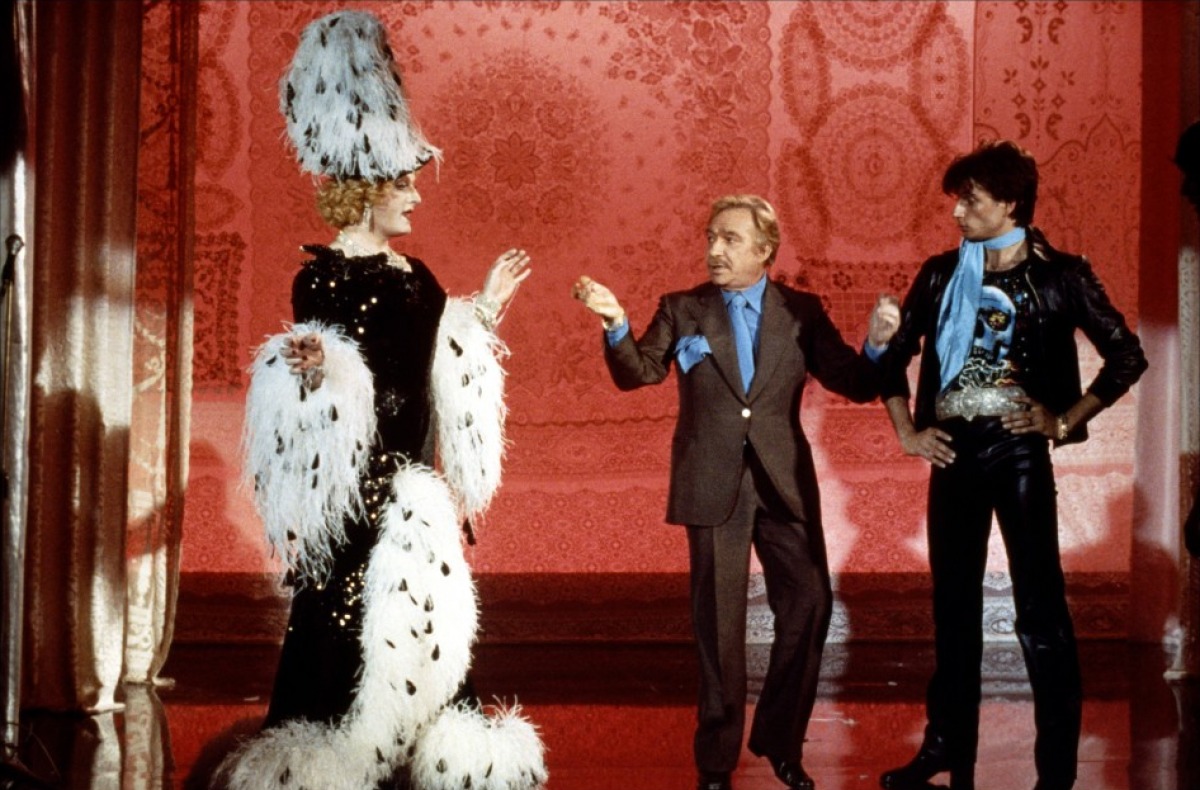
Directed by Bob Fosse, Liza with a Z is a concert TV special for Liza Minnelli as she performs songs from the film Cabaret that Fosse directed and Minnelli starred in along with songs written by Fred Ebb and lyricist John Kander. Shot on May 31, 1972 at the Lyceum Theatre in New York City, the film showcases Minnelli singing and dancing to an audience in all-out musical with numbers ranging in different musical styles with Fosse providing choreography. The result is a sensational and dazzling concert TV special from Bob Fosse.
Considered one of the greatest performers in entertainment, Liza Minnelli is someone that can do it all as she can sing, dance, act, and crack some jokes. In early 1972, Minnelli starred in the film version of the hit Broadway musical Cabaret which was directed by Bob Fosse as it drew her rave reviews and would give an Academy Award for Best Actress. As an encore of sorts, Minnelli, Fosse, and the songwriting duo of Fred Ebb and John Kander would create a show largely on her talents. The show itself wouldn’t just be about Minnelli the performer but also a woman sharing bits of her real self onstage where she would tell jokes between a few songs.
The selection of song choice doesn’t just consist of songs by Ebb and Kander but also interpretations of standards, show tunes, and a few contemporary songs like I Gotcha by Joe Tex and Son of a Preacher Man sung famously by Dusty Springfield. All of which play into Minnelli’s own personality and her own diverse take on these songs where the contemporary numbers dwell more into rock, pop, and soul while the rest are more fitted into traditional pop and jazz with the aid of music coordinator Marvin Hamlisch. The show also includes a medley devoted to Cabaret as it’s not just about Minnelli singing these songs. It is also the presentation of the show where she’s joined by dancers dancing along all to Bob Fosse’s intricate and racy choreography which adds a lot to many of these musical numbers.
Instead of having the concert special shot on videotape, which was the standard at the time. Fosse would shoot the special on 16mm film with the aid of cinematographer Owen Roizman in the way much of the stage sets are lit and shown. Even as Fosse would shoot many of the performance not just at the stage but also from the side with high and low angles to see what the audience at the show would see. Especially in the way the sets that are created by production designer Robert Randolph and art director Sabina Daley are shown to play into each different set of the performance as well as the costumes worn by the many dancers that are designed by Frank L. Thompson with Minnelli’s costumes provided by Halston. Each set would have Minnelli sport different looks of sorts courtesy of hair stylist Simon Scudera and makeup designer Christina Smith.
Adding to the energy and performances is the editing of Alan Heim as it says a lot to how Minnelli reacts to the audience as well as in the way she performs a song. Sound mixer Robert C. Fine, with sound consultant Andy Potvin for its 2000 reissue, would do nice work with the way the music sound with Potvin providing some additional mixing for the remastered edition of the special.
Liza with a Z is a spectacular concert TV special from Bob Fosse that features in the incomparable Liza Minnelli. Not only is the special a must-see for fans of Minnelli but it’s also an overlooked gem of sorts from Fosse who would create a lavish presentation that plays into Minnelli’s stature as an entertainer. In the end, Liza with a Z is a fabulous concert TV film from Bob Fosse.
Bob Fosse Films: Sweet Charity - Cabaret - Lenny - All That Jazz - Star 80 - The Auteurs #56: Bob Fosse
© thevoid99 2016
Based on the novella Lady Susan by Jane Austen, Love & Friendship is the story of a scandalized widow who seeks refuge at the home of her brother-in-law where she hopes to find a husband for herself and her daughter. Written for the screen and directed by Whit Stillman, the film is a period drama set in the late 18th Century where it plays into a woman is trying to redeem her name and provide a future for her daughter. Starring Kate Beckinsale, Xavier Samuel, Emma Greenwell, Morfydd Clark, Jemma Redgrave, Tom Bennett, Justin Edwards, Jenn Murray, Stephen Fry, and Chloe Sevigny. Love & Friendship is a witty and delightful film from Whit Stillman.
Set in 1790 Britain, the film revolves a recently-widowed woman whose scandalous past has come back to haunt her as she moves in with her brother-in-law where she falls for her sister-in-law’s brother. When her daughter has been kicked out of school, complications emerges when she falls for the same man her mother is courting while evading the affections of a dim-witted suitor. It’s a film that isn’t just about some of the complications of love but also a woman’s attempt to maintain her social status despite her illustrious past as a flirt where she’s not even allowed to talk to one of her best friends publicly as they would talk privately or correspond secretly through letters.
Whit Stillman’s screenplay isn’t just an exploration of social climbing, reputation, and survival but also a woman trying to ensure her daughter’s security despite their own personality differences. Yet, Lady Susan Vernon (Kate Beckinsale) is a woman that has become accustomed to a lifestyle and wants to keep it no matter what it takes. Sure, Lady Vernon is manipulative and is willing to scheme but it is all about the nature of the game she has to play to survive despite the notoriety she’s attained in the past as she is a bit indifferent of what people think of her. Still, she has to think about her teenage daughter Frederica (Morfydd Clark) who is asked to marry this young buffoon in Sir James Martin (Tom Bennett). Upon meeting her sister-in-law’s brother Reginald DeCourcy (Xavier Samuel), Lady Vernon sees him as a prospective husband but things complicated when Federica falls for him as well.
It’s not just in the plot scenarios and schematics where Stillman explores what Lady Vernon is doing but it is also in the dialogue. Stillman’s dialogue is very stylized in not just playing to the times but also in the rhythm and tone that is true to writings of Jane Austen. It has a language that is unique but also a feel that manages to play off into much of the humor. Even in some the dramatic moments as it play into the anguish in Frederica as well as some of the conversations Lady Vernon has with her American friend Alicia Johnson (Chloe Sevigny) who understands her friend’s plight. While she doesn’t agree with Lady Vernon’s tactics, she does understand the need to survive as she is married to a prestigious businessman in Mr. Johnson (Stephen Fry). Yet, if he finds out that his wife is talking to Lady Vernon. He will take her back to America where she is seen as a traitor for supporting the British during the American Revolution as it’s one of these tidbits in the script that makes it so fun to follow.
Stillman’s direction definitely owes a lot to style in not just the way it plays into costume period dramas but give it a sense of irreverent humor. From the way the characters are introduced to how elements of poetry and letters are being read with text presented on screen. Shot entirely on location in Ireland, the film does play into the look of the period with its usage of wide and medium shots to capture the location while the latter would also provide a sense of intimacy in the dramatic elements along with its usage of close-ups. Much of the composition relies more on a sense of control with its steadicams to follow the actors walking into a room or at a court inside the house. It all plays into this world where it is about behaviors and prestige where Stillman says a lot of what is going on in that world where everyone of importance has to present themselves in a certain way. At home, they can be themselves no matter how bad they are.
There is no question that Lady Vernon is a despicable character but she isn’t totally un-likeable as Stillman wants to maintain that sense of what she is doing. Especially as it relates to his own fascination of the upper-class world and what people are willing to do to maintain a lifestyle that not many people are accustomed to. Stillman doesn’t try to over-dramatize things with the exception of one key character who is presented as a form of humor. It is all about the role that women played in society and what they had to do to survive in an upper-class world. Even as they have to contend with morals and the rules where this one woman does what she have to do while not being afraid to break a few rules in the process. Overall, Stillman creates an engaging and exhilarating comedy about a woman’s search to find husbands for herself and her daughter through devious means.
Cinematographer Richard Van Oosterhout does excellent work with the film‘s cinematography from the differing look of the exteriors to play into a mood for the film as well as some of the interiors with its low-key approach to lighting as well as how the sun is placed against the windows. Editor Sophie Corra does terrific work with the editing as it largely straightforward to play into some of its humor through its rhythmic cuts as well as for some of the dramatic moments. Production designer Anna Rackard, with art directors Louise Mathews and Bryan Tormey and set decorator/carpenter Stuart Crinnion, does brilliant work with the look of the many interiors in the homes and estates that the characters live in as well as the apartment that Lady Vernon would live in London for the film‘s second half. Costume designer Eimer Ni Mhaoldomhnaigh does amazing work with the costumes from the lavish look of the dresses the women wear including the hats as well as the clothes that the men wore in those times.
Hair designers Eileen Buggy and Rod Ortega, with makeup designer Margot Boccia, do fantastic work with the design of the hairstyle of the women with the latter doing the work for the look of Lady Vernon. Visual effects supervisors Danielle Kempen and Hans van Helden do nice work with the minimal visual effects where it is really bits of set dressing as well as displaying the text that is read by characters onscreen. Sound editor Ranko Paukovic does superb work with the sound with way some of the action is heard in another room along with the lively moments in a party scene where Sir James is dancing like an idiot. The film’s music consists largely from traditional and classical pieces from the period of the time as well as variations of original music by Benjamin Esdraffo and Mark Suozzo with the latter doing much of the music supervision in selecting various classical and operatic pieces that are played in the film.
The casting by Kerry Barden, Colin Jones, and Paul Schnee is phenomenal for the large ensemble that it displays as it include some notable small roles from Kelly Cross as Lady Vernon’s traveling companion Mrs. Cross in the film’s first act, Conor Lambert as the DeCourcy family butler, Sylvie Benoiton and Daniel Magee as the children of Charles and Catherine Vernon, Lochlann O’Mearain as Lord Manwaring, Sophie Radermacher as Lord Manwaring’s young daughter, and Justin Edwards as Lady Vernon’s brother-in-law Charles Vernon who offers her a temporary place to stay as well as deal with several family issues. Stephen Fry is superb in his small role as Mr. Johnson as Alicia’s husband who disproves her friendship with Lady Vernon while attending to the emotional needs of Lady Manwaring in a very comical manner. Jenn Murray is wonderful as Lady Lucy Manwaring as this emotional drama queen who hates Lady Vernon as she accuses her of seeing her husband.
James Fleet and Jemma Redgrave are excellent in their respective roles as Sir Reginald and Lady DeCourcy as Catherine and Reginald’s parents who are concerned with Lady Vernon’s presence while taking in Frederica whom they cherish. Chloe Sevigny is fantastic as Alicia Johnson as an American exile who is Lady Vernon’s best friend as she helps her despite being told by her husband not to as Sevigny displays a lot of charm and flair to her character. Emma Greenwell is amazing as Catherine DeCourcy Vernon as Charles’ wife who also takes in Lady Vernon as well as taking a liking towards Frederica while admitting to having her own qualms about Lady Vernon. Morfydd Clark is brilliant as Lady Vernon’s daughter Frederica as this shy and troubled young girl who has gotten kicked out of school as well as not wanting to get married where Clark displays an anguish as well as an innocence to this young woman who finds herself falling in love.
Tom Bennett is hilarious as Sir James Martin as a young man who wants to marry Frederica as he is just this loveable buffoon who says very idiotic things while believing there’s twelve commandments instead of ten as he is just fun to watch. Xavier Samuel is remarkable as Reginald DeCourcy as this young man who becomes attracted to Lady Vernon as he finds her interesting while also becoming drawn by Frederica. Finally, there’s Kate Beckinsale in an incredible performance as Lady Susan Vernon as she exudes charm and wit into her character while not being afraid of being despicable but in a loveable way as Beckinsale just gives the performance of her career.
Love & Friendship is a sensational film from Whit Stillman that features a delightful performance from Kate Beckinsale. Featuring a great supporting cast, lovely visuals, gorgeous costumes, and a fantastic score. It’s a film that explores the world of Jane Austen with a sense of irreverent humor and a study of social climbing as well as what women had to do to survive in a world where there’s a lot of expectations in the upper class. In the end, Love & Friendship is a tremendously rich film from Whit Stillman.
Whit Stillman Films: Metropolitan - Barcelona - The Last Days of Disco - Damsels in Distress - The Auteurs #21: Whit Stillman
© thevoid99 2016
Based on the play by Jean Poiret, La Cage aux Folles is the story of a gay couple who learns that their son is getting married to the daughter of an ultra-conservative family as they try to pretend to be straight for this meeting between two families. Directed by Edouard Molinaro and screenplay by Molinaro, Marcello Danon, Jean Poiret, and Francis Verber, the film is an exploration into the life of a middle-aged gay couple who deal with the meeting of a family who are nothing like them. Starring Ugo Tognazzi, Michel Serrault, Remi Laurent, Luisa Maneri, Carmen Scarpitta, and Michel Galabru. La Cage aux Folles is wild and exhilarating film from Edouard Molinaro.
The film revolves around a middle-aged gay couple who try to pretend to be straight for their son as they’re about to meet his fiance’s parents whose father is a ultra-conservative political leader dealing with a scandal. It’s a film with just a simple plot that revolves these two men as one of them is a drag club owner and its director while his partner is the star of the club. Once they learn their son is going to marry to a young girl while realizing who her parents are, hilarity ensues where the club owner Renato (Ugo Tognazzi) does whatever he can to either hide his lover Albin (Michel Serrault) or try to make him straight. The film’s script doesn’t just play into these two men put into a situation where they try to help their son Laurent (Remi Laurent) though they admit they’re not fond about him marrying a girl they don’t really know. Still, it is about wanting to make him happy as they also have to deal with other issues. Upon meeting Simon Charrier (Michel Galabru), his wife Louise (Carmen Scarpitta) and daughter Andrea (Luisa Maneri), it is all about to see if they can do good for Laurent.
Edouard Molinaro’s direction is very lavish for not just the way he presents the lifestyle of this middle-aged gay couple where it opens with what they do at their nightclub where there’s a lot of drag performers and such. The film does open with its very intricate and dazzling tracking shot as it plays into its atmosphere. Much of it is very simple while Molinaro’s approach to the humor is very loose in the way characters interact with each other or in a situation. Even in its usage of close-ups and medium shots where Molinaro observes what is happening between Renato and Albin which includes a scene of the former teaching the latter how to act straight. The climatic meeting between the two families does start off tense and awkward yet once Albin makes his appearance, it does becomes a full-blown comedy where it would top itself. Especially as it relates to Charrier who becomes baffled by where he is at as well as knowing he’s being hounded by press forcing him to find a way to avoid scandal. Overall, Molinaro creates a lively and exciting film about a gay couple pretending to be straight for their son in meeting his fiance’s very conservative parents.
Cinematographer Armando Nannuzzi does excellent work with the film‘s cinematography to play into the lavish lights for the club‘s interiors as well as some of the very colorful locations of St. Tropez where Renato and Albin live. Editors Monique and Robert Isnardon do nice work with the editing as it is largely straightforward with some rhythmic cuts to play into the humor and the reaction of some of its characters. Production designer Mario Garbuglia and set decorator Carlo Gervasi do fantastic work with the look of the club as well as the home of Renato and Albin with all of its air of style in the things they have as opposed to the more conservative look of Charrier.
The costumes by Ambra Danon are amazing for the many stylish clothes Renato and Albin wear to play into their lively personalities as well as their attempts to look straight. The sound work of Mario Dallimonti does terrific work with the sound as it play into some of the chaotic moments in the redecorating as well as some of the raucous moments at the club. The film’s music by Ennio Morricone is brilliant as it is this mixture of late 70s dance/disco and cabaret music with some classical elements that are low key as it plays into much the film’s humor as it is one of his more underrated scores.
The film’s superb cast include some notable small roles from Carlo Reali as the club bouncer, Angelo Pellegrino as Renato’s assistant at the club, Guido Cerniglia as a doctor early in the film, Venantino Venantini as Charrier’s chauffer, and Liana Del Balzo as Charrier’s mother. Benny Luke is fantastic as Renato and Albin’s flamboyant servant Jacob whose attempt to be straight is very funny as well as the fact that is cool towards Renato and warm to Albin. Carmen Scarpitta is wonderful as Charrier’s wife Louise who hopes the wedding will kill the scandal while Luisa Maneri is terrific as Charrier’s daughter Andrea who created a lie in order to protect Laurent and his family while trying to not cause more trouble for her father. Claire Maurier is excellent as Laurent’s real mother Simone who agrees to help Renato and Albin despite resistance from the latter who doesn’t like Simone.
Remi Laurent is brilliant as Renato and Albin’s son Laurent who decides to get married as he deals with the fact that he is facing his Andrea’s parents where he copes with the fear of being hurt. Michel Galabru is amazing as Simon Charrier as a conservative politician who deals with a scandal that could ruin him as he frets over meeting Laurent’s parents where he is intrigued by Albin unaware of what he really is. Ugo Tognazzi is marvelous as Renato as a club owner/director who at first doesn’t want to change anything only to realize how much Laurent loves Andrea where helps him as well as try to teach Albin to act straight as the French version of the film features dubbing by Pierre Mondy. Finally, there’s Michel Serrault in a fabulous performance as Albin as a drag performer who is filled with many issues about himself as it’s a very loud and proud performance that manages to steal the show including the moments where he tries to act straight.
La Cage aux Folles is a spectacular film from Edouard Molinaro that features dazzling performances from Michel Serrault and Ugo Tognazzi. It’s a film that explores the world between gay and straight as well as what happens when two different ideals collide in a hilarious fashion. In the end, La Cage aux Folles is a sensational film from Edouard Molinaro.
Related: The Birdcage
© thevoid99 2016

Directed by Ava DuVernay and written by Paul Webb, Selma is the story of the events leading to the 1965 march led by Dr. Martin Luther King Jr. and several other Civil Rights leaders trying to make a difference during the Civil Rights movement in the American South. The film is a dramatic account of the non-violent march from Selma to Montgomery in the state of Alabama as it is considered a key turning point in the American Civil Rights movement. Starring David Oyelowo, Tom Wilkinson, Carmen Ejogo, Giovanni Ribisi, Tim Roth, Tessa Thompson, Wendell Pierce, Alessandro Nivola, and Oprah Winfrey. Selma is a mesmerizing and riveting film from Ava DuVernay.
The film is a dramatic account of the events that preceded the non-violent march from Selma to Montgomery led by Dr. Martin Luther King Jr. (David Oyelowo) in an attempt for African-Americans to have the right to register to vote that would eventually lead to the Voting Rights Act of 1965. Told in a straightforward manner, the film follows Dr. King and fellow Civil Rights leader who prepare for this march just as Dr. King is having frequent meetings with President Lyndon B. Johnson (Tom Wilkinson) about allowing African-Americans to have the right to register to vote without any issues. Johnson is reluctant as he has other things to deal with where he is also dealing with some opposition like FBI director J. Edgar Hoover (Dylan Baker) who thinks King is up to no good while King would also have to deal with Alabama’s Governor George Wallace (Tim Roth).
Paul Webb’s screenplay doesn’t just explore Dr. King’s attempt to get the march going with several other Civil Rights leaders but also dealing with the authority in Alabama where a lot of planning occurs. Even as Dr. King ponders if the media will see what happens as he also deals with the church bombing in Birmingham that killed four young girls and other events that includes the death of Malcolm X (Nigel Thatch). The script also plays in moments behind the scenes where Dr. King becomes weary and unsure of what is doing as his own personal life would nearly unravel when the FBI tries to create discord between Dr. King and his wife Coretta (Carmen Ejogo) over the former’s supposed extramarital affairs. Still, Dr. King tries to get the march forward where he also deals with members of the Student Nonviolent Coordinating Committee who don’t agree with Dr. King’s views.
There is a structure where much of the first half is about Dr. King and members of the Southern Christian Leadership Conference trying to plan for the march as well as deal with all sorts of legal and social issues. Even as Dr. King copes with loss and other things as well having to go back to his home in Atlanta and flying to Washington D.C. to meet with President Johnson. The second half is about the first two attempts for the march as the first one ends in violence where it is captured by the press while the second one would end abruptly by Dr. King due to an act of faith. Especially where he would hear that those who would march with him including whites would be targeted in this small Alabama town where racial tension is very high. The third act is about President Johnson’s decision as he is aware of the role he is playing where he knows what might happen if he doesn’t act.
Ava DuVernay’s direction is largely straightforward in terms of the fact that she doesn’t go for anything grand nor play too much into exposition which is often the case with a lot of films based on historical events. While much of it is shot in Atlanta and other parts in the nearby city including a few key shots in Selma and Montgomery. The film is more about the American South as a whole where it plays into a landscape that is changing where you have a group of people that want change but you have this other group that opposes change. DuVernay’s usage of wide and medium shots help play into this tension that is happening in Alabama which is the centerpiece of this old idea of the American South dating back to the 1800s. Even as Dr. King would meet this old man who is in his 80s as he is waiting for the right to vote as it is this very simple moment where this old man just endured loss as he ponders if he has a say in anything in this country that is supposed to be about equality. The direction also has DuVernay create moments that are quite intense such as a non-violent confrontation against a county sheriff that does unfortunately turn violent because the old man couldn’t sit down where a woman would hit that sheriff and all hell breaks loose.
The usage of close-ups and hand-held cameras play into that chaos as well as a moment where people are attempting a march at night where it turns very violent in the hands of the police. There are also moments during these meetings where DuVernay does create something where there is tension but also the need to resolve something not just in the meetings President Johnson would have with his staff and Dr. King but also a scene with him and Governor Wallace that plays into a world that is changing. The latter of which is actually afraid of change but is also indifferent in what history will think of him as it’s something President Johnson is aware of. While its ending is predictable, it does have something to say in what Dr. King has done to make the world better no matter how troubling it is but it’s also in the idea that one person does have a say. Overall, DuVernay creates a gripping yet engaging film about one of the most watershed moments in American history.
Cinematographer Bradford Young does excellent work with the film‘s cinematography from its usage of low-key lights for some of the interiors in many of the scenes set day and night to the look of the towns in the daytime including the famous Edmund Pettus Bridge in Selma. Editor Spencer Averick does nice work in creating some unique rhythmic and jump-cuts to play into some of the drama as well as some of the intense moments in the film. Production designer Mark Friedberg, with set decorator Elizabeth Keenan and art director Kim Jennings, does fantastic work with the look of the home of Dr. King and his family as well as some church interiors including the scene in Birmingham where the four little girls would be killed on that day. Costume designer Ruth E. Carter does wonderful work with the costumes as it play into the period of the times as well as the dresses the women wear.
Visual effects supervisors Anup Shakya and Dottie Starling do brilliant work with some of the minimal visual effects such as the Birmingham church bombing sequence as well as a few other moments that is essentially set dressing. Sound editor Greg Hedgepath does superb work with the sound as it play into some of the chaos in some of the protests as well as some chilling moments in the conversations. The film’s music by Jason Moran is terrific as it‘s mostly low-key and doesn’t appear very much as it is largely a mixture of orchestral, folk, and gospel to play into the times while music supervisor Morgan Rhodes provides a intoxicating soundtrack that mixes a lot of the music of the times from folk, gospel, soul, and blues from artists like Joyce Collins & Johnita Collins, Duane Eddy, Sarah Vaughan, the Staple Singers, Otis Redding, Odetta, the Impressions, and a new song called Glory by John Legend and Common.
The casting by Aisha Coley and Cynthia Stillwell are incredible as it features a massive ensemble with notable small roles from Jeremy Strong as white Boston pastor James Reeb, Tara Ochs as white Civil Rights activist Viola Liuzzo, Stan Houston as Selma’s sheriff Jim Clark, Nigel Thatch as Malcolm X, Michael Papajohn as state trooper leader Major John Cloud, Henry G. Sanders as the old man Cager Lee that Dr. King befriends, Keith Stansfield as the old man’s grandson, Ledisi Young as the legendary gospel singer Mahalia Jackson that Dr. King turns to for guidance early in the film, and Oprah Winfrey in a small yet wonderful standout performance as activist Annie Lee Cooper who is just a woman that just wants the right to vote. Other noteworthy appearances include Martin Sheen as Judge Frank Minis Johnson who decides whether Dr. King could march, Cuba Gooding Jr. as civil rights attorney Fred Grey, Dylan Baker as FBI Director J. Edgar Hoover, Stephen Root as Governor Wallace’s advisor Al Lingo, Niecy Nash as activist Richie Jean Jackson, and Giovanni Ribisi as President Johnson’s advisor Lee C. White.
In the performances of the many associates of Dr. King, Colman Domingo as Ralph Abernathy, Ruben Santiago-Hudson as Bayard Rustin, Stephan James as SNCC co-chairman John Lewis, Wendell Pierce as Hosea Williams, Lorraine Toussaint as Amelia Boynton Robinson, and Andrew Holland as Andrew Young are all excellent as people who are trying to see what they can do for the movement and make sure it goes in the right direction. Tessa Thompson is superb as Diane Nash as an activist who helps Dr. King in the strategy of the Selma march while Common is fantastic as Reverend James Bevel who also helps in making sure things go right in the need for non-violence. Alessandro Nivola is amazing as Assistant Attorney General John Doar who meets with Dr. King to understand what is doing while trying to ensure him that President Johnson is at his side knowing that what Dr. King wants isn’t easy.
Tim Roth is brilliant as Governor George C. Wallace as Alabama’s then-governor who tries to make sure Dr. King doesn’t march as Roth sells that air of racism in the governor as well as display a sense of fear about what could happen if change does happen in Alabama. Carmen Ejogo is radiant as Coretta Scott King as Dr. King’s wife who is aware of what her husband is doing while also knowing that not everything in her marriage is great though she stands by him when he needs her at the march. Tom Wilkinson is great as President Lyndon B. Johnson who wants to invoke an act where African-Americans can vote without any issue but is trying to see how he wouldn’t get into trouble as he also copes with how history will see him. Finally, there’s David Oyelowo in a tremendous performance as Dr. Martin Luther King Jr. as the civil rights leader who is trying to make change and ensure that the people of Alabama have a say while dealing with everything that involves in the march and its outcome as well as dealing with personal issues where he becomes overwhelmed with his role as a civil rights leader as it is a performance for the ages from Oyelowo.
Selma is a sensational film from Ava DuVernay that features an incredible performance from David Oyelowo as Dr. Martin Luther King Jr. Featuring a great ensemble cast and a compelling story that plays a lot into some of its historical context and its stakes. It’s a film that doesn’t just carry a lot of importance but also showcase a moment in time that would prove to be a major moment in American history. In the end, Selma is a spectacular film from Ava DuVernay.
Ava DuVernay Films: (This is the Life (2008 film)) - (I Will Follow) - Middle of Nowhere (2012 film) - 13th (2016 film) - (A Wrinkle in Time (2018 film))
© thevoid99 2016