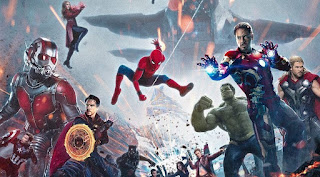
On April 30, 2008 just three days before its American release, a film about a playboy billionaire weapons manufacturer who later became a superhero by creating his own suit in order to stop his weapons be used for harm was unveiled to the world. Budgeted at $140 million and with a lot of skepticism into the idea that a gifted but troubled film star like Robert Downey Jr. would play the role of Tony Stark/Iron Man. The film would end up being the start of something much bigger than anyone would ever realize. Ten years later with billions and billions of dollars accumulated and counting with 17 films released and more to come with two films set to come out in 2018. The Marvel Cinematic Universe has re-written the rules of what a franchise could be as well as how to bring characters from different stories to come together and be heroes.
While it can be stated that films about superheroes aren’t for everyone and in an age where there’s so many big movies about superheroes to the point that people can be burned out. There is no question that Marvel Studios has created something that is special in not just making films about superheroes but giving audiences heroes whether they’re humans, aliens, gods from other universes, or beings made by man with a conscious that they can connect with. It’s easy to say that the films that Marvel has made are escapist, popcorn entertainment with big special effects and bombastic action sequences. Yet, they’re so much more than that as many of these films get their ideas from not just the original source materials in comic books but also draw ideas from the cinema of the past. So why has the Marvel Cinematic Universe have become a big deal and matter to the world of cinema? Here are 10 reasons why:
1. Heroic Characters with Human Struggles

Part of what make superhero films work is giving audiences heroes to root for in saving the world as Marvel had succeed that in the early 2000s with the first X-Men and Spider-Man films. There is something about a band of mutants and a teenage kid with superpowers that do connect with audiences as they’re all flawed and struggle with themselves. This is something the MCU has followed as the character of Tony Stark/Iron Man starts off as a douchebag who creates and sells weapons, drinks a lot, have too much fun, and sleeps around with women. Yet, when he’s attacked by terrorists and see his creation be used to kill innocent people. He would fight back as well as use his gift in inventing things including an arc reactor to protect his heart from the shrapnel that is near it as he would have a change of heart and spend much of his character arc through three solo films as well as other films in the MCU trying to bring world peace and ensure the world’s safety despite some bumps.
It’s also in the character arcs that is important to the MCU as Thor is this Norse God who wields a mighty hammer as his journey has him being banished to Earth in an act of humility to then realize what he needs to do in being king as he would later cope with loss and questioning his worth. Steve Rogers/Captain America also goes through an arc of his own from an idealistic scrawny kid from Brooklyn who is given a serum to be taller and stronger in order to help the Americans in World War II to dealing with the complications of the modern world as he struggles with his ideas only to see that not everything is black and white. Others such as Natasha Romanoff/Black Widow, Peter Parker/Spider-Man, Bruce Banner/the Incredible Hulk, the Guardians of the Galaxy, Clint Barton/Hawkeye, Doctor Steven Strange, Scott Lang/Ant-Man, and T’Challa/Black Panther all display characteristics that make audience relate to them as human (even though some are aliens) who know what they have to do to make the universe a safer place.
2. Unconventional Villains with Strong Motivations

Every superhero in any story needs a villain to fight against. That is often the scenario in every movie about a superhero needs though the MCU has struggled with creating compelling villains. Yet, recent films in the MCU have provided audiences with antagonists that don’t exactly play by ideas that seem very typical of what to expect from villains. While the character of Loki might be considered a villain in his role in trying to rule Earth in The Avengers, he’s really more an anti-hero as someone that is just trying to prove to his adopted father Odin that he can be king and step away from Thor’s shadow. Even as he would eventually help Thor in becoming king while having to face the fact that he is his own worst enemy for his love of mischief. Villains like Red Skull, Malekith, Ultron, and Kaecilius play into the typical tropes of characters that want to rule the world and have a thirst for power yet someone like Hela from Thor: Ragnarok isn’t just about wanting to conquer the world but also someone that has a legit grudge towards her father and brother with the former putting her in exile and the latter for just being in the way of her claim to Asgard’s throne.
The MCU admittedly has suffered from villains that don’t live up to expectations like Malekith, Kaecilius, Emil Blonsky/Abomination, and Aldrich Killian but recent films in the MCU have managed to find way to create antagonists that are more compelling like Hela and Ego from Guardians of the Galaxy Vol. 2 who have ambitions but also want something more. The character of Helmut Zemo from Captain America: Civil War would do something other villains hadn’t done which was to hurt the Avengers through secrecy all for the act of vengeance while Adrian Toomes/the Vulture in Spider-Man: Homecoming is just selling illegal weapons just to provide for his family. Then there’s Erik “Killmonger” Stevens from Black Panther who has a legitimate claim to the throne of Wakanda as he is someone that doesn’t play by the typical tropes of the villain. Instead, he is someone that is willing to challenge a lot of ideas his reasons into wanting become Wakanda’s king is a reaction to African-Americans’ own oppression as well as the dark history of colonization in Africa. So far, Killmonger is the MCU’s best villain though the upcoming arrival of Thanos for the next two Avengers films might top Killmonger.
3. Kevin Feige and Stan Lee

Anyone who has paid attention to cinema’s history is aware that there’s been film franchises as the longest-running franchise so far has been the James Bond film series. There’s a reason Bond has been around for more than fifty years and remaining strong as it goes to the people behind the scenes as it started off with Albert R. Broccoli and Harry Saltzman from Dr. No to The Man with the Golden Gun and then Broccoli by himself afterwards before handing the reins of the franchise to his daughter Barbara and stepson Michael G. Wilson who have ensure the franchise’s longevity since Broccoli’s death in 1996. It shows the importance of the role of the film producer as the Marvel Cinematic Universe has been overseen by Marvel Studios president Kevin Feige.
Since working as an associate producer for the 1998 film Blade and working under the tutelage of Richard Donner and others involved with the films from Marvel Studios. Feige’s role under the MCU isn’t just being the producer but to plan everything and make sure the films are released accordingly and planning for the future. Like Bond and its author in Ian Fleming, the MCU also rely on the comic books of Marvel as their resource while they’re also fortunate to have a good luck charm in Stan Lee. Lee’s role in the comics as the co-creator of the many comic characters has been a source of fun for the film. Though his role in Marvel has dwindled as more of a celebrated figurehead, he does remain a source of inspiration while his cameos in the many films of Marvel as well as the MCU have been a treat to watch.
4. Exposing Audiences to New Actors and New Heroes

For anyone that don’t read comics or are just casual fans surely have an idea who Spider-Man, Captain America, Thor, the Incredible Hulk, and Iron Man are before the MCU emerged. A decade later, not only are audiences given the chance to know more superheroes including the Avengers and Guardians of the Galaxy but also others who are strong supporting players who actually matter. Characters such as Sam Wilson/Falcon, Lt. Col. James “Rhodey” Rhodes/War Machine, Wanda Maximoff/Scarlet Witch, and the artificial intelligence program J.A.R.V.I.S. who later became Vision have managed to stand out and make an impact on their own in aiding the bigger stars like Iron Man, Thor, Hulk, Captain America, Black Widow, and Hawkeye. The MCU would carefully prepare those characters that include Pierto Maximoff/Quicksilver into the foray as well as create solo films for Ant-Man and Doctor Strange as a way to introduce these two characters. Yet, the most successful introduction the MCU has done is with the Guardians of the Galaxy as this group of misfits who come together to save the galaxy as it include a half-human with a love for 70s/80s music, an alien assassin, an alien warrior, a genetically-engineer raccoon, and a tree-like humanoid named Groot as it would later expand the assassin’s half-cyborg sister, an alien empath, and a ravager who is Quill’s father-figure.
These heroes would come to life and into the popular consciousness if it wasn’t for the casting directors in finding the right people. Before he would play Thor, Chris Hemsworth was just a TV star in Australia and played Captain Kirk’s father in the 2009 film version of Star Trek by J.J. Abrams while Tom Hiddleston was also doing TV and theater in Britain before playing Loki. Their roles in the MCU would make them big stars while Dave Batista was a popular pro wrestler in the WWE in the 2000s and had been in a few movies before being cast as Drax the Destroyer in the same year he would make an uninspired and uneventful return to the WWE due to bad booking. This inspired casting has also brought in a wide variety of people to be in the MCU whether it’s emerging indie film actors like Elizabeth Olsen, Anthony Mackie, Brie Larson, and Lupita Nyong’o to veterans like Michael Douglas, Forest Whitaker, Michael Keaton, Angela Bassett, and Samuel L. Jackson playing key parts along with established actors like Sylvester Stallone, Vin Diesel, Bradley Cooper, and Cate Blanchett. Without the right people, these films wouldn’t matter.
5. Creating a World/Universe that is Diverse and with a Sense of Equality

It is obvious that a lot of film franchises over the years have often featured protagonists who are essentially white. Batman, Superman, and James Bond are portrayed by white men and the world they live in is predominately white though it would change to reflect the world that would become more diverse. The one film franchise that managed to break away from those ideas to be part of a world that is diverse as well as cater to wider demographic has been the Fast and Furious franchise. Since 2001, the franchise started off with a unique cast that included a half-black/half-white lead, a white lead, and two Hispanic actresses that eventually grew to include African-Americans, a half-Samoan/half-black Canadian, an Israeli actress, Asians, and many others as it had become this very popular franchise that takes place in various parts of the world which would contribute to the film’s financial success as well as being embraced by the critics who dismissed the films as just car-chase films. This is something Marvel had noticed though they were slow in embracing the idea of diversity and gender equality during the Phase One portion of the MCU. There was controversy over the idea of having Idris Elba play the role of Heimdall in the Thor films yet Elba would end up being embraced for his performance as the famed Asgardian.
This eventually lead to the emergence of characters of diverse ethnicities and races to emerge as Scott Lang’s friends are a mixture of people who help him out while many of Peter Parker’s classmates in Spider-Man: Homecoming are kids from different racial backgrounds who actually look like real kids as it has this reflection of a world that mirrors the positive aspects of reality. The portrayal of women in the MCU is unique though slow to catch on as characters like Pepper Potts started off as Tony Stark’s assistant to then running his company and later becoming his fiancée while the character of Peggy Carter is seen as a total badass whom Steve Rogers becomes attached for. Eventually, characters such as Sharon Carter, Maria Hill, Scarlet Witch, Gamora, Nebula, Valkyrie, Shuri, Nakia, and Okoye with the Dora Milaje would prove that women don’t have to be damsels in distress but rather women who can’t be messed with. Even as the spotlight will be given towards more women and characters of diverse racial backgrounds as Hope Van Dyne/the Wasp and Captain Marvel are about to play their roles for the MCU.
6. Bringing in Filmmakers with Ideas that are Unique

The films of the MCU wouldn’t come to life without the filmmakers who are hired to make those films happen. While not everything worked in their favor as attempts to get Patty Jenkins to helm Thor: The Dark World and Edgar Wright for Ant-Man were unsuccessful. They have managed to get reliable studio filmmakers such as Joe Johnston, Peyton Reed, and Shane Black to create strong entries for the MCU in the first two phases of the series as well as Jon Faverau who would kick things off for the first two films about Iron Man. Then there’s Joss Whedon whose work in TV as well as having made a film of his own in Serenity before the MCU as he would helm the two films on the Avengers as well as help chart the course for the first two phases. It’s in that 2nd phase where Kevin Feige’s work in finding new talent would come into play as the MVPs of the MCU in terms of filmmaking have been Joe and Anthony Russos in not just helming two films in Captain America’s arc trilogy but will also be helming the next two films on the Avengers as they both brought their own spin on the story based on their work in comedies.
Then there’s filmmakers who aren’t part of the studio system such as James Gunn, Jon Watts, Taika Waititi, and Ryan Coogler whose recent entries into the MCU would prove to be beneficial. Gunn’s work as a writer/producer for Troma Entertainment in the late 90s as well as creating offbeat film projects made him the ideal choice to helm Guardians of the Galaxy while Jon Watts came from an independent film background that made him the unlikely person to direct Spider-Man: Homecoming. Then there’s Taika Waititi whose offbeat work in happy-sad comedies would make Thor: Ragnarok not just a standout film in the MCU but also make something allowed audiences to be engaged with Thor’s encounter with tragedy as well as loosen him up. Finally, there’s Ryan Coogler who had only made two films prior to Black Panther but would provide something themes of political and social commentary into the film as it would stand out from other films in the MCU. With the duo of Anna Boden and Ryan Fleck helming Captain Marvel, it is clear that the MCU has become a place where filmmakers with original ideas can bring something to the table.
7. Thinking Outside of the Box and Infuse Other Genres into Superhero Films

The idea of a superhero film often have this traditional narrative of a hero overcoming adversity and challenges in the hopes of making the world safe. That’s a story that is told very often as the MCU knows that it’s a formula that’s been done yet it doesn’t mean that they can get ideas from other films and other genres. The first film about Captain America was essentially inspired by World War II films in terms of its look and setting as the story was set during those times. The next two films under the helm of the Russo Brothers would draw its inspiration from 1970s political thrillers while Spider-Man: Homecoming was obviously inspired by the films of John Hughes with a visual reference to Ferris Bueller’s Day Off with a clip of that film being shown. Of course, there would be criticism over the fact that filmmakers had to get ideas from other films to stand out. Yet, the revered independent filmmaker Jim Jarmusch says it best about getting ideas from other films based on this quote.
It’s not just the comics that the filmmakers have to get ideas from but also from other films as Thor: Ragnarok is partially a buddy-comedy where Thor has to go back to Asgard to save his people with the Hulk. The scenes of Thor and Hulk are in the tradition of the screwball buddy comedies which include those moments with Bruce Banner dealing with the fact that he’s been the Hulk for two years. Doctor Strange is largely inspired by 1960s psychedelia and martial arts films of the 1970s/1980s in its visual approach as well as in some of the training scenes involving the titular character. Ant-Man is partially a heist film with some offbeat character that include Scott Lang’s friend Luis whose monologues provide a sense of comedy as it’s a play on the heist genre. Then there’s Black Panther which is obviously inspired by ideas of Afro-futurism and politically-based films to create something that is different where it does harken to ideas of Blaxploitation cinema but also the cinema of Africa as it relates to the years of colonialism and exploitation the continent would suffer through for much of its time.
8. Reinventing the Concept of Shared Universe for Cinema

The idea of the shared universe in cinema sort of began in 1943 in Roy William Neil’s Frankenstein Meets the Wolf Man in which two famed horror characters from Universal Studios meet for the first time. Though it would be the start of the monsters from the studio to meet and interact, they weren’t exactly great films. In 1954, Japan’s Toho Studios created the first Godzilla movie as it would lead to a franchise involving the titular character as well as the creation of more kaiju monsters that became a cinematic universe of its own. Attempts by Hollywood in creating shared universes with films like Alien vs. Predator and Freddy vs. Jason were presented with mixed results while independent filmmaker Kevin Smith created his own universe with his own creation that is set in a small town in New Jersey in the View Askewniverse. What Marvel Studios did upon creating Iron Man was to make audiences unaware of what they were doing while taking the time to develop films for other characters and introduce characters before finally unveiling something big that was to be The Avengers in 2012.
Rather than let audiences know right away of what they’re doing, the MCU’s method of making audiences aware of what is going where through post-credit sequences while subtly hint in what might happen next. Each character that Marvel is using and have the film rights to allows Kevin Feige and many others in the creative department to map things out as if it was a TV show for each episode. It allows a film to be developed carefully and be given the time to make sure things go right. It wasn’t until the third Iron Man film in 2013 where the shared universe concept was coming into play as audiences would be introduced to new characters without making people aware of what is to come through elements of subtlety. When it came to getting Spider-Man in the MCU after Sony Pictures’ attempt in creating a cinematic universe for Spider-Man and other characters related to the character with 2012’s The Amazing Spider-Man and its ill-fated sequel in 2014. Marvel Studios would make a deal with Sony in getting Spider-Man in the MCU as it would be a successful partnership where Spider-Man would interact with other characters giving audiences the chance to see all of their heroes together in one film.
9. Its Importance in Popular and Social Culture.

The world of the comic film culture can be described in before and after as it relates to the release of The Avengers. Before The Avengers, comic book conventions and other types of fandom were on the verge of the mainstream by the 21st Century yet remained sort of exclusive to the hardcore fans of comics, wizard trading cards, and such as it would become bigger by 2006 where the San Diego Comic Con would reach more than 100,000 attendees. After The Avengers, the culture itself became the mainstream for better or worse as it became the place where filmmakers would make announcement for new projects or the launch of something big. It didn’t just become comic book readers, nerds, and outsiders that were dressing up like superheroes but it also became mainstream. There is a downside to it as the culture can get overwhelming as studios would try and create cinematic universes of their own without any real understanding of how to reach a wide audience. Marvel understands that creating a universe isn’t easy as the fact that The Avengers and its 2015 sequel in Age of Ultron were major financial successes as they strive to ensure that all of their films become successful.
Especially as they’re aware to not underestimate its audience and have them prepared for something new to come. The recent success of Black Panther is a key example as it’s clear that Marvel didn’t think the film as of 4/15/18 would become this massive as it grossed more than a billion dollars worldwide and has made it into the top 10 highest-grossing films of all-time. Yet, it’s not just the financial success that is monumental but also in its reach to a demographic in African-American audiences and African audiences where it’s not just celebrities, athletes, political figures, journalists, and others that are doing the Wakandan salute. It’s the fact that this demographic have been waiting for a film like this and it couldn’t come at an appropriate time of racial turmoil and uncertainty where even rich African-Americans offered to rent theaters so that people who couldn’t afford or have the chance to see the film can be able to and more.
10. Developing Ideas for the Future

Following the release of Avengers: Infinity War, there will be three more films to come to complete the third phase of the MCU with Ant-Man & the Wasp coming in the summer while 2019 will mark the introduction of Captain Marvel in her titular film and the fourth Avengers film. The post-phase three period will be tricky as sequels for Spider-Man: Homecoming and Guardians of the Galaxy are in development for its respective summer 2019 and 2020 releases. Along with developing sequels for Doctor Strange and Black Panther plus a possible solo film for Black Widow, there is so much that Marvel wants to do as they’re also aware that they can’t go overboard as audiences can get burned out over so many film franchises. Even as Disney recently purchased 21st Century Fox which could mean that characters of the X-Men series and the Fantastic Four could finally be part of the MCU. Then there’s that question of then what? There’s so much the MCU could do but this isn’t some studio that will immediately rush and make something happen as they know that things like that could hurt a film. The people who run Marvel Studios are fortunately a patient bunch who will go to the comics for guidance as well as bring in anyone who has an idea and make something special.
It’s a future that is very bright for Marvel as they’re also involved with an upcoming animated feature for Spider-Man later in 2018 that isn’t part of the MCU but it might open the door for more Marvel-based films to be presented in a different light. Even as they’ve managed to find success on TV with shows like Agents of S.H.I.E.L.D., Jessica Jones, and the animated shows on Disney XD. Marvel has pretty much managed to find a formula for success with the MCU now becoming the new blueprint in not just creating a universe but also keep it fresh as long as there’s an audience that wants to see stories about heroes they can relate to. So to Marvel and the MCU, thank you for making films that matter to everyone including some of us snobs who love cinema.
Marvel Cinematic Universe: Infinity Saga: Phase One: Iron Man - The Incredible Hulk - Iron Man 2 - Thor - Captain America: The First Avenger - The Avengers
Phase Two: Iron Man 3 - Thor: The Dark World - Captain America: The Winter Soldier - Guardians of the Galaxy - The Avengers: Age of Ultron - Ant-Man
Phase Three: Captain America: Civil War - Doctor Strange - Guardians of the Galaxy Vol. 2 - Spider-Man: Homecoming - Thor: Ragnarok - Black Panther - Avengers: Infinity War - Ant-Man & the Wasp - Captain Marvel - Avengers: Endgame - Spider-Man: Far from Home
Post-Infinity Saga: Phase Four: Black Widow (2021 film) - Shang-Chi and the Legend of the Ten Rings – Eternals – Spider-Man: No Way Home – (Doctor Strange in the Multiverse of Madness) – (Thor: Love and Thunder) – (Black Panther: Wakanda Forever) - (The Marvels) – (Ant-Man & the Wasp: Quantumania) – (Guardians of the Galaxy Vol. 3) – (Fantastic Four)
Related: MCU is Cinema: Pt. 1 - Pt. 2 - Pt. 3 – Pt. 4 – (Part 5) – (Part 6) – (Part 7)
© thevoid99 2018
Written and directed by Rebecca Miller from a story by Karen Rinaldi, Maggie’s Plan is the story of a woman who falls in love with a married man only for things go wrong years later as she schemes to get him back to his ex-wife. The film is a romantic comedy of sorts as it plays into a woman who put herself into a situation only to find herself in serious trouble as she becomes part of a messy love triangle. Starring Greta Gerwig, Ethan Hawke, Bill Hader, Maya Rudolph, Travis Fimmel, Wallace Shawn, and Julianne Moore. Maggie’s Plan is a witty and whimsical film from Rebecca Miller.
The film follows a young woman who meets a writer as they fall in love despite the fact that he’s married to a college professor as they would later marry and have a child only for the marriage to lose its luster where the woman believes her husband is hung up on his ex-wife. It’s a film that explores a woman’s desire to wanting to become a mother only for her plans to just have a child without any emotional attachments to the father only for things to not exactly go her way. Rebecca Miller’s screenplay follows the titular protagonist (Greta Gerwig) who works at the New School in New York City where she’s the director of business development and outreach for the art and design students as she would meet another person at the school in John Harding (Ethan Hawke) over a bill where they have somewhat similar last names as Maggie’s surname is Hardin. Learning that Harding is working on a novelist and married to the famed writer Georgette Norgaard (Julianne Moore) who tenures at Columbia University.
Maggie and Harding befriend one another due to the former’s interest towards the latter’s novel as they suddenly begin an affair where the story moves three years later where they have a daughter named Lily (Ida Rohatyn). Yet, things become complicated as their relationship has hit a funk where Harding would help his ex-wife over business deals with Maggie watching over her teenage stepdaughter Justine (Mina Sundwall) and stepson Paul (Jackson Frazer). Maggie is convinced her relationship with Harding is going to end in divorce where she meets Norgaard about the idea of her getting back with Harding. It all play into Maggie’s need to control the situations as well as reclaim some idea of individuality as she often had to cancel meetings in her job and do all of the things that a mother does with Harding often too consumed with his own work and such. Norgaard is reluctant at first about Maggie’s plan as she’s still got issues with Maggie over her affair with Harding but also realizes that she still has feelings for her ex-husband.
Miller’s direction is straightforward in terms of the compositions and setting as it is shot largely in New York City during the winter as well as locations at upstate New York as Quebec. While there are some wide shots in some scenes, much of Miller’s direction rely on close-ups and medium shots as it relates to the characters interacting with one another. Even in scenes that are lightly comical as it relates to Maggie being with her friends including a man named Guy (Travis Fimmel) whom she originally wanted to impregnate her by donating his sperm. It’s among the lightly-comical moments that include the night Maggie tries to use Guy’s sperm to impregnate herself where Harding has rung the intercom to meet her as it would play into some silliness.
The scenes that showcases Harding’s marriage to Norgaard display that air of inequality where Norgaard is presented as someone that might seem pretentious yet she is revealed to be someone that is an intellectual but with a chip on her shoulder. In the film’s third act, it does become dramatic as it relates to Maggie and Harding yet would have an air of humor in the growing friendship between Maggie and Norgaard as Miller would show the two having common ground as well as create something together that would benefit everyone. Overall, Miller crafts a charming and enjoyable film about a woman’s scheme to get her husband back with his ex-wife that would eventually cause chaos in her own life.
Cinematographer Sam Levy does excellent work with the film’s cinematography as it is largely straightforward for its exterior look including the scenes set in Quebec that includes its low-key lighting for the interior scenes at night. Editor Sabine Hoffman does terrific work with the editing as it is straightforward with a few jump-cuts and montages with the latter playing into Maggie’s relationship with Harding early in the film. Production designer Alexandra Schiller, with set decorator Kendall Anderson and art director Brian Goodwin, does fantastic work with the look of the apartments the characters live in from the posh-look of Norgaard to the more Bohemian look of Maggie when she lives with Harding.
Costume designer Malgosia Turzanska does nice work with the costumes as it has a sense of style from the colorful look of Maggie to the more posh look of Norgaard. Sound editor Marlena Grzaslewicz does superb work with the sound in capturing the atmosphere of the hotel in Quebec to the exteriors of New York City. The film’s music by Michael Rohatyn is wonderful for its low-key score that mixes folk and indie music to play into the world of New York City while music supervisor Adam Horowitz provide a mix of music from reggae to rock.
The casting by Cindy Tolan is great as it feature some notable small roles from Wallace Shawn as a Q&A interviewer for Norgaard and Harding early in the film, Kathleen Hanna as a singer at an inn in Quebec, Ida Rohatyn as John and Maggie’s daughter Lily, Jackson Frazer as John and Georgette’s son Paul, and Mina Sundwall as John and Georgette’s teenage daughter Justine who is wondering why her dad is eating with her mom. Bill Hader and Maya Rudolph are superb in their respective roles as Tony and Felicia as friends of Maggie who have a family of their own as they’re concerned about her scheme with Tony being uncomfortable with the situation. Travis Fimmel is terrific as Guy as a friend of Maggie who makes and sells pickles as she wants him to donate his sperm to her only for things to not happen. Ethan Hawke is excellent as John Harding as a college professor for the New School that is trying to create a novel yet often neglects his parental duties and still has feelings for Georgette unaware of what he’s doing to Maggie.
Julianne Moore is incredible as Georgette Norgaard as a Danish intellectual/writer who is also a professor at Columbia University as she has some resentment and anger towards her ex-husband yet still has feelings for him where she would go along with Maggie’s plan only to befriend Maggie as it’s a charming performance from Moore. Finally, there’s Greta Gerwig in a remarkable performance as Maggie Hardin as a director for the New School who is eager to have a child where things don’t go as planned as she tries to take control of the situation in getting her husband back with his ex-wife only to realize her faults and accept about the way things are.
Maggie’s Plan is a marvelous film from Rebecca Miller that features great performances from Greta Gerwig and Julianne Moore. Along with its supporting cast and a witty story of a complicated love triangle, it’s a film that manages to bring something new to the romantic-comedy genre while being a woman’s film in its exploration for them to find their place in the world. In the end, Maggie’s Plan is a brilliant film from Rebecca Miller.
Rebecca Miller Films: (Angela (1995 film)) – Personal Velocity: Three Portraits - The Ballad of Jack and Rose - The Private Lives of Pippa Lee - Arthur Miller: Writer
© thevoid99 2018
For the 15th week of 2018 as part of Wandering Through the Shelves' Thursday Movie Picks series hosted by Wanderer. We forge into the subject about films about films. Films about the art filmmaker whether it’s fictional or something that is happening behind the scenes. Here are six picks for this subject. One list involving narrative-based films about making films and the second list about real-life stories of making films.
1. Day for Night
From the legendary Francois Truffaut comes one of his greatest triumphs as it explores the ups and downs of making a film. It’s a film that explores what it takes to make a film as a filmmaker, played by Truffaut, is dealing with a depressed English actress and all sorts of things. It’s a film told with a lot of humor but also play into Truffaut’s fascination with love as characters sleep around with each other as well as it all plays into the turbulent relationship for a filmmaker and cinema.
2. Burden of Dreams
From director Les Blank comes one of the greatest making-of films ever as it explores the intense production of Werner Herzog’s 1982 film Fitzcarraldo. A production that was intensely troubled when it began in 1980 with Jason Robards in the titular role and Mick Jagger as his loyal assistant. Things unfortunately go wrong when Robards was ill and had to go home while Jagger went on tour with the Stones forcing Herzog to create a new film with longtime collaborator Klaus Kinski replacing Robards while Jagger’s role was scrapped entirely. It also shows Herzog’s supposed disdain for nature as he tries to do the impossible by dragging a two-ton steamship on top of a fucking mountain.
3. Hearts of Darkness: A Filmmaker's Apocalypse
It’s no question that Apocalypse Now is one of the finest films ever made yet the story about the making of the film is just as compelling. Featuring footage that was shot by Francis Ford Coppola’s wife Eleanor, the film showcases the chaos that occurred during production where Coppola had to endure horrible weather, rising production costs, Marlon Brando arriving to the set overweight and not reading his lines, Martin Sheen having a heart attack, and all sorts of shit. It’s a film that showcases the air of insanity that occurs during a big production that would nearly kill any filmmaker as Coppola himself almost went insane during the production. It’s a compelling documentary that shows what goes on in big-budget filmmaking and how things can go wrong and the balls that it takes to create something that many people wouldn’t forget.
4. CQ
From Francis’ son Roman is a film about a film editor working a sci-fi film called Codename: Dragonfly while borrowing equipment and film for his own project as he deals with the chaos of finishing up the film he’s hired to work on. Starring Jeremy Davies as a young filmmaker working as an editor for this sci-fi film, it showcases a moment in time where things are to change as this young man finds himself falling for the film’s star just like the film’s original director. With a cast that includes Gerard Depardieu, Giancarlo Giannini, Elodie Bouchez, Jason Schwartzman, Billy Zane, Angela Lindvall, Dean Stockwell, and Roman’s sister Sofia in a cameo appearance. It’s a fun debut film from Roman.
5. Lost in La Mancha
With the film The Man Who Killed Don Quixote finally getting ready to come out after nearly 20 years of work, the 2001 documentary about Terry Gilliam’s first attempt in making the film is truly an astonishing experience that shows the audience what can go wrong. Among them is location issues, a poor soundstage, acts of God, and the wonderment over whether the production is cursed. It’s a mind-blowing documentary that showcases the many things that can go wrong as it would mirror many of the tribulations that even Don Quixote would endure in his story.
6. Tropic Thunder
From Ben Stiller comes a comedy about the making of a war movie where everything goes wrong with the biggest problem being the egos among its three main stars. With Stiller playing a fading action film star, the cast includes Robert Downey Jr. as an Australian method actor who takes on roles to great extremes as he plays an African-American platoon sergeant, Jack Black as a comedy actor with a serious drug problem, Brandon T. Jackson as a rapper trying to sell his endorsements, and Jay Baruchel as a newcomer. Add Matthew McConaughey as Stiller’s agent, Nick Nolte as the film’s author, Danny McBride as the special effects man, and Tom Cruise in one of the best performances of his career as a fat, balding, profanity-spewing film producer as it is a crazy-comedy about what happens when actors find themselves in a situation that becomes real life.
© thevoid99 2018
Directed by Jason Hehir and written by Simon Pummell, Andre the Giant is a documentary film about the legendary pro wrestler who was born with gigantism which would make him a beloved figure in the world of pro wrestling yet would deal with the prejudices of being gigantic. The film follows the man’s life from his early upbringing in France to being one of the most popular pro wrestlers in the world as well as being in movies like The Princess Bride. With interviews from wrestlers Hulk Hogan, Jerry “The King” Lawler, Pat Patterson, and Ric Flair as well as actors Billy Crystal, Robin Wright, Arnold Schwarzenegger, and filmmaker Rob Reiner. The result is a somber yet extravagant film about a man who was indeed larger than life.
Andre Rene Roussimoff was a man from a small French town just 40 miles away from Paris as he unexpectedly was growing very rapidly as a teenager where he would become a professional wrestler around the age of 17. Yet, this gigantic growth which he didn’t know where it was from would make him a major celebrity as well as a mythical figure in the world of professional wrestling. The film follows the man’s life from his beginnings in the small French town of Moliens where he lived with his two brothers who are interviewed in the film along with sister-in-law as they talk about Andre’s life in the small town and the difficulty he had with his growth. Yet, it would contribute to his love of athletics including rugby which would get him the attention of a local wrestling coach who saw what he could do.
Aside from pro wrestling writer Dave Meltzer, historians talk about Andre’s early wrestling career as it showed his athleticism early on but as his gigantism grew. He would become this special attraction upon his arrival in the early 1970s in Montreal where he got the attention of many promoters in North America. He would work in many territories in America as wrestlers such as Hulk Hogan, Jerry “The King” Lawler, Pat Patterson, and Ric Flair along with wrestling announcer “Mean” Gene Okerlund would talk about not just Andre’s work method but also how he would run the locker rooms as he would protect and sell other wrestlers who are good to him but then there’s those he didn’t like such as Big John Studd and “Macho Man” Randy Savage. The latter of which was revealed by Hogan about Savage using baby oil to make himself look good but it pissed Andre off really bad who really slapped the shit out of Savage.
There are also these mythological stories that are told such as the consumption of alcohol that Andre had drank where Flair claimed he saw him drank 106 cans of beer in one night. It adds to the mythology and legend of Andre as another WWE personnel that talks about Andre is referee Tim White who was Andre’s handler for much of his career. There were also discussions of Andre’s life outside the ring where he did struggle with his condition and learned about it much later in his life though he didn’t seek treatment as he felt it would threaten his career. There was also the fact that he had a daughter named Robin Christensen Roussimoff, who is interviewed in the film, as she shows pictures of her time with her father at his farm in Erbelle, North Carolina. The people who lived in Erbelle talked about Andre who felt at home in the town as his times traveling would often make him feel lonely and sensitive where he found a surrogate family in the people who looked after his ranch.
Actors such as Arnold Schwarzenegger, Cary Elwes, Robin Wright, and Billy Crystal talk about their time with him as Schwarzenegger knew him during the 1970s as he was often in awe of him. Elwes, Wright, and Crystal along with filmmaker Rob Reiner talked about working with him on The Princess Bride as they revealed some tidbits about the film as well as the pain that Andre was feeling as it relates to his back. With the help of editor Daniel Goddard, director Jason Hehir wouldn’t just compile the many footage of his matches but also some rare pictures including a few from Elwes and Andre’s daughter Robin as it shows someone who wanted to be like everyone else. WWE chairman Vince McMahon does dwell into Andre’s final years as he admitted that resentment from Andre over having to retire while WWE would continue without him as he felt sad that he is unable to wrestle. It was in early 1993 when Andre returned to France to visit his ailing father and then be at his funeral where he unexpectedly died on January 27, 1993 at the age of 46.
Hehir’s direction would have many of the people interviewed in a straightforward manner with Hogan being the one to talk about Andre’s impact as well as how he had been able to play a major part of the 1980s wrestling boom. The film’s music by Thomas Caffey is terrific for its triumphant score that play into the larger-than-life persona of Andre while music supervisor Rudy Chung helping to bring in an array of music that lives up to who Andre is.
Andre the Giant is a marvelous film from Jason Hehir and HBO Sports. It’s a documentary that wrestling fans will definitely enjoy as they would get a look at one of the sport’s most beloved figures while audiences familiar with the world of popular culture will see a man who was human like everyone but also had a heart that was as big as he was where all he wanted to do was make people smile. In the end, Andre the Giant is a remarkable film from Jason Hehir.
© thevoid99 2018
Directed by Rebecca Miller, Arthur Miller: Writer is a documentary film about the life of the famed playwright through many archival interviews and rare home movies shot by Miller’s daughter Rebecca. The film explores Miller’s life as well as his marriages to different women including Marilyn Monroe and photographer Inge Morath who is Rebecca’s mother as well as look into their family life. The result is a compelling and evocative film from Rebecca Miller.
Considered one of the great playwrights of the 20th Century, Arthur Miller was a figure that made an impact on American culture with his plays during the post-war era of the 20th Century. While it may have brought him fame and fortune, he also deal with scrutiny over supposed ties with communists during the Red Scare as well as being in a very publicized marriage to actress Marilyn Monroe from 1956 to 1961. For much of his time being famous and revered by many, Miller remained a man who was quite humble due to his upbringing as he would also choose to live much of his life in his home in Connecticut with his family doing all sorts of things. During this time in the 1980s to the early 2000s, Miller was filmed by his daughter Rebecca for interviews about his life that include conversations with his two siblings and his third wife Inge Morath.
The film is told in six chapters as it relates to Miller’s early life, his success with his plays, his three marriages including his second to Monroe, the Red Scare where he was accused of being a communist, and the period in the 1970s and 1980s where he felt out of place with the world of plays. Yet, much of the footage of Miller being interviewed is filmed by Rebecca who would appear in the camera as she also talks to her uncle Kermit and the actress Joan Copeland who is Rebecca’s aunt. Also interviewed in the film through more recent periods just years after her father’s death in 2005 are Rebecca’s older half-brother Robert, playwright Tony Kushner, and filmmaker Mike Nichols just before his death in 2014 as they’re filmed by Miller and cinematographer Ellen Kuras. Another half-sibling interviewed is Jane who does an audio interview as she and Robert talk about their father’s first marriage to their mother Mary Slattery and some of the regrets their father had over their dissolution.
Robert also talked about the time his father was married to Monroe where she was good to Robert and Jane but they both knew how fragile Monroe was as a person. It was during the production of The Misfits that starred Monroe and was written by Miller is where Miller first met the German-born photographer Morath who would later become his third wife though they only began a relationship just after Miller and Monroe had officially split. Rebecca would make mention of her younger brother Daniel who was born with Down syndrome as she doesn’t have him filmed nor use any photographs of him out of respect for his privacy as she also mentions that she never had the chance to film her father about Daniel whom he and Inge rarely talked about. Yet, Rebecca would also have her father talk about his falling out with filmmaker Elia Kazan over Kazan testifying to congress during the Red Scare as he felt Kazan had been pressured to name names in order to maintain his career. While Miller admitted to having interest in Marxism, he ended up not going along with it as he felt the whole Red Scare was about people becoming liberal against a very conservative period in American history which is partially why he wrote The Crucible.
Much of Rebecca Miller’s direction is straightforward with a lot of the home movies that she cultivated including the interviews and home movies she filmed from the 1980s to the 2000s that include a few she shot with cinematographer Ellen Kuras. Editor David Bartner would cultivate a lot of the home footage including the rare home movies shot by Arthur Miller himself as well as news footage of Miller during the late 1940s to the 2000s including footage of his plays and film contributions. Sound designer Ruy Garcia would compile all of the audio including rare audio interviews with Miller and his daughter Jane as well as audio from others about Miller’s life including his troubling period in the 1970s where he felt out of place from the world as he admitted having no clue about the counterculture as he preferred to follow his own muse. The film’s soundtrack largely consists of jazz music as it play into the world that Miller was including bits of rock as it relates to the late 1960s.
Arthur Miller: Writer is a marvelous film from Rebecca Miller. Not only is it a fascinating portrait of a revered man by his daughter but also a film that allows the man to be seen as someone who is human that has a broad view of the world. Even as it’s a film that allows Miller to show her father as someone that loved life no matter how bad things can be and the mistakes he’s made as a person. In the end, Arthur Miller: Writer is a remarkable film from Rebecca Miller.
Rebecca Miller Films: (Angela (1995 film)) – Personal Velocity: Three Portraits - The Ballad of Jack and Rose - The Private Lives of Pippa Lee - Maggie’s Plan
© thevoid99 2018

Directed by Wes Anderson and screenplay by Anderson from a story by Anderson, Roman Coppola, Jason Schwartzman, and Kunichi Nomura, Isle of Dogs is the story of a young boy in a futuristic, dystopian-Japan who travels to an island where dogs are living in exile due to an illness outbreak. The film is Anderson’s second stop-motion animated feature as it plays into a boy’s search for his dog where a group of dogs decide to help the boy as well as deal with being in exile because of a leader who hates dogs as the story is narrated by Courtney B. Vance. Featuring the voice cast of Bryan Cranston, Bill Murray, Edward Norton, Jeff Goldblum, Koyu Rankin, Greta Gerwig, Frances McDormand, Scarlett Johansson, Ken Watanabe, Fisher Stevens, Yoko Ono, Harvey Keitel, Liev Schreiber, Bob Balaban, Tilda Swinton, Frank Wood, and F. Murray Abraham. Isle of Dogs is a majestic and adventurous film from Wes Anderson.
Following a mandate to ban dogs from a Japanese by its mayor claiming that dogs are spreading diseases as they’re consumed by a mysterious illness, the film revolves around a young boy who travels to an island of trash to find his dog. It’s a film with a simple story as it explores conspiracy theories and paranoia from the perspective of humans while the dogs are dealing with hunger, an on-going flu, and the horrific environment they live in. Wes Anderson’s screenplay opens with a prologue of a legend about the arrival of dogs in Japan and how it lead to this conflict between man vs. dog until a boy came to the aid of dogs and would make them man’s best friend. It’s a story that would be replayed in this futuristic version of Japan where a mayor who hates dogs decides to create something to get the public to have dogs banned as it is told in four parts by an unseen narrator. Yet, the main narrative involves the mayor’s nephew Atari (Koyu Rankin) wanting to retrieve his dog Spots (Liev Schreiber) whom he got just after Atari had been injured in a train crash that killed his parents.
The need to retrieve Spots would have Atari land on this island filled with trash that was also the former site of a factory and amusement park where he would meet five dogs in Chief (Bryan Cranston), Boss (Bill Murray), Rex (Edward Norton), King (Bob Balaban), and Duke (Jeff Goldblum) where four of the dogs would help Atari find Spots but Chief is reluctant as he’s a stray dog that hasn’t known any loyalty to a master as he’s known to bite. Yet, the dogs would deal with a rescue team that has robotic dogs to attack where Chief decides to help Atari as it would play into this development between dog and boy, respectively, as it would also lead to some revelations to the former while giving the latter a sense of hope. The film also has subplots as it relates to students wanting to go against the mayor led by American foreign exchange student Tracy Walker (Greta Gerwig) who believes there’s a conspiracy happening involving the mayor and his cohorts where they are also attempting to shut down a scientist in Professor Watanabe (Akira Ito) from creating a cure for the dogs.
Anderson’s direction is definitely intoxicating for the way he uses Japanese art and its architecture to create a world that is futuristic in some ways but also harkens to the tradition of the past. With the help of animation director Mark Waring, Anderson creates a film that does play into his visual sensibilities in terms of his precise compositions, camera movements, and offbeat humor. Yet, he would also utilize broad visuals to play into this world as the island of trash is desolate but also wild with rumors of cannibalistic dogs who eat other dogs. There are also these elements where Anderson uses satire as it relates to the rule and rhetoric of Mayor Kobayashi (Kunichi Nomura) that has similarities to current events in the world in how dogs are being treated as they’re sent to this island of trash with more plans to get rid of them altogether. Especially as Kobayashi has a henchman in Major Domo (Akira Takayama) who is trying to create more chaos where a lot of the visuals play into elements of suspense and drama.
Anderson’s direction also has these tender moments as it relates to the developing relationship between Chief and Atari as it has bits of humor and drama with Chief carrying a secret of his own about his life as a stray dog when the subject of favorite foods emerge during a conversation with the other dogs. Many of the dialogue between the dogs are in English while the humans, with the exception of Tracy and a few translators, are in Japanese. It allows audience to see a world that is unique while unsettling at times as it plays into this growing tension for truth with the people in this Japanese city being told false things while Tracy is trying to reveal the truth with Atari making plans to return to the city with the dogs in the hope that the truth will come out. Overall, Anderson crafts a mesmerizing and exhilarating film about a boy who travels to an island of trash to find his dog.
Cinematographer Tristan Oliver does excellent work with the film’s cinematography in the way many of the backgrounds are lit as well as the presentation of some of the interior settings in day and night in terms of the lighting. Editors Andrew Weisblum, Ralph Foster, and Edward Busch do brilliant work with the editing as it has elements of jump cuts and other stylish cut to play into the action and suspense as well as some of the drama. Production designers Paul Harrod and Adam Stockhausen, with art director Curt Enderle, do incredible work with the look of the city in all of its grand detail as it is a major highlight of the film as well as how it would look in the day and night as is the island of trash with its decayed buildings and other places in the island.
Visual effects supervisors Lev Kolobov and Tim Ledbury do fantastic work with the visual effects as it is mainly bits of set dressing including scenes shown on a TV screen for the characters to watch as it help play into the stop-motion animated look. Sound editors Wayne Lemmer and Christopher Scarabosio do superb work with the sound in some of the sound effects involving the drones and robotic dogs as well as in some of the locations the characters are in. The film’s music by Alexandre Desplat is amazing for its usage of Japanese percussion and string music to help play into the drama and suspense as it’s another major highlight of the film while music supervisor Randall Poster provides a soundtrack that include a few score pieces of films by Akira Kurosawa and a song by The West Coast Pop Art Experimental Band that play for some of the adventure scenes.
The casting by Douglas Aibel and Kunichi Nomura is incredible as it features some small yet notable voice roles from co-writer Nomura as Mayor Kobayashi in all of his grandiose persona as well as Yoko Ono as Professor Watanabe’s assistant, Ken Watanabe as a head surgeon who helped Atari following the train crash, Fisher Stevens as a dog named Scraps whom Spots meet as he would tell him about cannibal dogs, Kara Hayward as a female dog named Peppermint, Anjelica Huston as a mute dog, Frank Wood as translator machine, Yojiro Noda as a news anchor, Nijiro Murakami as a school newspaper editor, Akira Ito as Professor Watanabe as a scientist who wants to disprove Kobayashi’s claims while wanting to create a cure for the dogs, and Akira Takayama as Kobayashi’s right-hand man Major Domo who would help Kobayashi in creating the anti-dog propaganda.
Liev Schreiber is terrific as Atari’s dog Spots who had been assigned to look after Atari following a near-fatal train crash while Harvey Keitel is superb as Gondo as a dog who leads a group of his own. F. Murray Abraham and Tilda Swinton are fantastic in their respective roles as Jupiter and Oracle as the former is a dog that helps the other dogs in finding Spots by showing them the way while the latter is a dog that claims to see the future as he’s really more into TV. Frances McDormand is excellent as Interpreter Nelson who would reveal the things that Kobayashi is saying while Greta Gerwig is wonderful as Tracy Walker as an American foreign exchange student who helps lead a student revolt against Kobayashi. Scarlett Johansson is brilliant as Nutmeg as a show-dog that convinces Chief to help Atari as she sees Atari as someone that can find the goodness in Chief.
The quartet of Bob Balaban, Jeff Goldblum, Bill Murray, and Edward Norton in their respective roles as King, Duke, Boss, and Rex are brilliant as the four dogs who have been treated well by their masters as they’re willing to help Atari find Spots while dealing with Chief’s reluctance. Koyu Rankin is remarkable as Atari as Kobayashi’s nephew who is eager to find his dog as he endures injuries and heartache as he is determined to get his dog back while befriending the other dogs including Chief. Finally, there’s Bryan Cranston in a phenomenal performance as Chief as a stray dog who has endured being captured and in a lot of fights who is reluctant to help Atari due to his own mistrusts towards humans where he later finds a sense of trust as well as a role that is far more important than himself.
Isle of Dogs is a tremendous film from Wes Anderson. Featuring a great cast, gorgeous visuals, top-notch stop-motion animation, amazing set designs, and a thrilling score by Alexandre Desplat. The film is an exciting yet compelling adventure film that takes a simple concept and inject some real-life allegories about the world as it all plays for a boy’s love for his dog. In the end, Isle of Dogs is a spectacular film from Wes Anderson.
Wes Anderson Films: Bottle Rocket - Rushmore - The Royal Tenenbaums - The Life Aquatic with Steve Zissou - Hotel Chevalier - The Darjeeling Limited - Fantastic Mr. Fox - Moonrise Kingdom - Castello Cavalcanti - The Grand Budapest Hotel - The French Dispatch - Asteroid City - The Wonderful Story of Henry Sugar - The Swan - The Rat Catcher - Poison - The Phoenician Scheme - The Auteurs #8: Wes Anderson
Wes Anderson Film Soundtracks: Bottle Rocket - Rushmore - The Royal Tenenbaums - The Life Aquatic with Steve Zissou - Seu Jorge-The Life Aquatic Studio Sessions - The Darjeeling Limited - Fantastic Mr. Fox - (Moonrise Kingdom) – (The Grand Budapest Hotel) – (Isle of Dogs)
© thevoid99 2018
Directed and designed by Michael Lee Nirenberg and written by Nirenberg and Flynn Hundhausen, Back Issues: The Hustler Magazine Story is about the creation of the pornographic magazine and its creator Larry Flynt along with various people who worked in the controversial magazine. The film follows the magazine’s history from a nightclub in Cincinnati to becoming the magazine that would challenge the Moral Majority in the late 1980s over what is obscene. The result is a fascinating look into one of the most polarizing pornographic magazines that was ever created.
When Hustler magazine was first published in 1974 by Larry Flynt, it was an admitted knock-off of Al Goldstein’s Screw magazine in terms of just displaying bawdy content yet the magazine went one-step further than their competitors by showing fully-explicit nudity including a woman’s genitals right inside. For some, the magazine pushed the boundaries of bad taste and Flynt made no apologizes for it as he aimed to offend everyone and anyone while also having the balls to make fun of advertisements so that the magazine can remain independent. The magazine gained notoriety a year later when it published high-quality photos of Jacqueline Kennedy Onassis sunbathing nude as it helped the magazine make a lot of money. The film that is directed and set designed by Michael Lee Nirenberg doesn’t just explore the magazine’s history but also some of the people who contributed to the magazine including his father William who had been the magazine’s art director in the late 70s and later one of its production designers in the early 1980s.
Flynt and his brother Jimmy are among those interviewed as well as famed photographers Suze Randall and her daughter Holly, writers Chris Gore and Lonn Friend, and the late Al Goldstein interviewed months before his death talk about the magazine and its evolution where it would write articles that would raise discussions as well as be respectful to the readers by not making them buy this or that to get women. Among those that contributed to the magazine greatly was Flynt’s late wife Althea who was a stripper at a club he and Jimmy ran in the late 1960s. Even as she would bring in Paul Krassner, a key figure of the counterculture movement, to run the magazine during a time when Flynt had become a born-again Christian in 1977 until his assassination a year later as the shooter Joseph Paul Franklin is interviewed in the film months before his execution.
With the help of co-writer and cinematographer Flynn Hundhausen, Nirenberg would shoot the interviews in a straightforward approach as well as getting insights from porno actors Ron Jeremy, Nina Hartley, and Kitten Natividad about the magazine as well as the fan base it got where people such as Dennis Hopper and Frank Zappa would make contributions to the magazine. Even in some of the infamous moments such as the image of a naked woman only seen from the waist down as she is seen being put through a meat grinder which was a joke towards the magazine’s depiction of women which outraged feminists. Though Nirenberg doesn’t touch upon Flynt’s legendary court battle with the televangelist Jerry Falwell, he does go into Flynt’s personality as Flynt would confess he’s bipolar as he knows he’s made some stupid decisions in his life. One major discussion is about the Internet where Flynt was able to take advantage of despite the lack of circulation for the magazine where he’s able to make money through selling pornography on the Internet.
Editor John Torrani would do excellent work in compiling many of the news footage of Flynt from the 70s and 80s as well as many of the archives relating to the magazine that include the special effects work of Ian Jarvis bringing the visuals to life. The film’s music soundtrack largely consists of punk rock music with contributions from the Adolescents and the Circle Jerks.
Back Issues: The Hustler Magazine Story is a brilliant film from Michael Lee Nirenberg. It’s a compelling documentary film that explores a magazine that people either love or hate but can’t deny Larry Flynt’s place in popular culture as well as being a first amendment advocate proving that it can protect anyone. In the end, Back Issues: The Hustler Magazine Story is an excellent film from Michael Lee Nirenberg.
Related: (The People vs. Larry Flynt)
© thevoid99 2018
Written, directed, and co-starring Zoe Lister-Jones, Band Aid is the story of a married couple who decide to form a band as a way to channel their frustrations with each other into music. The film is a look into a marriage that is on the verge of disintegration where two people decide to make an attempt to save the marriage through playing music. Also starring Adam Pally, Brooklyn Decker, Susie Essman, Hannah Simone, Retta, Ravi Patel, and Fred Armisen. Band Aid is a witty and whimsical film from Zoe Lister-Jones.
The film follows a couple whose constant arguments and frustration towards one another is leading them to a divorce until they find their musical instruments in a garage where they form a band in a last-ditch effort to save their marriage. It’s a film with a simple premise as it relates to this couple in Anna (Zoe Lister-Jones) and Ben (Adam Pally) whose marriage is in a slump as they tried everything as their professional lives hasn’t made them any happier either. During a birthday party for the child of friends, Anna and Ben find themselves playing instruments as it gave them a bit of joy as they seek out their old musical instruments and form a band with their neighbor Dave (Fred Armisen) as a way to play out their frustrations toward one another. Lister-Jones’ screenplay does showcase Anna and Ben dealing with their frustrations toward each other and the fact that they’re still dealing with a bigger issue that they haven’t really touched upon.
Especially as Anna’s attempt to be a successful writer has failed forcing her to drive for Uber while Ben’s own artistic pursuits has also floundered forcing him to make logos for corporate companies. The sudden re-interest towards music has them figuring some stuff out as they create songs about their own troubles as it play into the two sorting out their issues. Even as they would get better musically and personally with Dave’s help on drums but there are still some troubling aspects about their own faults that would come.
Lister-Jones’ direction is quite straightforward in terms of the compositions and setting as it is largely shot in California with its beaches and suburban areas. While there’s some wide shots in the film for the location, much of Lister-Jones’ direction involve more intimate shots in the close-ups and medium shots to get a scope of having the entire band in the frame as well as in a few of the performances. Much of Lister-Jones’ direction play into some offbeat humor as it relates to the musical performances as well as Anna and Ben coping with their own issues. The third act as it relates to some of the anxieties they would have in their own faults and failures in the past. It would be dramatic as Lister-Jones’ direction of an argument is told in one long take with a tracking shot as it help play into the intensity of the argument as well as an issue that they haven’t really confronted that is the source of their frustration. It would play into the two confronting this source of anger and frustration individually as well as question whether their marriage can be saved and if music can do that for them. Overall, Lister-Jones creates a compelling yet lively film about a floundering couple playing music in an attempt to save their marriage.
Cinematographer Hillary Spera does excellent work with the film’s cinematography for the natural sunny look of the daytime exteriors as well as some unique lighting for the interior/exterior scenes at night including the bar where the open mic nights happen. Editor Libby Cuenin does brilliant work with the editing as it has elements of jump-cuts but is mainly straightforward to play into the music as well as some of the film’s humor. Production designer Hillary Gurtler and set decorator Erin Eskila do fantastic work with the look of Anna and Ben’s home including their garage as well as the more spacious home of Dave.
Costume designer Sarah Fleming does nice work with the costumes as it is largely casual with some stylish clothing that Anna and Ben wear during their live performances to a small audience. Sound editor Penny Harold does superb work with the sound as it play into the way the music sounds as well as the other natural elements in the various locations in the film. The film’s music by Lucius is terrific for its low-key mixture of dreamy electronic music and indie folk sounds with other similar musical styles provided by music supervisor Alison Rosenfeld that include original songs written by Zoe Lister-Jones and Kyle Forester along with Adam Pally on a few songs that are performed by Lister-Jones, Pally, and Armisen as its mixture of garage-rock and indie give the songs a sense of life and help tell the story as it’s a highlight of the film.
The film’s wonderful ensemble cast include cameo appearances and small roles from comedian Retta as Anna and Ben’s marriage therapist, Brooklyn Decker as a friend at a birthday party where she breastfeeds one of her kids, Chris D’Elia and Colin Hanks as a couple of annoying Uber passengers Anna has to deal with, Erinn Hayes and Jamie Chung as a couple of Fred’s housemates who are recovering sex addicts, Hannah Simone and Ravi Patel as friends of Anna and Ben in their respective roles in Grace and Bobby, and Susie Essman in a terrific one-scene performance as Ben’s mother Shirley who gives Ben advice about marriage and what he has to do as a husband. Fred Armisen is excellent as Dave as Anna and Ben’s neighbor who helps sex addicts as he also plays drums where he copes with Anna and Ben’s troubles as it reminds him of his parents and their divorce.
Finally, there’s the duo of Adam Pally and Zoe Lister-Jones in incredible performances in their respective roles as Ben and Anna. Pally provides that sense of energy of anger and frustration into his role as a man who hates his job as well as do whatever he can to distract himself from the source of his anger. Lister-Jones play into a woman who is emotional and is trying to make sense of her own failures in life as well as the hope to succeed. Pally and Lister-Jones together are a joy to watch in the way they argue as well as channel everything through music as they just have amazing chemistry in the way they play with each other.
Band Aid is a sensational film from Zoe Lister-Jones that features top-notch performances from Lister-Jones, Adam Pally, and Fred Armisen. It’s a film that is very charming as well as being a musical that doesn’t play by the rules thanks in parts to the original songs as it help tells the story of a couple trying to save their marriage through music. In the end, Band Aid is a phenomenal film from Zoe Lister-Jones.
© thevoid99 2018
For the 14th week of 2018 as part of Wandering Through the Shelves' Thursday Movie Picks series hosted by Wanderer. The subject is on films from the underground. Films that are either didn’t get played in theaters and made their popularity through late night movies or films that were seen one day and then gone tomorrow only to be discovered years later. Here are my three picks:
1. Malibu Express
For anyone who grew up in the 1980s and 1990s and spent a lot of time staying up to watch skin flicks probably know who Andy Sidaris is. A man who basically perfected a simple genre of girls with guns. Yet, it’s often beautiful women with nice figures who weren’t afraid to show what they got as well as be badasses. The film is about a private investigator who tries to solve a murder case that gets more complicated due to the fact that all of the suspects, including the widow, are all gorgeous women. It’s got action, it’s got comedy, and most of all. It has a fine-looking chick named Knockers who definitely lives up to the name and more.
2. Miami Connection
A film that came out in the late 80s and disappeared into obscurity until discovered by the Alamo Drafthouse in the late 2000s and brought it back to life in 2012 comes a film that is cheesy but so fun to watch. It’s a film with a simple premise in which a martial arts band that just wants to make good music and bring peace that is forced to deal with a gang of biker-ninjas who want to take over a club for their drug enterprise. It’s got some moments that are unintentionally-funny but it never takes itself seriously as it’s just a fun martial arts film with some good tunes.
3. Killer Klowns from Outer Space
A film that I wasn’t fond of at first when I was a teenager that I’ve now grown to love as an adult is probably one of the silliest horror comedies ever made. It involves a group of alien killer clowns from outer space who arrive into a small town and just kill everyone with only a handful of people including a cop and two brothers selling ice creams from their ice cream trucks to save the world. It’s cheesy, it’s ridiculous, extremely silly, and not high-brow cinema at all. Then again, does it need to be high-brow when it is so fun to watch?
© thevoid99 2018
Written and directed by Eleanor Coppola, Paris Can Wait is the story of a woman who travels to Cannes with her producer husband as she decides to go to Paris with another traveler where a relationship ensues. The film is a genre-bender that blends the romantic comedy with the road movie as it plays into a woman wanting to escape from her husband’s busy life in order to enjoy life on her own with another traveler. Starring Diane Lane, Arnaud Viard, and Alec Baldwin. Paris Can Wait is a delightful and charming film from Eleanor Coppola.
The film is a simple road story about a film producer’s wife who decides to go to Paris rather than fly to Budapest from Cannes for a meeting while his partner offers to driver her to Paris from Cannes. It’s a film that doesn’t have much of a premise where this woman is on a road trip with a man she barely knows as he would make detours into various places in France including Lyon. Eleanor Coppola’s screenplay follows three days in the life of Anne (Diane Lane) who is on vacation at Cannes with her producer husband Michael (Alec Baldwin) during its film festival as he is dealing with all sorts of problems and has to leave to Budapest. Offering to drive Anne to Paris is Michael’s producing partner Jacques (Arnaud Viard) as he knows about the places to go to where Anne finds herself feasting on all sorts of food and go to various places during the trip. Though Anne at first is more concerned about getting to Paris, she does eventually embrace the things she sees as she would take pictures of the trip while getting to know Jacques despite his flirtatious behavior.
Coppola’s direction is simple in terms of the compositions she creates as it’s more about the journey from Cannes to Paris and through the many landmarks and locations throughout the country including the city of Lyon. Coppola’s usage of the wide and medium shots of the locations play into Anne’s look into her surroundings as her original intention was to fly but was unable to due to an ear infection she received. Yet, Coppola would also infuse elements of simple compositions in the medium shots and close-ups to play into the interaction between Anne and Jacques as well as the places they go to. There are some unique visuals that Coppola would create as it relates to not just the growing friendship between the two but also hinting elements of romance though there’s reasons for them not to be together. Even as they do share some of their own stories of sadness yet find some comfort through the amount of food they eat and the wine they drink. Overall, Coppola crafts a splendid and compelling film about a road trip through France.
Cinematographer Crystal Fournier does excellent work with the film’s colorful cinematography to capture the natural look of the many exterior locations of France for the scenes in the day with some low-key scenes at night for some of the scenes at the restaurants they go to. Editor Glen Scantlebury does nice work with the editing as it does have bits of style in the jump-cuts and dissolves to play into the scenes on the road with some straightforward cutting for the drama and humor. Production designer Anne Siebel and set decorator Christelle Maisonneuve do terrific work with the look of the hotel rooms as well as a few places such as Anne and Michael’s apartment in Paris.
Costume designer Milena Canonero does fantastic work with the costume as it is largely straightforward with a few designer-like dresses that Anne wears as well as a few other characters in the film. Sound designer Richard Beggs does superb work with the sound in capturing the atmosphere of people at Cannes as well as the quieter moments in the film for the locations involving trees and rivers. The film’s music by Laura Karpman is amazing for its jazz-like score that play into the serenity of France while the soundtrack features bits of classical music from Erik Satie and contemporary music from the band Phoenix.
The film’s wonderful cast include some notable small roles including a cameo from Aurore Clement as a concierge at Anne and Michael’s apartment, Eleanor Lambert as a picture of Anne and Michael’s daughter, and Elise Tielrooy as a friend of Jacques in Martine who runs a film museum in Lyon. Alec Baldwin is superb as Anne’s husband Michael as a film producer who is dealing with the chaos of a film he’s producing and other projects as he has a hard time trying to find time for himself. Arnaud Viard is brilliant as Jacques as Michael’s producing partner who offers Anne to take her to Paris as he shows her the many wonders of the country while being a flirtatious man as it’s a charming and fun performance from Viard. Finally, there’s Diane Lane in a radiant performance as Anne as a film producer’s wife that is eager to go to Paris where she deals with an ear infection forcing her to go on the road where she copes with her own problems as she becomes fascinated by her surroundings and the food she eats as it’s just an intoxicating and charismatic performance from Lane.
Paris Can Wait is a marvelous film from Eleanor Coppola that features an incredible performance from Diane Lane. Along with its gorgeous visuals, mesmerizing locations, and sumptuous images of food and wine. The film is an offbeat road movie of sorts with elements of the romantic comedy all playing into a woman discovering the wonders of France outside of Paris. In the end, Paris Can Wait is a remarkable film from Eleanor Coppola.
© thevoid99 2018
Directed by Jennifer LeBeau, Trouble No More is a documentary film of sorts that chronicles a brief period in the life and career of Bob Dylan from 1979 to 1981 where he had converted to Christianity and made a trilogy of gospel-based rock albums that would alienate many of his fans during that period. The film would feature footage directed by Ron Kantor from two concerts in Buffalo, New York and Toronto in 1980 as well as rare rehearsal footage that is inter-cut with new footage of a preacher spouting out sermons written by Luc Sante as he’s played by Michael Shannon. The result is a fascinating and offbeat film from Jennifer LeBeau.
Following a tumultuous period in the mid and late 1970s in which Bob Dylan was going through a divorce and other personal issues while his career hit a slump following the mixed reception of his 1978 album Street-Legal as well as the poor reception towards his concert/fictional film Renaldo and Clara. Something happened in late 1978 when a fan threw a silver cross on the stage as Dylan, unexpectedly, picked it up and suddenly converted to Christianity. This would lead to a trilogy of albums in Slow Train Coming, Saved, and Shot of Love from 1979 to 1981 as the album would alienate many people who had been following Dylan’s music from the early 1960s from his period of folk to rock music.
The film is a look into this period which opens with a rehearsal in Los Angeles with a small number of African-American female gospel singers and a group of musicians including drummer Jim Keltner, keyboardist Spooner Oldham, guitarist Fred Tackett, and bassist Tim Drummond. It shows how serious Dylan was with the music which is actually quite loose in comparison to a lot of the contemporary Christian/gospel music of the times and even afterwards which then cuts to a scene of people being baffled by Dylan’s conversion to Christianity and how disappointed they were in him not playing any of his older songs. The footage of the concerts that were filmed by Ron Kantor for two different shows in 1980 showcase the kind of music Dylan was doing which was raucous but also had lyrics that related to Christianity and God.
Director Jennifer LeBeau would inter-cut the songs in between the sets with filmed sermons by this preacher who speaks on the ills of the world over the inequality that people face and the things that are poisoning the soul. Shot by cinematographer Ellen Kuras with the preacher’s suit designed by Jessica Zavala, it is shot in a church where the preacher speaks Luc Sante’s written sermons as it brings some context into why Dylan had converted from Judaism to Christianity in that time. Yet, it does bear elements of realism as it’s told with such conviction by Michael Shannon whose voice does speak volumes as it is captured with such naturalism by sound mixer Jerry Stein.
Editor Damian Rodriguez would provide some straightforward edits in the sermon scenes while compiling much of the concert footage that is shown as it does reveal that there was an audience receptive to the music Dylan was doing at the time. Even though this period was brief as Dylan would return to more secular music while Dylan would distance himself from Christianity though he would return to Judaism while would occasionally perform songs from those trilogy of albums.
Trouble No More is an excellent film from Jennifer LeBeau. It’s a film that showcases a fascinating period in Bob Dylan’s career as well as be told in an unconventional fashion which is typical of Dylan as the filmed sermons with Michael Shannon are a joy to watch. While casual audiences might not be into the presentation, it is a film that fans of Dylan will enjoy. In the end, Trouble No More is a brilliant film from Jennifer LeBeau.
Related: Dont Look Back - No Direction Home - I'm Not There
© thevoid99 2018


