Friday, May 13, 2011

2011 Cannes Marathon: Bright Star


(Premiered at the 2009 Cannes Film Festival in Competition for the Palme D’or)


When The Piano came out in 1993 and co-won the Palme D’or w/ Chen Kaige’s Farewell, My Concubine. Jane Campion received international attention after helming two feature films as she also became the second woman to be nominated for an Academy Award for Best Director. Since then, Campion’s follow-up films to The Piano has divided audiences and critics that included an adaptation of Henry James’ Portrait of a Lady, the spiritual searching Holy Smoke!, and the 2003 erotic drama In the Cut. Campion took a break from feature-film making to do a couple of shorts for anthology films as she made her return in 2009 for a film about John Keats’ final years entitled Bright Star.

Written and directed by Jane Campion, Bright Star tells the story of John Keats’ final years as he finds a muse in a woman named Fanny Brawne. During these final years, Brawne would become more than his muse as the two would embark in a relationship that would shape Keats’ writing. Based on Andrew Morton’s biography on Keats, it’s a film that explores a man finding his muse in a woman who is different from many others. Starring Abbie Cornish, Ben Whishaw, Paul Schneider, Thomas Sangster, and Kerry Fox. Bright Star is a poignant yet mesmerizing romantic drama from Jane Campion.

It’s 1818 in London as Fanny Brawne (Abbie Cornish) is a woman who creates her own clothes and actually makes a living off of it. While she lives with her mother (Kerry Fox) and her two younger siblings in Samuel (Thomas Sangster) and Toots (Edie Martin). During a visit to meet Mrs. Dilke (Claudie Blakley), they meet a man who shares a house with Dilkes in Charles Brown (Paul Schneider). It is there that Fanny meets John Keats (Ben Whishaw) who is trying to write some new poems. Fanny is intrigued by Keats as Keats is amazed by Fanny’s sense of individuality and her ability to create her own clothes. While Fanny admits to not really understanding about poetry, Keats helps her as he decides to give her poetry lessons.

Despite having written a book of poems, Keats hasn’t been able to gain any financial success as Brown tries to help fund their lifestyle as they keep working. Keats and Fanny’s attraction increases though her mother isn’t so sure about this friendship until Brown writes a Valentine to Fanny as a joke. The joke upsets Keats as does Fanny as she ends their poetry lessons. When Fanny’s mother learns that the Dilkes are giving them the house they share with Brown as Fanny sees Keats again. The two renew their relationship as it blossoms into a romantic one until Keats had to leave with Brown to work in other places leaving Fanny upset. Though Keats and Fanny would write letters to each other, the longing for contact proves to be painful.

Keats eventually returns in the fall as he and Fanny renew their relationship once again as they decide to be secretly engaged. Keats suddenly becomes ill during the winter as friends try to help create funds for his new work and for his health. With suggestions for Keats to go to Italy for his health, Brown reveals that he couldn’t go because he needed to be with the Brawne’s new maid Abigail (Antonia Campbell-Hughes) whom he impregnated. Fanny wants to go to Italy to be with Keats as she helps him find a place to live. Instead, his illness worsens with Fanny taking care of him before he leaves for Italy as she hopes that they would marry upon his return.

While it is a love story about John Keats and his muse Fanny Brawne, it’s really about a relationship between two different artists and personalities that grows into something far more powerful. Brawne is a woman who is a bit flirtatious though is really an individual who finds her talents in creating her clothes with fashions that are quite ahead of its time. Yet, she has managed to make a living for herself while helping her mother and two siblings. Keats meanwhile, is a writer who has the talents but couldn’t gain any success as he tries to make a living while living off funds of others. He’s also a character that is a bit unaware of his surroundings while being a bit naïve at times.

When he and Fanny are together, there is a side to them that is innocent but also a bit chaotic due to their personalities. Even as there’s a few people wary about the relationship such as Mr. Brown and Fanny’s mother. Brown is someone who’s had a very testy relationship with Fanny whom he’s known for some time while often thinks he’s not good enough for a man as introspective as Keats. Fanny’s mother is more cautious as she sees how Fanny reacts to Keats even to the point where she is bewildered by Fanny’s attempt to kill herself because she hadn’t heard from Keats.

Jane Campion’s screenplay succeeds in studying the behaviors and personalities of its main characters while not delving into a lot of heavy drama that often hinders most films about famous figures. Yet, Campion isn’t interested in historical context or facts but rather explore the relationship between Keats and Brawne. Even as characters like Fanny’s mother and Mr. Brown get some development since they’re watching the relationship from afar. Campion’s script also uses Keats’ poems and letters to help emphasize the emotional longing for both Keats and Brawne. Notably the poem Bright Star that is recited in the film a couple of times. While the ending is obvious since it is about Keats’ final years, her approach is more about showing it from Brawne’s perspective.

Campion’s direction is truly mesmerizing in the way she tells the story by shooting largely on location near where Keats and Brawne spent their time together along with a small scene in Rome, Italy where Keats died. Campion creates compositions that allows the audience to see what Keats and Brawne are making in their respective trades. Notably in moments where she has the camera shooting close-ups on Fanny’s hands sewing or Keats’ writing. For a large portion of the Keats-Brawne scenes, it’s always about the dramatic elements yet it is approached with a sense of restraint with some anguish used. One notable scene that allows Campion to present humor is when Keats and Brawne are walking behind Brawne’s sister Toots as Toots looks back and they freeze.

The subtle moments such as that scene along with scenes where Fanny and Toots surrounded themselves in a room full of butterflies or a scene where Keats is just having a lovely time with the Brawne family. Part of Campion’s brilliance is a director is to just soak up the world that the characters live in as there are many scenes where the characters surround themselves with nature. There are some gorgeous compositions that include a shot of Keats lying on top of a tree. It’s shots like that along with its broad presentation that does give the film a poetic tone which isn’t surprising since the film is about a poet’s final years. Overall, this is Campion at her best as she creates a solid yet engaging romantic drama.

Cinematographer Grieg Fraser does a superb job with the cinematography from the naturalistic yet lush look of the scenes of trees and flowers in the spring/summer periods to the rainy/winter looks that play to the dreary mood of the characters. Fraser’s work for many of the exteriors along that the interiors of the home that Keats lived in with Brown and the Brawnes is truly exquisite for its intimacy and dark look against its wooden walls. Editor Alexandre de Franceschi does an excellent job with the editing as it’s mostly straightforward while using fade-to-black for many transitions. Particularly in creating a pace that, while slow, is methodical to build the burgeoning relationship between Keats and Brawne.

Production/costume designer Janet Patterson, along with set decorator Charlotte Watts and art director Christian Huband do a great job with the set decorations in the look of early 19th Century housing and objects while Patterson‘s costumes are the real technical highlight of the film. Particularly with the dresses made and worn by Fanny to reflect her personality. Sound editors John Dennison and Tony Vaccher do a wonderful job in capturing the broad world of 19th Century London with its horse trots and homes along with the sparse yet intimate world of the natural surroundings the characters encounter.

The film’s music by Mark Bradshaw is brilliant for its melancholic tone with an array of somber string orchestral pieces and dramatic flourishes to play to the love of Keats and Brawne. Bradshaw also helps create arrangements for a couple of pieces by Mozart including a vocal piece from Mozart that some of the actors sing in a party scene for the film.

The casting by Nina Gold is amazing for the ensemble that is assembled for the film. Notable small roles include Samuel Roukin as a critic in a party scene, Olly Alexander as John Keats’ ailing brother Tom, Gerard Monaco as Mr. Dilke, and Samuel Barnett is a friend of Keats who helps fund is trip to Italy. Other notable but memorable small supporting roles include Claudie Blakley as family friend Mrs. Dilke who wonders about Fanny’s relationship to Keats and Antonia Campbell-Hughes as the young maid Abigail whom Mr. Brown is smitten with. Edie Martin is very good as Fanny’s youngest sister Toots in whom brings her playful side while Thomas Sangster is also good as Fanny’s younger brother Samuel who enjoys the company of Keats.

Kerry Fox is excellent as Fanny’s mother who observes her daughter’s behavior while wanting her to be cautious about embarking on this relationship. Notably in scenes when she sees her daughter in despair while being very calm about what’s happening though does like Keats despite his aloof personality. Paul Schneider is brilliant as Mr. Brown, Keats’ longtime friend and colleague who tries to keep things going only to cause trouble about Keats’ relationship with Brawne. While Schneider gets to be funny in a few scenes, it’s a very surprising role for the North Carolina-based actor who proves to have a lot of range of a man who is good but does a lot of bad things while admitting his faults.

Ben Whishaw is superb as John Keats, a brilliant but introspective poet who is attracted to Fanny Brawne as he starts a relationship with her. Whishaw brings a calm yet chilling performance as a man who is very insecure while he finds inspiration in Fanny. It’s a remarkable performance for the actor as he also has a wonderful yet touching chemistry with his co-star Abbie Cornish. Abbie Cornish delivers what is definitely her most radiant performance to date as Fanny Brawne. Cornish delivers a performance that is full of grace of a woman who is definitely one-of-a-kind as she keeps things to herself while being a great artist of her own. In her scenes with Whishaw, Cornish brings a restraint to the way she reacts to him while showing anguish in her scenes of heartbreaking and longing. It’s definitely a stunning performance from the Australian actress.

Bright Star is a magnificent yet ethereal drama from Jane Campion featuring great performances from Abbie Cornish and Ben Whishaw. Fans of John Keats work will definitely see this as a great dramatic interpretation on his life as well as his relationship with Fanny Brawne. Fans of Jane Campion will no doubt see this as a return-to-form following the disappointing 2003 film In The Cut. It is a very poignant yet beautiful film about John Keats and Fanny Brawne as Bright Star is definitely an amazing film from Jane Campion.


© thevoid99 2011

Wednesday, May 11, 2011

2011 Cannes Film Festival Marathon: Broken Embraces


(Premiered at the 2009 Cannes Film Festival in Competition for the Palme D’or)


2006’s Volver was a massive hit for Spanish auteur Pedro Almodovar as it won the director various prizes including a Best Screenplay prize at the Cannes Film Festival while his ensemble of female actresses including longtime collaborator Penelope Cruz won the Best Actress prize at the festival. Even as Cruz received an Oscar nomination for Best Actress proving that Almdovar is still on top. Following a break, Almodovar re-teamed with Penelope Cruz for their fourth collaboration for a multi-layered project about love and its complications set in a noir setting entitled Los Abrazos Rotos (Broken Embraces).

Written and directed by Pedro Almodovar, Los Abrazos Rotos is a multi-layered film set into three different years about a blind writer reflecting on his years as a film director when he fell for a woman whose husband is a powerful businessman. A film that meshes film noir along with elements of mystery and Almodovar’s own brand of humor. It’s a film where Almodovar plays with genres where he pays tributes to 1950s American film noir while also having fun with his own work. Also starring Lluis Homar, Blanca Portillo, Tamar Novas, Ruben Ochandiano, Jose Luis Gomez, and appearances from Almodovar regulars Angela Molina, Rossy Palma, Lola Duenos, and Chus Lampreave. Los Abrazos Rotos is a stylish yet hypnotic film from Pedro Almodovar.

Once a great filmmaker until he turned blind, Mateo Blanco (Lluis Homar) has been living his life as a writer who helps create scripts for other filmmakers under his preferred pseudonym Harry Caine. With help from his longtime agent/friend Judit (Blanca Portillo) and her adult son/club DJ Diego (Tamar Novas), Harry is able to get work while Diego aspires to be a screenwriter. When Harry learns that a millionaire named Ernesto Martel (Jose Luis Gomez) has died, he recalls the story about Martel’s mistress in a secretary named Magdalena (Penelope Cruz) back in 1992. Magdalena was a part-time hooker whom Ernesto was attracted to while he helped her cancer-stricken father be moved to a hospital.

During a busy day, Harry gets a visit from a man named Ray X (Ruben Ochandiano) wanting to work with him on a project. After pitching the project to Harry who doesn’t want to do it, Ray says something that Diego overhears as Harry realizes who it is as does Judit. Revealed to be Ernesto’s son, Judit orders Diego to watch for him while she has to go to the U.S. for business as he is also asked to watch over Harry. When Diego reveals to Harry about a script idea relating to vampire lovers, Harry helps him structure the story. Diego is excited by the idea of a script until he accidentally drinks something with a drug that got him sick. Harry learns what happens as he decides to be by his side as he tells Diego a story about Martel and Magdalena that Judit doesn’t want to tell.

Two years after helping Magdalena, she becomes Martel’s mistress while has aspirations to be an actress. Accompanied by Ernesto Jr., she auditions for Mateo that doesn’t go well at first until he wants to see her again. She gets a part for a comedy called Chicas y maletas (Girls and Suitcases) with Ernesto Jr. documenting everything in the production. Yet, Ernesto Jr. is really served as a spy for what happens as Martel is suspicious about Magdalena’s growing relationship with Mateo. Even as he hires a lip-reader (Lola Duenos) to help out where it becomes clear that Mateo and Magdalena are falling for each other. With Martel wanting to stop the affair by doing anything as possible to stop the production. Instead, the love grows strong where they go away for a while only to find out what Martel is doing to Mateo’s film as Harry through Diego learns what really happened to his film. Even as Judit, following her return from the U.S., confesses what’s happened along with the idea of why Ernesto Jr. has shown up to meet Harry.

The film is about a man reflecting on the woman he had loved and what happened when she is taken by the man she was with. Yet, it’s told largely through flashbacks along with a multitude of perspectives about this beautiful woman who would be the object of Mateo’s desires but also the ire of jealousy in a man named Martel. The story is told in four different worlds and periods. 1992 when Magdalena meets Martel. 1994 when Magdalena meets and falls for Mateo where around the same time, the film that Mateo is trying make is also told. The fourth and last piece is from 2008 where Mateo is now Harry Caine as he tells the story to Diego, who is keen on wanting to know the secret his mother has been keeping from him since Ernesto Jr.’s appearance.

The film has Almodovar not just playing with the noir genre as well as the mystery aspects as the character of Diego is the one trying to learn what has happened and how Harry became blind. With Diego playing the audience of sorts, he learns about Magdalena, Martel, Martel’s son, Harry when he was Mateo, and his own mother. Each of those individuals have their own motives and reasons for either keeping secrets or trying to reveal things. Yet, Almodovar doesn’t portray them as heroes nor villains but rather as human beings. Martel might seem like a true villain, it’s easy to think about that though he is someone so in love with Magdalena that he’s even tried to help her dying father.

Almodovar’s script does have a lot of dramatic elements for many of the film’s flashback sequences as it is an ode to film noir. Even as it includes a scene where Martel does something to Magdalena that is like a lot of noir films. The film within a film called Chicas y maletas is really Almodovar’s Mujeres al borde de un ataque de nervios (Women on the Verge of a Nervous Breakdown) with some changes as Almodovar gets a chance to make fun of himself. The mixture of noir, comedy, melodrama, and suspense would’ve made the film uneven but Almodovar is able to make it unify into a wonderful story that leaves the audience a chance to piece everything together.

Almodovar’s direction is definitely hypnotic in his framing as he often shoots scenes with a broad scope. Even if it’s an intimate room setting with two people in the frame just so the audience can look at the world they’re living in. The stylization of the shots from the noir-like compositions for many of the film’s dramatic moments to the vibrancy of the film that Mateo is making. Even in the scenes where Mateo and Magdalena go to the Lanzarote island where the canvas is much broader and the compositions are richer. Even in those scenes where the characters briefly speak English for a moment showing Almodovar going outside of the box. Almodovar also goes into the use of old-school video cameras for many of the material shot by Ernesto Jr. where there is a great scene where Magdalena says everything that’s needed to be said in Ernesto’s video. The direction overall is masterful as it shows Almodovar refining his style while taking on a few new ideas in the process.

Cinematographer Rodrigo Prieto does a phenomenal job with the look of the film that ranges into a variety of moods. From the vibrant colors of the Chicas y maletas film to the noir-like look for many of the scenes at Martel’s home. Prieto’s photography is definitely a technical highlight of the film the way he shoots the stark but also peaceful world of Lanzarote to the world that is Madrid. Even as Prieto does some wonderful grainy camera for the film’s documentary footage.

Longtime Almodovar collaborator Jose Salcedo does a great job with the film’s editing. Particularly with its leisured pace and transitions in moving the film back and forth from flashback to present time. Salcedo’s cutting is mostly straightforward in its presentation but helps build the suspense slowly so the audience can get a chance to figure out what is going on.

Production designer Antxon Gomez, along with art director Victor Molero and set decorators Marta Blasco and Pilar Revuelta, does a fabulous job with the set pieces from the apartments that Harry and Judit live in along with the lavish home of Martel that represents his persona. Costume designer Sonia Grande does an excellent job with the costumes from the casual clothes that everyone wears to the stylish, dazzling dresses that Magdalena wears throughout the entire movie and such. Sound editor Peyalo Gutierrez and mixer Miguel Rejas do a wonderful job on the sound from the way shoes are heard when people are walking on marble floors to the atmosphere of the film set.

The film’s score by longtime Almodovar associate Alberto Iglesias is amazing for its dramatic orchestral score that plays to the noir tone of the film. Even as Iglesias mixes his Spanish folk sound with an orchestra to portray not just Mateo’s longing for Magdalena but also Martel’s jealousy. Iglesias’ work is truly superb while the rest of the soundtrack features a swelling orchestral piece from Miguel Poveda, a couple of electronic tracks, a piece by Can, and a cover of Michael Hurley’s Werewolf by Cat Power that plays to the haunting tone of the film.

The casting by Luis San Narciso does a superb job with the casting as the film includes numerous cameos from many of Almodovar’s array of regular actors and collaborators. Among them include Rossy de Palma, Carmen Machi, and Chus Lampreave as characters from Chicas y maletas along with Angela Molina as Magdalena’s mother, Kiti Manver as Magdalena’s brothel boss, Mariola Fuentes as an assistant of Mateo, and Lola Duenos as a lip-reader for Martel. Other notable small roles include Kira Miro as a model whom Harry would have sex with early in the film along with Alejo Sauras as a friend of Diego’s, and Ramon Pons as Magdalena’s dying father. Ruben Ochandiano is excellent as the devious Ray X who hopes to blackmail Harry while as Ernesto Jr., is a young filmmaker with long hair and pimples on his face who is desperate to become a filmmaker.

Tamar Novas is superb as Diego, Harry’s longtime assistant who aspires to be a writer while learning about the secrets that Harry has kept while becoming the man who helps Harry piece the missing pieces of the puzzle. Jose Luis Gomez is great as Ernesto Martel, a man who loves Magdalena but couldn’t bear to see her with another man as his desperation to have her would lead to some unimaginable things. The film’s best supporting performance definitely goes to longtime Almodovar regular Blanca Portillo as Judit, a longtime associate of Mateo/Harry who is haunted by Ray’s presence. Portillo does a magnificent job in portraying a troubled carrying secrets while admitting to her own guilt while not making her character pathetic despite her actions and motives.

Penelope Cruz is radiant in her role as Magdalena where she encompass all styles of beauty including an ode to the late, great Audrey Hepburn. While it may not top her performance in Volver, Cruz is able to showcase her range by being funny and relaxed in some moments while being dramatic and melancholic in other scenes. It’s definitely one of her best roles to date. Finally, there’s Lluis Homar in a spectacular performance as Mateo Blanco/Harry Caine. For Mateo, Homar plays a man who is an accomplished artist who finds a muse in Magdalena and falls for her. When he’s Harry Caine, he’s a man who still has some charm but also some regret over what happens while wondering what went wrong. It’s a mesmerizing role for Homar who is definitely one of the best actors working today internationally.

Los Abrazos Rotos is a remarkable yet spellbinding noir-thriller from Pedro Almodovar and company featuring top-notch performances from Penelope Cruz and Lluis Homar. Fans of Almodovar will definitely see this as another winning achievement from the renowned Spanish auteur. Even as his collaboration with Cruz, in four films so far, has cemented their place as one of the best director-actor collaborations in film. In the end, Los Abrazos Rotos is a chilling yet hypnotic film from Pedro Almodovar.


© thevoid99 2011

Monday, May 09, 2011

Blog News 5/9/11 & Blogging Around


For those of you who had been reading my Terrence Malick guide and my recent contributions to Internet memes. Thank you.

Coming Wednesday will be the 2011 Cannes Film Festival Marathon. I've added two more films to the marathon in Kelly Reichardt's Wendy & Lucy that won the 2008 Palm Dog Award at the 2008 Cannes Film Festival and Bob Fosse's 1979 film All That Jazz that co-won the Palme D'or at the 1980 Cannes Film Festival with Akira Kurosawa's Kagemusha. This will now be a total of 17 films for me to see. 15 of which will be films I haven't seen with 2 that I've seen and will expand my original reviews for its Criterion DVD content. Following the festival, I will make a list of the best films from that marathon along with fake awards similar to the ones Cannes present. After that, I will take a bit of time off so can I can prepare work on various projects including the fourth part of the Auteurs essay on Gus Van Sant, my 10th anniversary project on Ghost World, my 199120 7-part essay project, and my own script project.

In the world of the blogosphere, there is a lot that I've been reading and enjoying.

James @ Cinema Sights has a great review about The Wonderful, Horrible Life of Leni Riefenstahl that explores the controversial filmmaker who made propaganda films for the Nazis.

CS @ Big Thoughts From a Small Mind & the Mad Hatter @ Dark of the Matinee are both doing some fantastic reviews of some documentaries. CS has a great review of Mighty Jerome that is interesting to read. Hatter has a wonderful review of Michael Rappaport's documentary on A Tribe Called Quest called Beats, Rhymes, & Life-The Travels of A Tribe Called Quest.

J.D. @ Radiator Heaven, there is a great review about the Criterion DVD to Brian de Palma's 1981 film Blow Out that is a film I've only seen parts of but really need to see in its entirety.

Dan @ Dan the Man's Movie Reviews is becoming of my favorite bloggers who I enjoy reading as he some wonderful insight on one of my favorite films The Fifth Element.

There's a couple of blogs that I've recently followed whose reviews I enjoy reading. First is M.Carter @ the Movies and Not Just Movies. For anyone that hasn't read these blogs. Check them out.

Well, that is all for the day.  On Wednesday will be the first of 17 reviews to appear from the 11 of May to the 22nd as the Cannes Film Festival will progress.  Until then, au revoir.  

Sunday, May 08, 2011

A Life in Movies


There’s something going on at Fandango Groovers blog where he has a blog-a-thon called A Life in Movies. It’s essentially a list of your favorite movies started from your date of birth to present time. All righty, I guess I can do that.

1980-Raging Bull


Well, I was born on December 5 of that year and I don’t think I saw a film until a few years later. Raging Bull isn’t just my favorite Martin Scorsese film but I think one of the best films of the 1980s. Scorsese’s direction, Robert de Niro’s chilling performance, and Thelma Schoonmaker’s dazzling editing. What more can be said?

1981-For Your Eyes Only


One of my all-time favorite James Bond movies. Not because it has great action, a brilliant Bond girl in Carole Bouquet, and lots of intrigue. It also one of my favorite theme songs of any Bond film. And sorry Sean Connery fans but I like Roger Moore much better than Connery.

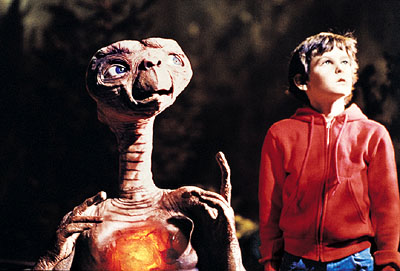
1982-E.T. the Extra-Terrestrial


One of my favorite films that I watched as a kid and seeing it recently on HD TV made it more magical than ever. It’s still Steven Spielberg’s best film.

1983-National Lampoon’s Vacation


Another film I loved to watch growing up and it’s a film that my parents also love. Plus, Chevy Chase kicked ass and he still does. Give the man a fucking comeback that lives up to his legend!

1984-Once Upon a Time in America


The only Sergio Leone film that was made while I was alive and definitely a great way to go for his last film. It’s definitely one of the best films ever made and certainly needs to be seen more.

1985-Brazil


My favorite Terry Gilliam film that definitely speaks to the dreamers all over the world. It’s funny, it’s got great sets, action sequences, and a hero to root for in Sam Lowry.

1986-Blue Velvet


One of the first David Lynch films that I had ever scene and certainly the most fucked up. If I ever find a woman who likes the same creepy shit I’m into, we’ll certainly see this and recall the awkward moment in The Squid & the Whale. I LOVE YOU, LOVE ME!!!! HE PUT HIS DISEASE IN ME!!!!

1987-Full Metal Jacket


The only Stanley Kubrick film in the list but definitely one of the best war films ever made. Not only because it has two very different stories but also how it captured the troubled idealism of a young man. Plus, it’s got some great one-liners from R. Lee Emrey.

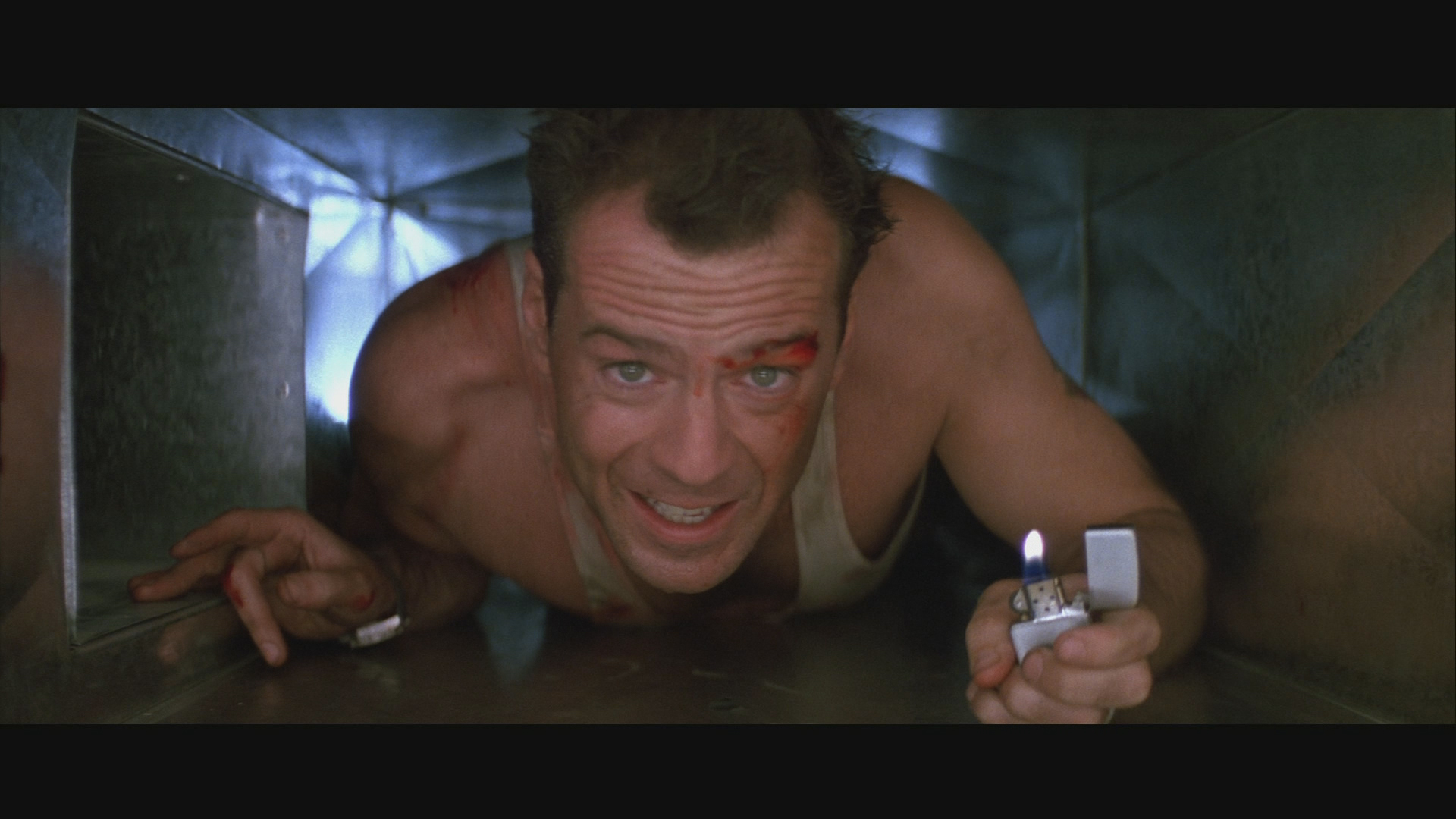
1988-Die Hard


BEST FUCKING ACTION MOVIE EVER!!!!!

1989-sex, lies, & videotape


Steven Soderbergh’s great debut film that set the new wave of indie cinema and definitely showed James Spader breaking out of the asshole roles he’s played throughout the 1980s.

1990-Goodfellas


A great movie about the mob and my third favorite Scorsese film behind Taxi Driver. It’s got a great look, a kick-ass soundtrack, a superb cast, and it’s very educational about how to make great Italian food with a razor.

1991-Barton Fink


My favorite Coen Brothers movie not only because it captures the struggle to write a screenplay but also a dazzling portrait into the world of creativity. It’s funny but also quite poignant about the world of writing.

1992-Reservoir Dogs


The first and definitely my favorite film by Quentin Tarantino. Definitely changed my life when I saw it on video. It fucked me up. What character do I want to play? Mr. Pink. “Why am I Mr. Pink? Why? Cause you’re a fag, that’s why?”

1993-Naked


One of the most brutal and ugliest films that I had ever seen. David Thewlis as a man that talks a lot while having sex with various women and going on and on about the world. Mike Leigh is definitely one of my favorite filmmakers working today.

1994-Chungking Express


My all-time favorite Wong Kar-Wai film and certainly a film I would watch over and over and over again. Not just because of a compelling yet stylish first half but an even kookier second half where I fell in love with Faye Wong. I will never hear California Dreamin’ the same way again.

1995-Safe


A film that definitely showed what an art film is and should be. It was also the first time I became aware of how a director presents a film in terms of framing and in mood. Definitely in my shortlist of the 25 best films ever made.

1996-Breaking the Waves


One of my top five favorite films ever made. Not only did it introduce me to Lars von Trier but got me reconnected in some ways with my own Catholic upbringing. It’s not an easy film to watch as I wept throughout the film while being captivated by its ending.

1997-The Fifth Element


My second favorite Luc Besson film behind Leon but definitely his most entertaining. What more could you ask for? Great visual effects, dazzling set designs, Gary Oldman chewing the scene, Bruce Willis kicking ass, Milla Jovovich looking hot, and Chris Tucker screaming like a little girl.

1998-The Thin Red Line


You need to have a Terrence Malick film in the list and fortunately, I was able to have two of his films so far released in my lifetime. Definitely the best war film ever made but also one of the most visually-spectacular films that I had ever seen.

1999-Being John Malkovich


Spike Jonze’s feature-film debut with a great screenplay by Charlie Kaufman. Who wouldn’t want to enter into the mind of John Malkovich and have sex with Catherine Keener?

2000-In the Mood for Love


My second favorite Kar-Wai film that is also the first Kar-Wai film that I had seen. Definitely a heartbreaking yet mesmerizing film filled with great visuals, a lush soundtrack, and great slow-motion shots of Maggie Cheung walking in those tight dresses.

2001-Ghost World


A film that definitely recalls my own sense of alienation with the world as a young man. Even as it felt very real how I felt about things with characters I enjoyed watching.

2002-Secretary


My second favorite film of all-time that definitely made me accept my own emotional dysfunctions. Plus, I was able to be wowed by one of my all-time favorite actresses in Maggie Gyllenhaal whom I would love to spank if she spanks me first!

2003-Lost in Translation


BEST FILM EVER MADE…

2004-Eternal Sunshine of the Spotless Mind


So far, Michel Gondry’s best film of his career and Charlie Kauffman’s best script yet. It’s original and daring. Plus, I got a kick out of seeing Kate Winslet being funny and wearing weird clothes while flashing her undies to a childlike Jim Carrey.

2005-The New World


The first Malick film that I saw at a movie theater and… whoa. It’s just indescribable as I became a full-on fan of Malick.

2006-Pan’s Labyrinth


Guillermo del Toro’s fantasy film that definitely dazzled me from start to finish. Not only was it the first film in Spanish that I saw at my local multiplex with an American audience. It was also a film that really was a mixture of art house and mainstream fantasy as it definitely proved that del Toro is one of the best filmmakers working today.

2007-I’m Not There


The second film by Todd Haynes on the list that also made me become a fan of Bob Dylan. Six people playing various personas of Dylan definitely sold me as it features one of my all-time favorite performances from Cate Blanchett as the electrified Dylan.

2008-WALL-E


My favorite film from Pixar and certainly one of my 10 favorite films ever made. To this day, I’m still stunned by the images presented in the film as well as the fact that it blended all sorts of genres into a sci-fi love story. The shot where WALL-E touches the rings of Saturn still brings a tear to my eye.

2009-Antichrist


A film that definitely channeled all of my frustrations with the world as well as being extremely confrontational and to the fucking point. Satan Bless Lars von Trier.

2010-Somewhere


Sofia Coppola has made the list again with a film that definitely showed her stripping things down to its bare essentials. It’s a very quiet yet hypnotic film that won me over.

2011-TBD


Well, it’s going to come down for me with two films. Terrence Malick’s The Tree of Life or Lars von Trier’s Melancholia. Better yet, it could be something else. We’ll just wait and see.

© thevoid99 2011

Old Joy


Originally Written and Posted at Epinions.com on 12/11/08 w/ Additional Edits.


One of American independent cinema's emerging female writer-directors, Kelly Reichardt is known for creating films set in the rural American landscape as she explored alienation in the U.S. 1994's River of Grass was a Sundance hit as well as nabbing three Independent Spirit Award nominations. 1999's short film Ode based on Herman Raucher's novel Ode to Billie Joe offered similar acclaim. After making two short films in 2001 and 2004, Reichardt returned with her third feature that would give her bigger acclaim and attention about two old friends reuniting on a weekend for a camping trip. The film is named after Jonathan Raymond's short story that Reichardt based on entitled Old Joy.

Directed and edited by Kelly Reichardt with a script written by Reichardt and Jonathan Raymond, Old Joy tells the story of two old friends reuniting for a weekend as they go camping in the mountains around Oregon. During this period, the two men deal with the changes they're facing once the weekend is over as one deals with imminent fatherhood while the other is trying to have one last adventure. An exploration of loss and alienation in the George W. Bush era, Reichardt's film is an eerie tale that is intimate in its storytelling. Starring musician Will Oldham and Daniel London. Old Joy is a poignant, intimate, and somber film from Kelly Reichardt.

Mark (Daniel London) is at home with his pregnant wife (Tanya Smith) as he gets a call from his old friend Kurt (Will Oldham). Kurt suggests that he and Mark should go camping for the weekend as Mark decides to go since he and Kurt hadn't seen each other in a long time. Taking his dog Lucy, Mark meets up with Kurt as the two drive to the Cascade Mountain range where they talk about old places they used to hang out and old friends they don't see very much. After getting some weed for the trip, the two continue to drive as they reach the Cascade Mountains. After trying to find the road to the Bagby Hot Springs near the river, they stop at a campsite where Kurt talks about his own adventures and ambitions. Mark reveals his own anxieties over his upcoming role in being a father. After finding the Bagby Hot Springs as the two and Lucy walk through the woods, Kurt tells a story as both he and Mark agree that the trip was a good escape to their own usual surroundings while pondering what's going to happen next.

The film is essentially about two old friends going on a camping trip for the weekend and trying to reconnect with one another as they face changing times and such where the trip is really an escape for them. That's practically it since director and co-screenwriter Kelly Reichardt decided to go more for minimalist storytelling instead of going for a traditional plot. Yet, the script that features not a lot of dialogue or plot-points but rather something that follows two guys going on a trip for escape. The film is driven more by improvisation to give it a more natural, realistic approach.

Reichardt's direction is definitely intimate in both its 73-minute running time and story. With numerous images of the Cascade Mountain range along with the forest, trees, and other nature images, the film is meant to reveal the natural world that the main characters are escaping to in comparison to the world and cities that are noisy and dirty. Reichardt isn't trying to make a political statement though the voices of people on Air America Radio is heard frequently to reveal the sense of alienation that is going on at the time during the country. Yet, sense of escape from the political and social climate of their surroundings bring a unique story of these two men trying to reconnect. While Reichardt also suggests some homoeroticism in Kurt's part towards Mark, it's only to reveal the intensity of this friendship as neither man hadn't seen each other in some time.

Reichardt's direction and her editing definitely works to create something that is intimate with lots of improvisation and rambling dialogue as she lets the audience see these two guys hang out and walk through the woods. On the editing, Reichardt uses jump-cuts and other transition styles to get the story flowing. What is more striking in both her editing and direction is knowing when not to cut. There's long takes in order for Reichardt to explore the conversation between Mark and Kurt as it maintains this sense of improvisational, naturalistic feel for the film. While audiences might feel that Reichardt's approach is pretentious, it's clear that Kelly Reichardt is an unlikely voice for American independent cinema by doing things unconventionally in order to tell a story.

Cinematographer Peter Sillen does brilliant work with the film's camera in creating a colorful yet natural look to many of the film's exterior forest scenes with wonderful looks of leaves and rivers. Sillen's photography is exquisite with those scenes without a lot of artificial lighting styles or flashy as he goes for realism and beauty. Sound designer Daniel Perlin along with editor Eric Offin and recordist Gabriel Fleming do great work in the film's sound to capture the atmosphere of nature as well as the noisiness of the city and roads. The music by indie band Yo La Tengo is wonderfully melodic and atmospheric with just its arpeggio-laden guitar and somber tone. The cast is filled with mostly friends and such with Tanya Smith in a very good small role as Mark's pregnant wife. Yet, it's the performances of Will Oldham and Daniel London that really shines. Oldham as the more ragged, talkative Kurt with his rambling dialogue and London as the quieter yet more serious Mark. Oldham and London have great chemistry as they bring a natural style of acting for the film.

Old Joy is truly a remarkable gem from Kelly Reichardt featuring great performances from Will Oldham and Daniel London along with Yo La Tengo's rich score. Fans of minimalist, American independent cinema will no doubt enjoy this film for its wandering style and looseness. Audiences of more mainstream films might be befuddled by its lack of plot and improvisational approach though its themes will prove to be relevant at the time when American aren't feeling great about themselves. In the end, Old Joy is a rich, intimate film from Kelly Reichardt that proves that less ideas can bring more out of a really good film.


© thevoid99 2011

Saturday, May 07, 2011

I'm a Cyborg, But That's OK


Originally Written and Posted at Epinions.com on 6/4/09.


After completing the Vengeance trilogy of Sympathy for Mr. Vengeance, Oldboy, and Sympathy for Lady Vengeance, Chan-wook Park became the leading director in South Korea. The trilogy showed an extreme, violent look into the world of vengeance as it attracted the attention of the international cinema circuit and filmmakers all over the world. Needing a break from his dark, violent films, Park decided to shift gears into something more light hearted in a romantic comedy entitled Ssaibogeujiman Gwaenchanha (I'm a Cyborg but That's OK).

Directed by Chan-wook Park with a script co-written with Seo-kyeong Jeong, Ssaibogeujiman Gwaenchanha tells the story of a young woman who lives in a mental institution as she believes she is a cyborg. At the hospital, she befriends a young schizophrenic, anti-social young man as they team up in hopes to escape the hospital while she wants to take revenge on the people who hospitalized her mentally-ill grandmother. A change of pace for Park, the film shows Park taking on new risks as he delves into a genre that he's not known for. Starring Im Su-jeong, Rain, Choi Hie-jin, Lee Yong-nyeo, Yu Ho-jeong, and Kim Byeong-ok. Ssaibogeujiman Gwaenchanha is a weird, enchanting, and visually-striking film from Chan-wook Park.

Cha Young-goon (Im Su-jeong) believes that she is a cyborg where an incident involving a moment where she cuts her wrists and put wires into her veins. After plugging the electronic wires in, she is taken to a mental hospital by her mother (Lee Yong-nyeo). Rarely talking to anyone except a vending machine and lights in the ceiling, Young-goon also refuses to eat as a fat patient would often eat her lunch. At the same hospital is an anti-social, schizophrenic young man named Park Il-sun (Rain) who likes to steal things and where masks. Convinced he can take souls from other people, he pretends to be other people including walking backwards, scratching his own butt, and other things. Yet, he remains haunted by the abandonment of his mother (Yu Ho-jeong) whose picture he carries.

When Young-goon notices Il-sun's antics, she hopes to have her soul taken from Il-sun but it doesn't work when he stole her grandmother's dentures to the point that she attacks him during a group therapy session. Yet, it became clear that Young-goon is becoming ill as she has fantasies of killing the hospital staff for taking away her mentally-ill grandmother. With help from Il-sun's stealing tactics to take away things from other people's bodies, she believes she has no sympathy. Yet, her condition deteriorates as she refuses to eat. With Il-sun becoming more troubled wearing masks and believes he is shrinking into a dot. With Young-goon's health failing, it's Il-sun and fellow patients that decide to help her out. Il-sun's determination along with Young-goon to confront her grandmother's illness as well as who she is.

The film is essentially a love story between two mentally-damaged individuals who both hide through masks or the belief that they're something else. What Chan-wook Park and co-writer Seo-kyeong Jeong create is simply a film that is definitely unconventional and whimsical. At the same time, they explore the psychological state of mind in both the characters of Young-goon and Il-sun. Young-goon is obviously damaged by her overbearing mother as well as a close connection to her own grandmother. Il-sun remains haunted by his own mother's abandonment where he seems to can't let go of things that forces him to believe he can take people's souls. The film's plot is simple but the approach in the story and direction is anything but.

Instead, Park goes for something that is very weird where it's a mixture of French New Wave in terms of voice-over narrations, the whimsical nature of films like Jean-Pierre Jeunet and Michel Gondry, and some of the fantasy-driven violence of Stanley Kubrick. While the film does start out slow in its first act involving doctors and such, it gets moving once the Young-goon and Il-sun character starts to interact each other. Thus, the film becomes this weird, dreamy, quirky kind of romantic comedy which includes a violent sequence where Young-goon shoots bullets from her fingers and ammunition coming out of her mouth. Park's striking compositions and staging in its presentation really shows a director trying new tricks and such. Even in some of the visual effects driven shots that are definitely pure fantasy as the film is a mixture of both fantasy and reality. While it may not have the sheer, visual arresting images or sharp camera work of his Vengeance trilogy. Park creates a film that is still exciting and entertaining to watch.

Cinematographer Chung-hoon Chung creates some amazing shots that is filled with bright colors from the interiors of the hospital in its whiteness to the colorful, dream-like shots of the fantasy sequences in the grass and landscapes. Chung's work is definitely striking from the sepia-awash shots of the boiler room scenes with dark, yellowish colors as it plays to a creepy yet entrancing look for the film. Editors Jae-beom Kim and Sang-beom Kim do some fine work with the editing despite a sluggish start in the first half. Filled with jump-cuts, dissolves, split-screen shots, and fade-outs, it's filled with lots of style while moves at a energetic pace for the film's second and third act.

Visual effects supervisor Jeon-hyeong Lee does some amazing work with the visual effects filled with things like a look into Young-goon's so-called robotic body, the fantasy sequences, and even the scenes where Young-goon becomes a violent cyborg. Music composer Yeong-wook Jo does great work with the film's orchestral-driven music that range from suspenseful to whimsical in its scenes. Filled with an array of arrangements that is playful but also dark, it's score is truly one of the film's technical highlights.

The cast is truly phenomenal with several memorable characters that are in the film whether it's a man walking backwards who often apologizes for things he believes he did wrong, a fat woman who likes to eat people's food and wear unmatched socks, a young woman who likes to look in the mirror and sing songs, and a man who is obsessed with winning a ping-pong match. Small roles from Byeong-ok Kim as a judge who sentenced Il-sun to a hospital, Dal-su Oh as a doctor in the film's early scenes, and Hie-jin Choi as a more sympathetic doctor are memorable. Even the small roles of Ho-jeong Yu and Young-nyeo Lee as the respective mothers of Il-sun and Young-goon are memorable though Yu is only shown as a picture.

In his acting debut, Korean pop singer Rain gives a phenomenal performance as a young man who likes to wear masks, win at ping-pong games, and steal the soul of his fellow friends at the hospital. Rain's performance is truly marvelous as he shows a great physicality in movement while proving to be a real solid actor when not speaking and such. One would think a pop star wouldn't give a performance like this but Rain, like a few notable pop artists, manages to make an impression. Even more so than his small role in the Wachowski brothers film version of Speed Racer. Im Su-jeong is great as Young-goon, a young woman who believes she's a cyborg as she has a quirkiness and charm that is intoxicating to watch. When her character deteriorates and we see the dark things about her, it's a performance that is truly mesmerizing. Su-jeong and Rain both have great chemistry as they really shine in their performances together.

When the film was released in late December 2006, it was filled with lots of anticipation considering the attention Park received for his Vengeance trilogy. The reaction however, was mixed as box office performances were disappointing in comparison to his films from the trilogy. While it would win an award at the Berlin Film Festival months later as well as some praise for Rain's performance. It didn't get the attention that his Vengeance trilogy received while not achieving a theatrical release in the U.S. despite Park's cult following in the country.

While it may not have the brilliant technical work or intense storylines of his Vengeance trilogy, Ssaibogeujiman Gwaenchanha is still an excellent film from Chan-wook Park. Thanks to the performances of Im Su-jeong and Rain, it's a film that fans of films by Michel Gondry or Jean-Pierre Jeunet's Amelie can enjoy for its quirkiness. Fans of Park will be glad to see the director doing something different while showing a side of himself that is truly offbeat. In the end, though it's not one of Park's great films, Ssaibogeujiman Gwaenchanha is still a whimsical, entertaining romantic-comedy from Chan-wook Park.

Chan-wook Park Films: (The Moon Is... The Sun's Dream) - (Trio) - Judgement (1999 short film) - JSA: Joint Security Area - Sympathy for Mr. Vengeance - (If You Were Me-Never Ending Peace and Love) - Oldboy - Three... Extremes-Cut - Sympathy for Lady Vengeance - Thirst - (Night Fishing) - Stoker - The Handmaiden - (The Little Drummer Girl (2018 TV series)) - Decision to Leave

© thevoid99 2011

Sympathy for Lady Vengeance


Originally Written and Posted at Epinions.com on 10/23/08.


After the release of 2003's Oldboy, the film became a huge, international success as director Chan-wook Park had caught the attention of the cinematic elite. While winning the Grand Jury Prize at the 2004 Cannes Film Festival, American film director Quentin Tarantino revealed that he wanted Oldboy to win the Palme D'or that year though he and his fellow jurors at the festival ended up giving the award to Michael Moore's Fahrenheit 9/11. Oldboy was also part of a trilogy focusing on the theme of vengeance as it was preceded by Sympathy for Mr. Vengeance back in 2002. Park went back to his trilogy to conclude as his focus shifts towards a different kind of protagonist than his previous films as he switches genders from male to female. For the third and final part of trilogy, Park tells the story of a woman seeking vengeance for a crime she didn't commit entitled Chinjeolhan geumjassi (Sympathy for Lady Vengeance).

Directed by Chan-wook Park with a script co-written with Seo-Gyeong Jeong, Chinjeolhan geumjassi tells the story of a woman who had been released in prison after serving thirteen-and-a-half years for the kidnapping and murder of a young boy. Hoping to reunite with her daughter and seek a new life, the woman's taste for vengeance is huge as she hopes to find the real culprit behind the crime she didn't commit. Starring Lee Young Ae, Choi Min-sik, and Kwon Yea-young. Chinjeolhan geumjassi is a brilliant, haunting, and complex film from Chan-wook Park.

For thirteen-and-a-half years, Lee Guem-ja (Lee Young Ae) has just been released from prison for serving time for the kidnapping and murder of a young boy. Arriving out of the prison, she meets a Christian group led by a priest (Kim Byeong-ok) who believes she has reformed only to be told to go screw himself. Lee returns to Seoul where she stays with an old friend and fellow convict in Kim Yang-hee (Seo Yeong-ju). Kim recalls that Lee was an angel of sorts at the prison where her beauty and innocence captivated her fellow prisoners as she even thwarted a bully prisoner they called "the Witch" (Su-hee Go). Kim along with another convict helps Lee plan her revenge on the man that she went to prison for named Mr. Baek (Choi Min-sik). Lee's generosity in beating a bullying prisoner, saving other prisoners by giving one of them a kidney, and such has made her fellow prisoner friends to return a favor.

Working at a bakery with a young man named Guen-shik (Kim Shi-hu), Lee has an encounter with Detective Choi (Nam Il-wu). Choi recalls that Lee's false confession was only done because she wanted to protect her newborn baby from the real kidnapper, Mr. Baek. Her baby named Jenny (Kwon Yea-young), is now 13 and lives in Australia with adoptive parents (Tony Barry & Anne Cordiner). Jenny doesn't speak much Korean as Lee tries to connect with her daughter as they return to Seoul where Lee gets contact with a former convict named Park Yi-jeong (Lee Seung-Shin), who is the wife of Mr. Baek. Yet, Mr. Baek receives information of Lee's plans from the priest as he hires thugs to stop.

Instead, the plan backfires when his wife drugs his dinner as Lee confronts the man who took thirteen-and-a-half years of her life. During this confrontation, she learns a horrifying discovery that his murder of the boy wasn't just some one-time incident. With help from Detective Choi, she uncovers something even worse. The discovery forces Lee to realize that justice for herself isn't enough as it involves many other people who help her decide about their own thirst for justice.

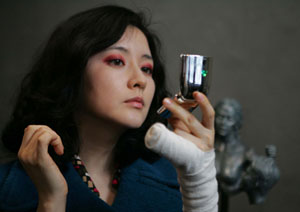
What sets this film apart from its predecessors in the Vengeance Trilogy isn't just the fact that it's led by a female protagonist nor the film is about justice over something done wrong. The film is more about a woman who was known for her purity as she changes into an avenging angel with red eye shadow and wearing red high heels. What it's really about is a woman trying to take back the years that she lost as well as avenging the death of a boy she didn't kill yet was part of the crime for getting involved with Mr. Baek. Yet she's ravaged with guilt for making this happen where in one scene, she cuts off one of her fingers as punishment over the death of this boy. The guilt isn't just over the boy's death but the fact that she never got to know her daughter just after she was born.

Lee's guilt over the boy's death and the years loss in not knowing her daughter is what drives Lee's thirst for revenge against Mr. Baek. Yet, what is revealed in the third about Mr. Baek through a simple object is more shocking. Yet, it begins to raise more question about a man's crime as if Park asks a question to his audience. What would you do if you just learned that some man killed your child and what would you do to that person? Park's script raises that question while its aftermath reveals something that is spiritual as well as comforting where Lee begins to wonder her own new chapter in her life.

Park's direction is as potent as it was in his previous film where he takes on more stylistic choices as well as compositions. While his approach to violence is still extreme and not for the faint of heart, he takes on a more cinematic approach to the film. With uses of stylish editing, grainy camera footage, and gorgeous compositions. Park's directing shows him getting more confident in his choices while creating moments of suspense and elements of fantasy for comical and dramatic reasons. Yet, Park's emphasis to tell a story comes first rather than going for style as he raises more question about vengeance and justice while revealing the outcome of what happens. The result is Chan-wook Park reaching out to new maturity in his direction and his work as a storyteller.

Cinematographer Jeong-hun Jeong creates amazing lighting set-ups for the film's nighttime, exterior scenes. Notably the scene where two hired thugs try to jump Lee and Jenny. Other exterior shots like the yellowish, sunny Australia sequence as well as the Korean snow scenes are wonderfully exquisite. The interior sequences, notably in the film's final act, is wonderfully lit to convey a mood and style that plays true with the film in its current tone. Editors Jae-beom Kim and Sang-Beom Kim do great work with the use of jump-cuts, split screens, smooth transitions, and other styles of edits to create a film that keeps on bringing surprises with its cuts. The pacing is a bit slow yet works to convey the build-up of what's to come as it works in order to tell the story.

Production designer Hwa-seong Jo along with set decorator In-ho Oh and art directors Hyeon-Seok Choi and Ji-hyeong Han do great work in the look of the apartment that Lee stays along with her bakery and the place where she imprisons Mr. Baek. Costume designer Sang-gyeong Jo does amazing work in the look of Lee's clothing from her light-colored prison garb that she wears to the black coats and red heels that she wears on her quest for vengeance. Sound designers Chang-seop Kim, Seok-weon Kim, and Seung-cheol Lee do great work in the film's sound with the use of gunshots, objects, and other things to help convey the surrounding atmosphere Lee is in. Visual effects supervisor Jeon-hyeong Lee does excellent work in the film's visual work including some fantasy sequences involving the snow and such. Music composers Seung-hyun Choi, Yeong-wook Jo, and Seok-joo Na do great work with the film's score filled with sweeping and somber orchestral arrangements to convey the moods of Lee and her quest.

The film's cast is truly superb with small appearances from actors from the previous parts of Park's Vengeance trilogy like Hye-jeong Kang of Oldboy as a TV announcer and as the role of Baek's hired thugs, Kang-ho Song and Ha-kyun Shin from Sympathy for Mr. Vengeance. Other small roles like Su-hee Go as the Witch, Seo Yeong-ju and Kim Bu-seon as two of Lee's former prison mates are great while Lee Seung-Shin is also great as a fellow prisoner who turns out to be Baek's wife. Tony Barry and Anne Cordiner are fine as Jenny's adoptive parents who turn out to be good people while Kim Byeong-ok is devilishly good as the eccentric priest who spies on Lee. Kim Shi-hu is very good as Lee's co-worker at the bakery whom she has a brief affair with while Nam Il-wu is brilliant as Detective Choi who decides to help out Lee in her investigation over the crime she didn't commit.

Kwon Yea-young is wonderful as Jenny, the young girl who just realized that she has a mother while wondering why Lee was never there for her. Kwon's sense of innocence is matched with Lee Young Ae's subtle performance as it adds a touch of hope to the film. Choi Min-sik of Oldboy is brilliant as the evil Mr. Baek, a man who doesn't have the look of a criminal but his actions make him more intriguing. Min-sik's performance is great for his subtlety where he seems to act and look normal until he's captured where he seems on the brink of losing it. The film's best performance is easily Lee Young Ae as Lee Guem-ja. Young Ae's performance is wonderfully harrowing with dabbles of humor as it's mostly dramatic. Yet, it's filled with regret and tension as Young Ae sells the despair of her character with such grace and beauty as it's truly a one of a kind performance.

While not as good as Oldboy, Chinjeolhan geumjassi is still a brilliant film from Chan-wook Park thanks to Lee Young Ae's amazing performance. While it's more accessible than Oldboy in some respects along with some strong themes, this film proves that Chan-wook Park is one of South Korea's great up-and-coming directors to break out internationally. While the violence may not be for everyone, it's definitely a film that anyone can relate to in what Park sets up. Overall as a trilogy, it's one of the most fascinating film trilogies ever created. In the end, Chinjeolhan geumjassi is a powerful film and a fitting end to the Vengeance trilogy from Chan-wook Park.

Chan-wook Park Films: (The Moon Is... The Sun's Dream) - (Trio) - Judgement (1999 short film) - JSA: Joint Security Area - Sympathy for Mr. Vengeance - (If You Were Me-Never Ending Peace and Love) - Oldboy - Three... Extremes-Cut - I'm a Cyborg but That's OK - Thirst - (Night Fishing) - Stoker - The Handmaiden - (The Little Drummer Girl (2018 TV series)) - Decision to Leave

© thevoid99 2011