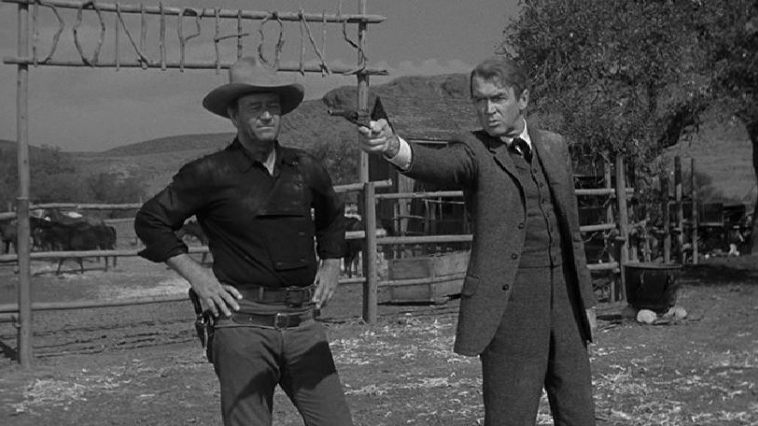
Set in the span of 12 hours in 1922 during the Irish War of Independence, the film follows a disgraced IRA officer who decides to inform on his best friend to the British in the hopes he can use the reward to take himself and his girlfriend to America only for the IRA to become suspicious over what had happened. It is a film that explores a man’s decision to inform his friend to the British so he can take his girlfriend to America where he would spend the reward money getting drunk and lavish his spendings on the people who are unaware of how he got the money. Dudley Nichols’ screenplay is straightforward in its narrative as it follows Gypo Nolan (Victor McLaglen) who had just been ousted by the IRA for refusing to kill a British soldier as his girlfriend Katie (Margot Grahame) is hoping to go to America but a ticket for both costs 20 pounds.
Seeing a bounty for his friend Frankie McPhillip (Wallace Ford) for 20 pounds, Nolan rats out to the British army where they succeed in finding him as Nolan gets his reward where he would spend the rest of the night spending his money on getting drunk and entertaining the locals while IRA leader Dan Gallagher (Preston Foster) wants to know what happened to McPhillip where he asks Nolan only to later suspect Nolan. Even as the night becomes more chaotic when Gallagher realizes something is up, he is also personally involved since he is in a relationship with McPhillip’s sister (Heather Angel).
John Ford’s direction is atmospheric for the overall setting of the film as it is shot at the RKO Studios lot in Hollywood which plays as this small Irish town at night filled with fog and light. While there are some wide shots to establish the locations, much of Ford’s direction emphasizes on medium shots and close-ups with the latter playing into some of the emotional reactions that Nolan is dealing with. Even as he would get drunk throughout where the medium and wide shots have Ford highlight the space of a room or a pub where Nolan is the center of attention. Ford also maintains this air of intrigue as it relates to what Nolan has done and how it would affect the IRA, with Gallagher being a commandant who runs a local faction of the IRA as he is also a friend of McPhillip. Even as there are scenes of IRA members carrying pistols but also having to hide from the British soldiers who would often march in the streets as it adds to the sense of danger that is happening in Ireland at that time.
Ford also plays into this exploration of guilt in Nolan where he would hide his shame through drink and partying where he would even crash into a high-society party where he buys drinks a British woman for Kate. It is one of the few moments of humor that occurs in the film that involves Nolan and a friend of his in Terry (J.M. Kerrigan) though the film would remain serious and intense during its third act when a kangaroo court occurs where Nolan tries to accuse someone of being the informer. Ford would maintain this sense of dread while its climax is about Gallagher realizing the truth and what is at stake with Nolan’s act of selfishness would also come into play once Katie finds out what he did. Overall, Ford crafts a thrilling and compelling film about a man who informed on his friend during the Irish War of Independence.
Cinematographer Joseph H. August does incredible work with the film’s black-and-white photography with its usage of fog and shadow to help maintain a chilling atmosphere for the exteriors while using low-key lights for some interior scenes at the homes for a few characters. Editor George Hively does excellent work with the editing as it features some rhythmic cuts to play into the drama and suspense while most of it is straightforward. Art director Van Nest Polglase and set decorator Julia Heron do brilliant work with the look of the interior of the pubs as well as the secret places where IRA hold their meetings and the exterior of some of the buildings that Nolan goes into. Costume designer Walter Plunkett does terrific work with the costumes with some of the posh clothing the women wear along with more rugged look of the men including lots of trench coats the IRA wears.
Makeup artist Robert J. Schiffer does nice work with the makeup in the look of the women at the posh party scene. The special effects work of Harry Redmond Sr. and Harry Redmond Jr. is fantastic for some of the scenes involving gunplay as it plays into the chaos and conflict between the IRA and the British. The sound work of Hugh McDowell Jr. and Robert Wise is superb for the sound in the way a fight would sound in and out of a pub as well as the chaos that goes on in the pub and in the streets. The film’s music by Max Steiner is wonderful for its sweeping orchestral score that features elements of Irish woodwinds and melodies that play into the land of Ireland along with layers of drum cadences and soaring strings as well as a soundtrack that is filled with traditional Irish folk songs as the music is a highlight of the film.
The film’s remarkable cast feature some notable small roles and appearances from Dennis O’Dea as the street singer, Grizelda Harvey as the English lady living in a posh house who looks like Katie, May Boley as the owner of the posh house in Madame Betty, D’Arcy Corrigan as a blind man who was given a one-pound note from Nolan, Francis Ford as a judge in the kangaroo court, Joseph Sauers and Neil Fitzgerald as a couple of IRA officers respectively in Bartly Mulholland and Tommy Connor with the former being suspicious of Nolan, and Donald Meek as the local tailor Peter Mulligan whom Nolan accuses of being the informer. Una O’Connor is fantastic in her small role as McPhillips’ mother who is shocked over what has happened while J.M. Kerrigan is superb as Terry as a friend of Nolan who helps him spend the money and party where he unfortunately enables his actions. Wallace Ford is excellent as Frankie McPhillip as an IRA officer who was Nolan’s best friend as well as a target for the British for killing a British soldier where he hopes to see his mother and sister while still doing things for the IRA.
Margot Grahame is brilliant as Katie Madden as Nolan’s girlfriend who hopes to go to America as she becomes surprised by the idea becoming a reality until she learns about what Nolan did to get the money. Preston Foster is amazing as Dan Gallagher as an IRA commander who runs his own local faction where he becomes suspicious on what happened to McPhillip as he is also in love with McPhillip’s sister where he becomes suspicious towards Nolan as he knows that Nolan has become a liability to the IRA. Heather Angel is incredible as McPhillip’s sister Mary who is troubled by what had happened as well as becoming tired of the violence as she hopes Gallagher would smooth things out only to realize that Nolan is the one that has been making a mess. Finally, there’s Victor McLaglen in a phenomenal performance as Gypo Nolan as a former IRA officer who had been ousted for letting go a British soldier as he decides to rat out McPhillip to the British for money where he tries to not feel guilty by imagining him and Katie going to America as well as drinking a lot and accusing someone else as it is this chilling performance that requires a lot of physicality as it is one of McLaglen’s finest performances.
The Informer is an incredible film from John Ford that features a tremendous leading performance from Victor McLaglen. Along with its ensemble cast, intoxicating visuals, Max Steiner’s riveting music score, and a compelling story of guilt and greed during the Irish War of Independence. It is a suspense drama that explores a man’s willingness to get something good going in his life only to do something awful as it would cost him everything as well as the plight of the people who know him. In the end, The Informer is a phenomenal film from John Ford.
© thevoid99 2024
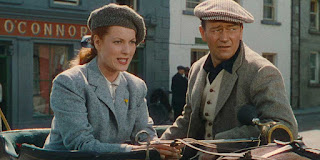
The film follows a former boxer who has returned from Pittsburgh to a small Irish village to purchase his old family cottage as he gets the ire of his neighbor who wanted the land as the tension worsens when the boxer falls for his neighbor’s sister. It is a film that plays into this man who has chosen to leave behind the world of boxing but also wanting to return home to his old family cottage in order to restore the family’s legacy while falling for this woman whose brother has immense hatred for. Frank S. Nugent’s screenplay, with un-credited contributions by John Ford, is largely straightforward as it is told mainly from the perspective of Father Lonergan (Ward Bond) who narrates the story as it opens with the arrival of Sean Thornton (John Wayne) who goes to the village of Inisfree with a lot of money in wanting to buy the cottage that his family used to live in when he was a child. Upon his arrival, Thornton gets a glimpse of a fiery redhead in Mary Kate Danaher (Maureen O’Hara) whom he tries to court only to realize her older brother is Squire “Red” Will Danaher (Victor McLaglen) who is upset that Thornton purchased the cottage and land from the rich widow Sarah Tillane (Mildred Natwick) who accepted Thornton’s offer.
Though Red refuses to have his sister wanting to do with Thornton despite the town’s embracement of him due to his family history. Mary Kate does fall for Thornton as many of its locals including Father Lonergan, the matchmaker/bookmaker Michaeleen `Oge Flynn (Barry Fitzgerald), the Protestant Reverend Cyril Playfair (Arthur Shields) and his wife Elizabeth (Eileen Crowe) decide to create a little lie that would get Red to allow his sister to marry Thornton. Yet, things eventually get complicated making things for Thornton and Mary Kate troubling with the former also carrying the guilt into why he ended his boxing career as he is unwilling to get physical with Red. Even as the latter has a dowry that she had worked for and wants as Thornton is unsure in how to get it without getting physical as he is afraid of what he might do.
John Ford’s direction is definitely full of richness in its imagery as many of its exterior locations were shot on location in the Ireland counties of Mayo and Galway with the interior locations shot at the Republic Studios backlot. Ford’s usage of the wide shots definitely add to the beauty of the locations with so much attention to detail of the hills and mountains in the background as well as the fields and grass in the foreground. It plays into the vastness of the village while Ford also employs a lot of close-ups and medium shots for the scenes at the cottage and at the pub where the characters go to. Even as it play into the drama such as the scene where Red meets Thornton for the first time at Tillane’s home where Ford definitely showcases the tension that looms throughout the film while also infusing bits of comedy when Flynn is asked to watch over Thornton and Mary Kate as their courtship begins.
Ford’s direction also plays into the difference between American and Irish customs as it is something Thornton has trouble with when it concerns the latter as well as his own confusion about Mary Kate’s dowry. It is a moment where Ford definitely shifts from the male perspective of things to Mary Kate’s own perspective of pride as she is someone who has to tend to her brother and his mates yet has worked hard to make something for herself. While Thornton has everything he can get her, the dowry isn’t something that Mary Kate needs as Thornton would eventually understand as Ford does create some unique shots as it plays into Thornton’s own fear about his past and what he’s afraid he might do. Yet, it all comes down to this climatic moment that is all about Thornton needing to prove how much he loves Mary Kate and what he must do for her. Overall, Ford crafts a riveting and evocative film about an Irish-born American ex-boxer trying to get the approval of his neighbor so he can marry that man’s sister.
Cinematographer Winton C. Hoch does brilliant work with the film’s Technicolor cinematography as it captures the lushness of the locations along with some low-key lighting for some of the interior/exterior scenes at night as it is a highlight of the film. Editor Jack Murray does excellent work with the editing as it has some unique rhythmic cuts to play into the drama and action along with a few transitional dissolves. Art director Frank Hotaling, with set decorators John McCarthy Jr. and Charles S. Thompson, does amazing work with the look of the interiors of the cottage that Thornton used to live in as a child as well as the home of Danaher. Costume designer Adele Palmer does fantastic work with the costumes from the look of the dresses that Mary Kate wears as well as some of the fine suits and casual clothing that Thornton wears.
The special effects by Howard and Theodore Lydecker are terrific for its usage of a few of the film’s minimal effects such as some of the medium shots of the characters on a carriage with rear projection footage in the background. The sound work of Daniel J. Bloomberg, T.A. Carman, David H. Moriarty, W.O. Watson, and Howard Wilson is superb for capturing the sounds of the crowd during some big events including the film’s climax along with the sound of music that is played on location. The film’s music by Victor Young is incredible for its luscious score that mixes orchestral string arrangements with traditional Irish folk as it is a major highlight of the film that include traditional songs that play into the atmosphere of the film.
The film’s wonderful ensemble cast as it feature some notable small roles from Jack MacGowran as Red’s assistant Ignatius Feeney, May Craig as a woman with a fish basket at the train station, Paddy O’Donnell as a railway porter, Eric Gorman as a train engine driver, Kevin Lawless as a train engineer fireman, Joseph O’Dea as a train guard, Sean McClory and Charles FitzSimons in their respective roles as the locals Owen Glynn and Hugh Forbes who are skeptical towards Thornton at first only to accept him due to his family heritage, and James Fitzsimons as a young pastor in Father Paul who would inform Father Lonergan about the events in the film’s climax. Arthur Shields and Eileen Crowe are superb in their respective roles as the Reverend Cyril and Elizabeth Playfair as a couple who help in creating a courtship for Thornton and Mary Kate with the former knowing Thornton under another name as a boxer. Francis Ford is terrific as an elderly villager in Dan Tobin who knows about the Thornton family as well as being supportive of him.
Mildred Natwick is fantastic as the widow Sarah Tillane as a rich woman who owned the land and cottage that used to be Thornton’s home as she accept Thornton’s offer against Red’s offer believing he will do more for the community. Ward Bond is excellent as Father Peter Lonergan as the film’s narrator who is among those who immediately accepts Thornton while also giving Mary Kate some guidance as he brings some humor including his quest to catch a large salmon. Barry Fitzgerald is brilliant as Michaeleen `Oge Flynn as a matchmaker/bookmaker who is the first to befriend Thornton as he is aware of Thornton’s family as he does what he can to guide Thornton about the Irish customs as well as courting Thornton to Mary Kate. Victor McLaglen is amazing as Squire “Red” Will Danaher as Mary Kate’s older brother who is upset at Thornton in buying the land and cottage that he hoped to get while also doing what he can to not approve the courtship between Thornton and his sister in an act of pride and arrogance.
Finally, there’s the duo of John Wayne and Maureen O’Hara in tremendous leading performance in their respective roles as Sean Thornton and Mary Kate Danaher. O’Hara’s performance is full of radiance and energy as a woman who is independent and prefers to do things her way despite having to care for her brother while also trying to save up money for her own dowry. Wayne’s performance is surprisingly tender as well as witty as a man who just wants to return to his roots as well as wanting something simple as a way to hide from the guilt he is carrying from his time in Pittsburgh. Wayne and O’Hara together just have immense chemistry in the way they deal with each other but also try to be respectful towards another as they are a major highlight of the film.
The Quiet Man is a sensational film from John Ford that features great leading performances from John Wayne and Maureen O’Hara. Along with its incredible ensemble supporting cast, gorgeous cinematography, beautiful locations, its exploration of pride and guilt, and Victor Young’s enchanting music score. It is a film that isn’t just this exhilarating and intoxicating romantic film but also an exploration of two people wanting to create a life for themselves despite the ire of a man who is full of pride because he couldn’t get what he wants. In the end, The Quiet Man is a phenomenal film from John Ford.
© thevoid99 2023
Based on the novel by John Steinbeck, The Grapes of Wrath is the story of a family who deal with the loss of their farm during the Great Depression as they move to California to become migrant workers as they deal with the new reality of their lives. Directed by John Ford and screenplay by Nunnally Johnson, the film is an exploration of a family dealing with a loss that is bigger than themselves as they struggle to adapt to their new reality as they also learn they’re not alone in what had been lost. Starring Henry Fonda, Jane Darwell, John Carradine, Dorris Bowdon, John Qualen, and Eddie Quillan. The Grapes of Wrath is a haunting yet majestic film from John Ford.
The film revolves around a farming family who had lost their land due to the circumstances of the Great Depression as they move from their home in Oklahoma to California to become migrant workers as they deal with not just the harsh reality of their situation but also the fact in how mistreated they are as well as many others who are going through similar situations. It’s a film that follows this family as they deal with not just losing their land that they lived for many years but also trying to start a new life that has little to offer as they’re forced to go on the road. Nunnally Johnson’s screenplay is largely straightforward as it is told largely through the perspective of Tom Joad (Henry Fonda) as a man who had just been paroled from prison after a four-year stint for killing a man in a fight as he returns to his family home to realize it had been abandoned with his parents living at his uncle’s home with the rest of the family. The first act is about the Joad family and Tom’s discovery of what is happening as old family friend Muley Graves (John Qualen) reveals what happened to him as his family had already left for California and why the Joad family has decided to move to California.
The trip from Oklahoma to California would be one of loss, revelation, and adversity as the Joad family would also learn that a lot of people as far as Arkansas have been making the journey to California and have suffered the same trials and tribulations the Joad had endured. Joining the Joad in this road trip is the former preacher Jim Casy (John Carradine) who would have his own revelations of his own in what he sees as it relates to the injustices migrant workers have to face such as wages being decreased and not having a lot of say in what they can do. There are also these moments where there are characters who have to do things they’re not proud of for money as it play into Tom’s own awareness of what is happening as he would go into his own revelations in the film’s third act upon the moment he and his family would go to work camps as it is more about the quality of life and the needs of those who want to work and have a good life.
John Ford’s direction doesn’t aim for anything glossy nor wanting to romanticize the period of the Great Depression as he just goes full-tilt into the harshness of the Dust Bowl and life in the American Midwest and in California during these tough times. Shot on various locations in Oklahoma, New Mexico, Arizona, and California and on the legendary Route 66 which is a major character in the film. Ford uses the wide shots to get a scope of these locations but also in this idea that California is this land of promise though Grandma Joad (Zeffie Tilbury) has a different opinion. Ford also play into this optimism that is carried in the film but it does get replaced with an air of cynicism until he finds a balance between the two as it would play into Tom’s development. Even as he is someone that already has a criminal record and can be short-tempered who is trying to maintain control but starts to seethe in rage over the injustices that is happening around him.
Ford’s usage of the medium shots and close-ups also play into a lot of the drama including a conversation with a former migrant worker who left California as he reveals what the Joads would face as the reality of their surroundings and these camps are in terrible condition. Ford would often have scenes on the road as well as a shot of the Joads driving through these camps as it has this stark tone that feels real as opposed to something extravagant that would expected in a Hollywood film. The direction also has Ford play into this idea of communism but it’s only briefly hinted as it is more about Tom and what he sees as well as the need for not wanting any more trouble. Still, he can’t un-see all of the injustice he suffers as the film does have bleak elements but Ford provides these touching moments that are defiant in the human spirit. Overall, Ford crafts a visceral yet rapturous film about a farming family moving to California to find a new life during the Great Depression.
Cinematographer Greg Toland does incredible work with the film’s black-and-white photography as it play into this stark naturalism of some of the scenes in the camps as well as its usage of available and low-key light as well as shadows for some of the interior/exterior scenes set at night as it is a major highlight of the film. Editor Robert L. Simpson does amazing work with the editing as it is largely straightforward yet it allows shots to play into some of the drama and suspense while maintaining a rhythm to help heighten up some intense moments. Art directors Richard Day and Mark-Lee Kirk, with set decorator Thomas Little, do brilliant work with the look of the camps as well as the homes of the Joad as well as the agriculture camp in the third act
Costume designer Gwen Wakeling does fantastic work with the costumes as it play into the ragged look of the characters as well as a refined look for some of the people in authority. The sound work of Roger Heman Sr., Edmund H. Hansen, and George Leverett do superb work with the sound as it play into the atmosphere of the locations as well as sounds of trains and gunfire as it help play into the suspense. The film’s music by Alfred Newman is terrific for its usage of folk-inspired instruments as much of the score is based on the traditional song Red River Valley with the accordion and harmonium as the basis for the score while its music soundtrack largely consists of folk songs of the time with consultation from the folk music legend Woody Guthrie.
The film’s wonderful ensemble cast as it feature some notable small roles from Ward Bond as a policeman, Selmer Jackson as an inspection officer, Joseph Sawyer as a ranch foreman, John Arledge as a young man who drives a caterpillar tractor to destroy Graves’ home because he needs the money, Daryl Hickman and Shirley Mills in their respective roles as the young Joad children in Winfield and Ruthie, Frank Darien as Uncle John Joad, Frank Sully as John’s son Noah, Zeffie Tilbury and Charley Grapewin in their respective roles as Grandma and Grandpa Joad, Eddie Quillan as Rose’s husband Connie, and O.Z. Whitehead as Tom’s younger brother Al. John Qualen is superb as family neighbor Muley Graves as a man who had lost his home and had been hiding at the old Joad home as he deals with what he lost and why he has no interest in going to California. Russell Simpson is superb as Pa Joad as a man who is filled with hope and optimism about going to California as he is forced to deal with reality while trying to maintain some hope for everyone else in the family.
Dorris Bowdon is fantastic as Rose of Sharon as Tom’s cousin who is hoping to start a new life as she struggles with her pregnancy but also hopelessness. John Carradine is brilliant as Jim Casy as a former preacher who joins the Joads on the road as he does what he can to help them while also coming to terms with the many injustices he sees in his journey. Jane Darwell is phenomenal as Ma Joad as Tom’s mother who tries to comprehend everything that is happening around her while being this glue to the family as well as a moral compass as there’s a radiance to her performance that includes the film’s final monologue as it just this touching yet powerful moment in the film. Finally, there’s Henry Fonda in a tremendous performance as Tom Joad as a man who had just been paroled as he tries to stay away from trouble as well as help his family any way he can while dealing with a lot of the prejudice and injustice that he sees as he feels compelled to wanting to do something not for himself but for those who are suffering as it is an iconic performance from Fonda.
The Grapes of Wrath is a magnificent film from John Ford that features great performances from Henry Fonda, Jane Darwell, and John Carradine. Along with its supporting ensemble cast, Greg Toland’s ravishing cinematography, emphasis on realism, and its study of inhumanity during the Great Depression. It is a film that explore a period in time when people are trying to find work and survive only to realize that they’re not alone in this endless cycle of movement and having to find work while realizing that they have the power to make their own decisions during those dark times. In the end, The Grapes of Wrath is an outstanding film by John Ford.
© thevoid99 2020
Directed by John Ford and written by Lamar Trotti, Young Mr. Lincoln is the story about the early life of Abraham Lincoln where he is a lawyer dealing with a murder case as it would define his character and what he would do later on. The film is a look into the life of the man who would later become one of the American Presidents as he is played by Henry Fonda in the first of many collaborations with Ford. Also starring Alice Brady, Marjorie Weaver, Arleen Whelan, Eddie Collins, Pauline Moore, and Richard Cromwell. Young Mr. Lincoln is a riveting and intoxicating film from John Ford.
Set mainly in 1837 Springfield, Illinois, the film revolves around Abraham Lincoln who has just started a law firm with John Stuart (Edwin Maxwell) where a murder occurred during an Independence Day celebration where a deputy had been killed following a fight with two young men. It’s a film that plays into a man who is destined for great things as he takes his first steps into greatness yet remains humbled in his pursuit of doing what is right. Lamar Trotti’s screenplay begins in 1832 in New Salem, Illinois where Lincoln is trying to decide what he wants to do where he is encouraged by this then-flame Ann Rutledge (Pauline Moore) to embark in studying law just before she would pass. Much of Trotti’s script play into Lincoln’s time in Springfield as he’s trying to settle small matters as well as be someone the town can count on.
Even as these two brothers in Matt and Adam Clay (Richard Cromwell and Eddie Quillan, respectively) had gotten into a fight with deputy Scrub White (Fred Kohler Jr.) who is killed where their mother Abigail (Alice Brady) witnessed what happened but isn’t sure. With the Clay brothers in trouble and to be hanged, it is Lincoln who is willing to defend them for Abigail Clay while wanting to get an understanding of what had happened as he is able to get the brothers a fair trial to defend them. The script also showcase Lincoln having encounters with the woman who would become his wife in Mary Todd (Marjorie Weaver) who is often accompanied by a future political rival of Lincoln in Stephen Douglas (Milburn Stone).
John Ford’s direction is largely simple in its compositions and setting where it is a more intimate film with a few wide shots of some of the locations that was mainly shot in soundstages in Hollywood. Ford would use close-ups and medium shots to maintain an intimacy into the way Lincoln interacts with other characters including what he does in Springfield such as judging pies and taking part in activities relating to the Independence Day celebration. Yet, it would be overshadowed by the fight between White and the Clay brothers as the former had been harassing one of their sisters earlier that day as it’s a scene that Ford would shoot on a wide shot to get perspective of what is happening and what Abigail sees as there is a confusion into what had happened. There are scenes that play into Lincoln’s personal life as well as his encounters with Todd as Ford would maintain this simplicity yet it is the film’s climatic trial scenes that showcase the air of drama and tension that looms. Especially where Lincoln who is handling his first case is aware of what he’s up against yet he uses common sense and reasoning to get what he’s needed where Ford just captures the tension but also this air of determination to do what is right that would define Lincoln as a man. Overall, Ford crafts a rich and engaging film about the early life of Abraham Lincoln.
Cinematographers Bert Glennon and Arthur Miller doe brilliant work with the film’s black-and-white photography with its rich look for some of the interiors in the day as well as the interior scenes at night including the jail cells the Clay brothers were staying at. Editor Walter Thompson does excellent work with the editing as it is largely straightforward in terms of its rhythmic cuts for dramatic effect as well as a few humorous moments in the film. Art director Richard Day and Mark-Lee Kirk, with set decorator Thomas Little, do fantastic work with the look of the courthouse, Lincoln’s law office, and other buildings to create 1830s Springfield. Costume designer Royer does amazing work with the costumes from the suit and big tall top hat that Lincoln wears to some of the lavish dresses that Mary Todd wears.
Makeup artist Clay Campbell does nice work with the look of Lincoln from his chin and moles as well some of beards and sideburns men had at the time. The sound work of Eugene Grossman and Roger Henan is terrific for its approach to sound in how gunfire would sound from afar as well as some of the quieter moments in the trial. The film’s music by Alfred Newman is wonderful for its somber yet elegant orchestral score that is largely driven by string arrangements while musical director Louis Silvers provides a soundtrack that mainly features a lot of the traditional music of the times.
The film’s superb cast feature some notable small roles from Spencer Charters as the trial judge Herbert A. Bell, Fred Kohler Jr. as Deputy Scrub White who would harass one of the Clay sisters that would eventually lead to a fight with the Clay brothers and his death, Donald Meek as Prosecutor John Felder trying to prove that the Clay brothers murdered White with intent, Richard Cromwell and Eddie Quinlan in their respective roles as Matt and Adam Clay, Arleen Whelan as their sister Alice, Eddie Collins as a local in Efe Turner, and Milburn Stone as Lincoln’s future political rival Stephen A. Douglas who is also a rival vying for the affections of Mary Todd. Ward Bond is terrific in a small role as Deputy White’s friend John Palmer Cass as a man who claims to saw what happened while raising questions about what he really saw.
Pauline Moore and Marjorie Weaver are fantastic in their respective as Ann Rutledge and Mary Todd with the former being a guide to Lincoln in his career and the latter being someone interested in the man as someone who is driven and determined. Alice Brady is excellent as Abigail Clay as the mother of the Clay brothers who saw what happened but is in conflict to reveal the truth as she doesn’t want to put one or both of her sons in jail. Finally, there’s Henry Fonda in a phenomenal performance as Abraham Lincoln as a man who would become a lawyer as he tries to make sense over a murder case as well as meet the people he’s defending where Fonda displays this air of sensitivity and humbleness as a man that just wants to do what is right and be helpful to everyone.
Young Mr. Lincoln is a spectacular from John Ford that features a great performance from Henry Fonda. Along with its ensemble cast, gorgeous photography, and its story of a young Lincoln trying to be a man that people can count on. It’s a film that showcases a man who would be great as he would take his first steps but also keep his feet on the ground to know that he’s just trying to be a good man. In the end, Young Mr. Lincoln is a sensational film from John Ford.
© thevoid99 2019
Based on the novel The Last Frontier by Howard Fast, Cheyenne Autumn is the story of a cavalry captain who reluctantly takes part on a mission to track down a tribe of migrating Cheyenne. Directed by John Ford and screenplay by James R. Webb with contributions from Mari Sandoz, the film is Ford’s final western as it play into a man being forced to take down a Native American tribe as it play as an elegy for the West and for Native Americans who had been mistreated by the American government. Starring Richard Widmark, Carroll Baker, Ricardo Montalban, Gilbert Roland, Sal Mineo, Dolores del Rio, Edward G. Robinson, Karl Malden, Arthur Kennedy, and James Stewart as Wyatt Earp. Cheyenne Autumn is a majestic and sprawling film from John Ford.
Set in the late 19th Century, the film is based on the real-life Northern Cheyenne Exodus of 1878-1879 where a group of Cheyenne decide to leave their reservation in the Oklahoma Territory to return to their homeland in Wyoming due to a promise that wasn’t fulfilled by the U.S. government. It plays into this cavalry officer who is order to pursue a tribe of migrating Cheyenne and take them back to the reservation as he doesn’t want to harm them but knows the mission is futile. Adding to this in this pursuit is then Secretary of the Interior in Carl Schurz (Edward G. Robinson) who trying to prevent violence happening while some in the press are spreading lies into what the Cheyenne has done when the reality is that the death toll of soldiers were actually small. James R. Webb’s screenplay is largely told from the perspective of Captain Thomas Archer (Richard Widmark) who talks about his pursuit as well as wanting to keep the peace knowing that he’s tried to help the Cheyenne anyway he can and was angry that a meeting between a major government official and the Cheyenne didn’t take place because the former didn’t keep his promise.
Captain Archer tries to ensure two of its chiefs in Little Wolf (Ricardo Montalban) and Dull Knife (Gilbert Roland) to stay in the reservation despite its poor condition so he can reach out and give the Cheyenne what they want. With their head chief in poor health, Little Wolf and Dull Knife make the decision to return to Wyoming as they’re aided by the schoolteacher Deborah Wright (Carroll Baker) who is concerned for the children as the Cheyenne allow her to travel with them. Wright is Captain Archer’s lover as he would learn that she had fled with the Cheyenne making his reluctant pursuit personal as well as wanting to ensure that no harm comes to her. The film also showcase others encountering the Cheyenne including Wyatt Earp and Doc Holliday (Arthur Kennedy) in a comedic moment in the film as it play into this exaggeration of the press. Much of the film’s second half is about this divergence between Little Wolf and Dull Knife over their journey with the latter seeking shelter where things don’t go according to plan which angers Captain Archer and Wright forcing the former to turn to Schurz for help.
John Ford’s direction is definitely grand for the way he captures the world of the American West as it is shot largely on Monument Valley at the Arizona-Utah Border to play into not just some of the desolation of the location but also into a world that is ever-changing. Ford’s usage of the locations has him use a lot of wide shots with some precise compositions such as the scene of the Cheyenne waiting for the government official as they remain still with Captain Archer and his superior waiting as they would learn that the man won’t show up prompting the Cheyenne to leave. Ford’s usage of the wide shots doesn’t just play into the beauty of these locations but also in how vast the number of the Cheyenne as well as Captain Archer’s troops who are trying to pursue the Cheyenne but don’t want to create any conflict that could get both parties killed. The attention to detail in the compositions says a lot of what Ford wanted to say about the West and its mistreatment towards Natives including the Cheyenne.
While there are some intimate moments in the close-ups and medium shots that include a brief detour in a scene at a small town where Earp and Holliday are first seen playing cards and then get involved in a scuffle with the Cheyenne that is a comical moment in the film. It’s a scene that does seem out of place but it does play into this air of exaggeration the press will make in order to stir trouble and sell newspapers though there is a scene of one newspaper that wants to tell the truth. It all play into Ford’s need to have the Natives tell their side of the story as well as their mistrust towards whites with the latter wanting to make amends for their past sins. Though the eventual meeting between Schurz and the Cheyenne chiefs is presented in an awkward backdrop, it is a key moment that would create a step forward into a peaceful settlement between the Cheyenne and the American government. Overall, Ford crafts an evocative and mesmerizing film about the real life Northern Cheyenne Exodus.
Cinematographer William H. Clothier does brilliant work with the film’s Technicolor cinematography as it captures the beauty of the locations as well as the great attention to detail for many of the colors including some of the interior lighting for scenes set at night. Editor Otho Lovering, with additional work by David Hawkins, does excellent work with the editing as it is straightforward to play into the action and suspense. Art director Richard Day and set decorator Darrell Silvera do amazing work with the look of the town where Wyatt Earp and Doc Holliday were playing poker as well as the look of some of the cavalry forts. Costume designers Frank Beetson Jr. and Ann Peck do fantastic work with the costumes for the look of the cavalry uniforms and the lavish clothes for the people at the small town as well as clothes of the Cheyenne. The sound work of Francis E. Stahl is terrific for its natural approach to sound as well as the way it captures gunfire and war drums from afar. The film’s music by Alex North is wonderful for its sweeping orchestral score that play into the sense of adventure and suspense along with the usage of percussions for some of the bombast as well as low-key moments for the drama.
The film’s superb ensemble cast include some notable small roles and appearances from Judson Pratt as a mayor, George O’Brien as Captain Archer’s superior Major Braden, Sean McClory as the fort doctor O’Carberry who tends to a young Cheyenne girl, Mike Mazurki as 1st Sergeant Stanislus Wichowsky who helps out Captain Archer later in the film, John Carradine as Major Jeff Blair who plays poker with Earp and Holliday, Elizabeth Allen as a woman trying to flirt with Earp, and Patrick Wayne as 2nd Lieutenant Scott as a young cavalry officer eager to kill some Cheyenne yet has to endure some humility.
James Stewart and Arthur Kennedy are terrific in their brief appearances in their respective roles as Wyatt Earp and Doc Holliday with the two legends who provide some humor in their roles but also prove to be capable badasses that no one should mess with. Dolores del Rio is terrific in a small role as Spanish Woman as a Cheyenne who is a liaison for the Cheyenne and Wright as she sees good intentions in Wright but also know there is trouble going on. Sal Mineo is wonderful as Red Shirt as the son of a chief who has immense disdain towards the white people as he would often get the Cheyenne into danger while he pines for a chief’s wife. Karl Malden is fantastic as Captain Oscar Wessels as a cavalry fort captain who takes in a portion of the Cheyenne for shelter until he is given the order to take them back to their reservation as tries to instill his idea of order.
Ricardo Montalban and Gilbert Roland are excellent in their respective roles as Little Wolf and Dull Knife as two Cheyenne chiefs who both share the same views about White people only to diverge over ideas of survival as they would both struggle to maintain their friendship. Edward G. Robinson is brilliant as Carl Schurz as the then-Secretary of the Interior who is trying to maintain some order as well as securing a peaceful resolution with the Cheyenne as well as discredit any kind of news that puts them in a bad light. Carroll Baker is amazing as Deborah Wright as a Quaker schoolteacher who joins the exodus to watch over the children and help them as she deals with the troubles of the journey. Finally, there’s Richard Widmark in an incredible performance as Captain Thomas Archer as a cavalry officer who is trying to ensure a peaceful resolution with the Cheyenne as he reluctantly pursues them where he becomes aware of Wright with them as he tries to ensure that he and his troops don’t kill anyone.
Cheyenne Autumn is a remarkable film from John Ford. Featuring a great cast, gorgeous visuals, an exhilarating film score, amazing action, and a compelling story. The film is definitely one of Ford’s finest westerns as well as a touching elegy to Native Americans who were often depicted in an unkind light in the genre. In the end, Cheyenne Autumn is a marvelous film from John Ford.
© thevoid99 2018
Based on the novel by Richard Llewellyn, How Green Was My Valley is the story of a Welsh family dealing with hardship in the 19th Century where a mining town in Wales is going through hard times. Directed by John Ford and screenplay by Philip Dunne, the film is a look into the life of a family from the perspective of a young boy as he sees a family deal with changes and a way of life becoming obsolete. Starring Walter Pidgeon, Maureen O’Hara, Anna Lee, Donald Crisp, Roddy McDowall, Sara Allgood, Barry Fitzgerald, Patric Knowles, John Loder, and narration by Irving Pichel. How Green Was My Valley is an evocatively rich and touching film from John Ford.
Told from the perspective of an old man recalling his time as a child in mid-19th Century Wales, the film revolves around a family in a small mining town where they deal with hardships and changing times that would affect their community. It’s a film that plays into a world that had a system and ideal that has worked with them for many years but little things would make some changes for this family and those they know as it would mark the end of innocence for a young boy. Philip Dunne’s screenplay follows the life of the young boy in Huw Morgan (Roddy McDowall) who sees the work that his father Gwilym (Donald Crisp) and his older brothers do as miners with his mother Beth (Sara Allgood) and older sister Angharad (Maureen O’Hara) do every day in making sure there’s soap and hot water available. It’s a system that’s worked as one of them in Ivor (Patric Knowles) would marry a young woman in Bronwyn (Anna Lee), whom Huw is fond of, who would do the same for Ivor. Yet when changes made over wages occur, the Morgan siblings hold a strike with Gwilym stepping back as he doesn’t want to cause trouble where he, Beth, Angharad, and Huw watch to see its outcome.
It would be in the town’s new pastor Mr. Gruffydd (Walter Pidgeon) who would make sense of everything as it would create an uneasy compromise that would start the beginning of a sense of decline in the town. Even as certain things occur where Mr. Gruffydd’s time with the ailing Huw, following an accident that left him temporarily paralyzed, has him being around Angharad who is falling for him. Yet, Mr. Gruffydd is aware that being seen with Angharad is forbidden as he would also see some of the trouble among some of the town elders over some of the immorality where Angharad would end up marrying the mine owner’s son Iestyn Evans (Marten Lamont). It would add to this sense of change where there’s tragedy but also this reality that Gwilym is forced to accept while he realizes that Huw should look for a future away from the mines though Huw does want to follow in the footsteps of his father and brothers.
John Ford’s direction is quite vast in terms of the setting that he creates as well as showing a world that was very simple only to be changed by modernism and this growing sense of morality. Shot on location at the Santa Monica Mountains near Malibu, California, Ford would use the landscape to recreate the world of 19th Century Wales at a time when the actual location was unavailable due the events of World War II. Nevertheless, Ford’s usage of the Santa Monica Mountains would allow him to capture life in a mining town where miners would sing traditional Welsh songs after work or for a ceremony as Ford would capture the vastness of this town and valleys with some gorgeous wide shots. Even in the moments of tragedy of how a town would react toward an emergency whistle to emphasize something has gone wrong while Ford would also capture a few wide shots to play into the moments such as the tense meetings at the church and Huw’s first day attending a national public school miles away from home.
Ford would also use close-ups and medium shots to get a look inside the Morgan family home as well as the way some of the characters interact. Notably the moments between Mr. Gruffydd and Angharad as they know their feelings for each other is forbidden with the former making a choice that he knows would protect him from some of the troubles he would endure from the elders. The film’s third act isn’t about Gwilyn facing reality as he becomes concerned for Huw’s future but also Huw making a decision to help the family where he learns about hypocrisy from some of the community as it relates to Angharad and Mr. Gruffydd. It would culminate with another moment of tragedy that would force the older Huw, via narration, to see what had been lost with Ford gazing into a moment in time where it was peaceful only to become corrupted by greed, deceit, and ideals that never did anything good. Overall, Ford crafts a somber yet rapturous film a boy coming of age in a small Welsh mining town in the 19th Century.
Cinematographer Arthur C. Miller does brilliant work with the film’s black-and-white photography to capture the gorgeous beauty of the exteriors in the day along with some naturalistic lighting for some of the interior scenes set at night. Editor James B. Clark does excellent work as it is straightforward with a few dissolves and rhythmic cuts to play into the drama. Art directors Richard Day and Nathan Juran, along with set decorator Thomas Little, do amazing work with the look of the town including the mining tower and the chapel where many in the community meet on Sundays. Costume designer Gwen Wakeling does fantastic work with the costumes that is true to the period including the dresses that the women wear. The sound work of Eugene Grossman and Roger Heman Sr. do superb work in capturing the atmosphere of the mines as well as how they’re heard from the outside. The film’s music by Alfred Newman is wonderful for its sweeping orchestral score that is a mixture of soaring string arrangements as well as vocal choirs with some traditional Welsh music.
The film’s incredible cast feature some notable small roles from Clifford Severn as a school bully who goads Huw into fighting him, Lionel Pape as the mine owner Mr. Evans, Marten Lamont as Mr. Evans’ son Iestyn who would marry Angharad, Ethel Griffies as Angharad’s housekeeper at the Evans estate, Frederick Worlock as the town doctor, Arthur Shields as the local deacon Mr. Parry who is an ultra-conservative figure in the town, the trio of, Richard Fraser, Evan S. Evans, and James Monk in their respective roles as three of Huw’s older brothers in Davy, Gwilym Jr., and Owen, and Morton Lowry as Huw’s cruel schoolteacher Mr. Jonas who looks down at Huw for being Welsh and working class. Rhys Williams is terrific as the boxer Dai Bando who teaches Huw the art of boxing while confronting Mr. Jonas over his cruelty. Barry Fitzgerald is superb as Bando’s friend Cyfartha as a man who is often drunk but is always friendly to everyone.
John Loder and Patric Knowles are fantastic in their respective roles as the eldest Morgan brothers in Ianto and Ivor as two men who become aware of the changes in the mine as they try to fight for what is right. Anne Lee is wonderful as Ianto’s wife Bronwyn whom Huw has a crush on as she deals with life as a miner’s wife as well as dealing with some of the chaos as she is able to get help from Ianto’s family. Sara Allgood is excellent as Beth Morgan as the family matriarch who is a very old-school woman with old-school values as she is baffled by the idea of mathematics and geography though she eventually realizes about the bleak future that is to come. Donald Crisp is brilliant as Gwilym Morgan as the family patriarch who is a miner that is dealing with changing times as well as sensing the decline in the world of mining as he urges Huw to focus on a life outside of mining.
Roddy McDowall is marvelous as Huw as the youngest child of the Morgan family who looks up to his brother as well as he cope with the changes around him as well as new environments in his life. Maureen O’Hara is amazing as Angharad as the sole Morgan daughter who helps her mother run the house as she is in love with Mr. Gruffydd as she is torn in being with him but also not cause any sense of immorality. Finally, there’s Walter Pidgeon in a remarkable performance as Mr. Gruffydd as the town’s new pastor who arrives to the town with a sense of morality yet is torn in his devotion to God and his feelings for Angharad where he helps out the Morgan family and sees the growing hypocrisy in the town toward things they don’t understand.
How Green Was My Valley is a spectacular film from John Ford. Featuring a great cast, a compelling premise, gorgeous visuals, and a sumptuous music score. It’s a film that explores a boy seeing a way of life go into decline as well as coping with changes that would destroy everything that made a community he grew up on become obsolete. In the end, How Green Was My Valley is a sensational film from John Ford.
© thevoid99 2017
Based on the short story by Dorothy M. Johnson, The Man Who Shot Liberty Valance is the story of an attorney whose encounters with a notorious outlaw has him teaming up with a gunslinger to deal with him in order to protect the people at a small town in the West. Directed by John Ford and screenplay by James Warner Bellah and Willis Goldbeck, the film is an exploration of two men with different ideas of the world who team up to face off against someone who just wants to bring chaos into the world. Starring John Wayne, James Stewart, Vera Miles, Lee Marvin, Edmond O’Brien, Andy Devine, John Carradine, Jeanette Nolan, Woody Strode, Strother Martin, and Lee Van Cleef. The Man Who Shot Liberty Valance is a grand yet evocative film from John Ford.
The film is essentially a reflective story in which a senator recalls a time in his life when he was just an attorney arriving into a small town in the West where he tries to stand up against a notorious outlaw where he later teams up with a gunslinger and a few others in making a stand against him. Especially as he would later become a pillar of hope in a town that is still ravaged with fear prompting this attorney from the East to make a difference. The film’s screenplay begins with Ranse Stoddard (James Stewart) and his wife Hallie (Vera Miles) arriving to the small town of Shinbone as the local press wonder why he’s there. He then tells them the story of how he first came to the town 25 years earlier where he would meet Hallie and stand up to the outlaw known as Liberty Valance (Lee Marvin) after trying to stop him from robbing a widow during a stagecoach robbery. After being healed by Hallie and a local rancher in Tom Doniphon (John Wayne), Stoddard would do whatever he can to help the town.
Stoddard is a man that is educated and isn’t willing to be violent as he is trying to make sure there’s some law and order in this small town he’s arrived in as he also wants to be there for the people whether it’s to defend them in a court of law or teach them how to read and write. He would live at the restaurant that Hallie works at while doing his law practice at the local newspaper run by its publisher Dutton Peabody (Edmond O’Brien) who would befriend Stoddard as they would team up for an election on statehood. While Doniphon appreciates what Stoddard is doing, he feels that Stoddard is also just making things troubling because of Valance who wants to maintain his own power by beating up anyone or kill someone. Doniphon is a no-nonsense man who can read and write but knows how lawless the West can be as he is the only man that can out-gun Valance.
John Ford’s direction is definitely rapturous in terms of some of the visuals he creates as well as the fact that much of the story is told in a reflective manner by Stoddard to a journalist. Shot on the studio backlots at Paramount Studios in Hollywood, the film is more intimate in terms of its location even though there are a few scenes set in the desert as much of it is shot at a soundstage as the fictional town of Shinbone. While there are some wide shots of some of those locations, Ford would emphasize more on close-ups and medium shots for much of the film as it relate to the intimacy in the story as well as capturing some of the conversations and moments with the characters. Notably in the scenes that show Stoddard doing all sorts of things whether in educating some of the locals, cleaning the dishes at the restaurant where he’s staying at, or looking at Peacock’s articles. While much of the film is dramatic with some suspense, Ford would infuse the film with bits of humor such as a scene where Doniphon would show Stoddard how to shoot a gun as it would reveal how tough Stoddard really is.
As for some of the action, there are moments where the violence is quite brutal such as the Stoddard’s first encounter with Valance where Valance would whip him such a visceral way. The scenes where Valance is around is always filled with dread as the man is quite unpredictable as he would just scare people with his presence or through his violent actions. There is a showdown that would occur between Stoddard and Valance but it’s a very unusual showdown early in its third act. Notably as it would be followed by its aftermath as it relates to not just what happened to Valance but also who shot him as it would create this myth that is very unsettling. Overall, Ford creates a mesmerizing yet intense film about a lawyer and a gunslinger standing up against a notorious outlaw.
Cinematographer William H. Clothier does brilliant work with the film’s black-and-white photography from the sunny look of the daytime exteriors to some of the stylish usage of shadows and shades for some of the interior/exterior scenes at night. Editor Otho Lovering does excellent work with the film’s editing as it has some stylish rhythmic cuts to play into the action and suspense as well as some straightforward cuts for the drama. Art directors Eddie Imazu and Hal Pereira, with set decorators Sam Comer and Darrell Silvera, do fantastic work with the look of the saloons, restaurants, and Doniphon’s ranch as well as the interiors of some of the buildings in the film.
Costume designer Edith Head does nice work with the costumes from the look of the hats and clothes the men wear to some of the dresses that Hallie wears. Sound recordists Charles Grenzbach and Philip Mitchell do terrific work with the sound as it play into raucous sound of the meetings as well as in some of the moments of suspense as it relates to the showdown between Stoddard and Valance. The film’s music by Cyril J. Mockridge and Alfred Newman is wonderful for its mixture of bombastic orchestra music with its large brass arrangements and string flourishes for some of the dramatic moments as the score also include some folk-based music of the times.
The film’s superb cast include some notable small roles from Denver Pyle and O.Z. Whitehead as the father-son duo of Amos and Herbert Carruthers, Willis Bouchey as a train conductor, Joseph Hoover as a journalist interviewing Stoddard in the film’s beginning, Jeanette Nolan and John Qualen as the Swedish immigrant couple in the Ericsons who work with Hallie at the restaurant, John Carradine as a speaker for a convention representing those in favor of territory rights, Ken Murray as the local doctor Doc Willoughby, Strother Martin and Lee Van Cleef as two of Valance’s henchman in their respective roles as Floyd and Reese, and Woody Strode as Doniphon’s ranch hand Pompey as an African-American that is very helpful as well as wanting to be educated by Stoddard. Andy Devine is terrific as the local marshal Link Appleyard as a man that has a hard time upholding the law as he’s afraid of Valance as he is kind of the film’s comic relief. Edmond O’Brien is excellent as Dutton Peabody as the local newspaper publisher who is full of gusto in the things he says while admittedly being a drunk but a man that can rile up Valance through his words.
Vera Miles is amazing as Hallie as a local woman who runs a restaurant as she is courted by Doniphon as she would fall for Stoddard whom she sees as a man that can help her as well as make her into something more. Lee Marvin is brilliant as Liberty Valance as a brutish outlaw who likes to wreak havoc on the people as he tries to assert his own power and whatever he can to play into his role in the West. James Stewart is incredible as Ranse Stoddard as an attorney who is trying to help the locals in the small town as he also stands up to Valance where he is forced to see what he has to do to deal with him. Finally, there’s John Wayne in a phenomenal performance as Tom Doniphon as it is a performance where Wayne display some charm as well as humility as a gunslinger that is the one person that can deal with Valance but also is aware of what Stoddard is trying to do for the town as he would take action that would prove to be catastrophic for both men.
The Man Who Shot Liberty Valance is a sensational film from John Ford that features great performances from John Wayne, James Stewart, Vera Miles, and Lee Marvin. Along with its dazzling visuals and a compelling take on heroism, it’s a film that explore what some will do to help people not be afraid from the presence of an outlaw but also into the myths of the West. In the end, The Man Who Shot Liberty Valance is a tremendous film from John Ford.
© thevoid99 2017
Based on the short novelette by Peter B. Kyne, 3 Godfathers is the story of three outlaws who find themselves taking care of a baby as they try to bring it to civilization in an act of goodwill. Directed by John Ford and screenplay by Frank S. Nugent and Laurence Stallings, the film is a dramatic tale in which three men find themselves in a situation as well as trying to do some good in a world that is often chaotic. Starring John Wayne, Pedro Armendariz, Harry Carey Jr., Ward Bond, Mae Marsh, and Ben Johnson. 3 Godfathers is a riveting and compelling film from John Ford.
Following a robbery that left one of three criminals wounded and forced to hide in the desert with very little water, three criminals find a covered wagon in the middle of the desert where a dying woman is giving birth as they made a promise to take care of her baby. It’s a film with a simple story yet it bears a lot of spiritual elements while balancing with it elements of the western genre as it manages to be a lot more. The film’s screenplay by Frank S. Nugent and Laurence Stallings start off with these three men wanting to rob a bank as it would be successful except one of the men gets wounded and they also lose their water supply. It becomes cat-and-mouse game between these criminals and a sheriff who is accompanied by a posse of deputies where it is a game of wits. Once the three men find this woman and help her give birth, they realize that they need to get this baby to shelter as it’s no longer about them anymore. Even as they also struggle to do the right thing amidst their lack of water and trekking through the treacherous desert.
John Ford’s direction is definitely rapturous in terms of its visuals as a lot of the film would be shot in and around Death Valley, California as Arizona and parts of Utah. The locations would give Ford a canvas to work with as his usage of the wide shots would play into the beauty of the American West and the Rocky Mountains where he would create images that are just gorgeous to watch. Especially in the attention to detail in how he would frame his actors for a shot while he would also use medium shots to create some intimacy but also moments where it plays into some suspense and drama. The film is set during the Christmas holidays which does add to the air of spirituality in the journey the three criminals would take as it has biblical references while giving the men something more noble than what they were doing. All of which play into doing what is right for a child and bring him into a world where no matter how bad things can be. There is a sense of good that can come in and with people who will do the right thing. Overall, Ford creates a fascinating yet powerful film about three criminals trying to make a vow for a dying woman to take care of her baby.
Cinematographer Winton C. Hoch does amazing work with the film‘s gorgeous and colorful cinematography with the usage of the Technicolor film stock as it captures a lot of the beauty of the Death Valley desert as well as the Rocky Mountains along with some unique yet naturalistic lighting for the scenes set at night. Editor Jack Murray does excellent work with the editing as it is straightforward with some rhythmic cuts for some of the action and a few dissolves for transitions. Art director Jack Basevi and set decorator Joseph Kish do amazing work with the look of the town that the criminals encounter early in the film as well as the water tank stops on the railroad. The sound work of Joseph I. Kane and Frank Moran is terrific as it plays into the sound of train whistles and gunfire as well as other naturalistic elements in the sound. The film’s music by Richard Hageman is fantastic for its orchestral-based music with its string arrangements that range from bombastic to somber as it plays into the many moods in the film as it would also include traditional songs of the times.
The film’s superb cast include some notable small roles from Charles Halton as the bank manager, Dorothy Ford as the bank manager’s niece, Guy Kibbee as the local judge, Jane Darwell as a train stop manager in Miss Florie, Ben Johnson as a member of the deputy posse, Hank Worden as a sheriff’s deputy in Curley, Mae Marsh as the sheriff’s wife, and Mildred Natwick as the dying mother the criminals find in the desert as they help deliver her baby. Ward Bond is fantastic as Sheriff Buck Sweet as a man who is going after the three criminals while admiring their strategy in how to evade capture. In the titular roles as the three criminals are its leads in Harry Carey Jr., Pedro Armendariz, and John Wayne in great performances. In the role of the youngest in William Kearney aka the Abilene Kid, Carey provides that sense of youth but also a spirituality as someone that is well-versed in the Bible while dealing with a gunshot wound on his shoulder.
Pedro Armendariz’s performance as Pete “Pedro” Fuerte is just fun to watch as someone that randomly speaks Spanish as he’s a Mexican bandit yet knows a lot about raising children while also being a man that knows a lot about the story of the three wise men where he sees it as a call to God. John Wayne’s performance as Robert Marmaduke Hightower is really Wayne in one of his best roles as this aging bandit that has seen a lot and knows what to do. Yet, he becomes this unlikely father for this baby while he is determined to do the right thing.
3 Godfathers is a phenomenal film from John Ford that features incredible performances from John Wayne, Pedro Armendariz, Harry Carey Jr., and Ward Bond. It’s a film that isn’t just a western that breaks away from some of its conventions but also give it a sense of spirituality in what three men try to do for a baby. In the end, 3 Godfathers is a spectacular film from John Ford.
© thevoid99 2016
Based on the short story Mission with No Record for the Saturday Evening Post magazine by James Warner Bellah, Rio Grande is the story of a cavalry unit who are trying to control an Indian uprising near the Mexican border. Directed by John Ford and screenplay by James Kevin McGuinness, the film is the third and final film of a trilogy of films devoted to the cavalry as it would revolve around a cavalry officer torn between his duty and the family he‘s become estranged with. Starring John Wayne, Maureen O’Hara, Claude Jarman Jr., Ben Johnson, Harry Carey Jr., Chill Wills, Victor McLaglen, and Grant Withers. Rio Grande is a compelling yet exciting film from John Ford.
Set in 1879, the film revolves an officer who is trying to run a fort and protect his settlers from the Apache who are trying to create chaos near the Mexican border in Texas. Even as he finds himself dealing with the arrival of his estranged wife and their son who had just enlisted in the cavalry after failing at West Point where he struggles to be a soldier as well as a good man. It’s a film that plays into a man trying to keep everything together as he is aware that the Apache are nearby the border where he hopes to stop them yet is uneasy by issues he has in his past relating to his family. James Kevin McGuinness’ script is structured to play into Lt. Colonel Kirby Yorke (John Wayne) as he tries to balance between family and duty as the first act is him dealing with his son Jeff (Claude Jarman Jr.) being enlisted as he doesn’t give him any special treatment as well as the arrival of his estranged wife Kathleen (Maureen O’Hara) whom he’s still in love with.
The second act revolves around Lt. Colonel Yorke’s attempt to balance duty and family while going on a small mission to the Rio Grande to meet with Mexican officers as Kathleen gets some unneeded reminders of her old home in the form of Major Sgt. Quincannon (Victor McLaglen) who is a friend of Lt. Col. Yorke. There’s a subplot involving a recruit named Tyree (Ben Johnson) who is rumored to be a fugitive as he tries to hide from a marshal as he would help Jeff go through training. The film’s third act revolves around a mission about getting the settlers to a fort where a lot happens but it also shows what kind of man Lt. Col. Yorke does as well as how his son is willing to prove himself to his father.
John Ford’s direction is definitely evocative for its usage of the wide and medium shots to capture much of the film’s location set in Monument Valley in Utah for many of the scenes set in the deserts along with some locations set in the town of Moab, Utah and areas near the Colorado River. Many of it play into the expansion of the West but also the unrest that is looming where Lt. Col. Yorke has to try and keep things civilized. The direction also has Ford creating a lot of these gorgeous images with the mountains and such as beautiful backdrops while he would create some intimate moments in the scenes at the fort involving Lt. Col. Yorke and his wife with some medium shots but also some close-ups. There are also moments where there are musical performances including a scene where musicians play for Kathleen as well as a general visiting the fort as well as a few comedic moments provided by Major Sgt. Quincannon. The climatic raid in the third act is definitely thrilling not just for Ford’s usage of dolly and tracking shots to capture the chase but also in creating a sense of urgency into the action. There is some suspense as it relates to what is needed to do but also a sense of what is happening where Ford knows how to shoot the action and make it mean something. Overall, Ford creates a fascinating and gripping film about a cavalry officer’s attempt to find balance in his role as a soldier and as a man.
Cinematographer Bert Glennon does brilliant work with the film‘s black-and-white photography from its usage of low-key lights and shadows for some of the film‘s nighttime interior/exterior scenes to the gorgeous look of the daytime exteriors to capture some of the film‘s locations. Editor Jack Murray does excellent work with the editing as a lot of it is straightforward with some rhythmic cuts to play into some of the action. Art director Frank Hotaling, with set decorators John McCarthy Jr. and Charles S. Thompson, does fantastic work with the look of the fort as well as the tents and wagons used in the film.
Costume designer Adele Palmer does nice work with the look of some of the uniforms as well as the dresses that Kathleen wears. The sound work of Earl Crain Sr. and Howard Wilson is superb for its naturalistic approach to the sound in the locations as well as in the music as well as some sound effects for the gunfire and arrows. The film’s music by Victor Young is wonderful for its orchestral score that can be serene for the dramatic moments to bombastic with its action scenes as the music also includes traditional songs performed by Sons of the Pioneers who appear in the film as regimental singers.
The film’s marvelous cast include some notable small roles from Karolyn Grimes as a young girl Major Sgt. Quincannon is fond of, Peter Ortiz and Steve Pendleton as a couple of captains aiding Lt. Col. Yorke, and Grant Withers as a marshal trying to find Tyree. J. Carrol Naish is terrific as General Philip Sheridan who makes a visit in the film’s second half as he would give Lt. Col. Yorke a major assignment while Chill Wills is fantastic as Dr. Wilkins who is the regiment’s surgeon that often provides some wise ideas. Victor McLaglen is excellent as Major Sgt. Quincannon as the film’s comic relief of sorts who likes to drink but also try to deal with what he did years ago that has gained him the ire of Kathleen Yorke.
Claude Jarman Jr. is superb as Lt. Col. Yorke’s son Jeff as a young recruit who tries to find his role in the military as well as trying to be himself without the need to impress his father whom he never saw for 15 years. Harry Carey Jr. is brilliant as Daniel “Sandy” Boone as a trooper who helps Jeff in learning the ropes while being a bit comical himself while Ben Johnson is amazing as the trooper Tyree as someone that is good with horses yet is hiding a secret as he is pursued by a marshal. Maureen O’Hara is great as Kathleen Yorke as Lt. Col. Yorke’s estranged wife who arrives to the fort to pull Jeff out only to find herself falling for her husband all over again but struggle with his duty as a soldier as it’s one of O’Hara’s finest performances. Finally, there’s John Wayne in a phenomenal performance as Lt. Colonel Kirby Yorke as this cavalry officer trying to do his job while becoming uneasy about having his son enlist as a cavalry trooper and becoming more uneasy with the presence of his wife where finds himself trying to balance being a soldier and be a good man as it’s Wayne in one of his defining roles.
Rio Grande is a remarkable film from John Ford that features amazing performances from John Wayne and Maureen O’Hara. The film isn’t just a unique look into the world of the cavalry but also a look into a man trying to find balance in his role as a soldier and as a man. In the end, Rio Grande is a sublimely rich film from John Ford.
© thevoid99 2016
Based on the stories The Big Hunt and War Party for the Saturday Evening Post magazines by James Warner Bellah, She Wore a Yellow Ribbon is the story of a cavalry officer trying to prevent a war with the Indians just days away from his impending retirement. Directed by John Ford and screenplay by Frank S. Nugent and Laurence Stallings, the film is the second part of Ford’s trilogy of films devoted to the cavalry where a man tries to deal with another war with the Indians as well as aging. Starring John Wayne, Joanne Dru, John Agar, Ben Johnson, Harry Carey Jr. and narration by Irving Pichel. She Wore a Yellow Ribbon is a dazzling and exhilarating film from John Ford.
Set in 1876 in the desert just days after the Battle of Little Big Horn where General George A. Custer and more than 200 men were killed by Sioux and Cheyenne Indian tribes. The film revolves around a cavalry officer who is a week away from retirement as he has a final mission to do while getting his officers ready to lead. It’s a film that plays into a man dealing with these last days in service as he also has to watch out for a young woman joining the mission to go into this fort to aid another regiment in breaking up a squadron of Cheyenne and Arapaho tribes and send them back to their reservations. The film’s screenplay doesn’t just play with Captain Nathan Brittles (John Wayne) dealing with retirement but also wanting to have a final moment of glory in his final days of service. It is also about the mission in hand as Cpt. Brittle is reluctant to accompany his superior’s wife Abby Alshard (Mildred Natwick) and their niece Olivia Dandridge (Joanne Dru).
The script also have a few subplots as it relates to a couple of lieutenants vying for Olivia’s affections while it adds some punch to the story where Cpt. Brittle is trying to smooth things but also watch Olivia closely as if she was his daughter. While Cpt. Brittle is a man of duty, he also knows what to do and how to keep everyone from harm. The script also play into this world that is changing as tribes the cavalry are dealing with are young men that really have a disdain for the rule of the cavalry and the white man. It’s something Cpt. Brittle and a few of his officers understand yet they know they have to deal with it anyway they can as there is a key moment in the film’s second half that play into that world that Cpt. Brittle is facing. Even as it shows that he has to accept the way things are and that he might not be part of this new world.
John Ford’s direction is definitely intoxicating not just for the usage of wide shots to play into many of the film’s locations at Monument Valley in Utah but also in creating something that play into the grandness of the American West. The usage of the wide and medium shots for its depth of field as well as play into some of the scenery and the largeness of the cavalry regiment says a lot of what Ford wanted to do visually. There is also an intimacy in the direction with its medium shots as it plays into some of the relationships that are happening with Cpt. Brittle trying to make sense of everything as well as do whatever he can to do his duty and get everyone in check. There aren’t a lot of close-ups but Ford does know how to create something simple while also adding some humor as it relates to Cpt. Brittle’s friendship with Sgt. Quincannon (Victor McLaglen). The action sequences are thrilling in the way Ford would know how to film the action as well as create a lot of shots to get the scope of what is happening. Even as it play into the climax where Cpt. Brittle and his men would do something drastic to chase away the Indians. Overall, Ford creates a riveting yet witty film about a cavalry officer embarking on one last mission before his retirement.
Cinematographer Winton Hoch does brilliant work with the film‘s gorgeous cinematography with its usage of the Technicolor film stock to capture the beauty of the locations for many of the scenes set in the day to some usage of low-key lighting for scenes set at night as well as some of its interior scenes. Editor Jack Murray does excellent work with the editing as a lot of it is straightforward with some stylish usage of dissolves and rhythmic cuts for the action scenes. Art director James Basevi and set decorator Joseph Kish do fantastic work with the look of the fort that many of the character live in as well as a reservation that Cpt. Brittle goes to late in the film. The sound work of Clem Portman and Frank Webster is terrific for some of the naturalistic sounds that happen in the location as well as some sound effects for some of the action. The film’s music by Richard Hageman is superb for its bombastic score with its Indian-inspired percussions as well as the usage of bugles and broad string arrangements along with a traditional song that is the inspiration for the film’s title.
The film’s incredible cast feature some notable small roles from Noble Johnson as a famous warrior known as Red Shirt, Chief John Big Tree as an old Indian friend of Cpt. Brittle in Pony-That-Walks, Francis Ford as a barman, Chief White Eagle as a tribe leader in Chief Sky Eagle, Michael Dugan as Sgt. Hochenbauer, and Arthur Shields as the regiment’s surgeon Dr. O’Laughlin. George O’Brien is terrific in his role as Cpt. Brittle’s superior/friend Major Allshard as a man who tries to give Cpt. Brittle a fitting and final assignment while Mildred Natwick is wonderful as Allshard’s wife Abbey who goes to the mission to see some friends as she would eventually help out as a nurse tending to the wounded. Victor McLaglen is fantastic as Sgt. Quincannon as a longtime friend of Cpt. Brittle who had fought with him for years as he is also due to retire where he provides some comedic dialogue as well as be given a very funny sequence.
Harry Carey Jr. is excellent as 2nd Lt. Ross Pennell as Olivia’s boyfriend who finds himself sparing against his superior Lt. Cohill for her affections. Ben Johnson is brilliant as Sgt. Tyree who is Cpt. Brittle’s right-hand man who helps look into the areas that is happening as well as help lead the cavalry into battle. John Agar is terrific as Lt. Flint Cohill as a young lieutenant that is groomed to be Cpt. Brittle’s replacement as he tries to deal with his ahead as well as his affections for Olivia. Joanne Dru is amazing as Olivia Dandridge as Major Allshard’s niece who joins the mission to go to another fort as she deals with the chaos of what Cpt. Brittle has to do but also the affections of two lieutenants. Finally, there’s John Wayne in a remarkable performance as Captain Nathan Brittle as this cavalry officer dealing with his retirement as he tries to embark on a final mission where it is Wayne not only displaying a larger-than-life presence but also a humility and sentimentality to a man dealing with not being what he’s meant to do as it is one of Wayne’s great performances.
She Wore a Yellow Ribbon is a phenomenal film from John Ford that features an incredible performance from John Wayne. Featuring a fascinating script, beautiful locations, and a strong supporting cast, the film is definitely one of the finest collaborations between Ford and Wayne in its exploration of the American West and the world of the cavalry. In the end, She Wore a Yellow Ribbon is a sensational film from John Ford.
© thevoid99 2016